[아시아] [2026] [세계조사보고서] ICMM, “물 확보 경쟁, 에너지 전환에 위험 초래”
이름
관리자
작성일
2026-07-23
조회수
861
파일첨부
[세계조사보고서] ICMM, “물 확보 경쟁, 에너지 전환에 위험 초래”
전 세계 광업·금속 시설 3분의 2가 중대한 물리적 수자원 위험 직면한 지역에 위치
38.2%는 기준 물 스트레스가 높거나 극도로 높은 유역 또는 물을 사실상 이용할 수 없는 건조 지역에 위치
국제광업금속협의회(ICMM), ‘글로벌 광업 및 금속 산업 용수 데이터세트(Global Mining and Metals Water Dataset)’ 보고서서 밝혀
ICMM 보고서, 광업 및 금속 시설과 수자원 스트레스, 고갈, 가뭄, 홍수, 연도 간 변동성 위험 교차하는 지역 분석
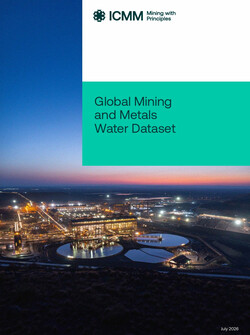
국제광업금속협의회(ICMM)의 새로운 분석 보고서에 따르면, 전 세계 광업 및 금속 시설의 약 3분의 2가 중대한 물리적 수자원 위험에 직면한 지역에 위치한 것으로 나타났다. 사진은 보고서 표지. [사진출처(Photo source) = 국제광업금속협의회(ICMM)]
국제광업금속협의회(International Council on Mining and Metals, ICMM)의 새로운 분석 보고서에 따르면, 전 세계 광업 및 금속 시설의 약 3분의 2가 중대한 물리적 수자원 위험에 직면한 지역에 위치한 것으로 나타났다.
국제광업금속협의회(ICMM)의 새로운 분석 보고서 사진은 보고서 ‘글로벌 광업 및 금속 산업 용수 데이터세트(Global Mining and Metals Water Dataset)’ 표지. [사진출처(Photo source) = 국제광업금속협의회(ICMM)]
국제광업금속협의회(ICMM)의 새로운 보고서‘글로벌 광업 및 금속 산업 용수 데이터세트(Global Mining and Metals Water Dataset)’에 따르면, 광업 및 금속 사업장과 기타 산업 및 생활용수 이용자 간 물 확보 경쟁이 업계가 직면한 가장 큰 물리적 수자원 위험이라는 사실도 보여준다. 또한 청정에너지 시스템에 필요한 원자재 수요가 증가함에 따라 지역 차원의 통합적인 토지 및 수자원 이용 계획을 조율하는 것이 중요하다는 점을 강조한다.
광물과 금속은 에너지 전환과 미래 저탄소 경제에 필수적이지만, 이번 분석은 이를 생산하는 데 필요한 여건이 물리적 수자원 위험으로 인해 제약받고 있음을 보여준다.
주요 조사 결과는 다음과 같다.
- 전 세계 광업·금속 시설의 65.7%가 최소 1개 이상의 물리적 수자원 위험 지표에서 높은 수준의 위험에 노출되어 있다.
- 시설의 38.2%는 기준 물 스트레스가 높거나 극도로 높은 유역 또는 물을 사실상 이용할 수 없는 건조 지역에 위치해 있다.
- 전 세계 시설의 27.4%가 기준 수자원 고갈 위험이 높거나 극도로 높은 지역에 노출되어 있다.
- 전 세계 시설의 27%가 높은 가뭄 위험에 노출되어 있으며, 가뭄은 이번에 분석된 물리적 수자원 위험 가운데 두 번째로 빈번한 위험으로 나타났다.
- 전 세계 시설의 14%가 높거나 극도로 높은 홍수 위험에 노출되어 있으며, 알루미나 정제, 알루미늄 제련, 몰리브덴 생산 및 철강 생산 시설의 노출도는 이보다 더 높다.
- 전 세계 시설의 16.2%가 수자원 공급의 연도 간 변동성이 높거나 극도로 높은 지역에 노출되어 있다. 다만 이러한 위험은 지역별로 불균등하게 나타나며, 오세아니아에서는 74%까지 상승한다.
- 시설의 4.9%가 동시에 3개 이상의 물리적 수자원 위험 지표에서 높은 위험에 노출되어 있다.
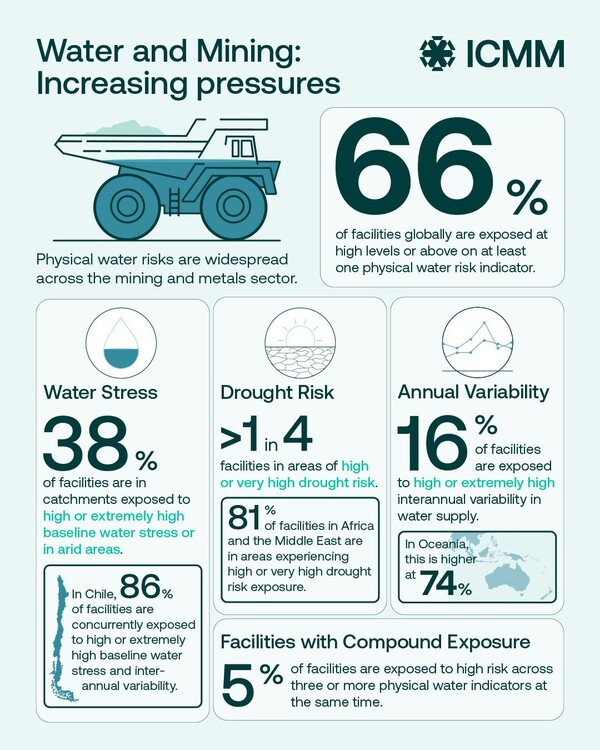
전 세계 광업·금속 시설의 65.7%가 최소 1개 이상의 물리적 수자원 위험 지표에서 높은 수준의 위험에 노출되어 있는 것으로 나타났다. [그림출처(picture source) = 국제광업금속협의회(ICMM)]
국제광업금속협의회(ICMM) 분석 결과, 광업 및 금속 부문의 수자원 위험은 전 세계적으로 나타나지만 그 양상은 지역과 원자재에 따라 다양했다. 일부 시설은 만성적인 물 확보 경쟁에 직면하고 있으며, 다른 시설은 가뭄이나 홍수 또는 예측하기 어려운 연간 수자원 공급에 직면해 있는 것으로 나타났다.
일부 지역과 공급망에서는 이러한 위험이 중첩되어 취약성을 초래하고 있으며, 이는 책임감 있는 수자원 관리와 정부, 업계, 투자자 및 해당 원자재를 사용하는 기업 간 공동 행동을 통해 해결해야 한다.
ICMM의 데이터 및 연구 담당 이사인 엠마 게이건(Emma Gagen) 박사는 “우리의 연구는 수자원이 이미 광업 및 금속 부문에서 중대한 사안이라는 점을 보여준다. 경제 전반에 걸친 수자원 위험 노출을 더 정확히 이해하고 관리하지 않는다면, 우리는 자신도 모르는 사이에 에너지 전환에 큰 제약을 받는 위험에 처하게 될 것”이라고 조사결과에 대해 말했다.
게이건 박사는 이어 “바로 이러한 이유로 ICMM 회원사를 포함한 선도적인 광업 기업들은 사회적으로 공평하고, 환경적으로 지속 가능하며, 경제적으로 유익한 방식으로 수자원을 관리하기 위해 수자원 보존 관리 원칙과 관행을 도입했다”고 덧붙였다.
조사 결과는 수자원 위험 노출이 업계 전반에 균등하게 분포돼 있지 않다는 점을 보여준다. 세계 최대 구리 생산국이자 전 세계 리튬 매장량의 상당 부분을 보유한 칠레에서는 시설의 85.8%가 기준 수자원 스트레스와 연도 간 변동성이 동시에 높거나 극도로 높은 지역에 위치해 있다.
아프리카와 중동에서는 시설의 80.7%가 높거나 매우 높은 가뭄 위험에 노출되어 있으며, 오세아니아에서는 74%가 수자원 공급의 연도 간 변동성이 높거나 극도로 높은 지역에 위치해 있다.
전 세계 광업·금속 시설의 16.2%가 수자원 공급의 연도 간 변동성이 높거나 극도로 높은 지역에 노출되어 있다. 다만 이러한 위험은 지역별로 불균등하게 나타나며, 오세아니아에서는 74%까지 상승하는 것으로 나타났다. [사진출처(Photo source) = 국제광업금속협의회(ICMM)]
게이건 박사는 “지금까지 광업 및 금속 부문이 수자원 위험에 얼마나 노출되어 있는지를 여러 원자재에 걸쳐 종합적으로 평가한 글로벌 분석은 없었다. ICMM은 신뢰할 수 있고 접근 가능한 데이터를 개발함으로써 정책 입안자와 투자자가 수자원 위험 노출에 대해 보다 정확한 의사결정을 내리고, 에너지 전환으로 발생하는 수요를 관리할 수 있도록 지원하고자 한다”고 말했다.
그는 특히, “이 데이터세트는 다른 기관과 관계자들이 이를 탐색하고 활용하며, ICMM과 협력해 업계 전반의 수자원 위험에 대한 공동의 이해를 지속적으로 개선해 나가기 위한 출발점이다”라고 강조했다.
이번 보고서는 광산, 제련소, 정제소 및 공장을 포함한 1만 2000개 시설로 구성된 ICMM의 최신 글로벌 광업 데이터세트(Global Mining Dataset, v1.5)를 기반으로 작성됐다. 시설 위치에 글로벌 수자원 위험 데이터세트를 중첩해 선정된 물리적 수량 위험에 대한 노출도를 평가했다. 글로벌 광업 및 금속 수자원 데이터세트는 세계자연기금(World Wide Fund for Nature, WWF) 수자원 위험팀 및 세계자원연구소(World Resources Institute, WRI)와 협력해 제작됐다.
세계자원연구소(WRI)의 식량·토지·수자원 프로그램의 크리스털 데이비스(Crystal Davis) 글로벌 디렉터는 “에너지 전환으로 인해 전 세계적으로 핵심광물 채굴과 생산이 급증하면서 국가들은 책임 있는 채굴 활동을 촉진하는 동시에 증가하는 수요를 어떻게 충족할 것인지를 두고 고심하고 있다”라면서 “책임 있는 채굴은 수자원 위험이 가장 큰 지역에 관한 신뢰할 수 있는 공개 데이터에 공동으로 접근하는 것에서 시작된다”고 말했다.
그는 이어 “WRI는 정부, 지역사회, 투자자 및 기업이 전체 밸류체인에 걸쳐 계획을 수립하고 행동하는 데 필요한 기초 데이터베이스(DB)를 제공하기 위한 의미 있는 진전으로서 ICMM의 기여를 환영한다”고 덧붙였다.
[원문보기]
Competition for water poses risks to the energy transition
ICMM report maps where mining and metals facilities intersect with water stress, depletion, drought, flood and interannual variability risks.
London, UK - Nearly two-thirds of mining and metals facilities worldwide are located in areas facing significant physical water risk, according to new analysis by ICMM.
Our Global Mining and Metals Water Dataset and report, also reveal that competition for water between mining and metals operations and other industrial and domestic users is the greatest physical water risk facing the industry. It highlights the importance of coordinated integrated land and water use planning at regional scales, as demand grows for the materials needed for clean energy systems.
Minerals and metals are essential to the energy transition and the low-carbon economy of the future, but this analysis shows that the conditions needed to produce them are constrained by physical water risks.
Key findings include :
- 65.7% of mining and metals facilities globally are exposed to high levels of at least one physical water risk indicator.
- 38.2% of facilities are located in catchments with high or extremely high baseline water stress, or in arid areas where water is functionally unavailable.
27.4% of facilities globally are exposed to high or extremely high baseline water depletion.
- 27% of facilities globally are exposed to high drought risk, making drought the second most prevalent physical water risk analysed.
- 14% of facilities globally are exposed to high or extremely high flood risk, although exposure is higher for alumina refining, aluminium smelting, molybdenum production and steel production.
- 16.2% of facilities globally are exposed to high or extremely high interannual variability in water supply, though this is geographically uneven and rises to 74% in Oceania.
- 4.9% of facilities are exposed to high risk across three or more physical water risk indicators at the same time.
The analysis found that water risk in mining and metals is global in scope but diverse in nature, differing according to geography and commodity. Some facilities face chronic competition for water; others face drought, flooding, or unpredictable annual supply.
In some regions and supply chains, these risks overlap, creating vulnerabilities that must be addressed at through water stewardship and coordinated action across governments, industry, investors and the companies that use these materials.
Commenting on the findings, ICMM’s Director of Data and Research, Dr Emma Gagen, said: “Our research shows that water is already a material issue for the mining and metals sector. If water risk exposure is not better understood and managed across the wider economy, we risk sleepwalking into a major constraint on the energy transition. This is why leading mining companies including ICMM members have embedded water stewardship principles and practices, to manage water in ways that are socially equitable, environmentally sustainable and economically beneficial.”
“The findings show that water risk exposure is not evenly distributed across the sector. In Chile, the world’s largest copper producer and home to a significant share of global lithium reserves, 85.8% of facilities face high or extremely high baseline water stress and interannual variability at the same time. In Africa and the Middle East, 80.7% of facilities are exposed to high or very high drought risk, while in Oceania, 74% face high or extremely high interannual variability in water supply.”
Dr Emma Gagen added that: “Until now, there has been no comprehensive, cross-commodity global assessment of how the mining and metals sector is exposed to water risk. By developing credible and accessible data, ICMM aims to support more informed decision-making by policymakers and investors on water risk exposure, helping to manage the demand created by the energy transition. ”
“This dataset is a starting point for others to explore, use and collaborate with us to continue improving the collective picture of water risk across the industry.”
The report draws on ICMM’s updated Global Mining Dataset (v1.5) of 12,000 facilities - including mines, smelters, refineries and plants - and overlays facility locations with global water-risk datasets to assess exposure to selected physical water quantity risks. The Global Mining and Metals Water Dataset was produced in partnership with the WWF’s Water Risk Team and the World Resources Institute (WRI).
Crystal Davis, Global Director for the Food, Land & Water Programs World Resources Institute, said: “With the global surge in the mining and production of critical minerals, driven by the energy transition, countries are grappling with how to meet the rising demand while promoting responsible mining activities. Responsible mining starts with shared access to credible, publicly available data on where water risks are greatest. WRI welcomes ICMM's contribution as a meaningful step toward providing governments, communities, investors and companies with a foundation data base needed to help plan and act across the full value chain.”
 즐겨찾기 추가
 시작페이지로 설정