[독일] HZDR 연구팀, '영원한 화학물질' 분해 기술 개발
유체역학적 캐비테이션·플라즈마 기반 PFAS 분해 기술 개발
상용화 시 PFAS 수계 유입 저감 기대
연구 성과, 국제학술지 『사이언티픽 리포트』·『케미컬 엔지니어링 저널 어드밴시스』에 각각 게재
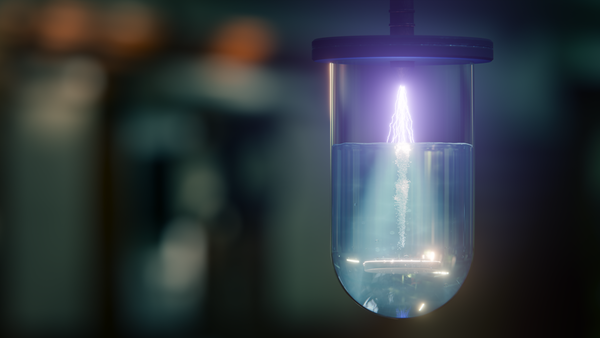
독일 헬름홀츠 드레스덴-로센도르프 연구센터(HZDR) 연구팀이 유체역학적 캐비테이션과 저온 대기압 플라즈마를 활용한 과불화합물(PFAS) 분해 기술을 개발해 상용화 가능성을 제시했다. [사진제공(Photo Source) = B. 슈뢰더(B. Schröder)/HZDR]
독일 헬름홀츠 드레스덴-로센도르프 연구센터(Helmholtz-Zentrum Dresden-Rossendorf, HZDR) 연구진이 과불화화합물(PFAS)을 분해할 수 있는 두 가지 새로운 처리 기술을 개발했다. 연구진은 유체역학적 캐비테이션과 기체 분산을 결합한 저온 대기압 플라즈마 기술을 활용해 화학적으로 분해가 거의 불가능한 산업용 화학물질인 PFAS를 분해하는 데 성공했다.
이번 연구에는 헬름홀츠 환경연구센터(Helmholtz Centre for Environmental Research, UFZ) 연구진도 참여해 PFAS의 분해와 불소이온 방출을 분석을 통해 확인했다. 연구진은 해당 기술이 상용화 단계에 이르면 산업 현장에서 활용돼 PFAS의 수계 유입을 크게 줄이는 데 기여할 수 있을 것으로 기대했다.
일부 PFAS는 유전물질에 변화를 일으키고 암 발생 위험을 높일 수 있는 것으로 의심되고 있지만, 나머지 많은 PFAS의 생물학적 영향은 아직 명확하게 밝혀지지 않았다.
PFAS는 1만 종이 넘는 단쇄 및 장쇄 산업용 화학물질군으로, 탄소(C)와 불소(F) 사이의 매우 안정적인 결합 구조 덕분에 뛰어난 화학적 안정성을 지닌다. PFAS는 하수를 통해 강과 바다로 유입돼 전 세계로 확산되고 있으며, 최근에는 독일 엘베강(Elbe River)에서도 고농도로 검출됐다. 이에 따라 식물과 동물은 물론 인간의 건강에도 잠재적인 위험을 초래할 수 있다는 우려가 커지고 있다.
독일의 식수 공급을 안정적으로 확보하고 수생태계를 보호하기 위한 국가 물전략(National Water Strategy)의 일환으로, HZDR 연구진은 수계의 PFAS 오염을 줄이고 이른바 '영원한 화학물질'을 체계적으로 분해하는 기술 개발을 추진하고 있다.
연구진은 2022년 시작한 예비연구에서 유체역학적 캐비테이션 기술을 활용해 PFAS를 분해하는 공정을 개발했다. 이 연구는 이사벨 우아칼로 아길라르(Ysabel Huaccallo-Aguilar) HZDR 박사후연구원이 주도했다.
캐비테이션으로 안정적인 결합 분해
제바스티안 라이네케(Sebastian Reinecke) 박사이자 HZDR 물·환경기술부 책임자는 “유체역학적 캐비테이션 공정에서는 PFAS가 함유된 물을 좁은 통로로 통과시켜 작은 증기 기포를 생성한다”고 설명했다.
장쇄 PFAS는 계면활성 특성을 지녀 기포 표면에 부착된다.
라이네케 책임자는 “좁은 통로를 지난 뒤 물속 주변 압력이 상승하면서 기포가 붕괴하면, 기포에 붙어 있던 PFAS가 국부적으로 수천 도에 이르는 고온에 노출된다”고 말했다.
이와 동시에 캐비테이션 과정에서는 반응성이 매우 높은 하이드록실 라디칼(Hydroxyl Radical)이 생성된다. 이 물질은 주변의 여러 물질과 비선택적으로 반응한다.
그는 “하이드록실 라디칼이 중간 생성물을 공격해 PFAS 분해를 크게 촉진하는 것으로 보고 있다”고 덧붙였다.
우아칼로 아길라르 연구원과 공동 연구진은 이 공정을 통해 수돗물 속 PFAS를 분해하고, 유기물에 결합된 불소를 무기화(Mineralization)할 수 있음을 확인했다.
처리 시간이 길어질수록 용액 내 불소이온 농도는 지속적으로 증가했다. 연구진은 실험에 PFAS 계열 물질 가운데 잔류성이 특히 높고 가장 많이 연구된 과불화옥탄설폰산(PFOS)을 사용했다.
실험 결과, 용액에 녹아 있던 PFOS 분자의 약 37%를 일정한 분해율로 제거하는 데 성공했다.
라이네케 책임자는 "현재 분해율을 높이기 위한 후속 연구를 진행하고 있다”고 말했다. 이어 "목표는 용액 속 PFAS의 80% 이상을 분해하고, 화학물질에 결합된 불소의 50% 이상을 무기화하는 것"이라며 "이는 PFAS의 특징인 탄소-불소 결합을 분해하는 것을 의미한다"고 밝혔다.
반응성 플라즈마로 PFAS 분해 효율 향상
또 다른 실험에서는 아미트 쿠마르(Amit Kumar) 환경공학 박사가 기체 분산을 결합한 저온 대기압 플라즈마 기술을 이용해 PFAS를 분해했다. 이 공정은 상온·상압 조건에서 작동하며 촉매나 추가 화학물질이 필요하지 않은 것이 장점이다.
쿠마르 박사는 박사과정에서 플라즈마에서 생성되는 반응성 화학종을 활용해 미량오염물질을 분해하는 기술을 연구했으며, 이번 실험에 그 성과를 적용했다.
라이네케 책임자는 "수면에서 플라즈마를 발생시키는 동시에 PFAS로 오염된 물에 기체를 주입했다. PFAS는 기체 기포 표면에 부착되고, 기포가 상승하는 동안 물이 지속적으로 순환하면서 PFAS를 수면으로 이동시켜 플라즈마에 의해 분해한다"고 설명했다.
이 방법은 장쇄와 단쇄 PFAS를 거의 완전히 분해하는 데 성공했다. 또한 이들 '영원한 화학물질'에 결합된 불소 원자의 약 35%가 불화염 형태로 방출됐다.
라이네케 책임자는 "이 방법은 캐비테이션보다 반응 속도가 훨씬 빠르지만, 단위 부피당 에너지 소비량도 훨씬 많다"며 "또한 반응 과정에서 생성되는 기체 화합물 등 다양한 전환 생성물에 대해서는 아직 충분한 분석이 이뤄지지 않았다"고 전했다.
연구진은 현재 이 공정에서 인체에 유해할 수 있는 물질이 생성되는지, 생성된다면 이를 어떻게 방지할 수 있는지를 확인하기 위한 추가 실험을 진행하고 있다.
플라즈마·캐비테이션 결합으로 PFAS 제거 효율 향상 기대
연구진은 현재 더 많은 양의 오염수를 처리할 수 있도록 공정의 규모를 확대하는 연구를 진행하고 있다.
여러 개의 전극과 기술용 가스 주입기를 활용해 반응 용량을 약 50밀리리터에서 5리터까지 단계적으로 늘리고 있으며, 향후에는 플라즈마 기술과 캐비테이션을 결합할 계획이다.
라이네케 책임자는 "플라즈마에서 생성되는 반응성 화학종과 캐비테이션 효과를 결합하면 높은 PFAS 분해율을 달성할 수 있을 것으로 기대한다"고 말했다.
두 기술의 장점을 하나의 공정에 결합하는 데 성공할 경우, 오염수에서 PFAS를 효율적으로 제거할 수 있는 새로운 고효율 PFAS 제거 기술을 개발할 수 있을 것으로 기대된다.
이번 연구 결과는 국제학술지 『사이언티픽 리포트(Scientific Reports)』에 '유체역학적 캐비테이션 처리를 이용한 물속 과불화옥탄설폰산(PFOS)의 분해 및 탈불소화(Degradation and defluorination of perfluorooctane sulfonate (PFOS) forever chemical in water using hydrodynamic cavitation treatment)'라는 제목으로 게재됐다.
이어 국제학술지 『케미컬 엔지니어링 저널 어드밴시스(Chemical Engineering Journal Advances)』에는 '기체 분산 저온 대기압 플라즈마를 이용한 수돗물 속 과불화옥탄설폰산(PFOS)의 분해 및 탈불소화 향상(Enhanced degradation and defluorination of perfluorooctane sulfonate (PFOS) in tap water using gas-dispersed cold atmospheric plasma)'이라는 제목의 논문이 게재됐다.
[원문보기]
New solutions to the PFAS problem
HZDR research team develops methods for breaking down “forever chemicals”
Researchers at the Helmholtz-Zentrum Dresden-Rossendorf (HZDR) have developed two new processes: Using hydrodynamic cavitation and cold atmospheric plasma combined with gas dispersion, they are looking to break down per- and polyfluoroalkyl substances (PFAS), industrial chemicals that are extremely resistant to chemical degradation. To support this effort, experts from the Helmholtz Centre for Environmental Research (UFZ) ran analyses that confirmed the degradation of PFAS and the release of fluoride. Once they reach market maturity, these processes could be used in industry, significantly reducing the release of PFAS into bodies of water (DOI: 10.1038/s41598-026-57490-6; DOI: 10.1016/j.ceja.2026.101046).
While some PFAS are suspected of altering genetic material and increasing the risk of cancer, the biological effects of many others remain unknown. This group of substances comprises more than 10,000 short- and long-chain industrial chemicals which owe their exceptional chemical resistance to their highly stable carbon-fluorine bonds. PFAS enter rivers and oceans via wastewater and are spreading worldwide. High concentrations of PFAS have also recently been detected in the Elbe River – a potential health hazard to plants, animals and humans alike.
In the context of the “National Water Strategy” to secure Germany’s drinking water supply and protect its bodies of water, researchers at HZDR are investigating how to reduce the burden on water bodies and specifically, how to systematically break down these “forever chemicals”. In a preliminary study, launched in 2022, a research team led by postdoctoral researcher Dr. Ysabel Huaccallo-Aguilar used a process known as hydrodynamic cavitation to degrade PFAS.
Cavitation breaks down stable bonds
“In hydrodynamic cavitation, we pass PFAS-enriched water through a constriction, generating small vapor bubbles,” explains Dr. Sebastian Reinecke, head of the Department of Water and Environmental Technologies at HZDR. Since long-chain PFAS are surface-active, they attach to the bubbles. “When the bubbles burst under the rising ambient pressure in the water downstream of the constriction, the PFAS that are attached to the bubbles are exposed to local temperature spikes of several thousand degrees Celsius,” Reinecke explains. At the same time, cavitation produces highly reactive hydroxyl radicals that react non-specifically with nearby substances. “Our hypothesis is that they attack the intermediate products, significantly boosting PFAS degradation.”
Ysabel Huaccallo-Aguilar and her colleagues were able to demonstrate that the process did break down PFAS in tap water while mineralizing organically bound fluorine. The longer the duration of the treatment, the higher the continuous increase in fluoride concentration in the solution. For their experiments, the researchers used perfluorooctane sulfonate (PFOS), a particularly persistent and well-studied compound from the PFAS group. By the end of the experiment, they were able to break down approximately 37 percent of the dissolved PFOS molecules at a stable degradation rate. “We are now conducting follow-up experiments to increase the degradation rate,” Reinecke explains. “Our goal is to improve the process to a degradation rate of more than 80 percent of the PFAS in the solution and mineralizing more than 50 percent of the fluorine that is bound in the chemicals – that means, breaking down the carbon-fluorine bonds that are typical of PFAS.”
Efficient PFAS degradation with highly reactive plasma species
In another series of experiments, environmental engineer Dr. Amit Kumar used cold atmospheric plasma in combination with gas dispersion to degrade PFAS. The advantage of this process is that it operates under ambient conditions and requires neither catalysts nor additional chemicals. In his PhD research, Kumar had already investigated ways of degrading micropollutants using the reactive chemical species that are generated in the plasma. He now applied his findings to this experiment. “We generated plasma at the water surface while simultaneously introducing gas into the PFAS-contaminated water,” says Sebastian Reinecke, explaining the experimental setup. “The PFAS attach to the surface of the gas bubbles. As they rise, the water is constantly circulated. This brings the PFAS to the surface, where they are broken down in the plasma.”
This method made it possible to almost completely degrade both long- and short-chain PFAS. About 35 percent of the fluorine atoms bound in these “forever chemicals” were released as fluoride salts. “While this method has significantly faster reaction kinetics than cavitation, it also consumes far more energy per volume unit,” Reinecke notes. “In addition, the process generates numerous transformation products that we have not yet been able to investigate in detail – for instance, gaseous compounds that form during the reaction.” The researchers are currently conducting further test series to find out whether the process produces any substances that may pose a health hazard, and if so, how to avoid it.
Synergies from combining plasma and cavitation
The researchers are currently working to scale up the process for larger volumes of contaminated water. Using multiple electrodes and a technical gas injector, they are gradually increasing the reaction volume from about 50 milliliters to five liters. The plan is to combine plasma technology with cavitation. “I believe we’ll achieve high degradation rates by combining the highly reactive species from the plasma with the effects of cavitation,” says Reinecke. If they succeed in merging the benefits of both methods into a single approach, they might create a whole new, efficient PFAS removal technology for contaminated water.
[출처 = 독일 헬름홀츠 드레스덴-로센도르프 연구센터(HZDR)(https://www.hzdr.de/db/Cms?pNid=99&pOid=78196) / 2026년 7월 17일]
[연구논문 출처 = 『사이언티픽 리포트(Scientific Reports)』(https://www.nature.com/articles/s41598-026-57490-6) / 2026년 2월 20일]
[연구논문 출처 = 『케미컬 엔지니어링 저널 어드밴시스(Chemical Engineering Journal Advances)』(https://www.sciencedirect.com/science/article/pii/S2666821126000153?via%3Dihub) / 2026년 2월 20일]
|  즐겨찾기 추가
 시작페이지로 설정
























