[유럽] [2026] [네덜란드] 아쿠아테크, “아시아, 물부족 및 물수요 증가로 담수화 성장 촉진”
이름
관리자
작성일
2026-07-13
조회수
882
파일첨부
[네덜란드] 아쿠아테크, “아시아, 물부족 및 물수요 증가로 담수화 성장 촉진”
- APAC 국가들, 물수요 증가·물부족 및 기후 관련 문제 심화 등 두 가지 문제에 직면
- 아시아 전역서 해수담수화, 미래 물공급에 매우 중요…담수화 기술 보급 확대 가로막는 가장 큰 장애물은 운용비용과 재정 문제
- 산업용 물재이용과 무방류 시스템(ZLD), 중국·인도·동남아시아 전역서 빠르게 확산
- 아쿠아테크, 덴마크 물기업 댄포스(Danfoss) 존 퍼거슨 APAC 매니저와 ‘아시아 해수담수화의 중요성’ 대담 나눠
아쿠아테크(Aquatech)는 온라인(Online)을 통해 덴마크 물기업 댄포스(Danfoss)의 APAC 매니저인 존 퍼거슨(John Ferguson, 사진)과 아시아에서 해수담수화가 중요한 이유 등에 대해 이야기를 나눴다. [사진출처(Photo Source) = 아쿠아테크(Aquatech) ]
아시아개발은행(ADB)은 2025년 말 기준으로 아시아 태평양 지역에서 지난 12년간 27억 명 이상의 사람들이 ‘극심한 물 부족(Extreme Water Insecurity)’ 상황에서 벗어났다는 보고서를 발표했다.
이는 전 세계 인구의 60%에 해당한다. 놀라운 수치이지만, 맥락을 고려해야 한다. 예를 들어, 이 지역은 전 세계 홍수 발생 건수의 약 41%를 차지한다.
ADB 보고서에 따르면, 해수 침입, 해수면 상승, 폭풍 해일(Storm Surges) 등이 증가하고 있으며, 장기적인 물 안보를 책임지는 습지, 강, 대수층(Aquifers), 삼림은 악화되고 있다. 물 안보를 지속적으로 개선하기 위해서는 모든 요소를 고려해야 하지만, 수요가 증가하는 상황에서 깨끗하고 신선한 물을 확보하는 것은 여전히 최우선 과제이다.
전 세계적으로 이러한 목표를 달성하기 위해 담수화 기술의 활용이 증가하고 있다. 특히, 아시아 전역에서 해수담수화는 미래 물 공급에 매우 중요하다. 수자원 기술 분야의 전문가들을 위한 플랫폼인 아쿠아테크(Aquatech)는 온라인(Online)을 통해 덴마크 물기업 댄포스(Danfoss)의 아시아 태평양 지역(APAC) 매니저인 존 퍼거슨(John Ferguson)과 아시아에서 해수담수화가 중요한 이유, 당면 과제, 그리고 현재 진행 중인 기회에 대해 대담을 나눴다. 그 내용을 소개한다.
Q. 아시아 물 시장에서 해수담수화가 중요한 이유?
아시아개발은행(ADB) 보고서에서 명확히 드러나듯이, 아시아는 전 세계적으로 물부족 현상이 가장 심각한 지역이다. 퍼거슨은 “급속한 도시화, 산업 성장, 그리고 기후변화로 인해 기존 담수자원이 한계에 다다르고 있다”고 설명한다.
해결책 중 하나는 가장 필요한 곳에 가장 가까운 천연자원을 활용하는 것이다. 2000∼2018년 아시아의 연안 인구는 25% 증가하여 1억2천500만 명이 더 늘어났다. 퍼거슨은 “연안 인구 밀도가 높기 때문에 해수는 합리적인 자원이 될 수 있다”며, “해수담수화는 강우나 하천으로는 불가능한 안정적인 공급을 보장한다”고 말한다.
전 세계 연안 인구의 60%가 아시아에 거주하고 있다. 하지만, 해안시설은 문제점도 안고 있다. 태국을 예로 들면, 새로운 해수담수화 시설의 위치는 신중하게 고려해야 한다. 세계은행(World Bank)에 따르면 태국의 동부 경제 회랑(Eastern Economic Corridor)은 전체 GDP의 약 30%, 고용의 4분의 1을 차지한다.
그러나 지난 30년 동안 태국의 해안선은 침식으로 인해 약 1억2천640만 제곱미터(㎡)의 토지를 잃었다. 오염과 과도한 개발 또한 심각한 문제로 대두되고 있으며, 담수원으로의 해수 침투는 더 큰 문제를 야기시킨다. 인구가 증가함에 따라 깨끗한 물을 확보하는 것은 더욱 중요해질 것이다.
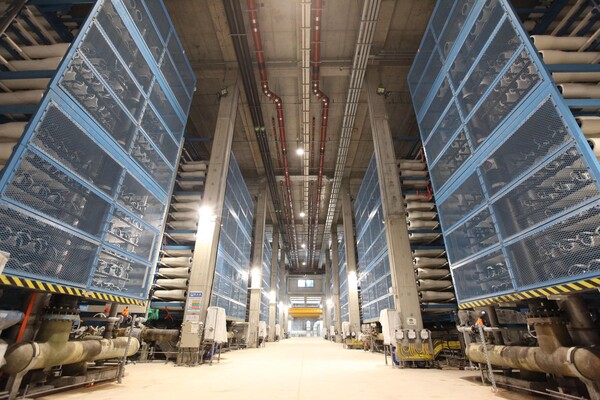
홍콩 최초로 역삼투압(reverse osmosis, RO) 기술을 적용한 ‘정관오 해수담수화 시설(Tseung Kwan O desalination plant)은 2024년 2월부터 가동되고 있다. [사진출처(Photo source) = 영국 RSK 그룹]
Q. 해수담수화 기술 사용 증가의 주요 동인은 무엇일까?
퍼거슨에 따르면, 아시아·태평양 지역(APAC)에서 해수담수화 기술 사용이 증가하는 주요 동인을 다음과 같이 다섯 가지로 설명한다.
① 주요 도시와 산업 단지의 물부족(Water scarcity)이다.
② 반도체, 전력, 광업 등 물 사용량이 많은 산업의 성장이다.
APAC은 2024년 전 세계 반도체 생산량의 50% 이상을 차지할 것으로 예상되며, 인공지능(AI)과 전기자동차의 발달로 수요가 기하급수적으로 증가할 전망이다. 주요 반도체 허브로는 중국 상하이와 선전, 대만, 서울, 말레이시아 페낭, 싱가포르 등이 있다.
③ 기후 변동성으로 인한 지표수 및 지하수 공급 안정성의 저하이다.
국제 NGO인 워터에이드(WaterAid)의 2025년 연구에 따르면, 남아시아와 동남아시아의 많은 도시에서 강우량 증가로 심각한 홍수 위험이 높아지고 있다. 또한 많은 도시들이 보고서에서 ‘채찍질 효과(whiplash effect)’라고 부르는 현상에 직면하고 있는데, 이는 ‘가뭄으로 수자원이 고갈되었다가 홍수로 기반 시설이 마비되고, 위생 시스템이 파괴되고, 식수가 오염되는’ 급격한 기상 변화를 의미한다.
④ 물 안보 및 자립을 위한 정책 변화이다.
예를 들어 태국 정부는 450만 가구에 깨끗한 물을 공급하고 수자원 비축량을 47억㎥까지 늘리는 것을 목표로 하는 3개년 물관리 계획을 발표했다. 스레타 타비신(Srettha Thavisin) 총리가 주도하는 이 계획은 145억 유로(약 24조8천807억 원)에 해당하는 비용이 소요될 것이다.
⑤ 에너지 효율성과 규모의 경제로 인해 입방미터(㎥)당 비용이 하락하고 있다.
Q. 동남아시아에서 담수화 기술 보급 확대를 가로막는 가장 큰 장벽은 무엇인까?
APAC 전반에 걸쳐 담수화 기술 보급 확대를 가로막는 가장 큰 장애물은 비용과 재정 문제이다. 퍼거슨은 “에너지 비용이 여전히 가장 큰 장벽이다”라고 설명한다. 이는 운영비용과 공공 가격 압력을 유발한다. 특히, 재정 여력이 제한적인 소규모 국가의 경우 자금 조달이 그 뒤를 잇는다. 규제와 환경 승인은 프로젝트 진행을 늦출 수 있지만 비용보다는 덜 큰 걸림돌이다.
퍼거슨은 “물 부족이 일상생활에서 눈에 띄게 나타나는 지역에서는 일반적으로 대중의 수용도가 높아지고 있다”고 덧붙였다.
Q. 아시아 정부는 담수화 확대를 지속가능성과 회복력 목표와 어떻게 조화시킬 수 있을까?
담수화는 전통적으로 에너지 집약적인 산업이었다. 각 담수화 플랜트는 막대한 환경적 영향을 미치며, 염수 배출에 대한 환경 문제도 오랫동안 제기되어 왔다. 담수화는 데이터센터의 성장과 반도체 생산 수요의 급증 시대에 물 안보를 위한 해결책을 제공한다.
APAC 국가들은 △물 수요 증가와 물부족, △기후 관련 문제 심화라는 두 가지 문제에 직면하고 있다. 그렇다면 APAC 국가들은 (물 수요 충족을 위한) 담수화 확대와 지속가능성 및 회복력 목표 달성 사이에서 어떻게 균형을 맞출 수 있을까.
퍼거슨은 에너지 효율성 향상에 우선적으로 집중해야 한다고 주장한다. 그는 “가장 큰 영향을 미치는 부분이 바로 에너지 효율성”이라며, “가능하다면 담수화 플랜트를 재생 에너지와 연계하고, 명확한 배출 기준을 설정하고 준수 여부를 모니터링해야 한다”고 강조한다.
가능한 경우 담수화 시설을 재생 에너지와 연계해야 한다. 이를 위해 퍼거슨은 “정부가 단순히 최저 자본 지출(CAPEX)에만 집중하는 것이 아니라, 조달 체계를 통해 고효율 기술을 장려해야 한다”고 주장한다. 또한 “재사용과 담수화는 하나의 물 전략의 일환으로 함께 계획되어야 한다”고 강조한다.
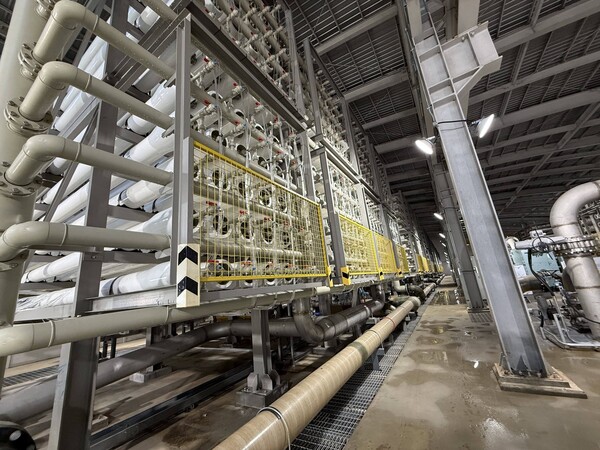
기후에너지환경부와 한국수자원공사(K-water)는 지난 2019년 본격적인 공사에 착수하여, 총사업비 3천175억 원(국고보조 952억 원, 한국수자원공사 2천223억 원)을 투입해 2025년 12월 18일 대산임해산업단지 해수담수화 시설을 완공했다. [사진출처 = 기후에너지환경부]
Q. 하지만 실제로는 어떻게 구현될까?
퍼거슨은 “담수화는 핵심 공급원이다. 가뭄에도 강하고 예측 가능하다. 재이용, 저장, 수요 관리는 담수화를 중심으로 이루어진다”라고 설명한다.
이러한 조합은 단일 수원에 대한 의존도를 줄이고 계절적 변동을 완화한다. 그는 “실제로 상수도 사업자들은 담수화를 통해 기저부하 수요를 충족하고, 재사용을 통해 산업용수를 공급하고 있다”라고 덧붙였다.
Q. 아시아 수자원 당국은 미래 물 안보 전략을 수립할 때 세계적인 담수화 선도국들로부터 어떤 교훈을 얻을 수 있을까?
퍼거슨은 세계적인 담수화 선도국들의 공통점은 장기적인 정책 일관성과 초기 비용뿐 아니라 생애주기 비용에 대한 집중이라고 생각한다. 그는 “호주는 에너지 효율성과 신뢰성에 중점을 두고 대규모 해수담수화 시설을 신속하게 구축함으로써 가뭄에 효과적으로 대응하고 있다”고 말한다.
퍼거슨은 특히, 싱가포르의 사례를 들면서 “장기적인 계획을 바탕으로 해수담수화, 뉴워터(NEWater ) 재이용, 원수 수입 등 다양한 분야에 걸쳐 체계적인 대응책을 마련했고, 걸프 국가들은 규모의 경제와 표준화를 통해 ㎥당 담수화 비용을 절감할 수 있음을 보여준다”고 언급했다.
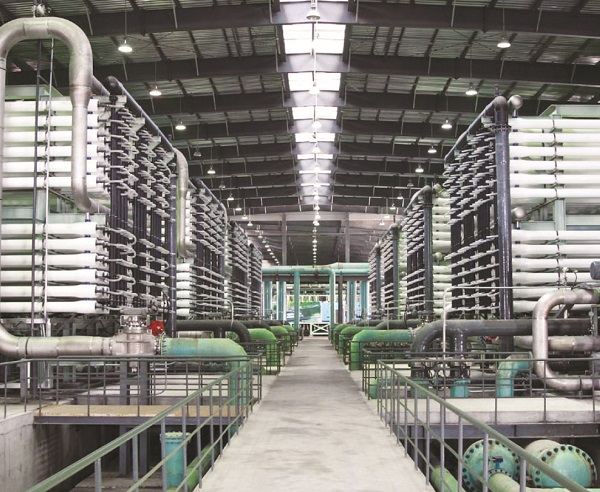
아시아 전역서 해수담수화가 미래 물공급에 매우 중요하지만, 담수화 기술 보급 확대를 가로막는 가장 큰 장애물은 운용비용과 재정 문제이다. 사진은 싱가포르 투아스(Tuas)에 위치한 싱스프링 담수화 시설(SSDP). 하루 최대 3천만 갤런(13만6천380㎥)의 담수를 생산할 수 있는 용량을 갖추고 있다. [사진출처(Photo Source) = 워터저널 DB 자료 / 배철민 편집국장]
Q. 염수 채굴(Brine Mining)과 같은 신흥 관련 기술이 아시아에 새로운 기회를 창출할 수 있을까?
염수(Brine)는 폐기물에서 자원으로 전환되고 있으며, 광물 회수 및 농축 공정은 특히 광업 및 산업 클러스터에서 새로운 가치 창출을 가져온다. “인도네시아의 ‘메이븐 프로젝트(MAVEN Project)’는 대규모 염수처리 및 농축의 좋은 예이다”라고 퍼거슨은 말한다.
메이븐 염수 채굴 프로젝트(MAVEN Brine Mining Project)는 세계 최초의 대규모 OARO(삼투압 보조 역삼투압, Osmotically assisted reverse osmosis) 상업 플랜트로, 하루 2만7천120㎥의 물을 처리하고 연간 22만 톤의 식용 소금을 생산할 수 있다. MAVEN은 인도네시아의 소금 수입 문제를 해결하고, 지속 가능한 생산 공정을 제공하며, 동시에 깨끗한 물을 생산한다.
“재이용은 이미 주요 성장 분야이다”라고 퍼거슨은 덧붙였다. “산업용 재이용과 무방류(ZLD, zero liquid discharge)는 중국, 인도 및 동남아시아 전역에서 빠르게 확산되고 있다”라면서, 에너지 소비 감소와 시스템 효율성 향상은 환경 발자국을 직접적으로 줄인다”라고 말한다.
Q. 그렇다면 환경 문제는 어떻게 해결할까?
퍼거슨은 “효율성이 높은 시스템은 취수량과 방류량을 줄이고, 혼합 및 방류구 설계 개선은 해양에 미치는 영향을 최소화한다. 또한, 염수 농도를 높여 총 방류량을 줄일 수 있다”고 말한다.
이 지역 전반에 걸쳐 규제가 강화되고 있다. 방류량 제한, 염도 기준치, 환경 모니터링은 대부분의 신규 프로젝트에서 표준으로 자리 잡고 있다.
퍼거슨은 “댄포스의 관점에서 역할은 분명하다”라면서, “에너지 소비 감소와 시스템 효율성 향상은 환경 발자국을 직접적으로 줄인다”라고 강조한다.
Q. 관광 수요 충족을 위한 담수화의 실현 가능성은 어느 정도일까?
아시아 전역의 관광 의존도가 높은 섬들이 계절적 물부족에 직면하고 있는 상황에서, 분산형 또는 소규모 담수화 시스템은 장기적인 물 공급 안정성 확보에 얼마나 효과적일까? 퍼거슨은 “매우 효과적이며 점점 더 필요해지고 있다”고 생각한다.
그는 “소규모 모듈형 담수화 시스템은 계절적 수요에 맞춰 공급할 수 있고, 대규모 인프라 구축 필요성을 줄이며, 신속하게 설치할 수 있고, 태양광을 포함한 하이브리드 에너지원과도 잘 연동된다”고 설명한다.
그는 핵심은 효율성과 신뢰성이라고 강조한다. “고압 펌프와 에너지 회수는 소규모 플랜트든 대규모 플랜트든 똑같이 중요하다. 이것들이 없으면 운영비용이 제한 요소가 된다.”
따라서 환경 및 에너지 비용이 수반되며 효율성이 증가함에 따라 이러한‘제한적(limiting)’ 요소는 APAC 지역 전반에 걸쳐 물 안보와 가용성을 높일 수 있는 잠재력을 가진 기술에 대한 우려가 줄어들 것이다.
[원문보기]
Scarcity and demand drive desalination growth in Asia
At the end of 2025, the Asian Development Bank (ADB) released a report that stated that more than 2.7 billion people in Asia and the Pacific had been lifted out of what it terms ‘extreme water insecurity’ over the past 12 years.
This amounts to 60 per cent of the total population. While this remains a remarkable statistic, it has to be viewed in context. For example, the region accounts for approximately 41 per cent of the world’s flood events.
According to the report, saltwater intrusion, rising sea levels and storm surges are increasing, while wetlands, rivers, aquifers, and forests that sustain long-term water security are deteriorating.
And while every element needs to be addressed to ensure water security continues to improve, securing fresh, clean water continues to be a priority as demand increases.
Around the world, the use of desalination is increasing to do just that. Across Asia, desalination is vital for the future of water supply. Aquatech Online talks to John Ferguson, Asia Pacific regional manager at Danfoss, about the importance of desalination in Asia, the challenges faced and the ongoing opportunities.
Q. Why is desalination important for the Asian water market?
As the ADB report makes clear, Asia has the largest concentration of water stress globally. On top of that, as Ferguson explains: “Rapid urbanisation, industrial growth and climate variability are pushing existing freshwater sources beyond limits.”
One answer is to make use of the natural resources available closest to where they are needed the most. Between 2000 and 2018, Asia’s coastal population increased by 25 per cent, adding an extra 125 million more inhabitants. “Coastal population density makes seawater a logical resource,” Ferguson states. “Desalination gives supply certainty that rainfall and rivers cannot.”
In total, Asia has 60 per cent of the world’s total coastal population. However, coastal facilities also present problems. Take Thailand as an example; the location of any new desalination plant would need careful consideration. According to the World Bank, Thailand’s Eastern Economic Corridor contributes approximately 30 per cent to total GDP, and a quarter of the country’s employment.
However, in the past three decades the country’s coastlines have lost approximately 126.4 million/m2 to erosion. Pollution and over-development are also growing concerns, and saltwater intrusion into freshwater sources presents further problems. As the population grows, securing clean water will become more important.
Q. What are the main drivers for increasing the use of desalination technologies?
According to Ferguson, there are five main drivers for the increasing use of desalination across Asia and the Pacific (APAC):
① Water scarcity in major cities and industrial clusters.
② The growth in water-intensive sectors such as semiconductors, power and mining : the APAC region accounted for just over 50 per cent of the global semiconductor production in 2024, with AI and electric vehicles set to increase demand exponentially. Leading semiconductor hubs include: Shanghai, Shenzhen, Taiwan, Seoul, Penang and Singapore.
③ Climate variability reducing reliability of surface and groundwater: A 2025 study by WaterAid highlighted that many of the cities in south and southeast Asia are experiencing increased rainfall, bringing with it the increased risk of severe flooding.
Many cities also face what the report calls a ‘whiplash’ effect where weather conditions shift from ‘droughts that deplete water sources to floods that overwhelm infrastructure, destroying sanitation systems and contaminating drinking water’.
④ Policy shift toward water security and independence: For example, the Thai government has announced a three-year water management plan aimed at providing 4.5m households with clean water and increasing water reserves to 4.7bn billion m3. The plan, spearheaded by Prime Minister Srettha Thavisin, will cost the equivalent of €14.5bn.
⑤ Falling cost per cubic metre driven by energy efficiency and scale.
Q. What are the biggest barriers preventing wider adoption of desalination in Southeast Asia?
Cost and finances are the biggest obstacles to wider adoption of desalination across the APAC region. “Energy cost is still the main barrier,” explains Ferguson. “It drives OPEX and public pricing pressure. Financing is close behind, especially for smaller nations with limited balance sheets. Regulation and environmental approvals can slow projects but are less of a blocker than cost.”
In areas where water stress is a visible part of everyday life, public acceptance is generally improving, adds Ferguson.
How can Asian governments balance desalination expansion with sustainability and resilience goals?
Desalination has traditionally been an energy-intensive industry. Each plant has a huge footprint, and there are also long-standing environmental concerns regarding brine discharge. Desalination provides a solution for water security in an age of data centre growth and ever-increasing demand for semiconductor production.
APAC nations are experiencing both increasing water demand and scarcity, as well as intensifying climate-related problems. So how can APAC countries balance desalination expansion (for water needs) with the need to focus on sustainability and resilience?
Ferguson believes we need to focus on energy efficiency first. “That is where the biggest impact sits,” he says. “Link desalination plants with renewable power where feasible. Set clear discharge standards and monitor compliance.”
Link desalination plants with renewable power where feasible
To do this, he believes governments need to “encourage high-efficiency technologies through procurement frameworks, not just lowest CAPEX. Reuse and desalination should be planned together as part of one water strategy.”
Q. But how would this look in practice?
“Desalination is the anchor supply,” he states. “It is drought-proof and predictable. Reuse, storage and demand management sit around it.”
The combination reduces reliance on a single source and smooths seasonal swings. “In practice, we see utilities using desal to cover baseload demand and reuse for industrial loops,” he adds.
Q. What lessons can Asian water authorities learn from global desalination leaders when developing future water-security strategies?
Ferguson believes that the common thread linking global leaders in desalination is long-term policy consistency and their focus on lifecycle cost, not just initial price.
“Australia has a strong response to drought through rapid deployment of large-scale desalination, with a clear focus on energy efficiency and reliability,” he begins. From Singapore, he points out the country's “diversification across desalination, reuse and imports with long-term planning discipline”, while the Gulf states show that the cost of desalinated water per cubic metre can be reduced through scale and standardisation.”
Q. Can emerging related technologies like brine mining create new opportunities in Asia?
Brine is moving from waste to resource, and the recovery of minerals and concentration processes create new value streams, particularly in mining and industrial clusters.
“The MAVEN project in Indonesia is a good example of brine handling and concentration at scale,” Ferguson says.
The Maven Brine Mining Project became the world’s first large-scale OARO commercial plant, capable of processing 27,120 m³/day of water and producing 220,000 tons of food-grade salt annually. MAVEN addresses Indonesia’s salt import challenges, offers a sustainable production process, and produces clean water at the same time.
“Reuse is already a major growth area,” Ferguson adds. “Industrial reuse and zero liquid discharge (ZLD) are expanding quickly across China, India and Southeast Asia.”
Lower energy consumption and higher system efficiency directly reduce environmental footprint
Q. But what about the environmental concerns?
Ferguson states that higher efficiency systems reduce intake and discharge volumes, while better mixing and outfall design limits marine impact. At the same time, brine concentration reduces total discharge volume.
Regulation is tightening across the region. Discharge limits, salinity thresholds and environmental monitoring are becoming standard in most new projects.
“From a Danfoss perspective, the role is clear,” Ferguson explains. “Lower energy consumption and higher system efficiency directly reduce environmental footprint.”
Q. How viable is desalination for meeting the water demands of tourism?
As tourism-dependent islands across Asia face seasonal water shortages, how viable are decentralised or small-scale desalination systems for long-term water resilience? Very viable and increasingly necessary, believes Ferguson.
“Small-scale, modular desal systems can match seasonal demand, reduce need for large infrastructure, they can be deployed quickly, and they work well with hybrid power including solar.”
The key, he states, is efficiency and reliability. “High-pressure pumps and energy recovery are just as important at small scale as they are in large plants. Without that, operating cost becomes the limiting factor.”
So, while desalination comes with environmental and energy costs, with increasing efficiencies, both of these ‘limiting’ factors become less of a concern for a technology that has the potential to increase water security and availability across the APAC region.
 즐겨찾기 추가
 시작페이지로 설정