[미국] 플로리다대, 불소 없는 차세대 PFAS 제거 소재 개발
재사용 가능한 ‘분자 벨크로’ 젤…기존 필터 대비 높은 제거 효율
불소화합물 없는 설계로 2차 오염원 감소…정수 시스템 적용 가능성 연구중
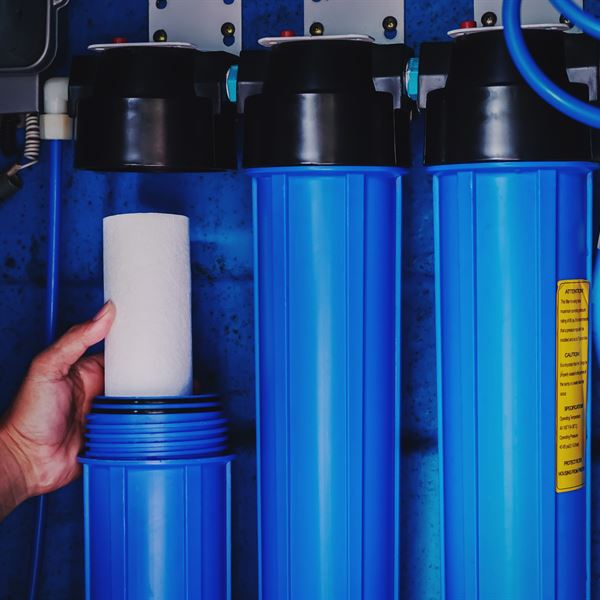
플로리다대학교(University of Florida) 화학공학과 연구진은 기존에 널리 사용되는 기존 제품보다 PFAS(과불화화합물)를 더 효율적으로 제거하는 새로운 젤 기반 소재를 개발했다. [사진제공(Photo Source) = University of Florida]
플로리다대학교(University of Florida) 화학공학과 연구진은 기존에 널리 사용되는 기존 제품보다 PFAS(과불화화합물)를 더 효율적으로 제거하는 새로운 젤 기반 소재를 개발했다.
이번 연구 성과는 선천적 기형 및 일부 암을 포함한 건강 문제와 연관된 PFAS를 제거하는 새로운 길을 제시한다. 특히, 이 신소재는 PFAS를 포집하는 과정에서 불소를 사용하지 않아, 여과 시스템 공급망 내 불소화합물 사용을 줄이는 데 기여한다.
이번 연구를 이끈 조슈아 문(Joshua Moon, Ph.D.) 플로리다대 화학공학과 교수는 "이 화학물질들은 매우 낮은 농도로 존재해 검출과 분리가 어렵지만, 여전히 인체 건강에 영향을 줄 수 있다"며 "이는 올림픽 규격 수영장에 식용 색소 한 방울을 떨어뜨린 뒤 그것을 모두 제거하려는 것과 같다"고 설명했다.
문 교수와 박사과정생 락샤이 다마니아(Lakshay Dhamania)는 지난 6월 8일 학술지 에너지 및 환경 재료(Energy and Environmental Materials)에 연구 결과를 발표했다. 현재 연구팀은 상업용 및 지자체 정수 시스템에 적용을 목표로 PFAS 여과 방법을 추가 시험하고 정교화하는 중이다.
문 교수가 '분자 벨크로(molecular Velcro)'라고 표현한 이 소재는 전기적 전하를 이용해 환경에서 가장 흔히 발견되는 PFAS의 한 종류인 PFOA를 포집한다. 이 젤은 PFOA 분자가 표면뿐 아니라 소재 전체에 결합할 수 있도록 해 여과 능력을 크게 향상시킨다. 또한 일반적인 용매로 PFOA를 씻어내면 여러 차례 재사용할 수 있다.
연구진의 또 다른 목표는 불소화합물에 의존하지 않고 PFAS를 제거하는 방법을 찾는 것이다. 불소화합물이 분해되면 오히려 환경에 불소화합물이 다시 방출될 수 있기 때문이다.
문 교수는 "현재 시중 소재들을 성능이 떨어지거나 PFAS 흡착을 위해 불소화합물에 의존한다"며 "우리는 소재 자체에 PFAS 유사 물질을 포함하지 않으면서도 효과적으로 작동하는 젤 형태의 흡착제를 개발했다"고 강조했다.
문 교수의 장기적 목표는 단일 소재 개발을 넘어선다. 연구진은 화학 구조를 세밀하게 조정할 수 있는 고분자를 설계해 PFAS 포집을 위한 더 광범위한 원리를 밝혀내고자 한다. 이는 PFOA보다 물에서 제거하기 어려운 화합물까지 포함된다.
문 교수는 "새로운 설계 원리를 만들거나 기존 소재에 대한 이해를 심화해 상업적 처리 공정이 해결하지 못하는 난제를 극복할 수 있을 것으로 기대한다"고 말했다.
[원문보기]
New technique filters PFAS forever chemicals using “molecular Velcro”
Researchers developed a reusable gel that captures PFAS “forever chemicals” from water more effectively than many existing filters.
The material works without fluorinated compounds in the finished filter, potentially reducing additional sources of PFAS-related pollution.
Researchers hope the work will lead to better ways of removing a wider range of PFAS from drinking water and wastewater.
A new gel-based material developed by University of Florida chemical engineers filters PFAS “forever chemicals” from water more efficiently than many widely used commercial options.
The advance offers a potential new path to filtering out PFAS, which has been linked to health effects including birth defects and some cancers. Importantly, the new material doesn’t itself use fluorine to trap PFAS, helping to reduce fluorinated chemicals in the filtration supply chain.
“One of the big challenges is that these chemicals are present at such low concentrations, so they’re very difficult to detect and separate, but they can still impact human health,” said Joshua Moon, Ph.D., a professor of chemical engineering at UF who led the new study. “It’s like putting a drop of food coloring in an Olympic-sized swimming pool and then trying to get all the food coloring back out. It’s not easy.”
Moon and his doctoral student Lakshay Dhamania published their findings June 8 in the journal Energy and Environmental Materials. Moon’s lab is now working to further test and refine their PFAS-filtering methods for potential application in commercial and municipal water filtration.
In what Moon describes as “molecular Velcro,” the new material uses electrical charges designed to trap PFOA, one of the most abundant versions of PFAS in the environment. The gel allows PFOA molecules to bind throughout the material rather than only on its surface, improving its filtration capacity.
The gel can then be used multiple times by flushing out the PFOA with common solvents.
One of the researchers’ goals was to identify a way to filter out PFAS without relying on fluorinated materials. If those materials break down, they can potentially release fluorinated compounds back into the environment.
“A lot of the materials out there either don’t work well or have to rely on using fluorinated stuff to bind PFAS. We were able to develop these gel-type adsorbents that work well without having PFAS-like substances in the material itself,” Moon said.
For Moon, the long-term goal extends beyond a single filtration material.
By building polymers whose chemistry can be adjusted piece by piece, the researchers hope to uncover broader rules for trapping PFAS. That includes compounds that are harder to remove from water than PFOA.
“Maybe we can create new design principles or a better understanding of existing materials to overcome some of the big challenges that commercial treatment processes can't really do,” Moon said.
[출처 = 플로리다대학교(University of Florida)(https://news.ufl.edu/2026/06/new-technique-filters-pfas-forever-chemicals-using/) / 2026년 6월 22일]
|  즐겨찾기 추가
 시작페이지로 설정
























