[호주] 뉴사우스웨일스대연구진 “PFAS, 먹이사슬 상위로 갈수록 농도 급증”
전 세계 수생·육상 먹이망 119건 분석 결과
72종 PFAS 비교, 화합물별 생물농축 특성 차이 확인
『Nature Communications』 게재, 규제 기준 재검토 필요성 제기
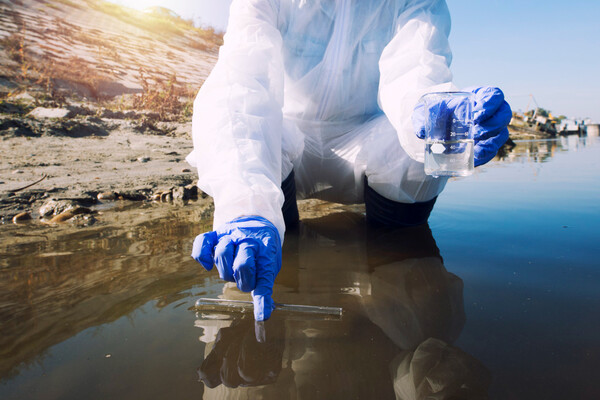
호주 뉴사우스웨일스대학교(University of New South Wales, UNSW) 연구진이 주도한 글로벌 메타분석 연구에서 과불화화합물(PFAS)이 먹이사슬 단계가 한 단계 올라갈 때마다 평균적으로 두 배씩 농축되는 경향이 확인됐다. [사진제공(Photo Source) = Freepik]
호주 뉴사우스웨일스대학교(University of New South Wales, UNSW) 연구진이 주도한 글로벌 메타분석 연구에서 과불화화합물(PFAS)이 먹이사슬 단계가 한 단계 올라갈 때마다 평균적으로 두 배씩 농축되는 경향이 확인됐다. 연구진은 이러한 생물농축 현상이 최상위 포식자와 인간에게 상대적으로 높은 화학물질 노출을 초래할 수 있다고 분석했다.
PFAS는 영원한 화학물질(forever chemicals)로 불리는 인공 화합물 계열로, 1만2천 종 이상이 존재한다. 내열성과 발수성이 뛰어나 세정제, 식품 포장재, 논스틱 조리기구, 의류, 소방 장비 등에 사용돼 왔다.
그러나 분해되지 않는 특성으로 인해 전 세계 육상과 해양 환경, 식물, 동물에 축적되고 있으며, 현재 거의 모든 인간의 혈류에서도 검출되고 있다. 일부 연구에서는 PFAS가 특정 암을 포함한 다양한 질환과 연관된 것으로 보고된 바 있다.
기존 연구는 PFAS의 독성 자체에 초점을 맞춘 경우가 많았으며, 먹이사슬을 따라 농도가 얼마나 증폭되는지에 대한 글로벌 수준의 정량적 분석은 제한적이었다. 이번 연구는 수생·육상 생태계를 아우르는 대규모 메타분석을 통해, 환경 중 미량 농도가 최상위 포식자에서 얼마나 증폭되는지를 종합적으로 제시했다.
연구진은 메타분석 기법을 활용해 전 세계 119개 수생 및 육상 먹이망을 분석했으며, 대형 어류, 바닷새, 해양 포유류 등 최상위 포식자를 포함했다. 총 72종의 PFAS를 대상으로 먹이사슬 단계별 농도 변화를 비교한 결과, PFAS 농도는 평균적으로 먹이사슬이 한 단계 올라갈 때마다 두 배로 증가하는 경향을 보였다. 특히 일부 PFAS는 기존 물질의 더 안전한 대안으로 판매되고 있음에도, 대체 대상이 된 기존 화합물보다 더 높은 생물농축 특성을 나타냈다.
이 연구의 주저자인 로렌초 리콜피(Lorenzo Ricolfi) UNSW 생물·지구·환경과학대학 박사과정 연구원은 “PFAS 농도는 평균적으로 먹이사슬이 한 단계 올라갈 때마다 두 배로 증가한다”고 밝혔다.
그는 “다른 연구들을 통해 확인된 PFAS의 독성을 고려할 때, 최상위 포식자에서 나타나는 이러한 극단적인 축적 속도는 심각한 건강 위험을 시사한다”고 말했다. 이어 “이는 연쇄적인 생태학적 위험을 만들어내며, 비교적 오염 수준이 낮은 환경에서도 최상위 포식자는 불균형적으로 높은 노출에 직면하게 된다”고 설명했다.
리콜피는 또한 “기존 PFAS를 대체하기 위해 도입된 새로운 화학물질들이, 대체 대상이 된 PFAS만큼 광범위하고 문제가 되기 전에 이들 물질의 건강 영향에 대한 긴급한 연구가 필요하다”고 밝혔다. 아울러
그는 “이번 연구 결과는 여러 정책 영역에서 즉각적인 대응이 필요함을 요구한다”고 강조했다. 그는 또 “더 안전한 대안으로 판매된 일부 신형 PFAS가 기존 PFAS의 생물농축 문제를 반복하거나, 오히려 이를 악화시킬 수 있음을 이번 연구가 보여준다”고 덧붙였다.
연구진은 PFAS 농도가 평균적으로 먹이사슬 단계마다 두 배로 증가하지만, 화합물별로 생물농축 정도에는 큰 차이가 있다고 밝혔다. 이에 따라 모든 PFAS를 동일하게 규제하는 방식이 아닌, 물질별 특성을 반영한 규제 접근이 필요하다고 지적했다. 또한 규제되지 않은 신규 PFAS 가운데 생물농축 가능성이 높은 물질에 대해서는 사용이 확산되기 전에 추가 연구와 검토가 이뤄져야 한다고 강조했다.
이번 연구는 호주 뉴사우스웨일스대학교(UNSW) 연구진이 주도했으며, 연구 결과는 국제 학술지 『네이처 커뮤니케이션(Nature Communications)』 최근호에 게재됐다.
[원문보기]
PFAS concentrations can double with every step up the food chain
A new UNSW-led global meta-analysis shows that PFAS concentrations can double at every step up the food chain, leaving top predators – and humans – potentially exposed to higher chemical loads.
A bottlenose dolphin swimming off the coast of Shanghai, China eats a fish.
Before it was eaten, the fish, one of the millions of sardines that live in Chinese coastal waters, fed on smaller fish.
Those smaller fish fed on plankton and algae drifting through water laced with the faintest trace of industrial chemicals – per- and polyfluoroalkyl substances, PFAS for short.
By the time they reach the dolphin, or the eagle, or the tuna on someone’s dinner plate, these chemical concentrations have magnified with every meal, and now a new meta-analysis led by UNSW researchers has revealed the scale of the problem.
Studies have linked PFAS to a host of illnesses, including some cancers, although Australian health authorities say there is limited conclusive evidence linking PFAS exposure to any specific disease and that more research is needed.
The authors examined 119 aquatic and terrestrial food webs across the globe, finding that top predators such as large fish, seabirds, and marine mammals can accumulate PFAS concentrations exponentially larger than the environments in which they’re found.
“PFAS concentrations double, on average, with each step up the food chain,” says study lead author Lorenzo Ricolfi, a PhD candidate from the UNSW School of Biological, Earth, and Environmental Sciences.
Known as “forever chemicals”, PFAS are from a family of more than 12,000 man-made compounds.
These chemicals are prized for their heat resistance and water repelling properties, and are used in cleaning products, food-packaging, non-stick pans, clothing, and fire-fighting equipment.
Since being discovered by the American chemical company DuPont in the 1930s, PFAS are now detectable in the bloodstream of almost every human being on the planet.
Unlike other chemicals, PFAS never break down, meaning that throughout the world right now they’re building up in environments, plants, and animals on land and in the ocean.
For humans, sitting as we do at the top of the food chain, this means the our diets can be an important pathway for PFAS exposure.
“Given what we know about PFAS toxicity from other studies, these extreme accumulation rates in top predators suggest serious health risks,” Ricolfi says.
“This creates a cascading ecological risk: apex predators face disproportionately high exposure even in relatively low-contaminated environments.”
The authors analysed 72 different PFAS and found dramatic variation in how much concentrations magnified up the food chain.
Some compounds – including chemicals marketed as safer alternatives to existing products – showed even higher magnification than the chemicals they were designed to replace.
“Urgent research into health impacts of these new chemicals is needed before they become as ubiquitous and problematic as the PFAS they're replacing,” Ricolfi says.
Ricolfi and his co-authors want to see policy changes at the international level, where toxicity is considered but not how much the chemicals accumulate up the food chain.
The authors argue compounds more prone to accumulation need greater scrutiny, particularly those that are unregulated.
“Our findings demand immediate action across multiple policy fronts,” Ricolfi says.
The team wants to see magnification data considered by international authorities when making regulatory decisions, instead of just acute toxicity.
They also argue authorities should urgently look at newer, unregulated chemicals prone to magnification before their use becomes widespread, particularly those that are filling the vacuum left behind by banned chemicals.
“Our findings reveal that some newer PFAS marketed as safer alternatives may replicate or even exacerbate the biomagnification consequences of legacy PFAS,” Ricolfi says.
While PFAS concentrations double, on average, at every step up the food chain, the authors note wide variation between different chemicals, with some accumulating more readily and others less so.
Because of this the authors want to see regulations based on compound-specific information rather than a one-size-fits-all approach.
The research appeared in the journal Nature Communications, opens in a new window.
[출처 = 뉴사우스웨일스대학교(University of New South Wales)(https://www.unsw.edu.au/newsroom/news/2025/12/pfas-concentrations-can-double-with-every-step-up-the-food-chain) / 2025년 12월 22일]
[연구논문 출처 = 『네이처 커뮤니케이션(Nature Communications)』(Unravelling the magnitude and drivers of PFAS trophic magnification: a meta-analysis | Nature Communications) / 2025년 11월 28일]
|  즐겨찾기 추가
 시작페이지로 설정
























