[미국] PFAS, 마이애미 빗물서 검출돼…물순환 통해 더 멀리 펴져
플로리다 인터네셔널 대학교, PFAS 이동 과정 밝혀낸 연구 발표
PFAS, 증발 및 미세입자·먼지에 흡수돼 대기에 침투…기류 따라 이동해 빗물로 떨어져
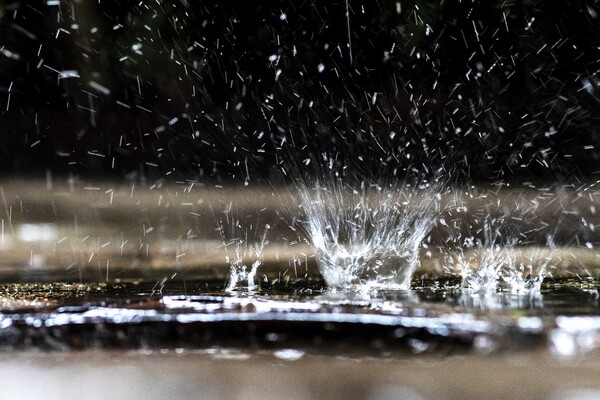
플로리다 인터네셔널 대학교(Florida International University, FIU)의 연구진은 영원한 화학물질이라고 불리는 PFAS(과불화화합물)가 마이애미의 빗물에서 검출됐으며, PFAS가 물순환을 통해 더 멀리 퍼질 수 있다는 사실을 밝혀냈다. [사진출처(Photo Source) = 픽사베이(Pixabay)]
플로리다 인터네셔널 대학교(Florida International University, FIU)의 연구진은 영원한 화학 물질이라고 불리는 PFAS(과불화화합물)가 마이애미의 빗물에서 검출됐으며, PFAS가 물순환을 통해 더 멀리 퍼질 수 있다는 사실을 밝혀냈다.
FIU 연구진은 1년 이상 마이애미-데이드 카운티의 세 곳에서 42개의 빗물 샘플을 수집해 분석했다. 그 결과, 총 21종의 퍼플루오로알킬 및 폴리플루오로알킬 물질(PFAS)이 검출됐으며, 여기에는 PFOS와 PFOA는 물론 오늘날 제조업에서 사용되는 새로운 종류의 PFAS도 포함돼 있었다.
여러 PFAS의 프로필은 해당 지역의 출처와 일치했지만, 일부 PFAS는 일치하지 않았다. 『대기 오염 연구(Atmospheric Pollution Research)』에 발표된 연구에 따르면, 이는 지구 대기가 이러한 화학 물질을 광범위하게 운반하는 경로로 작용해 전 세계 오염 문제에 기여하고 있음을 시사한다.
나탈리아 소아레스 키네테(Natalia Soares Quinete) FIU 화학과 조교수이자 본 연구의 저자는 "PFAS는 사실상 어디에나 있다"며 "이제 우리는 기단이 이러한 오염 물질을 지표수와 지하수에 영향을 미칠 수 있는 다른 곳으로 옮기는 데 어떤 역할을 하는지 보여줄 수 있다“고 설명했다.
논스틱 조리기구, 의류, 화장품, 식품 포장, 세제, 소방 폼 등 소비자 제품에 널리 사용되는 PFAS는 거의 파괴되지 않도록 의도적으로 만들어져 쉽게 분해되거나 사라지지 않으며, 환경에 유입되면 시간이 지남에 따라 축적되는 특성을 갖고 있다.
사람들은 PFAS를 섭취하거나 흡입할 수 있으며, 이러한 노출로 인해 간과 신장 손상, 생식 문제, 암 및 기타 질병 발생에 영향을 미칠 수 있다. 미국 환경보호청(EPA)는 낮은 수준의 노출도 위험할 수 있다고 경고하며, 식수에서 일부 PFAS에 대해 매우 엄격한 기준을 설정하고 있다.
그러나 PFAS가 환경을 통해 정확히 어떻게 이동하는지는 아직 명확한게 밝혀진 바가 없다.
FIU 환경연구소의 신종 오염물질 연구소장인 퀴네테 교수는 이를 밝혀내기 위해 노력해 왔다.
연구진은 비스케인 만을 포함한 식수와 지표수에서 PFAS를 검출했으며, 굴과 랍스터 등 해당 지역에 서식하는 생물에서도 PFAS를 발견했다. 그 다음으로, 연구진이 주목한 곳은 빗물이었다.
PFAS는 증발하거나 미세한 입자 및 먼지에 흡수돼 대기에 침투할 수 있다. 또한 바람과 변화하는 기류에 따라 이동하며, 빗물과 함께 땅으로 떨어진다. 이러한 PFAS의 이동 경로는 연구진의 데이터에서 확인됐다.
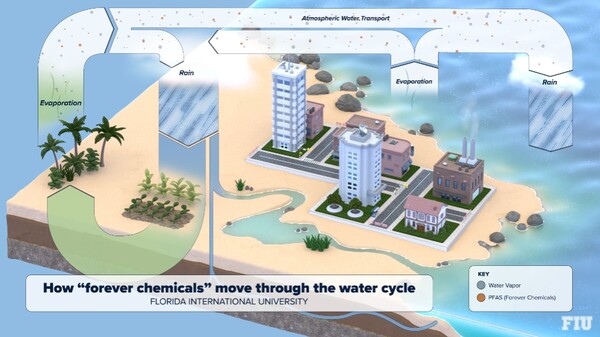
물순환은 지구 주위로 물을 이동시키는 복잡한 시스템이다. 이제 PFAS는 물순환을 통해 더 먼 거리로 확산되고 있다. [그림제공(Picture Source) = FIU]
2021년 10월~ 2022년 11월 마이애미의 빗물에서 가장 많이 자주 검출된 PFAS는 PFCA(74%)였으며, 이는 일반적으로 접착 및 얼룩 방지 제품, 식품 포장 및 소방용 폼에 사용된다. 연구진은 이전에 인근 지표수에서 이러한 화학 물질을 고농도로 검출했으며, 이는 지역적 출처에서 유래한다는 것을 나타낸다.
그러나 특정 시기에 눈에 띄는 변화가 발생했다. 북동부 기단이 마이애미로 이동하는 시기인 건기(10월~5월)에 PFAS 농도가 갑자기 치솟았다. 이 시기에 검출된 PFAS에는 노스캐롤라이나 및 기타 주의 공장 등지에서 주로 사용하는 특정 화학 물질을 포함해 더 다양한 종류의 PFAS가 검출됐다.
연구를 주도한 퀴네테 교수 연구실의 대학원생인 마리아 게라 데 나바로(Maria Guerra de Navarro)는 "계절 변화가 흥미로웠다"며 "우리가 검출한 PFAS와 일치하는 특정 화학 물질을 사용해 제품을 생산하는 제조 시설이 북부 주(州)에 많다라는 것을 알고 있으며, 그 곳에서 유래했을 가능성이 크다"고 설명했다.
연구진이 의심하는 바는 다음과 같다. 북쪽 기류의 건조한 공기는 더 많은 PFAS가 포함된 먼지와 입자가 퍼질 수 있는 완벽한 조건을 만든다. 비가 내리면서 공기 중의 오염 물질을 '완전히 씻어내는' 현상이 오염 물질 농도를 높이는 원인이 될 수 있다. 나바로 대학원생은 현재 이러한 건식 침적 과정을 연구하고 있으며, 직경 10미크론 입자에 얼마나 많은 PFAS가 포함될 수 있는 지를 측정하고 있다.
연구진은 이전 연구와 마찬가지로, 이 데이터가 PFAS를 통제하고 줄이기 위한 향후 솔루션과 규정을 안내하는 데 도움이 되기를 바라고 있다.
나바로 대학원생은 "이 모든 것이 하나의 세계라는 인식을 조성하기 위한 것"이라며, "한 지역에서 일어나는 일은 다른 지역 어디서나 영향을 미칠 수 있다. 우리는 이러한 화학 물질이 전 세계로 확산되는 것을 방지하는 방법을 고민해야 한다"고 강조했다.
[원문보기]
It’s literally raining “forever chemicals” in Miami
PFAS are in Miami’s rainwater. And it is the latest evidence the synthetic “forever chemicals” — that have raised health concerns for people and wildlife — hitch a ride on the water cycle, using the complex system to circulate over greater distances.
For more than a year, FIU researchers collected and analyzed 42 rainwater samples across three different sites in Miami-Dade County. A total of 21 perfluoroalkyl and polyfluoroalkyl substances, or PFAS, were detected, including PFOS and PFOA (since phased out of production over cancer concerns), as well as the newer varieties used in manufacturing today.
While profiles of several PFAS matched back to local sources, others did not. According to the study, published inAtmospheric Pollution Research, this suggests Earth’s atmosphere acts as a pathway to transport these chemicals far and wide — contributing to the worldwide pollution problem.
“PFAS are practically everywhere,” said FIU Assistant Professor of Chemistry and study authorNatalia Soares Quinete. “Now we’re able to show the role air masses play in potentially bringing these pollutants to other places where they can impact surface water and groundwater.”
Widely used in consumer products — non-stick cookware, clothing, cosmetics, food packaging, detergents and firefighting foams, to name a few — PFAS were purposefully created to be almost indestructible. They don’t break down easily or simply go away. Once in the environment, they accumulate over time. People can ingest or inhale them, and exposure has been linked to liver and kidney damage, fertility issues, cancer and other diseases. The EPA warned even low levels of exposure can be dangerous, setting strict near-zero limits for some PFAS in drinking water.
It's still unclear, though, how exactly these long-lived chemicals journey through the environment.
Quinete, who heads the Emerging Contaminants of Concern lab inFIU’s Institute of Environment, has been trying to piece this picture together.
Her research group is among the first to extensively track the prevalence of the persistent pollutants across South Florida. They’ve detected PFAS indrinking waterandsurface waterincluding Biscayne Bay. And, subsequently, also found PFAS in animals that live in those areas, includingoystersand economically important recreationalfish and lobsters. Rain was the natural next place for the team to look.
PFAS can infiltrate the atmosphere by either evaporation or getting absorbed into microscopic particles and dust. Wind and shifting air currents shuttle them along. Eventually, it rains. As each drop falls to earth, it brings along some of the pollutants. The cycle begins and ends and begins again.
This played out in the team’s data.
Between October 2021 and November 2022, the most frequently detected and abundant PFAS in Miami’s rainwater, in 74% of samples, were PFCAs — commonly used in non-stick and stain-resistant products, food packaging and firefighting foams. The researchers previously detected high levels of these compounds in nearby surface waters, a sign they’re coming from local sources.
However, a noticeable shift occurred at certain times of year. PFAS concentrations suddenly skyrocketed during the dry season (October through May), coinciding with Northeastern air masses moving into Miami. More emerging PFAS also made an appearance including those typically found in North Carolina and other states, where facilities produce goods made with these particular chemicals.
“The season variations were interesting to us,” said Maria Guerra de Navarro, a graduate student in Quinete’s lab who helped lead the study. “We know there are northern states with manufacturing that matches back to the PFAS we saw, so it’s likely that’s where they are coming from.”
Here’s what the researchers suspect is happening: Drier air in northern currents creates perfect conditions for more PFAS-laden dust and particles to spread around. Rain “washing out” those pollutants from the air could account for higher contaminant concentrations. Guerra de Navarro is currently examining this kind of dry deposition, measuring how many PFAS can be packed into particles smaller than 10 microns — seven times smaller than the strand of a human hair (70 microns).
As with their past research, the team hopes the data can help guide future solutions and regulations for controlling and reducing PFAS.
“This is all about creating awareness that this is all one world,” says Guerra de Navarro. “What’s happens in one area can impact here, there,everywhere. We have to be thinking about how to prevent these chemicals from going all over the world.”
[출처 = 플로리다 인터네셔널 대학교(Florida International University)(https://news.fiu.edu/2024/its-literally-raining-forever-chemicals-in-miami) 2024년 11월 4일]
|  즐겨찾기 추가
 시작페이지로 설정
























