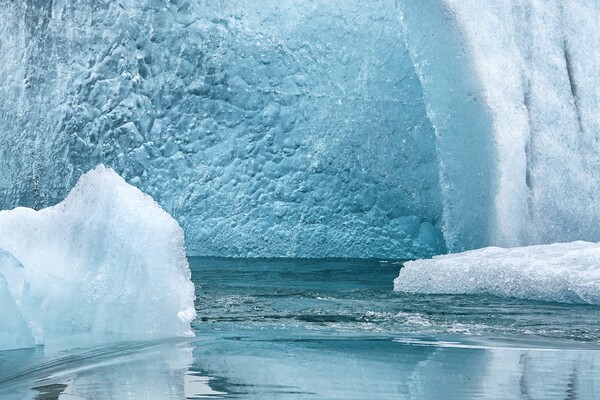
전 세계적으로 빙하가 녹고 있다. 지난 10년 동안 유럽과 같이 인구가 많은 지역의 얼음 손실은 더 빠른 속도로 증가했다. [사진출처(Photo Source) = 픽사베이(Pixabay)]
전 세계적으로 빙하가 녹고 있다. 지난 10년 동안 유럽과 같이 인구가 많은 지역의 얼음 손실은 더 빠른 속도로 증가했다. 이는 해수면 상승을 가속화할 뿐만 아니라 담수 공급도 위협한다. 한 국제 연구팀이 남극과 그린란드를 제외한 모든 빙하 데이터를 결합했으며, 그 결과를 최근 『네이처(Nature)』에 게재했다.
남극과 그린란드를 제외한 비교적 작은 양의 빙하는 2000~2023년 부피가 약 5% 손실됐다. 이는 남극 빙상의 두 배가 넘는 2천730억 톤의 얼음 손실에 해당한다. 특히, 중부 유럽에서는 39%의 얼음 질량이 손실됐다.
녹은 물의 양은 매년 다르다. 그러나 연구팀은 이러한 양상이 눈에 띄게 나타나고 있다고 말한다. 2012년과 2023년 사이 즉, 이전 10년 전과 비교해 훨씬 더 많은 얼음이 녹았다.
베르트 바우터스(Bert Wouters) TU 델프트의 지구과학 및 원격감지과 부교수.
베르트 바우터스(Bert Wouters) 유럽 델프트 공과대학교(TU Delft )의 지구과학 및 원격감지과 부교수는 해수면 상승만이 문제가 아니라고 지적했다. 그는 "빙하가 녹는 것을 직접 목격하게 될 것”이라며 “빙하는 많은 사람이 거주하는 곳에 위치해 있으므로 특히 남미와 아시아에서 지역의 식수 공급에 영향을 미칠 것이며, 홍수 위험도 주의해야 한다”고 강조했다.
베르트 바우터스 교수는 여러 연구에서 나온 데이터를 통합해 신뢰할 있는 추정값을 제공했다. 그는 “접근 가능한 빙하에서 현장 측정 데이터를 많이 수집했다”며 “이 외의 모든 빙하는 위성에서 데이터를 얻었다"고 설명했다. 이어 "방법론과 녹은 물 추정치가 종종 달랐다"며 "이를 과학적으로 통합하는 것이 큰 도전이었다"고 덧붙였다.
연구팀은 데이터 통합에 성공했으며, 그 결과 2000년부터 2023년까지 전 세계 모든 빙하 지역에 대한 빙하 질량 변화의 연간 시계열을 구축했다.
[원문보기]
Melting glaciers accelerate sea level rise and put drinking water supply at risk
Glaciers are melting around the world. Last decade, the loss of ice in the more populated regions, such as Europe, increased at ever-faster rates. This not only accelerates sea level rise, but is also endangers freshwater supplies.
An international group of researchers combined data from all those glaciers, excluding Antarctica and Greenland. The study was recently published in Nature.
All relatively small glaciers combined (because those of Antarctica and Greenland are not included) lost approximately 5% of their volume between 2000 and 2023. This amounts to a loss of 273 billion tonnes of ice, which is more than double that of the Antarctica Ice Sheet. In Central Europe, think of the Alps, even 39% of the ice mass was lost.
Intensifying loss
Unsurprisingly, the amount of meltwater coming down varies per year. But the pattern that is becoming visible the researchers call shocking. Between 2012 and 2023, much more ice was lost (36% more meltwater) compared to the decade before.
It is not only about rising sea levels, says Bert Wouters. “We will directly notice the melting of these glaciers. Because they are located where many people live, it will affect drinking water supplies, in particular in South America and Asia. And the risk of flooding after the melt season also poses a danger.”
Combining global melt data
Bert Wouters is Associate Professor of Geoscience and Remote Sensing at TU Delft and ensured that the data from many studies together produced a solid estimate. “From the accessible glaciers, we have lots of field measurements. From all those other glaciers, we have data from satellites. The methods and thus the meltwater estimates were often varying. It was a big challenge to make it scientifically unified.”
The team of researchers, part of the Glacier Mass Balance Intercomparison Exercise (Glambie), succeeded. This resulted in an annual time series of glacier mass changes for all glacier regions globally from 2000 to 2023.
The GlaMBIE Team (2025): Community estimate of global glacier mass changes from 2000 to 2023. Nature. https://doi.org/10.1038/s41586-024-08545-z
 즐겨찾기 추가
 시작페이지로 설정