[영국] 영국-대만, '제8차 에너지 대화' 및 '제21차 재생에너지 콘퍼런스' 개최
에너지 안보·해상풍력·CCUS 협력 강화 및 ‘영국-대만 CCUS 파트너십’ 출범
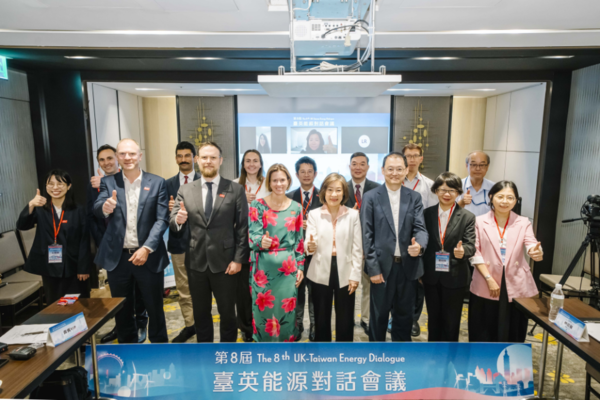
영국과 대만은 10월 20일 타이베이에서 '제8차 영국-대만 에너지 대화(UK-Taiwan Energy Dialogue)'와 '제21차 영국-대만 재생에너지 콘퍼런스(UK-Taiwan Renewable Energy Conference)'를 개최했다. [사진출처 = 영국 정부(UK GOV)]
영국과 대만은 10월 20일 타이베이에서 '제8차 영국-대만 에너지 대화(UK-Taiwan Energy Dialogue)'와 '제21차 영국-대만 재생에너지 콘퍼런스(UK-Taiwan Renewable Energy Conference)'를 개최하고, 에너지 안보, 해상풍력 및 탄소포집·활용·저장(Carbon Capture, Utilisation and Storage, CCUS) 분야 협력 강화를 위한 공동 의지를 재확인했다.
이번 행사는 대만영국사무소(British Office Taipei)와 대만에너지국(Energy Administration, Ministry of Economic Affairs)이 공동 주최했으며, 양국 정부 관계자와 규제기관, 산업계, 연구기관 및 에너지 전문가들이 참석했다.
개회식에서는 루스 브래들리-존스(Ruth Bradley-Jones) 대만영국사무소 대표의 개회사와 신시아 키앙(Cynthia Kiang) 대만 경제부 차관의 환영사가 진행됐으며, 영국 에너지안보·탄소중립부(Department for Energy Security and Net Zero, DESNZ)의 사이먼 페인(Simon Payne) 국제 양자협력 총괄과 대만 에너지청 우즈웨이(Chih-Wei Wu) 청장이 공동 의장을 맡아 회의를 진행했다.
이번 대화에서는 에너지 안보와 기후변화 대응, 재생에너지 확대, 산업 탈탄소화 등 양국이 직면한 공통 과제를 중심으로 논의가 이뤄졌으며, 특히 강화된 무역 파트너십(Enhanced Trade Partnership, ETP)의 에너지·탄소중립 협력 분야에서 새로운 ‘영국-대만 CCUS 파트너십’이 공식 출범했다.
양국은 CCUS가 철강, 시멘트, 석유화학 등 감축이 어려운 산업 부문의 탄소 배출 저감과 탄소중립 목표 달성을 위한 핵심 수단 중 하나라는 데 공감하고, 정책·기술·투자 협력을 확대하기로 했다.
새로운 파트너십은 △정책 및 규제 협력 △연구·혁신·실증 중심의 기술 협력 △산업 및 투자 연계 등 세 축을 중심으로 운영된다.
양국은 향후 정책 설계와 규제 체계, 금융 모델에 대한 경험을 공유하고, 저장기술과 모니터링·검증 체계에 관한 공동 연구를 추진하는 한편, 기업과 투자기관 간 협력 확대를 통해 상업적 CCUS 생태계 조성을 지원할 계획이다.
에너지 안보 세션에서는 글로벌 지정학적 불확실성과 에너지 시장 변동성에 대응하기 위한 정책 경험과 전략이 공유됐다.
영국 측은 최근 국제 에너지 시장의 변동이 재생에너지 확대와 에너지 전환의 중요성을 더욱 부각시키고 있다고 설명하며, 국내 청정에너지 투자 확대와 전력시스템 회복력 강화를 위한 정책 방향을 소개했다.
대만 측은 인공지능(AI) 산업과 반도체 공급망 확대에 따른 전력 수요 증가에 대응하기 위해 재생에너지 다변화, 에너지 저장 확대, 전력망 안정성 강화, 연료 공급선 다변화 등을 추진하고 있다고 밝혔다.
해상풍력 세션에서는 양국의 추진 현황과 향후 발전 전략이 논의됐다.
영국은 현재 세계 최대 규모의 해상풍력 시장 중 하나로서 설치 용량 확대와 함께 부유식 해상풍력, 공급망 구축, 항만 인프라 개발 등을 추진하고 있으며, 이를 통해 에너지 안보와 탄소중립 목표를 동시에 달성해 나가고 있다고 설명했다.
대만은 현재 운영 중인 해상풍력 사업 성과를 공유하고, 향후 정기적인 용량 입찰과 신규 부지 개발, 공급망 강화, 금융 지원 확대, 부유식 해상풍력 실증사업 등을 추진할 계획을 소개했다.
양국은 지난 20여 년간 축적된 해상풍력 협력 경험이 양국 에너지 전환의 중요한 기반이 되고 있다는 데 의견을 모았다.
CCUS 세션에서는 양국의 탄소중립 정책과 산업 탈탄소화 전략이 집중적으로 논의됐다.
영국은 현재 추진 중인 주요 CCUS 클러스터 사업과 탄소 포집·운송·저장 체계 구축 경험을 공유했으며, 이를 통해 시멘트 등 고배출 산업의 탄소 감축을 지원하고 있다고 설명했다.
대만은 CCUS를 탄소중립 이행의 핵심 수단으로 평가하며, 정책·규제 정비와 기술 개발, 녹색투자 확대, 국제협력 강화를 통해 2035년까지 온실가스 감축 목표 달성을 지원할 계획이라고 밝혔다.
에너지 대화와 함께 개최된 제21차 영국-대만 재생에너지 콘퍼런스에서는 정책 입안자와 산업계 관계자, 에너지 전문가들이 차세대 에너지 전환 전략을 논의했다.
콘퍼런스에서는 CCUS, AI 시대의 전력망 회복력, 해상풍력 확대, 부유식 해상풍력 기술, 해저케이블, 운영 최적화 및 해양 서비스 등 미래 에너지 산업의 핵심 의제가 다뤄졌다.
또한 영국 정부 기관과 연구기관, 산업계 대표 및 13개 영국 기업이 참여해 기술혁신과 투자, 산업 협력 기회를 모색했다.
영국과 대만은 앞으로도 해상풍력, 전력망 안정화, 차세대 에너지 기술 분야에서 협력을 확대하고, 연구개발과 투자, 산업 파트너십을 강화함으로써 에너지 안보 확보와 산업 탈탄소화, 지속가능한 경제성장 달성에 공동으로 기여해 나갈 방침이다.
[원문보기]
8th UK-Taiwan Energy Dialogue and 21st UK-Taiwan Renewable Energy Conference
The conference advanced cooperation on energy security, offshore wind, and carbon capture, utilisation, and storage (CCUS)
The eighth UK-Taiwan Energy Dialogue and 21st UK-Taiwan Renewable Energy Conference were held in Taipei on 20 October, bringing together policymakers, regulators, industry representatives and experts from the United Kingdom and Taiwan to deepen cooperation on energy security, offshore wind and industrial decarbonisation.
The Dialogue was organised by the British Office Taipei and Taiwan’s Energy Administration, Ministry of Economic Affairs. The event was opened by Ruth Bradley-Jones, Representative at the British Office Taipei, and Cynthia Kiang, Deputy Minister of Economic Affairs, and chaired by Simon Payne, Head of International Bilateral Cooperation at the UK Department for Energy Security and Net Zero, and Chih-Wei Wu, Director General of Taiwan’s Energy Administration.
It focused on shared energy-security challenges, offshore wind deployment, and carbon capture, utilisation, and storage (CCUS). It also marked the launch of the new UK-Taiwan CCUS Partnership under the Energy and Net Zero pillar of the Enhanced Trade Partnership.
Opening the Dialogue, Ruth Bradley-Jones, Representative at the British Office Taipei, said:
The challenges we face – energy security, climate change and the growing demands of a digital economy – do not stop at our borders. Nor should our ambition.
She highlighted the increasingly close relationship between energy security, economic security and the energy transition, and welcomed the launch of the UK-Taiwan CCUS Partnership as a step forwarding bilateral cooperation. She noted that growing electricity demand, including from AI-enabled technologies, reinforces the need both to expand renewable-energy deployment and develop solutions to decarbonise hard-to-abate industries.
She added: The Partnership we are launching today under our Enhanced Trade Partnership will bring structure and momentum to that burgeoning relationship. It will help build the sustained institutional links, regulatory understanding, research connections and business partnerships required for success.
In her opening remarks, Deputy Minister Kiang said: In the face of geopolitical tensions, extreme weather events and volatility in energy markets, energy security is inextricably linked to the net-zero transition.
On the new CCUS Partnership, she added: Taiwan and the UK will also exchange views on CCUS policy and technological developments at the Energy Dialogue this year and will continue to discuss opportunities for collaboration.
Launch of the UK-Taiwan CCUS Partnership
A key outcome of this year’s Dialogue was the launch of the UK-Taiwan CCUS Partnership, a flagship project under the Enhanced Trade Partnership and a new framework for cooperation on carbon capture, utilisation, and storage. The Partnership reflects a shared recognition that CCUS can play an important role in industrial decarbonisation, supporting hard-to-abate sectors while helping deliver net-zero objectives and maintain economic competitiveness.
The Partnership intends to strengthen cooperation between policymakers, regulators, industry, investors and research institutions, and support the development of commercially viable CCUS ecosystems in both markets.
Cooperation is expected to focus on three workstreams:
- policy and regulatory cooperation, supporting exchanges on policy design, regulatory frameworks, financing models and approaches to enabling CCUS deployment
- technical cooperation on research, innovation and deployment, connecting researchers, technical institutions, and clusters to address key questions around storage, monitoring, and verification
- commercial pipeline and investor engagement, exploring, at an appropriate time, opportunities to connect companies, investors and project owners, build partnerships and support future project development
The Partnership, as with other initiatives under the ETP, will be overseen by senior officials from both sides and supported by working-level leads. Over time, a joint secretariat will be established to coordinate activities and monitor delivery across the three workstreams.
Participants welcomed the launch as a significant step in expanding UK-Taiwan cooperation on industrial decarbonisation and clean energy innovation, building on more than two decades of bilateral collaboration in offshore wind and renewable energy.
Dialogue sessions
The Dialogue consisted of three sessions covering energy security, offshore wind and CCUS. Discussions combined UK and Taiwan perspectives, highlighting shared challenges, policy approaches and opportunities for deeper bilateral cooperation.
Energy security
In the first session, Simon Payne, Head of International Bilateral Cooperation at DESNZ, presented on the impact of the Strait of Hormuz crisis on the UK’s energy transition. He said recent market disruption reinforced the UK’s view that clean energy deployment strengthens energy security by reducing exposure to international fossil fuel price shocks, while also supporting affordability and climate goals.
Mr Payne outlined how the UK is responding through measures to support consumers, strengthen system resilience and accelerate investment in domestic clean energy. He also highlighted the role of renewable generation, market design and long-term infrastructure planning in improving national resilience.
Fang-Ling Liao, Director of the Energy Policy and Climate Change Division at Taiwan’s Energy Administration, set out Taiwan’s response to two linked challenges: rising electricity demand from AI and semiconductor supply chains, and geopolitical risks to fuel supply. She outlined Taiwan’s Second Energy Transition, focused on diversified green energy, efficiency, storage and grid resilience.
Ms Liao also described practical steps to strengthen energy security, including regular reviews of long-term power demand, additional gas-fired capacity, stronger requirements for large data centres, emergency response arrangements, diversified fuel supplies and strategic reserves.
Offshore wind cooperation
During the offshore wind session, Luke Rawcliffe presented an overview of the UK’s offshore wind programme and recent policy developments. He highlighted the UK’s 16.7 GW of installed offshore wind capacity, its ambition to reach 43-50 GW by 2030, and the sector’s growing role in supporting energy security and net-zero objectives.
Mr Rawcliffe outlined the UK’s Contracts for Difference mechanism, including the results of Allocation Round 7, which secured a record 8.4 GW of offshore wind capacity. He also discussed the next phase of deployment, including floating offshore wind, grid expansion, supply chains, planning and port infrastructure.
Ju-Ming Cheng, Director of the Energy Development Division at Taiwan’s Energy Administration, reviewed Taiwan’s offshore wind progress, with around 5 GW now installed and 515 turbines in operation as of 1 October 2026. She set out Taiwan’s 2026-2039 plan, including further allocation rounds, regular releases of new capacity and scope for additional projects through cross-government coordination on available sites.
Ms Cheng highlighted the priorities for the next phase of development, including clearer policy, stronger local supply chains, improved financing, faster administrative processes and preparation for floating wind demonstration projects, reflecting Taiwan’s continued focus on offshore wind as a central part of its net-zero pathway.
Carbon Capture, Utilisation, and Storage
In the third session, Shyam Desai, Head of Economics at the British Office Taipei, outlined the framework and three workstreams for the UK-Taiwan CCUS Partnership, as described above.
Chloe Healy, Industrial Carbon Capture Strategy Lead at DESNZ, outlined the UK’s approach to deploying CCUS, including lessons from earlier programmes and the tailored business models developed for capture, transport and storage.
She highlighted progress on the HyNet and East Coast clusters, the role of shared infrastructure in decarbonising hard-to-abate sectors such as cement, and plans to expand deployment through further clusters while strengthening domestic supply-chain capability.
Ciao-Kai Liang, Section Chief at the Climate Change Administration, Ministry of Environment, presented Taiwan’s approach to CCUS as a key enabler of its net-zero transition, particularly for hard-to-abate industries.
He outlined the CCUS Flagship Carbon Reduction Action Plan, which aims to reduce emissions by 6 million metric tonnes of CO₂e annually by 2035 through policy and regulation, technology development, financial incentives, green investment and international cooperation.
21st UK-Taiwan Renewable Energy Conference
The Conference brought together policymakers, industry leaders and energy experts to explore the opportunities and challenges shaping the next phase of the energy transition. The conference featured contributions from Greg Gardner, Richard Burch, Simon Payne, Chloe Healy, Richard Baker, Gus Jaspert, Chong Ng and Fraser MacDonald, representing the Department for Business, Innovation, Science and Trade, the Department for Energy Security and Net Zero, Scottish Development International.
The Crown Estate and Offshore Renewable Energy Catapult, alongside representatives from 13 leading UK companies. Discussions focused on emerging priorities such as CCUS, grid resilience in the AI era, and offshore wind development, including floating offshore wind, subsea cable technologies, operational optimisation, and marine services.
Building on more than two decades of successful renewable energy cooperation, the UK stands ready to deepen its partnership with Taiwan, combining expertise in offshore wind, grid resilience and emerging energy technologies with stronger commercial, investment and innovation links that support long-term energy security, industrial decarbonisation and sustainable economic growth.
[출처 = 영국 정부(UK GOV)(https://www.gov.uk/government/news/8th-uk-taiwan-energy-dialogue-and-21st-uk-taiwan-renewable-energy-conference) / 2026년 10월 28일]
|  즐겨찾기 추가
 시작페이지로 설정
























