[북아메리카] [2026] [미국] USF·FAU 공동연구진, DNA 분석으로 유해조류 대발생 조기 감지
이름
관리자
작성일
2026-10-20
조회수
718
파일첨부
[미국] USF·FAU 공동연구진, DNA 분석으로 유해조류 대발생 조기 감지
인디언리버 석호 20개 지점 분석해 적조·갈조 유발종 등 유해조류 11종 확인
여러 유해종 동시 출현 빈번, 수온·염분·영양염류 등 복합 요인이 대발생 좌우
기상 레이더처럼 예측…2017년 적조 피해 27억달러, 기후변화 시대 모니터링 도구로 기대
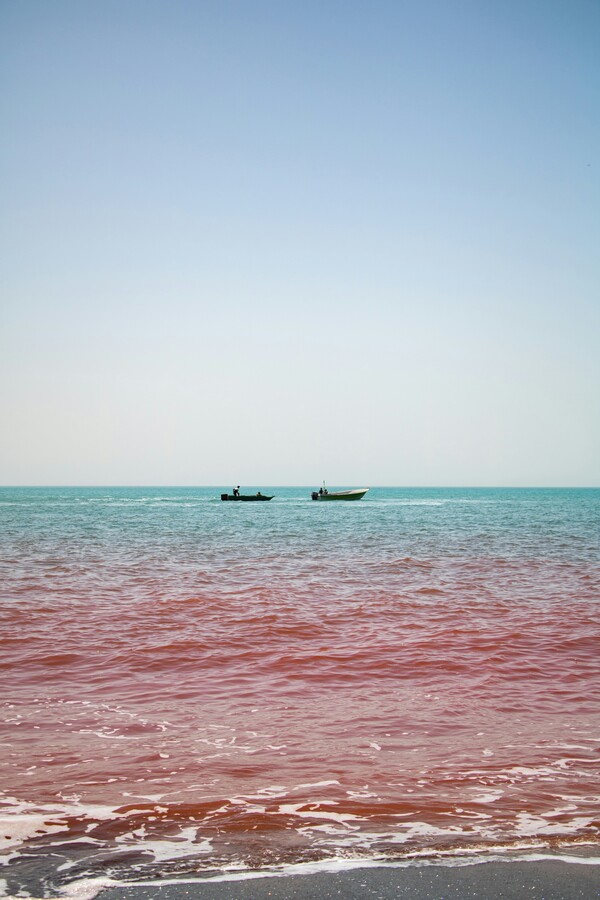
미국 사우스플로리다대학교(University of South Florida)와 플로리다애틀랜틱대학교(Florida Atlantic University) 연구진이 수행한 새로운 연구에 따르면, 첨단 DNA 염기서열 분석 도구를 활용해 연안 해역의 유해조류를 신속하게 식별할 수 있음을 확인됐다. [사진출처(Photo source) = Unsplash]
미국 사우스플로리다대학교(University of South Florida)와 플로리다애틀랜틱대학교(Florida Atlantic University) 연구진이 수행한 새로운 연구에 따르면, 첨단 DNA 염기서열 분석 도구를 활용해 연안 해역의 유해조류를 신속하게 식별할 수 있음을 확인됐다. 이 기술은 유해조류 대발생(HAB)이 확산되기 전에 잠재적으로 위험한 종을 감지할 수 있는 새로운 모니터링 방식을 제시한다.
이번 연구는 『PLOS Water』에 발표됐으며, 연구진은 플로리다 인디언리버 석호(Indian River Lagoon) 내 20개 지점을 대상으로 옥스퍼드 나노포어 미니온(Oxford Nanopore MinION) 장비를 활용해 유해조류 종을 식별했다. 그 결과, 적조(Red Tide)와 갈조(Brown Tide)를 일으키는 종을 포함해 총 11종의 유해조류가 확인했으며, 일부는 매우 낮은 농도에서도 검출됐다.
연구진은 유해조류 대량발생이 단일 종에 의해 발생하는 것이 아니라, 여러 종과 다양한 환경 요인이 복합적으로 작용한 결과임을 밝혀냈다. 이는 플로리다를 비롯한 기수 연안 생태계에서 환경적 요인이 유해조류 대발생 위험에 어떤 영향을 미치는지 이해하는 데 중요한 단서를 제공한다.
기븐스 박사는 “이번 연구에서 가장 주목할 점은 여러 유해조류 종이 동시에 출현하는 현상이 빈번하게 관찰됐다는 사실”이라며 이는 공통된 생태학적 요인에 의해 영향을 받거나 서로 상호작용하며 성장을 촉진할 가능성을 시사한다고 설명했다.
인디언리버 석호는 플로리다 동부 해안에 위치한 길이 250km에 달하는 기수 하구 생태계로, 북미에서 생물 다양성이 가장 풍부한 수역 중 하나다. 4천300종 이상의 동식물이 서식지하지만, 유해조류 대발생은 이러한 생태계의 균형을 위협하고 있다.
연구진은 유해조류 대발생의 발생과 확산 과정을 이해하기 위해 석호 수역에 존재하는 환경 DNA(eDNA)를 분석했다. 일반적인 미생물 연구에서 주로 사용되는 박테리아 마커 대신, 조류대발생을 일으키는 생물을 확인할 수 있는 진핵생물(Eukaryote)의 리보솜 RNA 유전자를 표적으로 삼았다. 진핵생물은 유전물질을 담고 있는 막으로 둘러싸인 핵을 가진 생물이다.
연구진은 옥스퍼드 나노포어 미니온(MinION)을 활용해 석호 내 20개 지점의 미생물 군집을 대상으로 실시간 전체 염기서열 분석을 수행했다. 그 결과, 적조와 갈조를 유발하는 종을 포함해 약 12종에 달하는 유해조류대발생 종을 검출했다. 또한 이들 종의 출현 패턴은 수온, 염분, 영양염류 농도 등 다양한 환경 요인과 밀접한 관련이 있는 것으로 나타났다. 이러한 요인들은 평상시에는 잠복 상태에 있던 조류를 대규모 번성으로 전환시켜 피해를 유발할 수 있다. 연구진은 이번 기술이 유해 조류 대발생을 사전에 예측하는 데 활용될 수 있을 것으로 기대했다. 이는 기상학자가 레이더를 이용해 날씨를 예보하는 것과 유사하게, 환경 정보를 기반으로 조류 대발생 가능성을 예측하는 개념이라고 설명했다.
레이스 장 교수는 "핵심은 규모와 시너지 효과"라며 "유해종은 개체 수가 적다가 환경 조건이 변하면 급격히 증식할 수 있으며, 여러 유해종이 동시에 발생하는 경우가 많다"며 "나노포어 기술은 거의 실시간으로 고해상도 모니터링을 제공해 유해종이 눈에 띄게 나타나기 전에 공통적인 유발 요인과 군집 변화를 포착할 수 있다"고 말했다.
특히 적조 현상은 각별한 우려 대상이다. 적조는 물고기와 조류, 해양포유류를 폐사시키는 것은 물론, 공기 중으로 퍼지는 에어로졸을 생성해 사람의 건강에도 악영향을 미친다. 또한 적조는 해변과 관광산업에 의존하는 지역 경제에도 심각한 타격을 준다. 미국 국립연안해양과학센터(National Centers for Coastal Ocean Science)에 따르면, 2017년 플로리다에서 발생한 장기 적조로 약 27억 달러(약 3조7천억 원)의 경제적 손실이 발생한 것으로 집계됐다.
연구진은 이번 성과가 플로리다를 넘어 더 넓은 지역에도 적용될 수 있다고 전망했다. 예를 들어, 태평양은 최근 엘니뇨 현상으로 더욱 악화될 것으로 예상되는 대규모 해열 현상을 겪고 있다. 지구의 극지방은 기록적인 온난화와 빙하 감소를 경험하고 있으며, 유럽은 기록적인 가뭄과 산불로 고통받고 있다.
오코리-크로우 교수는 “유해조류 대발생의 원인을 파악하고 그 진행 과정을 추적해야 할 시급성이 더욱 커지고 있다”며 “기후변화와 인간 활동의 영향이 확대되는 시대에 수생 생태계 전체가 어떻게 작동하는지 이해하려는 노력이 필요하다”고 강조했다. 이어 “박테리아부터 고래에 이르기까지 전체 먹이 사슬이 극적인 환경 변화를 겪고 있으며, 이번 연구는 이러한 변화를 추적하고 이해하는 데 매우 강력한 도구를 제공한다”고 덧붙였다.
[원문보기]
Research team uses new tool to define and predict harmful algal blooms
A new study by researchers at the University of South Florida and Florida Atlantic University has demonstrated that a promising DNA sequencing tool can rapidly identify harmful algae in coastal waters, offering a new approach for monitoring species that could lead to improved methods for detecting potentially dangerous species before blooms become widespread.
Published today in PLOS Water, the research team utilized a specialized tool called the Oxford Nanopore MinION to identify harmful agal bloom (HAB) species at 20 sites across Florida’s Indian River Lagoon. Using the technology, they found 11 harmful algal bloom species, including species responsible for brown and red tides, with some at very low concentrations.
Researchers also found that harmful algal blooms don’t exist in a silo: their impact is a cooperative effort.
Their findings could enhance the understanding of how environmental drivers shape bloom risk across brackish coastal systems, particularly in Florida.
The team included Dr. Justin Gibbons, a computational biologist in the Department of Global, Environmental, and Genomic Health Sciences in the USF College of Public Health (COPH); and Dr. Rays H.Y. Jiang, an associate professor in the genomics program in the college. They collaborated with faculty at FAU’s Harbor Branch Oceanographic Institute in Boca Raton, including Dr. Greg O’Corry-Crowe, research professor; Dr. Heidi Pagán, research associate; and Tatiana Ferrer, coordinator of research programs.
“The result that stood out to me the most was the frequent co-occurrence of the harmful algal bloom species,’’ Gibbons said. “This suggests that there’s either shared ecological drivers for them or that they somehow interact and promote the growth of each other.’’
The study focused on the Indian River Lagoon, a 156-mile-long brackish estuary system on Florida's east coast. One of North America's most biologically diverse bodies of water, it supports more than 4,300 species of plants and animals. But HABs threaten the harmony of this ecosystem.
To understand how HABs develop and spread, the team analyzed environmental DNA in lagoon water. Rather than looking at the bacterial marker commonly used in microbial studies, they targeted a specific eukaryotic ribosomal RNA gene, which provides a window into algae that cause blooms. A eukaryotic organism has a distinct, membrane-bound nucleus that holds its genetic material.
Using the Oxford Nanopore MinION, the team made real-time, full-length sequencing of microbial communities across 20 sites in the lagoon. They detected nearly a dozen HAB species, including brown and red tide. Their pattens were linked to such environmental factors as temperature, salinity and nutrients, which can change algae blooms from dormant to destructive. Having a technology that predicts a bloom is similar to how a meteorologist relies on radar to forecast the weather.
“The key is scale and synergy,’’ Rays said. “Harmful species can sit at low abundance, then expand quickly when conditions change, and several HAB species often co-occur. Nanopore offers near-real-time, higher-resolution monitoring that could catch shared triggers and community shifts before a bloom is obvious.’’
Blooms that cause red tide are of special concern because they not only kill fish, birds and marine mammals, but harm people by producing breathable aerosols. They also affect businesses that depend on beaches and tourism: The prolonged red tide bloom that descended on Florida in 2017 caused $2.7 billion in lost income, according to the National Centers for Coastal Ocean Science.
But the research has potential beyond the Sunshine State. The Pacific Ocean, for example, is seeing a massive new heatwave that likely will be compounded by a developing El Niño. The earth’s polar regions are experiencing record warming and ice loss and Europe is suffering from record droughts and wildfires.
“The urgency to understand the drivers and track the development of HABs highlights an even bigger challenge: the race to understand how entire aquatic systems work in an era of climate change and growing (human) impacts,’’ said O’Corry-Crowe. “From bacteria to whales, entire food-webs are witnessing dramatic environmental shifts, and this study provides an incredibly powerful tool to track and understand the processes driving these changes − as well as the impacts.’’
 즐겨찾기 추가
 시작페이지로 설정