[호주] “극심한 ‘엘니뇨 현상’ 다가오고 있다…탄소중립 목표 달성 앞당기면 발생 빈도 줄일 수 있다”
인류의 온실가스 배출로 인한 지구 온난화 가속화로 극심한 ‘엘니뇨(El Niño) 현상’ 더욱 빈번해질 것으로 예측
세계는 태평양 중심으로 발생하는 역사적인 엘니뇨 현상의 문턱에 서 있어…이 기후 패턴은 지구 전체의 날씨 뒤바꿀 수 있어
탄소중립 목표 달성 기간 길어질수록 더욱 극심한 엘니뇨 현상에 직면할 가능성이 높아져
호주 맬버른대학교·호주국립대학교 연구팀이 공동 연구
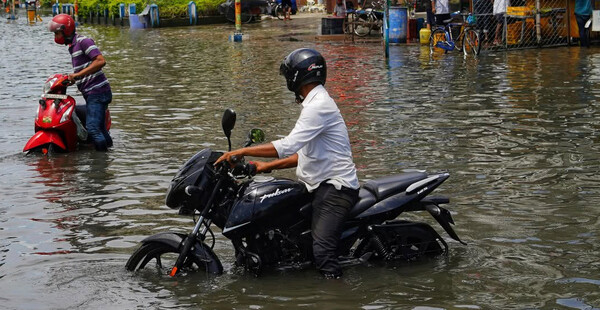
호주 맬버른대학교와 호주국립대학교 연구팀이 공동연구한 보고서에 따르면, 태평양 서쪽과 동쪽 사이의 온도 차이가 줄어들면 동태평양이 엘니뇨 현상에 더 가까워진다. 집중 호우는 따뜻한 해수를 필요로 하는데, 동태평양이 서쪽보다 더 빠르게 온난화될 것으로 예상되므로 강우대가 동쪽으로 이동하는 데 필요한 압력이 줄어든다. 이는 엘니뇨 현상 중 극심한 엘니뇨 현상이 더 자주 발생할 가능성을 의미한다. [사진출처(Photo source) = 세계기상기구(WMO)]
엘니뇨(El Niño)는 새로운 현상은 아니지만, 예측에 따르면 이번 엘니뇨는 역대 최대 규모가 될 수 있다. 연구에 따르면 인류의 온실가스 배출로 인한 지구 온난화가 가속화됨에 따라 극심한 엘니뇨 현상이 더욱 빈번해질 것으로 예상된다.
국제학술지 『Communications Earth & Environment(커뮤니케이션스 어스 & 인바이런먼트)』가 10월 13일 발표한 ‘해양 열 관성은 탄소중립 상황에서 열대 태평양의 평균 상태 변화를 유지한다(Ocean thermal inertia sustains a tropical Pacific mean state shift under net zero)’라는 새로운 연구보고서는 엘니뇨 현상의 변화 원인과 탄소중립(Net Zero) 목표 달성 시 이 기후 패턴이 어떻게 변화할 수 있는지를 수록했다.
호주 맬버른대학교와 호주국립대학교 연구팀의 공동 연구 결과에 따르면, 화석 연료에 대한 의존도가 높아질수록 극심한 엘니뇨 현상은 더욱 빈번해지겠지만, 탄소 중립 목표를 조기에 달성하면 엘니뇨 발생 빈도를 줄일 수 있을 것으로 나타났다.
엘니뇨(El Niño)가 지구 날씨에 미치는 영향
엘니뇨는 오랫동안 태평양을 넘어 전 세계의 기온과 강수량 변화에 영향을 미쳐 왔다. 다음은 몇 가지 대표적인 사례이다.
1982년, 강력한 엘니뇨 현상이 남아메리카에 엄청난 양의 비를 쏟아 부었다. 페루의 일부 강은 평소보다 1천 배나 많은 물로 가득 찼다. 태평양 중앙에 위치한 키리바티 제도(Kiritimati Island)의 일부인 키리티마티 섬에서는 폭우로 바닷새 둥지가 침수되고 군락 전체가 사라지는 참사가 발생했다. 한편, 호주 남동부는 극심한 가뭄에 시달렸고, 결국 ‘재의 수요일(Ash Wednesday)’ 산불로 75명이 목숨을 잃었다.
1998년 엘니뇨는 지구상에서 가장 건조한 지역 중 하나인 페루의 세추라 사막(Sechura Desert)에 3m 깊이의 새로운 호수를 만들만큼 많은 비를 몰고 왔다. 이와 함께 모기 개체 수가 기록적으로 증가하고 말라리아가 널리 퍼졌다. 인도네시아에서는 수개월간 지속된 심각한 가뭄으로 인해 파괴적인 산불이 몇 주 동안이나 타올랐다.
2016년에는 강력한 엘니뇨 현상과 이미 온난화되고 있던 해수 온도가 맞물리면서 그레이트 배리어 리프(Great Barrier Reef)의 3분의 2 이상이 백화 현상을 겪었다.
현재 열대 태평양에서 형성되고 있는 엘니뇨는 기록상 가장 강력한 엘니뇨 중 하나로, 그 영향은 2027년까지 지속될 것으로 예상된다. 호주의 경우, 이로 인해 고온 건조한 날씨와 심각한 산불 시즌의 위험이 높아질 수 있다. 엘니뇨의 영향은 이미 전 세계적으로 나타나고 있으며, 파나마 운하(Panama Canal)를 통한 물류 운송이 지연되고 어류들이 더 차가운 바다로 이동하는 현상이 발생하고 있다.
온난화된 세상에서의 엘니뇨
과학자들은 엘니뇨를 지구 날씨를 일시적으로 변화시키는 현상으로 이해해 왔으며, 엘니뇨가 소멸되면 다시 ‘정상(Normal)’ 상태로 돌아온다고 여겨왔다. 그러나 기후 변화는 ‘정상’의 의미를 바꿀 것으로 예상된다.
지구 온난화가 진행됨에 따라 극심한 엘니뇨 현상이 더욱 빈번해질 가능성이 높다. 이번 연구에 따르면, 세계가 탄소 순배출량 제로(Net Zero Carbon Emissions)를 달성하더라도 열대 태평양은 수 세기 동안 엘니뇨와 유사한 상태를 유지할 수 있으며, 극심한 엘니뇨 현상이 더욱 자주 발생할 수 있다.
공동연구팀은 기후 모델을 사용하여 두 가지 가능한 기후 미래를 시뮬레이션했다. 하나는 탄소 배출량이 계속 증가하는 시나리오이고, 다른 하나는 세계가 탄소 순배출량 제로 목표를 달성하는 시나리오이다. 시기가 중요한지 알아보기 위해, 이번 세기 중 서로 다른 시점에 배출량을 감축할 경우 어떤 결과가 나타날지도 살펴보았다.
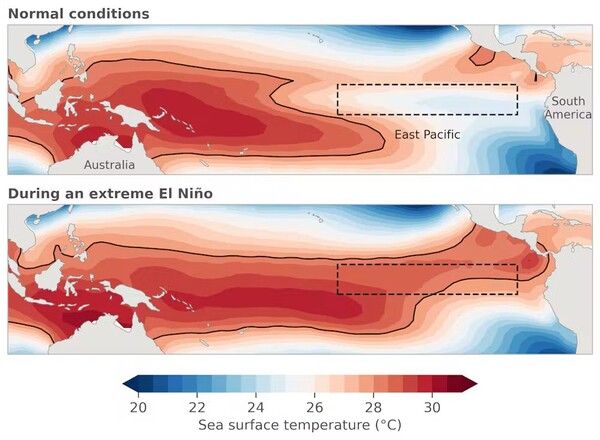
정상 상태와 극심한 엘니뇨 시기의 열대 태평양 해수면 온도. [그림출처(picture source) = 크리에이티브 커먼즈(Creative Commons, CC) / 더 컨버세이션(The Conversation)]
태평양의 경고
태평양은 지구 표면의 약 3분의 1을 차지하며, 인도네시아에서 남아메리카까지 적도를 따라 뻗어 있다. 태평양 서쪽은 일반적으로 동쪽보다 몇도(℃) 더 따뜻하다. 이러한 온도 차이는 동쪽에서 서쪽으로 부는 무역풍이 동쪽 심해의 차가운 물을 끌어올리는 것과 관련이 있다. 엘니뇨 현상이 발생하면 이러한 온도 차이가 줄어들어 동풍 무역풍이 약해지고 강수량이 호주에서 동쪽으로 이동한다.
기후 모델은 온난화가 지속될 경우 동태평양이 서태평양보다 더 빠르게 온난화되어 이러한 온도 차이가 줄어들 것이라고 예측한다. 하지만, 과학자들은 아직 이러한 현상을 관측하지 못했으며, 최근 수십 년 동안 동태평양은 오히려 냉각되는 추세를 보였다.
그러나, 세계가 화석 연료를 계속 태운다면 이러한 온난화 추세가 나타날 것으로 예상된다. 연구팀의 연구 결과는 이러한 서쪽과 동쪽 사이의 온도 차이가 온실가스 순배출량 제로 목표 달성 후에도 수 세기 동안 회복되지 않고 오히려 줄어들 것이라는 점을 시사한다.
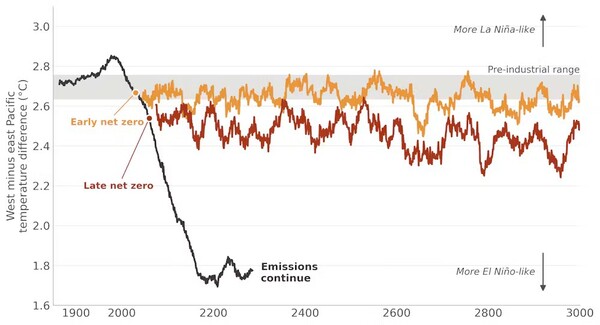
엘니뇨와 유사한 열대 태평양의 변화는 배출이 중단된 후에도 오랫동안 지속된다. 고배출 시나리오는 2300년까지만 실행되었다. [그림출처(picture source) = 크리에이티브 커먼즈(Creative Commons, CC) / 더 컨버세이션(The Conversation)]
이는 해양이 온난화에 더디게 반응하기 때문이다. 연구에 따르면, 지구 평균 기온 상승은 세계가 순배출량 제로 목표를 달성한 직후 멈출 것으로 예상된다. 반면 해수 온도는 수 세기 동안 계속 상승할 것으로 예측된다.
즉, 전 세계 해양, 특히 남극 대륙을 둘러싼 남극해는 온실가스 배출이 멈춘 후에도 오랫동안 온난화가 지속될 것이다. 이는 열대 강우대가 북반구와 남반구의 온도 차이에 따라 위치가 결정되기 때문에 열대 강우대가 적도에 더 가까워지게 만들 것이다. 그 결과 무역풍이 약해지고 동태평양 해역이 따뜻해질 것으로 예측했다.
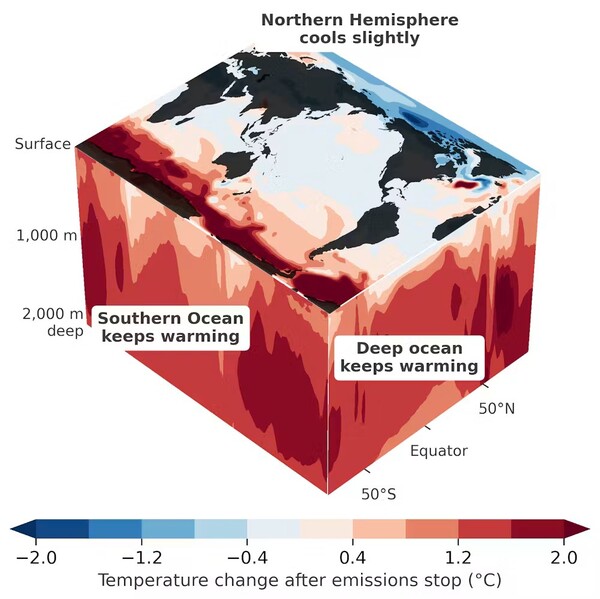
남극해와 심해는 배출이 중단된 후에도 계속해서 온난화되고 있다. [그림출처(picture source) = 크리에이티브 커먼즈(Creative Commons, CC) / 더 컨버세이션(The Conversation)]
더욱 극심한 엘니뇨 현상 발생 가능성 증가
태평양 서쪽과 동쪽 사이의 온도 차이가 줄어들면 동태평양이 엘니뇨 현상에 더 가까워진다. 집중 호우는 따뜻한 해수를 필요로 하는데, 동태평양이 서쪽보다 더 빠르게 온난화될 것으로 예상되므로 강우대가 동쪽으로 이동하는 데 필요한 압력이 줄어든다. 이는 엘니뇨 현상 중 극심한 엘니뇨 현상이 더 자주 발생할 가능성을 의미한다.
이번 연구보서는 탄소중립 목표 달성 기간이 길어질수록 더욱 극심한 엘니뇨 현상에 직면할 가능성이 높은 것으로 예측했는데, 이러한 지연은 미래 세대에 더 큰 위험과 더 높은 비용을 초래하는 더욱 열악한 기후를 야기할 수 있다는 것이다.
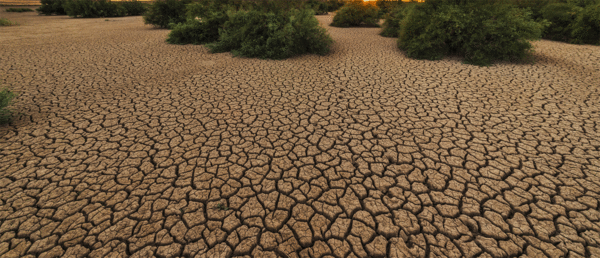
화석 연료에 대한 의존도가 높아질수록 극한 가뭄, 집중호우 등 극심한 ‘엘니뇨 현상’은 더욱 빈번해지겠지만, 탄소중립(Net Zero) 목표를 조기에 달성하면 엘니뇨 발생 빈도를 줄일 수 있을 것으로 나타났다. [사진출처(Photo source) = 픽사베이(Pixabay)]
이번 연구보고서는 △아디티야 센굽타(Aditya Sengupta) 호주 멜버른 대학교 지리·지구 및 대기과학부 박사과정 연구원 △앤드루 킹(Andrew King) 멜버른 대학교 ARC 21세기 기상 우수센터 기후과학 ARC 미래 펠로우 및 부교수 △조세핀 브라운(Josephine Brown) 멜버른 대학교 부교수 △맨디 프로인트(Mandy Freund) 멜버른 대학교 기후과학지리학 강사 △니콜라 마허(Nicola Maher) 호주국립대학교 기후과학 DECRA 연구원 등이 공동으로 연구를 했다.
[원문보고]
Extreme El Niños are coming. Reaching net zero sooner means facing fewer of them
The world is on the cusp of an historic El Niño, a climate pattern centred in the Pacific that could reshape weather across the planet.
El Niño is hardly a new phenomenon, but forecasts indicate the coming one could be the biggest ever recorded. Research suggests extreme El Niño years will become more common as the world rapidly warms, driven by humanity’s greenhouse gas emissions.
Our new research examines the reasons why El Niño is changing, and how this climate pattern may evolve if we reach our net zero goals. Our findings suggest extreme El Niños will become more common if we remain reliant on fossil fuels, but reaching net zero earlier should limit how often they occur.
Shaping global weather
El Niño has long influenced weather across the globe by driving variations in temperature and rainfall beyond the Pacific Ocean. Here are several exceptional examples.
In 1982, a strong El Niño dumped vast volumes of rain on South America, with some rivers in Peru filled with 1,000 times more water than usual. On Kiritimati island (part of Kiribati in the central Pacific), heavy rainfall flooded seabird nests and caused entire colonies to vanish. Meanwhile, southeast Australia was crippled by drought, culminating in the Ash Wednesday fires that claimed 75 lives.
The El Niño of 1998 carried enough rain to fill a new lake three metres deep in Peru’s Sechura Desert, one of the driest places on Earth. With it came record numbers of mosquitoes and widespread malaria. In Indonesia, months of severe drought allowed devastating forest fires to burn for weeks.
In 2016, a strong El Niño coupled with already warming oceans triggered the bleaching of more than two-thirds of the Great Barrier Reef.
The current El Niño forming in the tropical Pacific is expected to be among the strongest on record, with its effects lasting well into 2027. For Australia, this could heighten the risk of hot, dry conditions and a fierce bushfire season. Its presence is already being felt across the globe, slowing the shipping of goods through the Panama Canal and forcing fish to migrate to cooler waters.
El Niño in a warmer world
Scientists have always understood El Niño to be a phenomenon that temporarily alters global weather, with conditions returning to “normal” when it dissipates. However, climate change is expected to change what “normal” looks like.
As the planet warms, extreme El Niño years are likely to become more common. Our research suggests the tropical Pacific could remain in an El Niño-like state for centuries - even if the world reaches net zero carbon emissions - and extreme El Niño years would occur more often.
We used climate models to test two possible climate futures: one in which carbon emissions continue to rise, and the other in which the world meets its net zero goals. To see if timing matters, we also examined what would happen if we curb emissions at different points during this century.
A warning from the Pacific
The Pacific Ocean covers about a third of the planet, stretching along the equator from Indonesia to South America.
Its western side is normally several degrees warmer than its eastern side. This temperature difference is linked with the trade winds that blow from east to west and pull cold water up from the deep eastern ocean. During an El Niño, this temperature gap shrinks, causing the easterly trade winds to slacken and rainfall to shift east, away from Australia.
Under continued warming, climate models show the eastern Pacific warming faster than the west, reducing this temperature difference. Scientists are yet to observe this happening, with the eastern Pacific even cooling in recent decades.
However, this warming trend is expected to emerge if the world keeps burning fossil fuels. Once it does, our findings suggest this west-to-east temperature difference will be reduced for centuries after emissions reach net zero, rather than recovering.
This is because oceans are slower to respond to warming. Research suggests global temperatures would stop rising soon after the world meets its net zero target. By contrast, ocean temperatures would keep rising for centuries.
This means the world’s oceans, particularly the Southern Ocean surrounding Antarctica, will keep warming long after emissions stop. This would draw tropical rain belts closer to the equator, as their position depends on the temperature contrast between the northern and southern hemispheres. This would keep the trade winds weak and the eastern Pacific warm.
More extreme El Niño to come
A smaller west-to-east temperature difference would mean the eastern Pacific sits closer to El Niño conditions. Heavy tropical rain needs warm water and, with the eastern Pacific projected to warm faster than the west, it would take less of a push for rainfall to shift east. This means a larger share of El Niño events would become extreme.
Our research suggests the longer we take to reach net zero, the more extreme El Niños we will likely face. Further delay could create a less hospitable climate with more risks and higher costs for generations to come.
[출처 = 더 컨버세이션(The Conversation)(https://theconversation.com/extreme-el-ninos-are-coming-reaching-net-zero-sooner-means-facing-fewer-of-them-292134) / 2026년 10월 13일]
[연구논문 출처 = 커뮤니케이션스 어스 & 인바이런먼트(Communications Earth & Environment)(https://www.nature.com/articles/s43247-026-04082-x) / 2026년 10월 13일]
|  즐겨찾기 추가
 시작페이지로 설정
























