[북아메리카] [2026] [캐나다] 워터루대, 저렴한 3D 프린팅 필터로 물속 미세플라스틱 최대 90% 제거
이름
관리자
작성일
2026-10-12
조회수
847
파일첨부
[캐나다] 워터루대, 저렴한 3D 프린팅 필터로 물속 미세플라스틱 최대 90% 제거
생분해성 고분자 기반 3D 프린팅 디스크 필터 적층 여과 컬럼 개발
가정용·산업용 등 사용 목적에 따라 맞춤형 설계 가능
10마이크로미터 미만 미세플라스틱 제거 위한 기술개발 예정
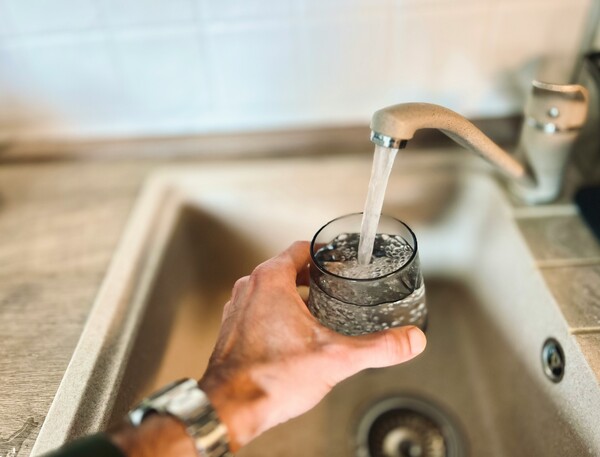
캐나다 워터루대학교(University of Waterloo) 연구진이 물속 미세플라스틱을 최대 90%까지 제거할 수 있는 저비용 맞춤형 3D 프린팅 필터를 개발했다. 이 기술은 가정용은 물론 산업용 수처리 분에도 적용할 수 있는 해결책으로 주목받고 있다. [사진출처(Photo source) = Unsplash]
캐나다 워터루대학교(University of Waterloo) 연구진이 물속 미세플라스틱을 최대 90%까지 제거할 수 있는 저비용 맞춤형 3D 프린팅 필터를 개발했다. 이 기술은 가정용은 물론 산업용 수처리 분에도 적용할 수 있는 해결책으로 주목받고 있다.
미세플라스틱은 크기가 5mm 미만인 매우 작은 플라스틱 조각으로, 전 세계 식수에서 점점 더 자주 발견되고 있다. 이들은 인체에 섭취될 경우 조직과 혈액으로 침투할 수 있으며, 심지어 모유에서도 검출된 사례도 보고됐다. 현재 진행 중인 연구들은 미세플라스틱이 암과 심장질환을 비롯한 다양한 건강 문제와 연관될 가능성을 제기하고 있다.
연구팀은 3단계 공정을 통해 생분해성 고분자로 제작한 3D 프린팅 디스크 필터를 여러 겹 쌓아 올린 여과 컬럼(Column)을 개발했다. 이 시스템은 제작이 간편하고 사용 목적에 따라 맞춤형 설계가 가능하다는 장점이 있다.
티자주 메코넨(Tizazu Mekonnen) 워털루대 화학공학과 교수. [사진제공(Photo source) = University of Waterloo]
티자주 메코넨(Tizazu Mekonnen) 워털루대 화학공학과 교수는 "8개에서 20개의 필터를 적층하는 방식을 연구했다"며 "20개의 필터를 사용했을 때 미세플라스틱을 최대 90%까지 제거할 수 있었는데, 이는 기존 여과 기술보다 크게 향상된 성과"라고 설명했다.
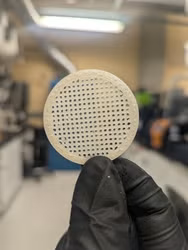
3D 프린트로 제작한 필터 모습. [사진제공(Photo source) = University of Waterloo]
연구진은 먼저 디스크 필터가 물과 최대한 넓게 접촉하도록 설계한 뒤, 수용성 고분자를 추가했다. 이 고분자는 3D 프린팅 후 세척 과정에서 제거되며, 그 자리에 나노 및 마이크로미터 규모의 미세 기공이 형성된다.
이후 연구진은 기공을 막지 않으면서도 미세플라스틱 포집 능력을 높이는 감압성 접착제를 추가해 여과 성능을 더욱 향상시켰다.
실험 결과, 비교적 큰 미세플라스틱 입자는 거의 완벽하게 제거됐지만, 10마이크로미터보다 작은 입자의 경우 포집이 더 어려운 것으로 나타났다. 이에 따라 연구진은 남아 있는 10%의 미세플라스틱까지 제거할 수 있는 기술개발을 다음 연구 과제로 삼고 있으며, 대학원생 에단 크로퍼드(Ethan Crawford)도 해당 연구에 참여하고 있다. 연구진에 따르면, 미세플라스틱은 예상치 못한 경로를 통해 상수원으로 유입되며, 대표적인 사례가 세탁 과정이다.
메코넨 교수는 "우리가 입는 옷 대부분은 폴리에스터 형태의 폴리에틸렌 테레프탈레이트(PET)와 면을 혼합한 소재이거나 순수 폴리에스터로 만들어져 있다"며 “건조기 필터를 확인해 보면 얼마나 많은 섬유가 걸러지는지 알 수 있는데, 이 섬유들 대부분이 미세플라스틱이며 건조기 필터는 그중 일부만 포집할 수 있다”고 설명했다.
특히 세탁기는 건조기보다 더 많은 미세플라스틱을 배출한다. 세탁 과정에서 발생하는 고속 회전으로 인해 미세한 섬유가 떨어져 나와 하수처리 시스템으로 흘러 들어가기 때문이다.
메코넨 교수는 활성탄과 같은 기존 여과 기술이 미세플라스틱 제거에 제한적인 효과만 보이는 만큼, 이번에 개발된 3D 프린팅 필터가 향후 가정용 정수 시스템과 산업용 폐수처리 시설에 폭넓게 활용될 수 있을 것으로 기대한다고 밝혔다.
이 연구는 '미세플라스틱 포집을 위한 3D 프린팅 유동식 정수 필터: 표면 다공성, 컬럼 높이 및 감압 접착제가 제거 효율에 미치는 영향(3D-printed, flow-through water filters for microplastic capture: The effect of surface porosity, column height, and pressure-sensitive adhesives on removal efficiency)'이라는 제목으로 학술지 『Separation and Purification Technology』에 게재됐다.
[원문보기]
Low-cost 3D-printed filter removes up to 90 per cent of microplastics from water
The new customizable filter design could be adapted for household and industrial water treatment
University of Waterloo engineers have developed a low-cost, customizable 3D-printed filter that removes up to 90 per cent of microplastics from water, offering an inexpensive solution for both residential and industrial uses.
Microplastics are tiny plastic fragments smaller than five millimetres that are increasingly found in drinking water worldwide. Once ingested, they can enter human tissue and blood and have been found in breast milk. Ongoing research suggests they could be linked to health problems including cancer and heart attacks.
The research team used a three-step process to develop a filtration column of stacked, 3D-printed disk filters made from a biodegradable polymer. The columns are easy to produce and customize.
“We explored using between eight and 20 filters stacked together,” said Dr. Tizazu Mekonnen, a chemical engineering professor at Waterloo. “With 20 filters, we removed 90 per cent of microplastics, a marked improvement over current filtering technologies.”
Researchers first designed disk filters to maximize contact with water flowing through them, then added a water-soluble polymer that washes away after printing, leaving behind pores at the nano and micro scales.
Lastly, they added a pressure-sensitive adhesive that increases microplastic capture without blocking the pores.
Relatively large microplastics were captured almost completely, while particles smaller than 10 micrometers proved more difficult to trap. Figuring out how to remove that 10 per cent is the next step in the project, which includes engineering graduate student Ethan Crawford. Microplastics can get into water supplies through unexpected sources, including household laundry.
“Our clothes are mostly a mix of Polyethylene terephthalate (PET) in the form of polyester and cotton or pure polyester,” said Mekonnen, the Canada Research Chair in Sustainable Multiphase Polymers. “When you pull out the dryer filter, you can see how much fiber it captures. Those are all microplastics and that filter can capture only a portion of them.”
Washing machines release even more microplastics because of the high speed spinning that pulls tiny fibers loose and sends them into wastewater systems.
Mekonnen said the new technology has promising potential for integration into household drinking water systems and industrial water treatment plants since current filtering methods, like activated carbon, are only partially effective at removing microplastics.
A study on the work titled, 3D-printed, flow-through water filters for microplastic capture: The effect of surface porosity, column height, and pressure-sensitive adhesives on removal efficiency, was published in the journal Separation and Purification Technology.
[출처 = 워터루대학교(University of Waterloo)(https://uwaterloo.ca/news/media/low-cost-3d-printed-filter-removes-90-cent-microplastics) / 2026년 9월 29일]
 즐겨찾기 추가
 시작페이지로 설정