[북아메리카] [2026] [미국] UC 리버사이드, PAFS 제거 화학 반응 규명 연구 결과 발표
이름
관리자
작성일
2026-09-22
조회수
813
파일첨부
[미국] UC 리버사이드, PAFS 제거 화학 반응 규명 연구 결과 발표
자외선·아황산염 활용해 탄소-불소 결합 분해 과정 규명…PFAS 처리 기술 최적화 근거 마련
수화 전자·수산화 라디칼·수산화 이온의 역할 규명으로 환경 친화적 불소화합물 설계 가능성 제시
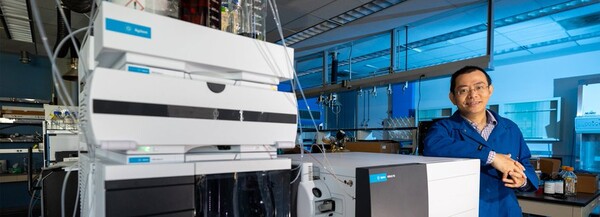
미국 캘리포니아대학교 리버사이드 캠퍼스(University of California, Riverside) 환경공학과 연구진은 자외선(UV)을 활용해 물 속 ‘영원한 화학물질’로 불리는 과불화화합물(PFAS)을 제거하는 과정에서 발생하는 핵심 화학 반응을 규명하고, 보다 효과적인 정화 기술 개발을 위한 로드맵을 제시했다. [사진제공(Photo source) = University of California, Riverside]
미국 캘리포니아대학교 리버사이드 캠퍼스(University of California, Riverside) 환경공학과 연구진은 자외선(UV)을 활용해 물 속 ‘영원한 화학물질’로 불리는 과불화화합물(PFAS)을 제거하는 과정에서 발생하는 핵심 화학 반응을 규명하고, 보다 효과적인 정화 기술 개발을 위한 로드맵을 제시했다.
이번 성과는 국제 학술지 『네이처 워터(Nature Water)』에 게재됐으며, 자외선을 이용한 PFAS 분해 과정에서 일어나는 화학 반응을 상세히 분석했다.
연구를 이끈 류진용(Jinyong Liu) 화학환경공학과 부교수는 “PFAS 제거를 어렵게 만드는 강력한 탄소-불소 결합이 끊어지는 과정에서 생성되는 반응과 부산물을 확인했다”며 "이러한 분해 메커니즘을 이해함으로써 PFAS 파괴 조건을 최적화하고 더 깊은 분해 방법을 모색할 수 있으며, 기술 개선을 위한 훨씬 더 나은 로드맵을 마련할 수 있다"고 설명했다.
연구진은 이번 결과가 향후 어떤 처리 기술과 운영 조건이 PFAS의 완전한 파괴에 유리한지를 판단하는 데 중요한 근거가 될 것이라고 강조했다.
또한 이번 연구는 기존 문헌에서 주로 가정에 의존하고 실험적 증거가 부족했던 분해 메커니즘을 바로잡는 의미가 있다고 덧붙였다.
궁극적으로 이번 연구 결과는 화학자들이 사용 후 더 쉽게 분해되는 안전한 불소화합물을 설계하는 데 중요한 밑거름이 될 수 있다.
류 교수는 "분해 메커니즘을 알게 되면 불소화합물 산업에 확실한 정보를 제공해 환경 보호를 위해 더 쉽게 처리할 수 있는 화합물을 어떻게 설계해야 하지 알릴 수 있다"고 설명했다.
PFAS는 열, 습기, 기름, 얼룩에 강한 특성 때문에 1940년대부터 널리 사용되기 시작했다. 눌어붙지 않는 조리 도구, 기름에 강한 식품 포장재, 얼룩 방지 카펫, 세척제, 페인트, 바니시, 실런트, 소화제 등 수천 가지 제품에 사용돼 왔다.
그러나 수십 년에 걸쳐 PFAS는 지하수로 유입돼 식수와 식품을 오염시켜 왔다.
특정 PFAS에 노출될 경우 콜레스테롤 수치 증가, 면역 반응 약화, 간 손상, 임신 합병증, 신장암 및 고환암 위험 증가와 관련이 있다는 연구 결과가 보고됐다.
이러한 건강 문제로 인해 미국 환경보호청(EPA)은 2024년 처음으로 여러 PFAS에 대한 연방 차원의 식수 기준을 법적으로 설정했으며, 이후 일부 규정을 재검토했지만 가장 잘 알려진 두 가지 화합물에 대해서는 4ppt(1조분의 4)라는 엄격한 기준을 유지했다.
류 교수팀이 밝혀낸 화학 반응은 복잡한 연쇄 과정을 포함한다. 자외선과 아황산염은 매우 반응성이 높은 전자를 생성해 PFAS 분자를 공격하고 탄소-불소 결합을 끊기 시작한다.
이러한 결합이 끊어지면서 불소 원자가 분자에서 떨어져 나와 물 속에서 불소 이온 형태로 방출되며, 수산화 라디칼과 수산화 이온은 탄소-탄소 결합을 끊어 남은 분자 사슬을 분해한다.
그 결과 생성된 짧은 사슬 화합물은 추가적인 탈불소화 과정을 거쳐 PFAS를 점진적으로 분해하고 더 많은 불소를 방출한다.
연구진은 특히 탄소, 수소, 산소를 포함하는 단순한 화합물인 포름산염(Formate)이 중요한 PFAS 사슬 단축 경로에서 생성되는 주요 탄소 함유 생성물임을 발견했는데, 이는 이전 연구에서 제안된 이산화탄소, 일산화탄소와는 다른 결과였다.
방출된 불소는 물속에서 불소 이온으로 전환되며 이는 치아 건강 증진을 위해 식수에서 흔히 발견되는 훨씬 덜 문제가 되는 형태다.
기존 연구가 주로 수화 전자(Hydrated Electrons)에 초점을 맞췄던 것과 달리, 이번 연구는 수화 전자뿐 아니라 수산화 라디칼, 수산화 이온도 PFAS 분해와 불소 제거에 중요한 역할을 한다는 점을 밝혔냈다.
이러한 발견은 엔지니어들에게 처리 시스템을 개선하기 위해 필요한 화학적 이해를 더 정확하게 제공한다고 류 교수는 말했다.
가오 진위(Jinyu Gao) 박사후 연구원. [사진제공(Photo source) = University of California, Riverside]
이번 연구는 류 교수 연구실에서 수년간 이어져 온 PFAS 연구의 성과를 기반으로 진행됐다. 제1저자인 가오 진위(Jinyu Gao) 박사후 연구원은 2022년 박사과정 시절부터 PFAS 분해 메커니즘을 연구하기 시작했다.
PFAS 분자가 분해되면서 생성되는 전환 생성물들을 광범위하게 분석하고, 반응 속도론적 연구를 결합해 분해의 여러 단계에서 일어나는 화학 반응을 재구성했다. 이를 통해 연구진은 이전에 알려지지 않았던 경로를 식별하고 탄소-불소 및 탄소-탄소 결합을 끊는 데 있어 수화 전자, 수산화 라디칼 및 수산화 이온의 역할을 규명할 수 있었다.
이 논문은 "자외선 조사 하에서의 PFAS 분해에 대한 종합적인 메커니즘 및 경로(Comprehensive Mechanisms and Pathways for PFAS Degradation Under UV Irradiation)"라는 제목으로 화학환경공학과 소속의 가오 진위 박사후 연구원, 단단 라오(Dandan Rao), 류진용 교수가 공동 저자로 참여했다.
[원문보기]
Study unveils chemistry of destroying ‘forever chemicals’
Findings could lead to more effective PFAS cleanup technologies
UC Riverside environmental engineers have identified key chemical reactions that occur when ultraviolet light is used to destroy “forever chemical” pollutants in water, providing a roadmap for developing more effective cleanup technologies.
The discovery, published in the journal Nature Water, details the chemistry involved in using UV light to break down per- and polyfluoroalkyl substances, or PFAS, a large group of persistent pollutants commonly known as forever chemicals.
Importantly, the researchers identified reactions and by-products that form as treatment breaks the exceptionally strong carbon-fluorine bonds that make PFAS so difficult to destroy, said Jinyong Liu, a UCR associate professor of chemical and environmental engineering and corresponding author of the study.
“Knowing this degradation mechanism gives us a better understanding of how to optimize the conditions for PFAS destruction and achieve deeper degradation, and gives us a much better roadmap for improving the technology,” Liu said, who holds the university's Won and Insook Yoo Endowed Chair in Environmental Engineering.
The findings can help researchers determine which treatment technologies, combinations of technologies, and operating conditions favor more complete destruction of PFAS, he said.
The study also corrects degradation mechanisms reported in earlier scientific literature that were based largely on assumptions rather than experimental evidence, Liu said.
The findings also could eventually help chemists design safer fluorinated compounds that break down more readily after use.
“By knowing the degradation mechanisms, we can give the solid input to the fluorocarbon industry to tell them how to design compounds that can more easily be treated to protect the environment,” Liu said.
PFAS came into widespread use beginning in the 1940s because of their ability to resist heat, moisture, grease, and stains. They have been used in thousands of products, including nonstick cookware, grease-resistant food packaging, stain-resistant carpets, cleaning products, paints, varnishes and sealants, and fire suppressants.
Over decades, PFAS have entered groundwater and contaminated drinking water and food.
Exposure to certain PFAS has been associated with increased cholesterol, weakened immune response, liver effects, pregnancy complications, and increased risks of kidney and testicular cancers.
Because of such health concerns, the U.S. Environmental Protection Agency in 2024 established enforceable federal drinking-water limits for several PFAS for the first time. The agency has since reconsidered portions of those regulations while retaining the stringent 4-parts-per-trillion limits for two of the best-known compounds.
The chemistry uncovered by Liu’s team involves a complex sequence of reactions. Ultraviolet light and sulfite generate highly reactive electrons that attack PFAS molecules and begin breaking their carbon-fluorine bonds.
As those bonds break, fluorine atoms are stripped from the molecules and released into the water as fluoride ions. Hydroxyl radicals and hydroxide ions also help break carbon-carbon bonds, fragmenting the remaining molecular chains.
The resulting shorter-chain compounds can undergo further defluorination, progressively dismantling the PFAS molecules and releasing more fluoride.
The researchers also found that formate — a simple compound containing carbon, hydrogen and oxygen — is the primary carbon-containing product produced during an important PFAS chain-shortening pathway. Earlier studies had proposed carbon dioxide, carbon monoxide or other products.
The released fluorine becomes fluoride ions in the water, a far less problematic form commonly found in drinking water to promote dental health.
Earlier research largely focused on hydrated electrons as the critical agents responsible for PFAS destruction. The UCR study found the chemistry is more complicated. Hydrated electrons, hydroxyl radicals, and hydroxide ions can all play important roles in reactions that break PFAS molecules apart and strip away fluorine.
The findings give engineers a more accurate understanding of the chemistry needed to improve treatment systems, Liu said.
The work builds on years of PFAS research in Liu’s laboratory. Lead author Jinyu Gao began investigating the mechanisms in 2022, initially as a UCR doctoral student and later as a postdoctoral researcher.
The team combined kinetic studies with extensive analysis of transformation products — compounds created as PFAS molecules break apart — to reconstruct chemical reactions occurring at different stages of degradation. This allowed the researchers to identify previously unrecognized pathways and determine the roles of hydrated electrons, hydroxyl radicals, and hydroxide ions in breaking carbon-fluorine and carbon-carbon bonds.
The paper, “Comprehensive Mechanisms and Pathways for PFAS Degradation Under UV Irradiation,” was authored by Jinyu Gao, Dandan Rao, and Jinyong Liu of UC Riverside’s Department of Chemical and Environmental Engineering.
 즐겨찾기 추가
 시작페이지로 설정