[미국] “뉴욕주 공립학교 40% 이상이 식수의 납 함량 기준 초과”
환경아메리카 연구·정책센터· ‘뉴욕공익연구그룹, ‘겟 더 리드 아웃 뉴욕(Get the Lead Out New York)’ 보고서 공동발표
뉴욕주 보건부 웹사이트에 게시된 최신 검사 검토 결과, 뉴욕주 1천918개 학교(42%)가 최소 1곳 이상 급수시설서 납 기준(5ppb) 초과
“식수·조리 및 음료 제조에 사용되는 모든 수도꼭지에 납 제거 필터 설치 의무화해야”
“미국소아과학회(AAP)의 공중보건 권고안에 따라 학교 식수 납 허용 기준 5ppb서 1ppb로 설정해야”
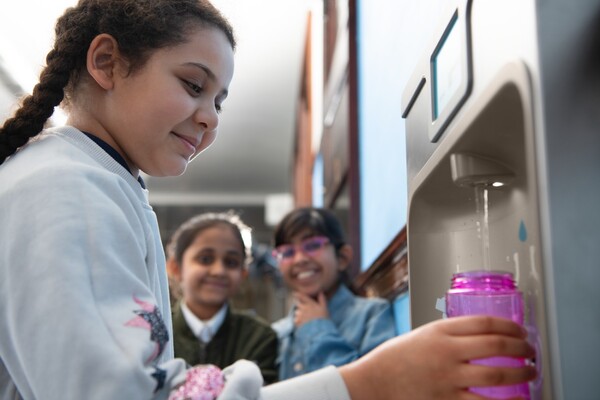
미국의 환경보존단체인 환경아메리카 연구·정책센터와 뉴욕공익연구그룹(NYPIRG)이 공동 발표한 ‘겟 더 리드 아웃 뉴욕(Get the Lead Out New York)’이라는 보고서에 따르면, 뉴욕주 공립학교의 40% 이상에서 공급되는 식수의 납 함량이 주 기준을 초과하고 있는 것으로 나타났다. [사진출처(Photo source) = 환경아메리카 연구·정책센터(Environment America Research & Policy Center) / 주른 엘카이 워터 솔루션(Zurn Elkay Water Solutions)]
미국의 환경보존단체인 환경아메리카 연구·정책센터(Environment America Research & Policy Center)와 뉴욕공익연구그룹(New York Public Interest Research Group, NYPIRG)은 ‘겟 더 리드 아웃 뉴욕(Get the Lead Out New York)’이라는 보고서를 9월 17일 발표했다. 이 보고서에 따르면, 뉴욕주 공립학교의 40% 이상에서 공급되는 식수의 납 함량이 주 기준을 초과하고 있는 것으로 나타났다. 이 보고서 내용을 소개한다.[번역 및 정리 = 배철민 편집국장 겸 글로벌물산업정보센터장]
뉴욕의 학교들은 아이들을 안전하게 보호할 책임이 있으며, 여기에는 안전한 식수를 제공하는 것도 포함된다. 하지만, 뉴욕주 전역의 학교 급수에서는 납 오염이 정기적으로 검출되고 있다.
환경아메리카 연구·정책센터, 뉴욕공익연구그룹 등 두 단체가 뉴욕주 보건부(New York State Department of Health) 웹사이트에 게시된 최신 검사 결과를 검토한 결과, 뉴욕주 공립학교의 42%에서 음용 또는 조리용으로 사용되는 급수시설 중 최소 한 곳이 주 기준인 5ppb(10억분의 1) 이상의 납(lead, pb)이 검출된 것으로 나타났다. 테스트 결과, 엠파이어 스테이트(Empire State) 빌딩 전역에 1만2천 곳이 넘는 수도꼭지에서는 학생들에게 납에 노출될 위험이 높은 것으로 나타났다.
이러한 검사 결과는 유해 물질로 인한 심각한 문제의 ‘빙산의 일각(Tip of the Iceberg)’에 불과하다. 낮은 수준의 납 노출로도 인체에 해로울 수 있다는 공중보건 전문가들의 견해에도 불구하고, 학교는 5ppb 미만의 납 검출 수치를 주 정부 웹사이트에 보고할 의무가 없기 때문이다.
또한, 일부 학교가 납 저감 조치를 ‘완료(Complete)’했다고 보고했음에도 불구하고 수년 후 실시한 검사에서 다시 주 정부 기준치를 초과하는 결과가 나오는 우려스러운 경향도 확인되었다.
뉴욕 학교들에서 식수의 납 오염 광범위하게 발생
뉴욕주 보건부가 제공한 4천514개 공립학교와 협력교육서비스위원회(BOCES) 지점의 데이터를 검토한 결과, 다음과 같은 사실을 확인했다.
- 뉴욕주 1천918개 학교(42%)가 보건부에 학교가 보고한 최신 완전 검사 데이터에서 납 농도가 5ppb를 초과한 급수 시설이 최소 한 곳 이상 확인되었다.
- 뉴욕주 공립학교의 급수 시설 1만2천452곳에서 납 수치가 주 정부의 기준치인 5ppb를 초과하는 것으로 나타났다.
- 학교에서 제출한 상세 검사 데이터에 따르면, 수백 개, 많게는 수천 개의 수도꼭지에서 5ppb 이하의 납이 검출되었을 가능성이 있다. 하지만 어린이에게 있어 납은 그 농도가 아무리 낮더라도 안전하지 않다.
- 이 수치에는 학교가 주 당국에 보고한 가장 최근의 검사 결과만 포함되어 있다. 과거 검사에서 주의 기준치를 초과했던 다른 급수 시설들은 현재 사용이 중단되었거나 개선 조치가 취해진 것으로 알려졌다.
학교 식수 내 납 문제는 주 전역의 문제
제퍼슨(Jefferson), 세인트로렌스(St. Lawrence), 쇼토쿼(Chautauqua), 루이스(Lewis), 톰킨스(Tompkins) 카운티는 납 농도가 5ppb를 초과하는 시료를 최소 한 개 이상 검사한 학교 비율이 가장 높았다. 다섯 개 카운티 모두에서 검사한 학교의 75% 이상이 최소 한 곳 이상의 수질 기준을 초과했다.
세네카(Seneca), 쇼토쿼(Chautauqua), 코트랜드(Cortland), 프랭클린(Franklin), 제퍼슨(Jefferson) 카운티가 주 기준인 5ppb를 초과하는 검사소 비율이 가장 높았다. 다섯 개 카운티 모두에서 15% 이상의 매장, 즉 7곳 중 1곳 이상이 음용이나 조리에 사용할 수 있는 기준치를 초과하는 수치를 기록했다.
아래의 인터랙티브 지도에는 카운티별 납 검사 결과 데이터가 포함되어 있다.
[그림 1] 뉴욕주 카운티별 납 검사 결과 데이터(County-by-county testing results)
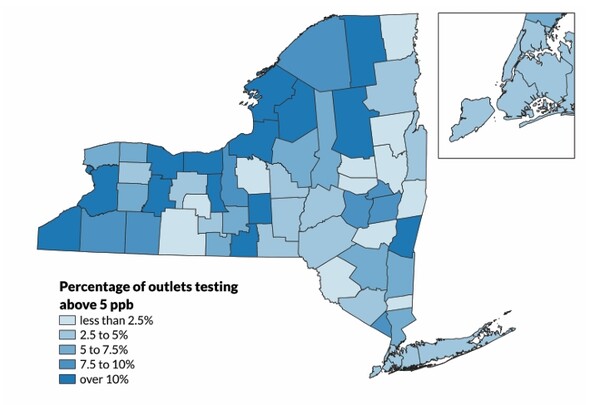
※ 미국 인구조사국 카운티, 단순 지도(미국 도시), 프런티어 그룹( United States Census Bureau's counties, Simple Maps (US Cities), Frontier Group)
뉴욕주의 현재 납 방지 노력은 부족
납 검사는 변동성이 매우 커서, 어느 시점에 기준치 이하로 나왔던 수돗물이 나중에는 기준치 이상으로 나올 수도 있고 그 반대도 마찬가지이다. 따라서 기준치 이하로 검출되었다고 해서 반드시 납 정화가 성공적이고 지속적이라는 뜻은 아니다.
일부 학교는 2026년에 2023∼2025년 준수 기간의 최종 보고서보다 더 많은 수도꼭지가 주의 납 기준치를 초과했다고 보고했다. 이는 학교 측에서 납 위험 제거가 ‘완료되었다’고 보고했음에도 불구하고, 아이들이 여전히 주 기준치를 초과하는 납 농도의 물에 노출되고 있을 가능성을 시사한다.
뉴욕주는 납 농도가 5ppb 이하로 검출된 급수 시설에 대해서는 개선 조치를 의무화하지 않고 있다. 그러나 일부 학교에서는 이러한 시설이 상당한 납 노출 위험을 초래할 수 있다.
2025년 뉴욕주 감사관(Comptroller) 보고서는 공립학교의 초기 납 검사 과정에서 여러 문제점을 지적했다. 여기에는 검사 대상이어야 할 많은 급수 시설에 대한 검사 누락, 일부 학군의 필수 개선 계획 미비, 심지어 규정에 따른 검사 결과 미보고 사례 등이 포함되어 있다.
뉴욕주는 학생들을 납으로부터 충분히 보호하지 못하는 현재의 ‘검사 후 조치(text and fix)’ 방식에서 벗어나야 한다. 대신 모든 학교의 수도꼭지에서 납 노출을 제한하는 예방적 차원의 ‘필터 우선(filter first)’ 전략을 신속하게 도입해야 한다.
주 정책 입안자들은 다음 사항을 준수해야
식수, 조리 및 음료 제조에 사용되는 모든 수도꼭지에 납 제거 필터를 설치하도록 의무화해야 한다. 음수대 사용을 중단하거나 납 제거 기능이 있는 물병 급수대(필요 시 음수대 기능 포함 가능)로 교체해야 한다.
미국소아과학회(American Academy of Pediatrics, AAP)의 공중보건 권고안에 따라 학교 식수의 납 허용 기준을 1ppb로 설정해야 한다.
이와 병행하여, 각 지역 학군은 현행 주(州) 규정보다 강화된 ‘필터 우선(filter first)’ 정책을 도입하고, 학교에서 학생들에게 제공되는 식수의 납 농도가 1ppb를 초과하지 않도록 보장해야 한다.
참고 : 이 보고서의 분석이 완료된 후, 밸리 스트림 센트럴 고등학교(Valley Stream Central High School)는 뉴욕주 보건부 웹사이트의 보고 내용을 업데이트했다. 이에 따르면, 2026년 6월 검사에서 5ppb 기준치를 초과했던 8개 급수 지점에 대한 개선 조치가 완료되었다. 4곳은 안내 표지판을 부착하는 방식으로, 나머지 4곳은 수도꼭지를 교체하는 방식으로 조치가 이루어졌다.
[원문보기]
Get the lead out New York
Why New York State's efforts to get lead out of school drinking water are still inadequate
The drinking water at more than 40% of New York State public schools exceeds state standards for lead. But effective solutions exist.
New York’s schools have a responsibility to keep children safe, including by providing them with safe drinking water. Yet, water supplies in schools across New York State regularly test positive for lead contamination.
Our review of the most recent testing results posted to the New York State Department of Health’s website finds that 42% of New York State’s public schools had at least one water outlet used for drinking or cooking that tested above the state’s standard of 5 parts per billion (ppb) of lead. That’s over 12,000 water outlets across the Empire State that tests indicate could be exposing schoolchildren to lead.
These test results are just the tip of the toxic iceberg. Schools are not required to report positive lead tests below 5 ppb to the state website - despite the consensus of public health experts that lead can be harmful even at low levels of exposure. In addition, our analysis shows concerning trends of some schools reporting that lead remediation is “complete” -only to report exceedances of the state standard in tests taken years later.
Lead contamination of drinking water is widespread in New York schools
We reviewed data supplied to the New York State Department of Health by 4,514 public schools and Boards of Cooperative Educational Services (BOCES) locations and found the following:
1,918 schools in New York state (42%) reported at least one water outlet at which lead levels exceeded 5 ppb in the most recent complete testing data reported by schools to the Department of Health;
12,452 water outlets at New York State public schools tested above the state’s 5 ppb threshold for lead;
Detailed testing data provided by schools indicate that hundreds, if not thousands, of water outlets may have lead at levels below 5 ppb. Yet lead is unsafe at any level for children;
These figures include only the most recent testing results reported by schools to the state. Other outlets tested above the state’s threshold in the past but have reportedly either been removed from service or remediated.
Lead in school drinking water is a statewide problem.
Jefferson, St. Lawrence, Chautauqua, Lewis and Tompkins counties had the highest percentage of schools with at least one outlet testing at more than 5 ppb of lead. In all five counties, 75% or more of schools tested had at least one outlet exceeding the state threshold.
Seneca, Chautauqua, Cortland, Franklin and Jefferson counties had the highest percentage of outlets testing above the 5 ppb state threshold. In all five counties, 15% or more of outlets - more than one in every seven outlets potentially used for drinking or cooking - tested above the threshold.
The interactive map below includes data on lead testing results by county.
New York State’s current lead protection efforts are inadequate.
Lead testing is notoriously variable, meaning that taps testing below a given threshold at one moment may test above the threshold at a later time (and vice versa). Testing below the threshold, therefore, is not necessarily an indicator of successful and lasting lead remediation.
Some schools reported more taps exceeding the state’s lead threshold in 2026 than in the schools’ final reporting for the 2023-2025 compliance period. This raises the possibility that children have continued to be exposed to water with lead levels above the state threshold even after the schools reported that remediation of lead hazards was “complete.”
New York State does not require remediation for water outlets that test positive for lead at or below the 5 ppb threshold. In some schools, these outlets pose a significant risk of lead exposure.
A 2025 New York State Comptroller’s report identified problems with earlier rounds of lead testing at public schools, including the failure to test many outlets that should have been tested, the absence of required remediation plans at some school districts, and even the failure to report testing results as required.
New York State should shift away from its current “text and fix” approach, which fails to adequately protect schoolchildren from lead. Instead, the state should move swiftly to adopt a preventive “filter first” strategy that limits exposure to lead at all taps in every school.
State policymakers should:
Require the installation of lead-capturing filters on all taps used for drinking, cooking and beverage preparation. Fountains should either be disconnected or replaced by lead-filtering water bottle stations, which can also include fountains as needed.
Set a 1 ppb limit on lead in school drinking water, following public health recommendations by the American Academy of Pediatrics.
In the meantime, local school districts should go above and beyond current state requirements by adopting “filter first” policies and ensuring that the drinking water provided to children at school does not exceed 1 ppb of lead.
Note: After the analysis for this report was completed, Valley Stream Central High School updated its reporting to the New York State Department of Health website, indicating that remediation had been completed for the eight outlets that tested above the 5 ppb threshold in June 2026. Four outlets were remediated with signage and four with replacement taps.
[출처 = 환경아메리카 연구·정책센터(Environment America Research & Policy Center)(https://environmentamerica.org/resources/get-the-lead-out-new-york/) / 2026년 9월 17일]
|  즐겨찾기 추가
 시작페이지로 설정
























