[미국] 텍사스주립대 연구팀, 카일 호수 수질 개선 위해 부유식 인공습지 조성 연구 추진
카일시로부터 45만7천달러 지원 받아 자연 기반 수질 개선 시스템 실험
부유식 인공습지, 부력 구조물에 심겨진 식물 뿌리가 물속으로 늘어져 질소·인 흡수 및 분해
2027년 봄, 부유식 인공습지 설치 후 성능 지속적으로 모니터링할 계획
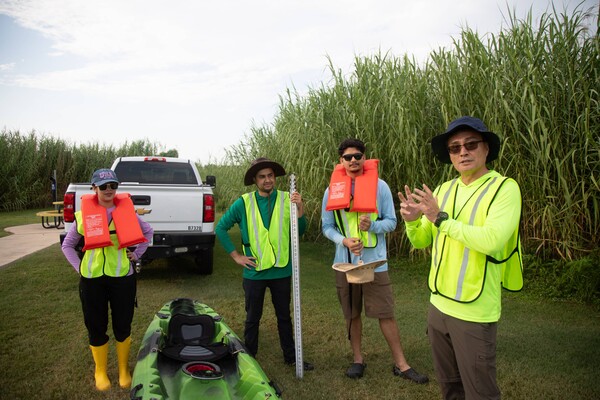
텍사스 주립대학교(Texas State University)의 황상철 교수(Ph.D., P.E.)는 카일시(City of Kyle)의 지원을 받아 카일 호수(Lake Kyle)에 수질 개선을 위한 부유식 인공습지를 설치하는 프로젝트를 주도하고 있다. 사진은 왼쪽부터 이번 연구에 참여하는 프라네샤 당골(Pranesha Dangol), 프라즈왈 바타라이(Prajwal Bhattarai), 비벡 파우델(Bibek Paudel)과 황 교수 모습. [사진출처(Photo source) = Texas State University]
텍사스 주립대학교(Texas State University)의 황상철 교수(Ph.D., P.E.)는 카일시(City of Kyle)의 지원을 받아 카일 호수(Lake Kyle)에 수질 개선을 위한 부유식 인공습지를 설치하는 프로젝트를 주도하고 있다.
이 연구는 이러한 지연 기반 시스템이 주변 플럼 크릭 유역(Plum Creek Watershed, 빗물과 유출수가 플럼 크릭과 연결된 수계로 흘러드는 지역)을 보호하는 데 도움이 되는지를 시험할 예정이다.
황 교수는 TXST 잉그램 공과대학(Ingram School of Engineering) 토목·환경공학과 소속으로, 카일시로부터 3년간 진행되는 "부유식 인공습지를 활용한 저수지 내 수질 관리(In-Reservoir Water Quality Management with Floating Wetlands)" 프로젝트에 대해 45만7천 달러(약 6억2천만 원)의 연구비를 지원받았다.
이번 연구는 카일시가 빠르게 성장하는 상황에서 추진되고 있으며, 미국 인구조사국(U.S. Census Bureau) 추산에 따르면, 이 도시의 인구는 2020년에서 2025년 사이에 53% 증가해 6만9천917명에 이르렀다. 이러한 개발은 강우 시 유출수을 늘려 퇴적물, 영양염류, 박테리아 및 기타 오염물질을 지역 수계로 유입시킬 수 있다.
카일 호수는 12.5에이커 규모의 레크리에이션 호수로, 주민들이 낚시, 산책, 피크닉, 야외 활동을 즐길 수 있는 공간이다. 깨끗한 물은 레크리에이션뿐 아니라 수생 서식지와 카일을 넘어서는 수계에도 도움이 되며, 플럼 크릭은 헤이스(Hays)와 콜드웰(Caldwell) 카운티를 지나 샌마르코스(San Marcos)강으로 이어진다.
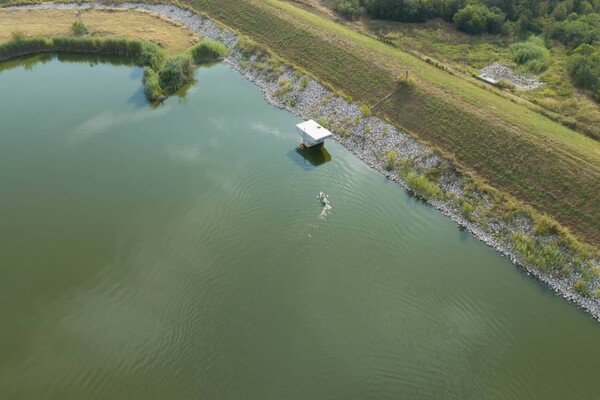
카일 호수는 12.5에이커 규모의 레크리에이션 호수로, 주민들이 낚시, 산책, 피크닉, 야외 활동을 즐길 수 있는 공간이다. 사진은 카일 호수 전경.
황 교수는 "이번 연구비 지원은 우리 연구가 실제 환경과 수자원 문제 해결에 기여할 수 있다는 지역사회의 인정과 신뢰를 의미한다"며 "학술 연구를 지역사회에 직접 도움이 되는 실질적 해결책으로 전환할 기회를 제공한다"고 말했다.
부유식 인공습지는 습지 식물이 심어진 부력 구조물로, 뿌리가 물속으로 늘어져 질소(N)와 인(P) 같은 영양염류를 흡수하고 오염물질을 분해하거나 부유 입자를 포집하는 미생물의 서식처 역할을 한다.
기존의 기계 장비나 화학물질에 의존하는 처리 방식과 달리, 부유식 인공습지는 식물과 뿌리, 자연적 과정을 활용해 물을 정화하며 호수나 연못에 직접 설치할 수 있어 추가적인 부지나 대규모 인프라가 필요하지 않다.
황 교수 연구팀은 카일 호수의 현재 수질 상태를 측정하고 잠재적 오염원을 파악하기 위해 모니터링을 진행 중이다. 이미 실험실에서 소규모 부유식 인공습지를 시험했으며, 이제는 카일 호수의 환경과 더 유사한 조건에서 대형 버전을 실험하고 있다. 연구팀은 2027년 봄에 부유식 인공습지를 설치하고 이후 성능을 지속적으로 모니터링할 계획이다.
황 교수는 "우리 연구는 실험실을 넘어선다. 현장에서 직접 자연 기반 해결책을 시험하며 지역사회에 실질적 가치를 제공할 수 있는 방안을 찾고 있다"고 강조했다.
또한 이번 연구의 기초 모니터링 과정에서는 '영원한 화학물질'이라 불리는 과불화화합물(PFAS)을 포함한 신종 오염물질도 검사할 예정이다. 다만 현재 카일 호수나 플럼 크릭 유역에서는 PFAS가 수질 문제로 확인된 바는 없다.
황 교수는 프로젝트의 단독 책임 연구자로서 박사·석사·학부생들로 구성된 HEDGE 연구팀을 이끌고 있다. 학생 연구진에는 △프라네샤 당골(Pranesha Dangol, 토목공학 학부생, 수질 모니터링 및 분석 담당) △프라즈왈 바타라이(Prajwal Bhattarai, 토목공학 박사과정, 부유식 인공습지 설계·시공 담당) △비벡 파우델(Bibek Paudel, 컴퓨터공학 학부생, 데이터 분석 지원)이 참여하고 있다.
이 프로젝트는 카일 지역사회의 성장과 함께 지역 수자원을 보호하기 위한 보다 명확한 데이터와 새로운 도구를 제공할 뿐 아니라 다른 도시들이 자체 수질 문제 해결에 적용할 수 있는 모델이 될 수 있다.
자연적 과정과 기존 처리 및 빗물 관리 방식을 결합함으로써 이번 연구는 텍사스주와 그 너머 지역에서 보다 지속 가능한 물관리 방식을 구축하는 데 기여할 것으로 기대된다.
[원문보기]
TXST project will launch floating wetlands in Lake Kyle to improve water quality
TXST-led research funded by the City of Kyle will use floating wetlands in Lake Kyle to clean the water and test a nature-based way to protect local waterways.
Texas State University researcher Sangchul Hwang, Ph.D., P.E., is leading a City of Kyle-funded project that will deploy floating wetlands to improve water quality in Lake Kyle.
The project will test whether this nature-based system can help protect the surrounding Plum Creek Watershed, the land that drains rain and runoff into Plum Creek and connected waterways.
Hwang, a professor of civil and environmental engineering in TXST’s Ingram School of Engineering, received a $457,000 grant from the City of Kyle for the three-year project, “In-Reservoir Water Quality Management with Floating Wetlands.”
The research comes as Kyle continues to grow rapidly. U.S. Census Bureau estimates show the city’s population jumped by 53% from 2020 to 2025, reaching 69,917 residents. Continued development can increase stormwater runoff, which can carry sediment, nutrients, bacteria, and other pollutants into local waterways.
Lake Kyle is a 12.5-acre recreational lake where residents can fish, walk trails, picnic, and spend time outdoors. Cleaner water can support recreation, aquatic habitat, and waterways beyond Kyle, as Plum Creek flows through Hays and Caldwell counties before joining the San Marcos River.
“This grant represents recognition and trust from the community that our research can contribute to addressing real-world environmental and water challenges,” Hwang said. “It provides an opportunity to translate our academic research into practical solutions that can directly benefit the community.”
Floating wetlands are buoyant platforms planted with wetland vegetation. Their roots dangle into the water, where they absorb nutrients such as nitrogen and phosphorus, and host microorganisms that break down pollutants and trap suspended particles.
Unlike traditional treatment methods that rely primarily on mechanical equipment or chemicals, floating wetlands harness plants, roots, and natural processes to clean the water. They can be anchored directly in lakes and ponds without requiring additional land or major infrastructure.
Hwang’s team is monitoring Lake Kyle to measure current water quality conditions and pinpoint potential pollution sources. The researchers have already tested a small-scale floating wetland in the lab and are now testing a larger version under conditions that better match Lake Kyle. The team expects to launch the floating wetlands in spring 2027, followed by continued monitoring to measure how well they work.
“Our research goes beyond the laboratory,” Hwang said. “Rather, we are working on-site and testing a nature-based solution that could have practical value for the community.”
As part of its baseline monitoring, the research will also screen for contaminants of emerging concern, including per- and polyfluoroalkyl substances (PFAS) — often called “forever chemicals” — although PFAS have not been identified as a current water quality problem in Lake Kyle or the Plum Creek Watershed.
Hwang is the project’s sole principal investigator, leading a team of doctoral, graduate, and undergraduate students from his HEDGE Research Group. The student team includes:
-Pranesha Dangol, a civil engineering undergraduate student who focuses on water quality monitoring and analysis.
-Prajwal Bhattarai, a civil engineering doctoral student who works on the design and construction of the floating wetlands.
-Bibek Paudel, a computer science undergraduate student who supports data analytics.
The project will give Kyle clearer data and new tools to protect local water resources as the community grows, while providing a model other cities can adapt to their own water-quality challenges. By pairing natural processes with existing treatment and stormwater practices, the research could help shape a more sustainable approach to managing water across Texas and beyond.
[출처 = 텍사스주립대학교(Texas State University)(https://news.txst.edu/research-and-innovation/2026/txst-launches-floating-wetlands-lake-kyle.html) / 2026년 9월 11일]
|  즐겨찾기 추가
 시작페이지로 설정
























