[미국] 바이오가스협회, “미국 하수처리장, 재생에너지의 거대한 공급원으로 잠재력 커”
현재 1천200개 하수처리장이 슬러지를 재생에너지로 재활용…3천800개는 그렇지 않아
미국 하수처리 시설에서 연간 1천억 입방피트(ft³ ) 이상의 바이오가스 포집 가능
‘혐기성 소화’ 방식 사용하여 분해하면 병원균·악취 제거…하수슬러지 부피 줄이는 효과 있어
바이오가스 포집하여 에너지 생산에 활용하면, 연간 바이오가스 생산량은 1천720억 ft³ 로 증가
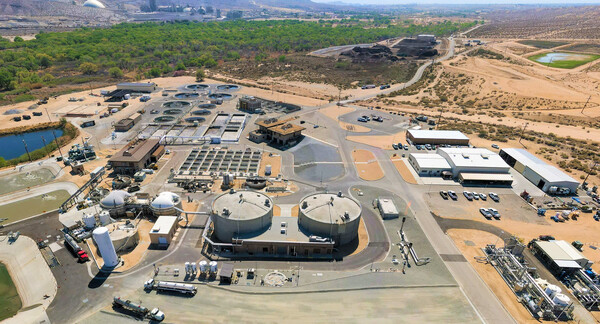
미국 바이오가스협회(ABC)가 9월 9일 발표한 새로운 데이터에 따르면, 현재 미국 전역의 하수처리장 1천200곳이 하수 슬러지에서 발생하는 바이오가스(Biogas)를 포집하여 활용하고 있다. 이는 미국에서 가동 중인 모든 유형의 바이오가스 시설 2천600여곳 중 거의 절반을 하수처리장이 차지하고 있다. 사진은 빅터밸리 물재이용시서(Victor Valley Wastewater Reclamation) 및 바이오가스 시설 (Biogas facilities). [사진출처(Photo source) = 미국 바이오가스협회(ABC) / 플리커(Flicker)]
미국 내 많은 지역사회의 하수처리장들이 단순히 하수를 처리하는 것을 넘어 재생 에너지를 생산하는 역할까지 수행하고 있다.
미국 바이오가스협회(American Biogas Council, ABC)가 9월 9일 발표한 새로운 데이터에 따르면, 현재 미국 전역의 하수처리장 1천200곳이 하수슬러지에서 발생하는 바이오가스(Biogas)를 포집하여 활용하고 있다. 이는 미국에서 현재 가동 중인 모든 유형의 바이오가스 시설 2천600여곳 중 거의 절반을 하수처리장이 차지하고 있음을 의미한다.
이들 하수처리 시설은 연간 1천억 입방피트(ft³ ) 이상의 바이오가스를 포집하고 있는데, 이는 미국 가정 약 110만 가구에 전력을 공급할 수 있는 양(연간 2천120억 Kwh)에 해당한다. 그러나 수천 곳의 하수처리장이 추가로 이러한 작업을 수행할 수 있음에도 불구하고, 현재는 그렇지 않은 실정이다.
미국 전역의 일부 하수처리장에서는 ‘혐기성 소화(Anaerobic digestion)’ 방식을 사용하여 하수슬러지(바이오솔리드)를 분해한다. 이 과정은 병원균과 악취를 제거하고, 처리 및 폐기에 막대한 세금이 소요되는 슬러지의 부피를 줄이는 효과가 있다.
물질이 분해되는 과정에서 메탄(CH₄) 함량이 높은 가스인 바이오가스가 배출되는데, 이를 대기로 방출하는 대신 포집하면 재생 에너지로 활용할 수 있습니다. 바이오가스 포집 시스템은 이 가스를 모아 전기나 열을 생산하는 데 사용함으로써 화석 연료 사용을 대체할 수 있게 해준다.
하지만 ABC에 따르면, 미국 하수처리장이 가진 잠재적 에너지 중 극히 일부만이 포집되고 있다. 바이오가스 포집이 실현 가능한 선택지가 될 만큼 충분한 하수 유입량을 갖춘 하수처리장이 약 3천800곳이나 더 존재하기 때문이다.
만약 이 시설들이 바이오가스를 포집하여 에너지 생산에 활용한다면, 연간 바이오가스 생산량은 약 1천720억 ft³ 로 증가할 수 있다. 이는 미국 가정 약 190만 가구에 전력을 공급할 수 있는 양으로, 현재 생산량의 거의 두 배에 달한다.
미국 하수처리장의 바이오가스 포집 시스템 개시 연도별 현황
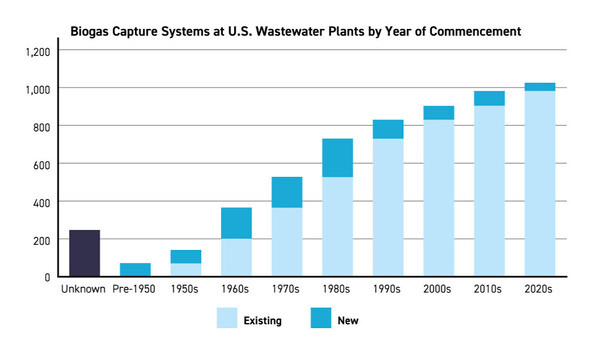
[그래픽 출처(graphic source) = 미국 바이오가스협회(ABC)]
ABC의 패트릭 서파스(Patrick Serfass) 상임이사는 “우리는 흔히 하수처리장을 에너지를 생산하는 곳이 아니라 소비하는 곳으로 생각하는 경향이 있다”라고 말했다.
서파스 상임이사는 특히 “하지만 지역사회는 이미 처리비용을 지불하고 있는 폐기물 흐름을 안정적인 재생 에너지로 전환할 기회를 가지고 있다”라면서 “전력 수요가 증가함에 따라, 이러한 에너지를 더 많이 포집하여 활용하면 지역사회의 늘어나는 에너지 수요를 현지에서 충족하는 데 도움이 될 수 있다”고 강조했다.
현재 바이오가스를 포집 및 활용하는 1천200개 시설 중 대다수는 시설 내에서 전력이나 열을 생산하여 자체 수요를 충족하고 화석 연료 구매량을 줄이는 데 이를 사용하고 있다.
캘리포니아주 툴레어(Tulare) 시의 한 시설은 하수처리 과정에서 발생하는 바이오가스를 전력으로 변환하는 시스템을 통해 연간 100만 달러(약 13억5천만 원) 이상의 전기 요금을 절감하고 있다고 보고했다.
추가적인 전력 생산은 데이터센터, 제조업, 운송업 등 안정적인 전력을 필요로 하는 분야를 지원할 수 있으며, 풍력이나 태양광처럼 날씨의 영향을 받는 에너지원을 보완하는 역할도 할 수 있다.
이 1천200개 시설 중 약 4%에 해당하는 또 다른 그룹은 불순물을 제거하고 메탄(CH₄) 농도를 높여 바이오가스를 재생 천연가스(Renewable Natural Gas, RNG)로 업그레이드한다. 이렇게 생산된 가스는 기존 가스 배관망의 가스와 동일한 품질을 갖추게 되어 일반 천연가스를 직접 대체하는 용도로 사용될 수 있다.
미국 바이오가스협회(ABC)는 유기성 폐기물을 청정 에너지와 비료로 재활용하는 모든 기업을 대변하며 미국 바이오가스 산업의 목소리 역할을 하고 있다. 바이오가스 포집 시스템은 폐기물, 음식물 쓰레기, 가축 분뇨, 하수 등을 재활용하여 지역사회를 안전하고 깨끗하게 유지하며 지역 경제를 지원한다.
[원문보기]
America’s Wastewater Plants Could Be a Much Bigger Source of Renewable Power
Today, 1,200 wastewater treatment plants recycle sludge into renewable energy, but 3,800 don’t.
WASHINGTON - September 8, 2026 - Wastewater treatment plants in many American communities are doing more than treating sewage - they’re also producing renewable energy.
According to new data released today from the American Biogas Council, 1,200 wastewater treatment plants across the United States currently capture and use biogas produced from wastewater sludge. That means wastewater treatment plants account for nearly half of the approximately 2,600 biogas facilities of all types operating in the United States today.
Together, these wastewater facilities capture more than 100 billion cubic feet of biogas per year, enough to power about 1.1 million U.S. homes (212 billion kilowatt-hours of electricity annually). But thousands more wastewater treatment plants could do the same and currently are not.
Across the country, some wastewater treatment plants use anaerobic digestion to break down sewage sludge, also called biosolids, to kill pathogens, odor, and reduce the volume of sludge state tax dollars pay to remove.
As the material digests, biogas is released - a methane-rich gas that, if captured, can make renewable energy instead of going into the atmosphere. A biogas capture system collects this gas so it can be used to generate electricity or heat, displacing the need to use fossil fuels.
But only a fraction of the potential energy at America’s wastewater plants is captured, according to the ABC. About 3,800 more wastewater treatment plants have sufficient wastewater flows biogas capture to be a viable option.
If these facilities captured their biogas and used it to produce energy, annual biogas production could increase to approximately 172 billion cubic feet, enough to generate electricity for approximately 1.9 million American homes - almost twice as much.
“We tend to think of wastewater treatment plants as places that consume energy, not places that can produce it,” said ABC Executive Director Patrick Serfass.
“But communities have an opportunity to turn the waste stream we already pay to manage into reliable, renewable power. With electricity demand rising, capturing more of this energy can help communities meet their growing energy needs locally.”
Today, of the 1,200 facilities that capture and use their biogas, the vast majority generate electricity or heat at the plant to meet plant needs and reduce the amount of fossil fuel the plant purchases.
One plant in the City of Tulare, California, has reported that its wastewater biogas-to-electricity system saves more than $1 million annually in avoided electricity costs.
Additional power generation could also support data centers, manufacturing, transportation and other sectors with increasing demand for reliable, electricity to complement weather-dependent resources such as wind and solar.
Another subset of these 1,200 plants, about four percent, upgrade their biogas to renewable natural gas (RNG) by removing impurities and concentrating the methane so it matches the kind of gas in our gas pipelines and can be used as a direct substitute for conventional natural gas.
Explore the ABC’s Wastewater Fast Facts, additional graphs, biogas project profiles, and more in the American Biogas Council Newsroom.
About the American Biogas Council
The American Biogas Council is the voice of the U.S. biogas industry, representing all companies working to recycle organic waste into clean, locally made energy and fertilizer. Biogas capture systems recycle waste, food scraps, manure, and wastewater, keeping communities safe and clean, and supporting local economies.
The ABC’s mission is to maximize the economic and environmental benefits of biogas while advancing sustainable solutions for energy, agriculture, and waste management. Learn more at americanbiogascouncil.org, on X @ambiogascouncil, Facebook, and LinkedIn.
[출처 = 미국 바이오가스협회(ABC)(https://americanbiogascouncil.org/americas-wastewater-plants-could-be-a-much-bigger-source-of-renewable-power/) / 2026년 9월 9일]
|  즐겨찾기 추가
 시작페이지로 설정
























