[북아메리카] [2026] [미국] 미시간주립대 연구진, 메뚜기 뇌 신경세포서 PFAS 식별 능력 확인
이름
관리자
작성일
2026-08-21
조회수
600
파일첨부
[미국] 미시간주립대 연구진, 메뚜기 뇌 신경세포서 PFAS 식별 능력 확인
미시간주립대 연구진 참여…『Journal of Hazardous Materials Advances』 게재
메뚜기 뇌의 후각 처리 영역 신경 활동 기록해 PFAS별 반응 분석
환경 시료와 유사한 농도의 PFOS 감지…휴대용 생물학적 센서 개발 가능성 제시
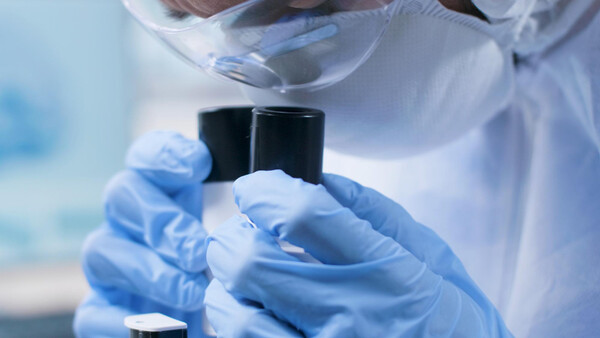
미국 미시간주립대학교(Michigan State University, MSU) 연구진이 메뚜기 뇌의 신경세포가 환경에서 검출되는 수준의 과불화화합물(PFAS)을 감지하고 여러 PFAS를 구별할 수 있다는 사실을 확인했다. [사진출처(Photo Source) = Magnific]
미국 미시간주립대학교(Michigan State University, MSU) 연구진이 메뚜기 뇌의 신경세포가 환경에서 검출되는 수준의 과불화화합물(PFAS)을 감지하고 여러 PFAS를 구별할 수 있다는 사실을 확인했다.
PFAS는 눌어붙지 않는 조리기구와 방수 직물, 소방용 포말 등에 사용되는 물질이다. 분해 속도가 매우 느려 물과 토양, 생물체에 잔류하기 때문에 오염 상태를 감시하고 정화하기 어렵다.
데바지트 사하(Debajit Saha) 미시간주립대학교 공과대학 및 정량건강과학공학연구소 부교수는 “PFAS는 감지하기가 매우 어렵고, 아주 낮은 농도에서도 PFAS를 식별할 수 있는 기술이 절실히 필요하다”고 말했다.
과학자들은 수십 년간 기술을 개발해 왔지만 생물체의 감각에 필적하는 민감도를 지닌 인공 화학센서를 제작하는 데 여전히 어려움을 겪고 있다. 개는 여러 화학물질을 감지하는 능력이 가장 뛰어난 동물 가운데 하나이며, 곤충은 주변 환경을 탐색할 때 후각에 크게 의존한다.
연구진은 곤충이 PFAS를 감지할 수 있는지 확인하기 위해 메뚜기 뇌에서 냄새를 처리하는 영역의 신경 활동을 기록했다. 이어 메뚜기를 여러 PFAS가 포함된 기체에 노출했다. 실험에는 환경에서 흔히 발견되고 엄격하게 규제되는 PFAS 가운데 하나인 과불화옥탄술폰산(Perfluorooctanesulfonic Acid, PFOS)도 포함됐다.
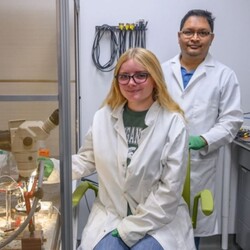
서머 맥레인스보보다 연구 주저자와 데바지트 사하 부교수. [사진출처(Photo Source) = 미시간주립대 데릭 L. 터너(Derrick L. Turner)]
서머 맥레인스보보다(Summer McLane-Svoboda) 사하 연구실 박사과정생 겸 대학원 연구조교이자 이번 연구의 주저자는 “처음에는 메뚜기 뇌가 PFAS에 반응할지조차 확신할 수 없었다”며 “PFAS마다 서로 다른 신경 패턴이 나타나는 것을 확인한 뒤 생물체가 강력한 PFAS 감지 플랫폼이 될 수 있다는 사실을 깨달았다”고 말했다.
연구결과, PFAS별로 서로 다른 신경 활동 패턴이 나타났다. 연구진은 이를 ‘냄새 지문’으로 설명했으며, 이 반응을 통해 메뚜기가 서로 다른 화학물질을 구별할 수 있다는 사실을 확인했다.
메뚜기는 오염된 환경 시료에서 발견되는 것과 유사한 농도의 PFOS도 감지했다. PFAS가 전적으로 인공적으로 만들어진 화학물질이라는 점에서 이 결과는 연구진에게 예상 밖의 발견이었다.
곤충이 진화 과정에서 인식하게 된 자연적인 냄새와 달리 PFAS는 존재하기 시작한 지 수십 년밖에 되지 않았다. 이에 따라 메뚜기의 감각체계가 PFAS에 강하게 반응하는 이유는 명확하지 않다.
메뚜기 뇌의 PFAS 반응에 대해 사하 부교수는 “메뚜기 뇌가 PFAS에 얼마나 강하게 반응하는지 보고 놀랐다”며 “PFAS는 자연환경에 존재하지 않는 인공 화학물질이지만 어떤 이유에서인지 곤충의 감각체계가 이를 감지할 수 있다”고 설명했다.
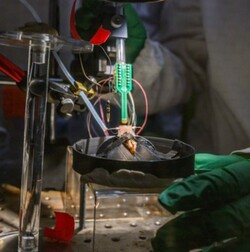
메뚜기 뇌의 PFAS 감지 반응을 확인하는 실험 장면. [사진출처(Photo Source) = 미시간주립대 데릭 L. 터너(Derrick L. Turner)]
현재 PFAS를 검출하려면 일반적으로 액체크로마토그래피 질량분석법(Liquid Chromatography-Mass Spectrometry)과 같은 실험실 장비가 필요하다. 이러한 분석 시스템은 정확도가 높지만 가격이 비싸고 전문시설이 필요하며 현장에 쉽게 배치하기 어렵다.
기존 검출 방법 가운데 상당수는 특정 PFAS를 식별하도록 설계돼 있어 오염 여부를 광범위하게 선별하는 데도 어려움이 있다.
이번 연구는 개념증명 단계다. 연구진은 현재 실험실 밖에서도 이 방법으로 PFAS 오염을 감지할 수 있는지 확인하기 위해 미국 미시간주에서 채취한 환경 수질 시료를 시험하고 있다.
또한 사하 부교수는 “생물학은 PFAS를 감지하는 완전히 다른 방법을 제공할 수 있다”며 “살아 있는 감각체계가 이러한 화학물질을 인식할 수 있다면 오염 상태를 감시할 수 있는 더 빠르고 활용도 높은 도구를 개발할 수 있을 것”이라고 말했다.
PFAS 감지를 위한 곤충 감각체계의 활용 가능성을 제시한 이번 연구결과는 『저널 오브 해저더스 머티리얼즈 어드밴시스(Journal of Hazardous Materials Advances)』에 게재됐다.
연구진은 궁극적으로 여러 PFAS를 현장에서 신속하게 선별할 수 있도록 해당 기술을 소형화해 휴대용 생물학적 센서로 개발하는 것을 목표로 하고 있다.
[원문보기]
How insects could help detect PFAS contamination
MSU researchers uncover an unexpected biological ability that could inspire future PFAS sensors
Summary
• PFAS contamination is widespread, but detecting multiple PFAS chemicals requires expensive laboratory equipment and specialized analysis.
• Neurons in a locust’s brain can distinguish between multiple PFAS compounds, including PFOS at environmentally relevant concentrations.
• Insects have an unexpected biological ability to sense human-made chemicals that do not naturally occur in the environment.
• The work could eventually lead to portable biological sensors for faster environmental monitoring.
Researchers at Michigan State University have discovered that neurons in a locust’s brain can distinguish among multiple PFAS compounds, including PFOS, one of the world’s most common “forever chemicals,” at environmentally relevant concentrations.
PFAS, or per- and polyfluoroalkyl substances, are used in products ranging from nonstick cookware and waterproof fabrics to firefighting foams. Because they break down very slowly, they persist in water, soil and living organisms, making contamination difficult to monitor and clean up.
“PFAS are extremely difficult to detect,” said Debajit Saha, associate professor in Michigan State University’s College of Engineering and Institute for Quantitative Health Science and Engineering. “There is a tremendous need for technologies that can identify them at very low concentrations.”
Despite decades of engineering, scientists still struggle to build artificial chemical sensors that rival the sensitivity of living organisms. Dogs remain among the best detectors of many chemicals, and insects rely heavily on smell to navigate the world.
To test whether insects could detect PFAS, researchers recorded neural activity from the portion of a locust’s brain that processes odors. The insects were exposed to gases containing several PFAS compounds, including PFOS, one of the most common and heavily regulated PFAS chemicals found in the environment.
“We weren’t sure whether the locust brain would respond to PFAS at all,” said Summer McLane-Svoboda, a doctoral candidate and graduate research assistant in Saha’s lab and lead author of the study. “Once we saw distinct neural patterns for different compounds, we realized biology could become a powerful PFAS-sensing platform.”
The researchers found that each PFAS compound produced a distinct pattern of neural activity — an “odor fingerprint” that allowed the insects to distinguish between different chemicals. The team also demonstrated that locusts could detect PFOS at concentrations similar to those found in contaminated environmental samples.
This finding bewildered the researchers because PFAS are entirely human-made chemicals. Unlike the natural odors insects have evolved to recognize, PFAS have existed only for decades, making it unclear why the locust’s sensory system responds so strongly to them.
“We were surprised by how strongly the locust brain responded to PFAS compounds,” Saha said. “For some reason, the insect’s sensory system is able to detect these human-made chemicals, even though they don’t naturally occur in the environment.”
Detecting PFAS today typically requires laboratory instruments such as liquid chromatography-mass spectrometry. Although highly accurate, those systems are expensive, require specialized facilities and are not easily deployed in the field. Many existing detection methods are designed to identify specific PFAS compounds, making broad screening for contamination challenging.
The study is a proof of concept. Next, the team is testing environmental water samples collected in Michigan to determine whether the approach can detect PFAS contamination outside the laboratory. Ultimately, the researchers hope to miniaturize the technology into portable biological sensors capable of rapidly screening multiple PFAS compounds in the field.
“Biology may offer a completely different way to detect PFAS,” Saha said. “If living sensory systems can recognize these chemicals, we may be able to build faster, more versatile tools for monitoring contamination.”
The team is now working with environmental samples collected in Michigan to determine whether the approach can identify PFAS contamination outside the laboratory.
The research was published in the Journal of Hazardous Materials Advances.
 즐겨찾기 추가
 시작페이지로 설정