[덴마크] “지속 가능성은 코펜하겐 하수처리장 혁신을 이끈다”
덴마크 최대 공공하수처리회사 바이오포스(BIOFOS), 코펜하겐 3개의 허수처리장 운영관리
BIOFOS 연구개발 책임자 다인스, 35년 넘게 하수처리 분야 종사…하수처리장 혁신에 앞장
하수슬러지, 기후 친화적인 전기·바이오가스·그리드용 난방에 이상적인 에너지원임을 발견
케미라가 개발한 KemConnect® 스마트 물관리 솔루션…탄소중립 수처리로 온실가스 배출 감소 및 바이오가스 생산량 늘려 순환경제에 기여
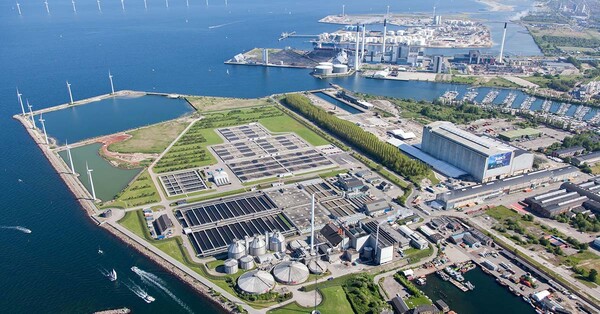
덴마크 최대의 공공 하수처리 회사인 바이오포스(BIOFOS)는 다인스 손버그(Dines Thornberg)를 비롯해 소수의 연구자들이 헌신적인 노력으로 코펜하겐 하수처리장의 혁신을 이끌고 있다. 사진은 라이네튼 하수처리장(Lynetten wastewater treatment plant) 전경. [사진출처(Photo source) = 케미라(Kemira)]
지속 가능성에 대한 집중은 지방자치단체가 하수관리 방식을 변화시키고 있다. 하지만, 변화는 하루아침에 일어나지 않는다. 전 세계 유틸리티(Utilities) 회사들은 덴마크 코펜하겐(Copenhagen)의 하수처리 분야에서 영감을 얻을 수 있다. 이곳의 자체 연구자들은 온실가스 배출을 줄이고 바이오가스 생산량을 늘려 순환 경제에 기여하고 있다.
다인스 손버그(Dines Thornberg)는 35년 넘게 하수처리 분야에서 일해왔다. 스스로를 ‘하수처리광(Wastewater nerd)’이라 칭하는 그는 현재 덴마크 최대의 공공 하수처리 회사인 바이오포스(BIOFOS)의 연구개발 책임자이다.
BIOFOS는 린네텐(Lynetten), 아베뒤레(Avedøre), 담후소엔(Damhusaen)에 위치한 세 개의 하수처리장(Wastewater Treatment Plant, WWTP)을 통해 120만 명의 주민들이 배출한 하수를 처리한다. 이 유틸리티는 다인스 손버그(Dines Thornberg)를 비롯해 소수의 헌신적인 연구자들을 보유하고 있어 행운이며, 이들의 혁신적인 이니셔티브는 BIOFOS에서 운영관리하는 하수처리장의 지속 가능성 측면에서 앞서 나가고 있다.
다인스 손버그는 “우리는 법적으로 처리해야 할 물을 처리하는 것 이상의 일을 하고자 한다. 우리는 에너지와 기후 긍정적 방향을 이루고 싶다”라고 설명한다.
물 관리보다 더 많은 것
BIOFOS의 환경 친화적 방향 강화 노력은 유엔 지속가능발전목표(Sustainable Development Goals, SDGs), 특히 물 관련 목표와 SDG 7(저렴하고 청정한 에너지, Affordable and Clean Energy), SDG 12(책임 있는 생산 및 소비, Responsible Production and Consumption), SDG 13(기후 행동, Climate Action)을 중심으로 진행되고 있다.
이에 따라 다인스와 연구팀은 BIOFOS의 탄소 발자국(Carbon Footprint)을 가장 넓은 의미에서 연구해왔다. 이들은 온실가스 배출과 화석 기반 에너지원 사용을 평가했다. 그들의 분석 결과 흥미로운 것은 “BIOFOS의 전체 탄소 발자국을 변화시키려면 탄소와 전혀 관련 없는 문제를 다뤄야 한다”는 결론에 도달했다.
CO₂를 넘어선 배출 감축
다인스는 BIOFOS가 기후 영향에 가장 큰 우려를 가진다고 말하는데, 이는 이산화탄소(CO₂)의 약 275배에 달하는 온실가스 아산화질소(Nitrous Oxid)라고 한다. 아산화질소, 즉 N₂O는 대기 중에 약 100년간 머물러 매우 강력하다.
다인스는 “N₂O에 집중함으로써 우리는 전체적인 환경 발자국(Environmental Footprin)을 훨씬 더 크게 줄일 수 있고, 탄소 중립 목표에 한 걸음 더 다가가며 궁극적으로 기후 긍정적인 상태가 될 수 있다”고 설명한다.
N₂O 배출량에 대해 전력회사는 전면 규모의 해결책을 조사했다. 용존산소(Dissolved Oxygen, DO) 설정값을 조정하여 산소 수준을 변경했다. 또한 유기 화합물을 분해하는 박테리아의 수를 조절하기 시작했다. 마지막으로, 그들은 화학물질, 에탄올(Ethano), 글리코겐(Glycogen), 또는 탄소원을 첨가하여 슬러지 농도를 조절했다. 이러한 조정들을 종합해 배출량을 억제하고 있다. 다음 단계로 다인스는 “팀이 탄소 포집 기술을 고려하고 있다”고 말한다.
하지만 배출량은 이야기의 일부에 불과하다. BIOFOS는 에너지 사용에 대해서도 면밀히 검토하고 있다. 오늘날 회사는 이미 에너지 양성(Energy positive) 상태로, 전력망에 순 기여자이다. 하지만 여전히 에너지 균형의 개선 가능성을 모색하고 있다.
각 에너지 단위는 중요하다
BIOFOS가 덴마크에 위치해 있기 때문에, 현재 운영을 위해 비교적 적은 화석연료를 사용한다고 추정하는 것이 맞다. 실제로 다인스는 “화석연료 기반 에너지가 과거 우리 CO₂ 발자국에 가장 큰 기여를 했다”고 말한다. 하지만 “덴마크는 주로 풍력 형태로 50% 재생에너지로 전환했다”라고 덧붙였다.
이 자체로 유틸리티의 에너지 믹스와 전반적인 환경 발자국이 크게 개선되었다. 하지만 그는 “에너지 측면에서 대대적인 개선을 하기가 이제 더 어려워졌다”고 지적한다. 그래서 다인스는 에너지 효율성에 더 많은 시간을 할애하며, 점진적인 개선을 목표로 하고 있다. 그는 혼자서 처리하기 힘든 특히 고집스러운 문제, 기름과 지방을 떠올린다.
다인스 연구책임자는 “지방이 잘못된 곳에서 계속 나타나 하류로 계속 퍼졌으며, 그로 인해 누적 문제가 발생했다. 지방이 1차 정제기에 쌓이면서 냄새가 나기 시작했고, 지방은 센서와 기계에도 코팅되고 있었다”라고 말한다.
이 문제로 모든 것이 지연되었고, 효율적이지 않아 지속 가능하지 않았다. BIOFOS는 케미라(Kemira)의 예스퍼 버너(Jesper Berner) 영업 매니저에게 화학적 해결책을 요청했다. 성공적인 협력 후, 그들은 BIOFOS의 광범위한 지속 가능성 목표를 지원하는 다른 해결책, 예를 들어 더 나은 슬러지 관리를 통한 바이오가스 생산 최적화 방안을 모색하기 시작했다.
부산물에서 바이오가스로
다른 많은 하수처리장(WWTP)와 마찬가지로, BIOFOS는 그들이 생성하는 슬러지가 기후 친화적인 전기, 바이오가스, 그리드용 난방에 이상적인 에너지원임을 발견했다. 여기서 케미라의 화학 및 응용 전문성은 BIOFOS에 큰 도움이 되었다.
이 유틸리티는 2019년부터 케미라와 함께 슬러지 관리 작업을 시작했다. 그들은 1차 단계에서 더 많은 슬러지를 제거하고 소화기로 보내기 위해 사전 침전을 도입했다. 이것은 바이오가스를 더 많이 생산하는 데 도움을 줄뿐만 아니라, 2차 단계에서 더 작은 부하를 처리할 수 있게 해주었다.
“그것이 우리를 더 친환경적으로 만들고 기후 노력에 도움을 주는 것이다. 이로 인해 하류 에너지를 절약할 수 있었다. 추가적인 이점으로, 간접적으로 비용을 절감할 수 있다”라고 다인스는 말한다.
케미라에서는 순환 경제가 실제로 구현된 훌륭한 사례라고 생각한다. BIOFOS는 폐기물을 지역 사회에 귀중한 에너지로 전환했다.
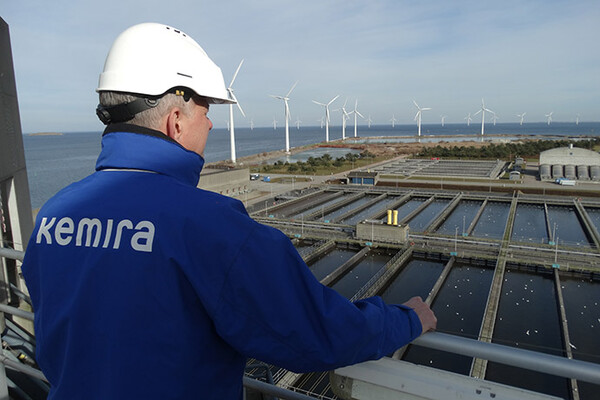
BIOFOS는 그들이 생성하는 슬러지가 기후 친화적인 전기, 바이오가스, 그리드용 난방에 이상적인 에너지원임을 발견했다. 여기서 케미라(Kemira)의 화학 및 응용 전문성은 BIOFOS에 큰 도움이 되었다. 케미라의 예스퍼 버너(Jesper Berner) 영업 매니저가 덴마크 코펜하겐의 라이네튼 하수처리장을 내려다보고 있다. [사진출처(Photo source) = 케미라(Kemira)]
자산 수명 연장
순환 경제의 또 다른 원칙은 자원과 자재의 유효 수명을 연장하는 것이다. 케미라는 최근 몇 년간 빗물 증가로 인해 버거워지고 있는 기존 시설에서 더 많은 수용 능력을 끌어내는 BIOFOS를 돕고 있다.
“지금 당장 더 많은 수용력을 위해 건설해야 한다면, 비용이 매우 많이 들 것이다. 케미라의 켐커넥트(KemConnect®) 덕분에 중간 기간을 가질 수 있다”고 다인스는 설명한다.
케미라가 개발한 KemConnect® 는 강력한 디지털 플랫폼과 케미라의 세계적 수준의 화학 기술을 결합한 효율적이고 신뢰할 수 있는 최적화를 위한 스마트 물관리 솔루션(Smart Water Management Solution)으로, 케미라의 알고리즘은 변화하는 공정 조건에서도 화학적 인산염 제거에 필요한 정확한 응고제 용량을 제공한다.
KemConnect® 솔루션은 또한 수처리의 주요 영역에서 데이터 기반 화학 관리를 가능하게 한다. 실시간 모니터링, 고급 공정 제어 및 최적화, 예측 분석 솔루션을 통해 투명성을 구축하고, 공정에 대한 더 깊은 이해를 제공하며, 공장 운영에 대한 선제적이고 시기적절한 조치를 가능하게 한다.
그리고 코펜하겐에서는 상황이 꽤 극적으로 변한다. “도시에서 나오는 원시 하수는 밤보다 낮에 훨씬 많다. 또한 일주일과 계절에 따라 달라진다. 화학적 투여는 중요한 조절 요소이다”라고 다인스가 설명한다.
KemConnect® 를 통해 그는 화학물질을 보다 효율적으로 사용하면서 공정을 안정화하고 최적화하기를 희망한다. KemConnect® 애플리케이션은 지속적으로 개발되고 있으며, BIOFOS는 케미라의 소중한 파트너이다.
BIOFOS는 또한 ‘EU 호라이즌 2020 프로젝트(EU Horizon 2020 project)’인 디지털 물의 도시(Digital-water.city)의 일환으로 48시간 하수처리장 유량 예보와 실시간 빗물관리 개선을 위해 노력하고 있다.
다인스가 35년 넘게 이 업계에 들어온 이후로 하수 처리가 크게 변했다는 말로는 부족하다. 그럼에도 불구하고, 여러 면에서 충분히 현대화되지 못했다. 비록 다인스와 그의 팀이 지금 모든 답을 가지고 있지 않을지라도, 올바른 질문을 던지고 올바른 파트너를 선택함으로써 변화를 촉진하고 있다. “우리는 파트너십에 관한 UN SDG 17(목표를 위한 파트너십)을 지지한다”라고 강조한다.
함께 문제 해결하기
케미라에서는 모든 고객에게 파트너십의 정신으로 접근하는 것을 좋아한다. BIOFOS 같은 유틸리티 업체들은 어려운 화학 관련 문제에 대해 종종 저희에게 도움을 요청하지만, 투명한 접근 방식과 직접적인 지원 덕분에 계속해서 저희에게 의지한다.
다인스는 이 파트너십에 대해 케미라의 예스퍼 버너(Jesper Berner) 영업 매니저를 칭찬한다. “나는 수년간 예스퍼와 함께 일해왔다. 필요하지 않은 것을 쓰라고 강요하지 않는다. "나는 그를 업계에서 가장 솔직하고 정직한 사람 중 한 명이라고 생각한다”라고 그는 말한다.
다인스의 연구가 어디로 향하든, 케미라 연구팀은 지식과 해결책, 협력 정신을 갖추고 있다. 우리의 목표는 BIOFOS와 같은 지방자치단체 유틸리티가 하수처리를 목적에 맞게 조정하고 탄소중립(Net-Zero) 세계와 순환 경제에 맞게 준비되도록 돕는 것이다.
[원문보기]
Sustainability steers innovation at Copenhagen’s wastewater treatment plants
We want to do more than treat the water which we are obliged to treat by law. We want to be energy and climate positive
Sustainability focus is changing the way municipalities manage wastewater. But change doesn’t happen overnight. Utilities everywhere can take inspiration from Copenhagen’s wastewater treatment, where in-house researchers are reducing greenhouse gas emissions, and contributing to the circular economy by increasing biogas output.
Dines Thornberg has been working in wastewater treatment for more than 35 years. A self-proclaimed “wastewater nerd”, he is currently the head of R&D at BIOFOS, the utility that manages wastewater for the city of Copenhagen in Denmark and its neighboring communities.
BIOFOS treats the wastewater of 1.2 million people with three wastewater treatment plants (WWTPs) in Lynetten, Avedøre and Damhusaen. The utility is lucky to have Dines and a handful of dedicated researchers whose innovative initiatives keep BIOFOS’s plants two steps ahead when it comes to sustainability.
“We want to do more than treat the water which we are obliged to treat by law. We want to be energy and climate positive,” he explains.
More than water management
BIOFOS’s efforts to become more environmentally friendly are oriented around the United Nations Sustainable Development Goals (SDGs), especially the goals related to water, as well as SDG 7 (Affordable and Clean Energy), SDG 12 (Responsible Production and Consumption) and SDG 13 (Climate Action).
As such, Dines and the team have been studying BIOFOS’s carbon footprint in the broadest sense. They have evaluated their greenhouse gas emissions and their use of fossil-based energy sources. Their analysis led to an interesting conclusion: to move the needle on BIOFOS’s overall carbon footprint, they must tackle something that has nothing to do with carbon at all.
Reducing emissions beyond CO₂
Dines says that BIOFOS’s biggest concern when it comes to climate impact is nitrous oxide, a greenhouse gas with global warming potential about 275 times that of CO2. Nitrous oxide, or N₂O, lingers in the atmosphere for roughly 100 years, making it extremely potent.
“By focusing on N₂O, we will make a much bigger dent in our overall environmental footprint, bringing us closer to our goal of carbon neutrality and, ultimately, becoming climate positive,” Dines explains.
To reduce N2O emissions, the utility has investigated full-scale solutions. They have changed aeration levels by adjusting the dissolved oxygen setpoint. They also started varying the number of bacteria working to degrade organic compounds.
Finally, they changed their sludge concentration by adding chemicals, ethanol or glycogen, or a carbon source. Taken together, these adjustments are curbing emissions. As a next possible step, Dines says their team is considering carbon capture technology.
But emissions are only part of the story. BIOFOS is also taking a hard look at energy use. The company today is already energy positive, meaning they are a net contributor to the grid. But they are still looking for possible improvements in their energy balance.
Each unit of energy counts
Since BIOFOS is situated in Denmark, you would be right to assume that they use relatively few fossil fuels to power their current operations. Indeed, Dines says, “Fossil-based energy used to be the biggest contribution to our CO2-footprint. But then Denmark switched to 50% renewable energy, mostly in the form of wind power.”
That alone drastically improved the utility’s energy mix and overall environmental footprint. However, he points out, it’s now harder to make sweeping improvements when it comes to energy.
So Dines devotes more time to energy efficiency, targeting incremental improvements. He recalls one particularly stubborn issue that was too slippery to handle alone - greases and fats.
“Fats kept popping up in the wrong places and continuing downstream,” Dines explains. “It led to an accumulation problem. The fat accumulated in the primary clarifiers and started to smell. Fats were also coating sensors and machines.”
The issue slowed everything down ─ not very efficient, which means not very sustainable. BIOFOS turned to Kemira sales manager Jesper Berner for a chemical solution. After a successful collaboration, they began exploring other solutions in support of BIOFOS’s broader sustainability ambitions, including optimizing biogas output through better sludge management.
From by-product to biogas
Like many other WWTPs, BIOFOS has found that the sludge they generate is an ideal energy source for climate-friendly electricity, biogas, and heating for the grid. Here, Kemira’s chemistry and applications expertise has also helped BIOFOS tremendously.
The utility began working with Kemira on sludge management in 2019. They implemented pre-precipitation to take more sludge out in the primary step and send more to the digestors. Not only did this help BIOFOS produce more biogas, it meant they could treat smaller loads in the secondary step.
“That is making us greener and helping with our climate efforts. It saves energy downstream. As an added benefit, it indirectly reduces costs,” Dines says.
At Kemira, we also think it’s a great example of circular economy in action. BIOFOS has turned a waste stream into valuable energy for their local community.
Extending the life of assets
Another principle of the circular economy is extending the useful life of resources and materials. Kemira is helping BIOFOS squeeze more capacity out of their current facilities, which are straining to keep up in recent years due, in part, to increased stormwater.
“If we had to build for more capacity right now, it would be very expensive. We can have an intermediate period thanks to Kemira’s KemConnect™,” Dines explains.
KemConnect™ is a smart water management solution that combines a robust digital platform with Kemira’s world-class chemistry for efficient and reliable optimization. Our algorithm doses the exact amount of coagulants required for chemical phosphate removal even under changing process conditions.
And conditions do change quite dramatically in Copenhagen. “The load of raw wastewater coming from the city is much higher in the daytime than at night. It also varies throughout the week and with the seasons. Chemical dosing is an important control,” Dines explains. With KemConnect™, he hopes to stabilize and optimize their processes while using chemicals more efficiently. The KemConnect applications are constantly further developed, and BIOFOS is a valuable partner for Kemira in this development work.
BIOFOS is also working toward a 48-hour WWTP flow forecast, and better real-time stormwater control, as part of an EU Horizon 2020 project called digital-water.city.
It’s an understatement to say that wastewater treatment has changed considerably since Dines began working in the business more than 35 years ago. And yet, in many ways, it hasn’t modernized enough. Even though Dines and his team may not have all the answers right now, they continue to foster change by asking the right questions and picking the right partners. “We support the UN SDG 17 regarding partnerships,” he emphasizes.
Problem-solving together
At Kemira, we like to approach every customer in the spirit of partnership too. Utilities like BIOFOS often seek out our help for difficult chemistry-related issues, but they turn to us time and time again because of our transparent approach and hands-on support.
Dines compliments Jesper for this partnership “I have been working with Jesper for many years. He doesn’t push us to use something we don’t need. I consider him to be one of the most straightforward and honest people in the business,” he says.
No matter where Dines’ research leads him next, the team at Kemira is prepared with knowledge, solutions and a collaborative spirit. Our goal is to help municipal utilities like BIOFOS adapt wastewater treatment so it’s fit-for-purpose and ready for the net-zero world and circular economy.
[출처 = 케미라(Kemira)(https://www.kemira.com/stories/sustainability-steers-innovation-at-copenhagens-wastewater-treatment-plants/)]
|  즐겨찾기 추가
 시작페이지로 설정
























