[스위스] WMO, '전 세계 연간-10년 주기 업데이트' 보고서 발표
향후 5년 내 2024년 최고기온 경신 가능성 86%
2026년 말 엘니뇨 예측…이르면 2027년 최고 기온 돌파 가능성 높아
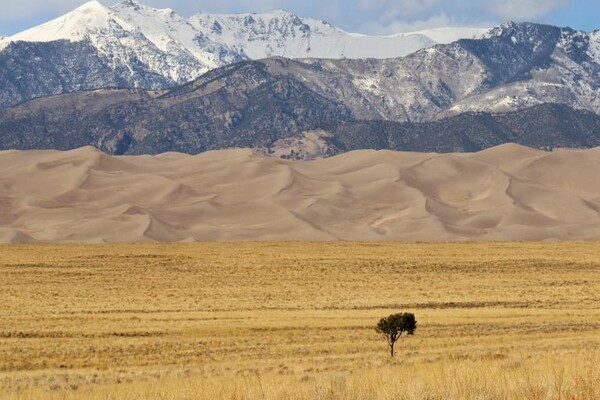
영국 기상청(Met Office)이 작성한 세계기상기구(WMO)의 새 보고서에 따르면, 향후 5년 동안 전 세계 평균 기온은 계속해서 최고 기록 수준을 유지하거나 이에 근접할 가능성이 높으며, 북극 지역의 기온 상승 폭은 전 세계 평균보다 더 클 것으로 예상된다. 사진은 WMO 2026년 달력 공모전 수상작, 니우르마 산체스(Niurma Sanchez)의 작품. [사진제공(Photo Soruce) = WMO]
영국 기상청(Met Office)이 작성한 세계기상기구(WMO)의 새 보고서에 따르면, 향후 5년 동안 전 세계 평균 기온은 계속해서 최고 기록 수준을 유지하거나 이에 근접할 가능성이 높으며, 북극 지역의 기온 상승 폭은 전 세계 평균보다 더 클 것으로 예상된다.
이번 보고서는 '전 세계 연간-10년 주기 업데이트(Global Annual-to-Decadal Update)'라는 제목으로, 지난 5년간 관측된 기후를 분석하고 향후 5년 동안의 기온과 강수량에 대한 지역별 예측을 제시한다.
보고서에 따르면, 2026~2030년 동안 전 세계 연평균 지표면 기온은 1850~1900년 평균 대비 1.3°C에서 1.9°C 높아질 것으로 전망된다. 또한 이 기간 중 한 해는 역대 가장 따뜻했던 2024년의 기록을 경신할 가능성이 86%의 달한다. 특히, 2026~2030년 사이 적어도 한 해는 산업화 이전(1850~1900년) 평균보다 1.5°C 이상 일시적으로 초과할 가능성이 매우 높으며(91%), 이는 이미 2024년에 관측된 바 있다.
더 나아가 2026~2030년의 5년 평균 기온이 1850~1900년 평균보다 1.5°C를 초과할 가능성도 75%로 높게 나타났다. 반면, 같은 기간 중 어느 한 해라도 1850~1900년 평균보다 2°C 이상 높아질 가능성은 1% 미만으로 매우 낮다.
중앙태평양 열대 지역(니뇨 3.4 구역)의 예측에 따르면, 2027년과 2028년에 엘니뇨 현상이 발생할 가능성이 크다. 보고서의 주저자인 리언 허맨슨(Leon Hermanson) 박사는 "2026년 말에 엘니뇨 현상이 발생할 것으로 예측되며, 이로 인해 2027년이 또다시 역대 최고 기온을 기록할 가능성이 높아졌다"고 밝혔다.
이번 업데이트는 세계기상기구의 연간 및 10년 주기 기후 예측을 주도하는 영국 기상청이 작성했으며, 바르셀로나 슈퍼컴퓨터 센터, 캐나다 기후 모델링 및 분석 센터, 독일 기상청(Deutscher Wetterdienst) 등 13개 기관의 예측치를 종합한 것이다. 과거 기후 데이터를 바탕으로 한 사후 예측(hindcasts) 검증 결과 정확도가 매우 높아, 전 세계 연평균 지표면 기온 예측에 대한 신뢰도도 역시 크다.
파리 협정에서 규정한 1.5°C(또는 2.0°C) 기준은 20년 이상의 장기적인 온난화 수준을 의미한다. 따라서 특정 연도의 평균 기온이 이 수치를 넘어선다고 해서 곧바로 파리협정 목표 달성이 불가능해지는 것은 아니다. 다만, 전 세계 기온 상승세가 이 기준에 근접함에 따라 일시적인 초과 현상이 더욱 빈번해질 것으로 예상된다.
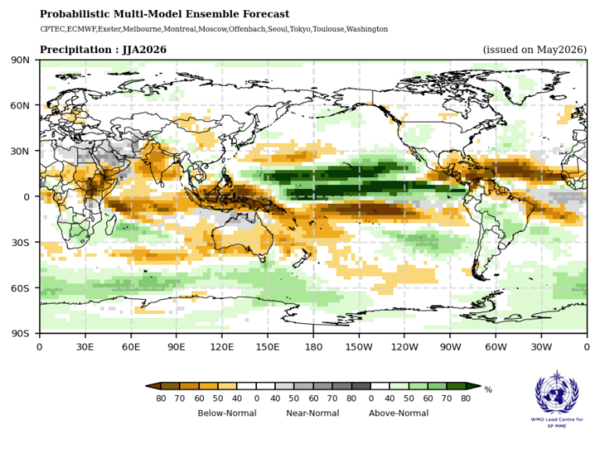
그림 1. 2026년 여름철(6~8월) 전 지구 확률론적 멀티모델 앙상블 강수량 예측
[자료제공(Picture Soruce) = WMO]
기타 주요 결과
- 향후 5년 동안 북반구의 겨울철(11월~3월) 북극 기온은 1991~2020년 평균보다 2.8°C 높을 것으로 예측되며, 이는 같은 기간 전 세계 평균 기온 편차보다 3.5배 이상 큰 편차다.
- 2026년 3월부터 2035년까지 북극 해빙 예측에 따르면 바렌츠해, 베링해, 오호츠크해의 해빙 밀도가 더욱 감소할 것으로 예상된다.
- 강수량 예측에 따르면, 향후 5년 동안 북반구 고위도 겨울(11월~이듬해 3월) 동안 평균보다 습한 날씨가 예상된다. 1991~2020년 기준 기간과 비교했을 때 열대 및 고위도 지역의 강수량은 증가하고, 아열대 지역, 특히 남반구의 강수량 감소 패턴은 기후 온난화에 따른 예상과 일치한다.
2026년 5월~9월에서 2030년까지 강수량 패턴 예측에 따르면, 이 시기에는 사헬 지대, 북유럽, 알래스카, 시베리아 지역에서 강수량 증가(다우 편차)가 나타나고, 아마존 지역에서는 강수량 감소(가뭄 편차)가 나타날 가능성이 더 높다.
이번 업데이트는 모든 세계기상기구 권역에 대한 지역별 예측을 제공하며, 특히 12월부터 2월 사이의 강수량 변동성이 매우 큰 남동부 유럽을 대표적인 예시로 보여준다. 이 지역은 2009년 이후 수년간 많은 강수량을 기록하다가, 최근 몇년 동안은 이례적으로 건조한 기후를 보였다. 이번 예측에 따르면, 2026~2030년 기간에는 강수량이 이례적으로 많을 가능성이 높다. 다만, 이 지역에 대한 예측 신뢰도는 낮은 편이다.
이러한 예측 정보는 지역기후센터(RCCs), 지역기후전망포럼(RCOFs), 그리고 각국 기상청(NMHSs)의 안내 지침으로 활용하기 위한 것이다. 연간 및 10년 단위 예측의 정확도는 일반 날씨나 계절 단위의 예측 정확도와 다르며, 지역 및 계절에 따라 정확도가 크게 달라질 수 있다.
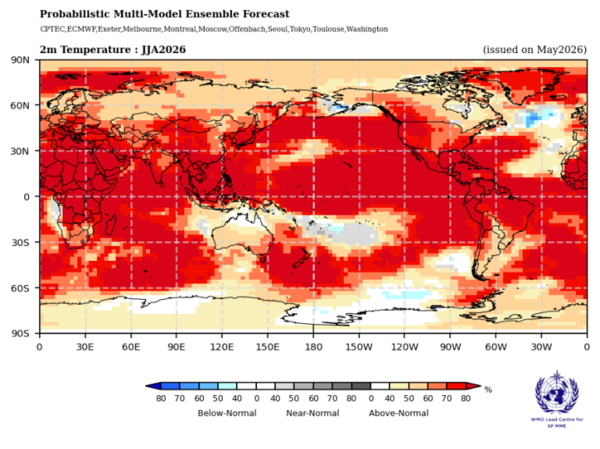
그림 2. 2026년 여름철(6~8월) 전 지구 확률론적 멀티모델 앙상블 지상 2m 기온 예측
[자료제공(Picture Soruce) = WMO]
[원문보기]
New report suggests more global temperature records ahead
Global average temperatures are likely to continue at or near record levels in the next five years, with Arctic temperature anomalies expected to continue to be higher than the global mean, according to a new report from the World Meteorological Organization (WMO), produced by the UK’s Met Office.
The Global Annual-to-Decadal Update also takes a look at the observed climate over the past five years and gives regional predictions for temperatures and precipitation over the next five years.
Annual global mean near-surface temperatures during 2026–2030 are predicted to range between 1.3°C and 1.9°C above the 1850-1900 average. It is likely (86% chance) that one year between 2026 and 2030 will surpass 2024 as the warmest year on record, according to the update.
It is very likely (91% chance) that the global mean near-surface temperature will temporarily exceed 1.5°C above the 1850-1900 average levels for at least one year between 2026 and 2030. This level was also temporarily exceeded in 2024, when the global average surface temperature was about 1.55 °C above the pre-industrial baseline.
It is likely (75% chance) that the 2026-2030 five-year mean will exceed 1.5°C above the 1850-1900 average. It is considered exceptionally unlikely (less than 1%) that any single year will exceed 2°C above the 1850-1900 average in the next five years.
The five-year predicted average temperature in the central tropical Pacific (Niño 3.4 region) indicates a tendency towards El Niño conditions, particularly in 2027 and 2028, it says.
Dr Leon Hermanson is the lead author of the report. He said: “There is an El Niño predicted for the end of 2026, which increases the chances of the following year, 2027, being the next record-breaking year.”
The update is produced by the UK’s Met Office in its role as the WMO Lead Centre for Annual to Decadal Climate Prediction. It provides a synthesis of predictions contributed by 13 different institutes, including four Global Producing Centres: Barcelona Supercomputer Centre, Canadian Centre for Climate Modelling and Analysis, Deutscher Wetterdienst, and the Met Office.
Confidence in forecasts of annually averaged global mean near-surface temperature is high since hindcasts show very high skill.
The 1.5°C (and 2.0°C) levels specified in the Paris Agreement refer to long-term warming sustained over an extended period, typically assessed over 20 years. Individual years with annual global mean temperatures exceeding these levels do not mean that the long-term temperature goals of the Paris Agreement are out of reach. Temporary exceedances are expected to occur with increasing frequency as the underlying rise in global temperature approaches these levels.
Other key findings:
-Arctic temperatures over the next five extended northern hemisphere winters (November-March) are predicted to be 2.8°C above average temperatures for 1991-2020, an anomaly more than three and half times that of global mean temperature anomaly over the same period, it says.
-Predictions of Arctic sea-ice for March 2026-2035 suggest further reductions in sea-ice concentration in the Barents Sea, Bering Sea, and Sea of Okhotsk.
-Precipitation predictions favour wetter than average conditions at high latitudes in the northern hemisphere for the next five extended winter seasons (November to March). The pattern of increased precipitation in the tropics and high latitudes compared to the 1991-2020 reference period, and reduced precipitation in the subtropics, particularly in the southern hemisphere, is consistent with expectations of a warming climate.
-Predicted precipitation patterns for May-September 2026-2030 suggest that wet anomalies in the Sahel, northern Europe, Alaska and Siberia, and dry anomalies over the Amazon, are more likely in this season.
The update provides regional forecasts for all WMO regions, and showcases the example of South-Eastern Europe which experiences great variability in its December to February precipitation. Recent years have been anomalously dry after many years of high precipitation since 2009. The forecast suggests the 2026-2030 period is likely to have anomalously high precipitation – although predictions for this region have low skill.
The forecasts are intended as guidance for Regional Climate Centres, Regional Climate Outlook Forums and National Meteorological and Hydrological Services. The skill of interannual to decadal forecasts is different to that of weather and seasonal timescales and skill may vary considerably with region and season.
[출처 = 세계기상기구(WMO)(https://wmo.int/news/media-centre/new-report-suggests-more-global-temperature-records-ahead) / 2026년 5월 28일]
|  즐겨찾기 추가
 시작페이지로 설정
























