[미국] 미국 로체스터대, 태양광으로 담수 생산·리튬 추출 성공
『라이트: 사이언스 앤드 애플리케이션스(Light: Science & Applications)』 게재…로체스터대 광학연구소 연구진 참여
레이저 가공 흑색 금속 기반 태양열 담수화 기술 개발
브라인 배출 없이 염분 고체화…그레이트솔트호수 시료서 리튬 약 50% 회수
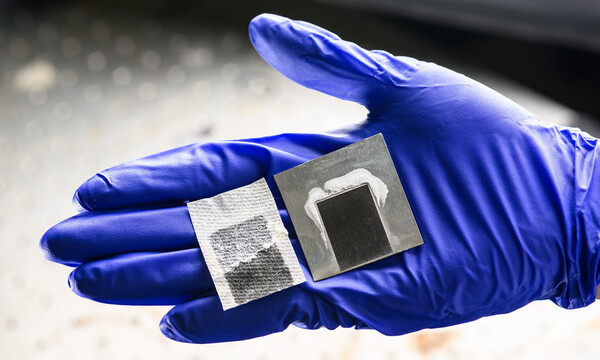
미국 로체스터대학교(University of Rochester) 연구진이 화학 첨가제 없이 바닷물을 담수로 전환하고, 담수화 과정에서 발생하는 염분을 유용한 광물 자원으로 회수할 수 있는 태양열 담수화 기술을 개발했다. [사진출처(Photo Source) = University of Rochester J. Adam Fenster]
미국 로체스터대학교(University of Rochester) 연구진이 화학 첨가제 없이 바닷물을 담수로 전환하고, 담수화 과정에서 발생하는 염분을 유용한 광물 자원으로 회수할 수 있는 태양열 담수화 기술을 개발했다.
연구진은 해당 기술이 기존 담수화 공정의 고농도 염수 배출 문제를 줄이는 동시에 식수 생산과 광물 회수를 병행할 수 있는 가능성을 제시한다고 밝혔다.
유엔(UN)에 따르면 전 세계 약 22억 명이 안전하게 관리되는 식수 서비스를 이용하지 못하고 있으며, 미국 캘리포니아부터 중동에 이르는 지역에서는 해수를 담수로 전환하기 위해 담수화 시설에 의존하고 있다.
그러나 역삼투와 열증류 등 기존 담수화 기술은 에너지 소비가 크고 전처리 및 후처리 공정이 필요하며, 부산물로 고농도 염수인 브라인을 남기는 한계가 있다. 브라인은 바다로 배출될 경우 염분 농도를 높이고 수중 산소 농도를 낮춰 해양생태계에 부정적인 영향을 미칠 수 있다.
이에 로체스터대학교 광학연구소(Institute of Optics) 연구진은 에너지 효율적인 태양열 담수화 공정을 개발했다. 이번 연구는 춘레이 궈(Chunlei Guo) 로체스터대학교 광학·물리학 교수이자 레이저에너지연구소(Laboratory for Laser Energetics) 선임과학자가 이끌었으며, 연구 결과는 『라이트: 사이언스 앤드 애플리케이션스(Light: Science & Applications)』에 게재됐다.
연구진은 펨토초 레이저(Femtosecond laser)로 표면을 가공한 흑색 금속 기반 태양광 패널을 활용했다. 해당 금속 표면은 빛을 매우 효과적으로 흡수하고 물을 강하게 끌어당기는 초친수성(Superwicking) 특성을 갖도록 설계됐다.
패널의 활성 영역은 얇은 물층을 표면으로 끌어올려 태양복사에너지를 거의 모두 흡수한 뒤 물을 증발시켜 담수를 생산한다. 이후 남은 염분과 광물은 처리되지 않은 수동 영역(Passive Region)으로 이동해 축적되도록 함으로써 염분이 활성 영역을 막아 연속적인 담수화를 방해하는 문제를 방지했다.
기존 태양열 담수화 기술은 실험실에서 염화나트륨(NaCl)과 물만으로 구성된 모의 해수를 사용할 경우 안정적으로 작동하지만, 실제 해수 환경에서는 다양한 광물 성분이 표면에 딱딱하게 축적돼 담수화 효율이 떨어지는 문제가 있었다. 이는 샤워기나 주전자에 스케일이 쌓이는 현상과 유사하지만, 해수에는 수돗물보다 수백 배 많은 염분이 포함돼 있어 문제가 더욱 심각하다.
연구진은 이러한 문제를 해결하기 위해 흑색 금속 표면의 미세 홈 구조를 정밀하게 설계했으며, 액체가 증발한 뒤 가장자리에 입자가 집중되는 '커피 링 효과(Coffee Ring Effect)'를 활용했다. 이를 통해 해수에 포함된 염분과 광물이 자연스럽게 수동 영역으로 이동하도록 유도했다.
춘레이 궈 교수는 "커피를 표면에 떨어뜨리면 물이 증발한 뒤 가장자리에 커피 입자가 농축된 고리 형태로 남는다"면서 "연구진은 동일한 원리를 이용해 염분을 수동 영역으로 이동시켰다"고 설명했다.
연구진은 태평양, 대서양, 인도양에서 채취한 해수 시료를 이용해 기술을 검증했다. 그 결과 담수를 생산하는 동시에 남은 염분을 수동 영역으로 이동시켜 회수할 수 있었으며, 패널의 효율을 유지한 채 표면의 자가 세정 기능을 구현하는 데 성공했다.
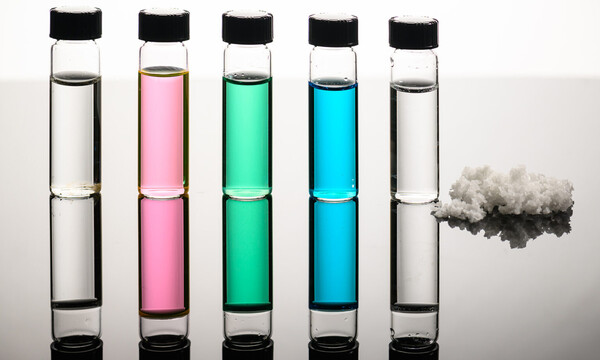
담수와 광물로의 전환: 바닷물, 그레이트솔트호수 물, 황산니켈 용액, 염화구리 폐수, 담수화된 물 시료와 회수된 염분. 로체스터대학교 연구진이 개발한 새로운 기술은 자연수와 산업용 폐수를 담수와 재사용 가능한 광물로 전환할 수 있다. [사진출처(Photo Source) = University of Rochester J. Adam Fenster]
이번 기술의 또 다른 특징은 고농도 염수을 남기지 않고 염분을 거의 100% 고체 형태로 회수할 수 있다는 점이다. 연구진은 이를 통해 식염 생산뿐 아니라 리튬(Li)과 같은 고부가가치 광물의 회수도 가능하다고 설명했다.
연구진은 관련 연구를 『저널 오브 머티리얼스 케미스트리 A(Journal of Materials Chemistry A)』에도 발표했다. 해당 연구에서는 동일한 초친수성 태양광 패널을 이용해 리튬을 선택적으로 분리하는 기술을 제시했다. 연구진은 흑색 금속 표면의 미세 홈 내부에 수소타이타네이트(Hydrogen Titanate) 나노입자를 삽입해 리튬을 다른 염류 및 광물로부터 분리했다.
춘레이 궈 교수는 "육상에서 리튬을 채굴하는 방식은 에너지와 환경 측면에서 부담이 크기 때문에 바닷물에서 직접 리튬을 추출하는 기술이 중요한 대안이 될 수 있다"고 말했다.
연구진은 미국 유타주의 그레이트솔트호(Great Salt Lake) 물 시료를 활용한 실험에서 담수화 후 남은 염분으로부터 약 50%의 리튬을 회수했다. 초친수성 담수화 기술은 현재 소규모 장치에서 개념 검증을 마친 상태이며, 향후 대규모 적용도 가능할 것으로 전망했다. 또한 해당 기술이 전 세계 식수 접근성 향상과 핵심 광물의 지속 가능한 공급망 구축에 기여할 수 있을 것으로 기대했다.
이번 연구는 미국 국립과학재단(National Science Foundation), 빌 앤 멜린다 게이츠 재단(Bill & Melinda Gates Foundation), 월드와이드 유니버시티 네트워크(Worldwide Universities Network)의 지원을 받아 수행됐다.
[원문보기]
New method turns ocean water into drinking water, without waste
The energy-efficient desalination system produces fresh water without chemical additives and transforms leftover salts into useful materials.
Big takeaways
· A new desalination method produces drinking water from seawater without chemical additives.
· The solar-powered system uses specially engineered black metal to absorb sunlight.
· Its self-cleaning surface separates and collects salts, instead of dumping them as harmful brine waste.
· From the salts, the system can extract lithium, a key material for rechargeable batteries.
· The approach could help address global water shortages and growing mineral demand.
The United Nations estimates that 2.2 billion people lack safely managed drinking water, and communities from California to the Middle East rely on desalination plants to convert ocean water to fresh water.
Common desalination techniques, such as reverse osmosis and thermal distillation, are energy-intensive, require pre- and post-water treatment, and leave behind a concentrated saltwater byproduct called brine. The brine byproduct wreaks havoc on sea life when it’s deposited back into the ocean by raising the salt level and lowering oxygen in the water.
But a novel approach developed at the University of Rochester offers a way to overcome these drawbacks. Researchers at URochester’s Institute of Optics developed a new solar-thermal desalination process to produce fresh water in an energy-efficient way that does not leave behind brine and requires no chemical additives to pre-treat the water.
A team led by Chunlei Guo, a professor of optics and of physics and a senior scientist at URochester’s Laboratory for Laser Energetics, describes their method in a paper published in Light: Science & Applications.
The technology uses solar panels made of black metal etched with femtosecond lasers to make the surface super light-absorbing and superwicking—or extremely attractive to water. T
he panels have a laser-treated active region that pulls a thin layer of water across the surface, absorbs nearly all solar radiation, distills the water, and deposits the leftover salts and minerals into the panel’s untreated sides or “passive” region so that the salt does not clog the active region and disrupt continuous desalination.
Leveraging the ‘coffee ring’ effect
Guo says other researchers have developed solar-thermal desalination techniques that work well in lab experiments using simulated seawater made of only water and sodium chloride. As the water evaporates, the sodium chloride crystallizes in a grainy and porous fashion allowing water to pass through to dissolve the salt. The solar panels, meanwhile, can be easily cleaned.
But real ocean has a much more complex composition, and these systems tend to encounter issues when tested in the field. Unlike sodium chloride, many other components in seawater, such as magnesium- and calcium-based materials, crystallize in a crusty and non-porous fashion on the solar panel’s surface, clogging it. Eventually, water can no longer seep through.
This is the same phenomenon as your shower head clogging over time or your teapot lined with scales, except that seawater contains hundreds of times more salts than your tap water.
To keep their solar panel surface from gumming up similarly, Guo’s team precisely etched the black metal’s grooves so the various salts and minerals in ocean water would simply slough off. They also leveraged a physical phenomenon that has plagued clumsy javaphiles for centuries: the coffee ring effect.
“If you drop coffee on a surface, eventually the water evaporates, and there’s a ring left at the outer edge that is the concentrated coffee particles,” says Guo. “We use that same principle to advance the salts to the passive region.”
Testing their solar-thermal desalination technique using samples of water from the Pacific, Atlantic, and Indian Oceans, Guo and his team were able to make the surface self-cleaning. In other words, it extracted freshwater and directed the remaining salts to the passive region where they could be later collected without reducing the panel’s efficiency.
Turning waste into resources
One of the new desalination method’s distinct advantages is that instead of leaving behind brine that must be disposed of or processed, it extracts nearly 100 percent of the salts in solid form.
This could not only produce an abundant supply of table salt, but it could also be used to extract more precious minerals, including lithium, which is used in the lithium-ion batteries that power electric vehicles and other electronics.
In a related paper in the Journal of Materials Chemistry A, Guo and his colleagues show how they can use the same superwicking solar panels to separate lithium from the rest of other salts in desalination. Embedding nanoparticles made of hydrogen titanate in the tiny grooves of the black metal surface isolates the lithium from other salts and minerals.
“Mining lithium from the earth has proven to be very taxing from an energy and environmental standpoint, so pulling lithium directly from saltwater could be a very important future route,” says Guo.
Using water samples from Great Salt Lake, the researchers extracted about 50 percent of the lithium from the salts left behind by the desalination process.
Guo says now that the superwicking desalination technology has been demonstrated in proofs of concept on small-scale devices, he sees the technology inherently scalable, capable of improving global access to drinking water and building more sustainable supply chains for precious minerals.
The National Science Foundation, the Bill & Melinda Gates Foundation, and Worldwide Universities Network supported this research. Guo’s colleagues from the Institute of Optics who contributed to the research include Senior Scientist Subash Singh, alumnus Ran Wei ’24 (PhD), PhD students Luheng Tang and Tainshu Xu, and Mingjiang Ma.
[출처 = 로체스터대학교(University of Rochester)(https://www.rochester.edu/newscenter/what-is-desalination-definition-ocean-water-704732/) / 2026년 5월 27일]
[논문출처 = 『라이트: 사이언스 앤드 애플리케이션스(Light: Science & Applications)』(https://www.nature.com/articles/s41377-026-02315-4)]
|  즐겨찾기 추가
 시작페이지로 설정
























