[국제] IWMI, 각국 물관리 역량 강화 위한 ‘물 거버넌스 액셀러레이터’ 출범
국가·유역기구 대상 기술 자문 제공… 초국경 물관리 협력 체계 구축 지원
기후변화 대응·수자원 외교 확대 위한 물 거버넌스 강화 추진
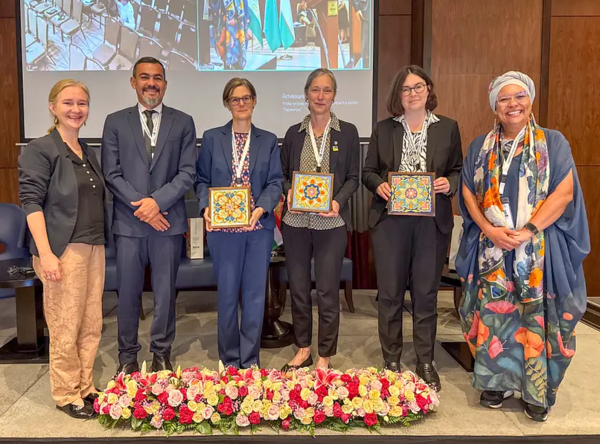
타지키스탄 두샨베(Dushanbe)에서 열린 제4차 국제 행동 10개년 ‘지속가능발전을 위한 물(Water for Sustainable Development)’ 고위급 국제회의에서 국제물관리연구소(IWMI)와 협력기관 관계자들이 기념촬영을 하고 있다. [사진제공(Photo Source) = 페루자 알리쿨로바(Feruza Alikulova)/IWMI]
국제물관리연구소(International Water Management Institute, IWMI)는 국가와 유역기구의 초국경·지역·지역사회 단위 물관리 체계 강화를 지원하기 위해 기술 자문 서비스인 ‘물 거버넌스 액셀러레이터(Water Governance Accelerator)’를 출범했다고 밝혔다.
이번 액셀러레이터는 5월 25일부터 28일까지 타지키스탄 두샨베(Dushanbe)에서 열린 제4차 국제 행동 10개년 ‘지속가능발전을 위한 물(Water for Sustainable Development)’ 고위급 국제회의에서 공식 출범했다.
전 세계 담수의 약 3분의 2가 국경을 넘어 흐르는 가운데 물수요는 국가 간 협력 체계 구축 속도보다 더 빠르게 증가하고 있다. 현재 통합수자원관리(IWRM) 이행 수준의 세계 평균은 57%에 머물고 있으며, 물 관련 의사결정이 부문별로 분절돼 추진되면서 지속가능발전목표(SDG) 6.5.1 달성도 수십 년 지연될 것으로 전망된다. 여기에 기후변화로 인한 압박까지 더해지며 전 세계 물 거버넌스는 파편화된 이행 구조라는 과제에 직면해 있다.
이번 회의가 국가 간 협력 확대와 공동 대응 강화를 목표로 하는 가운데, IWMI는 보다 신속하고 체계적인 물 거버넌스 추진을 지원하기 위해 이번 액셀러레이터를 개발했다고 설명했다.
마크 스미스 IWMI 사무총장은 “우리의 물미래는 단순한 자원 확보가 아니라 거버넌스에 달려 있다”며 “기후변화로 수자원 시스템에 대한 압박이 커지고 물수요도 계속 증가하는 상황에서 그 중요성은 어느 때보다 커졌다”고 말했다. 아울러 “IWMI는 국제적 약속과 현장 이행 간 격차를 해소하기 위해 물 거버넌스 액셀러레이터를 개발했다”고 덧붙였다.
대부분의 중·저소득 국가에서는 농업용수 취수량 가운데 실제로 계측되는 비율이 10% 미만에 그친다. 수문 관측망은 노후화됐고 지하수는 사실상 관리·감시가 이뤄지지 않는 경우가 많으며, 취수 허가 등록 정보도 최신 상태를 유지하지 못하고 있다. 데이터 역시 기관별로 분산돼 있어, 전 세계 153개국 가운데 모든 초국경 유역에 대한 운영 체계를 완전히 구축한 국가는 24개국에 불과한 실정이다.
후안 카를로스 산체스 라미레스(Juan Carlos Sanchez Ramirez) IWMI 물 거버넌스·정치경제 연구그룹 리더이자 물 거버넌스 액셀러레이터 팀장은 “물 거버넌스는 하나의 고정된 체계가 아니다. 요금 체계를 정하는 지방정부, 법률을 만드는 정부 부처, 협정을 이행하는 유역기구, 정책을 조율하는 지역 협의체 간 상호작용으로 이뤄진다”고 말했다. 이어 “물 거버넌스 액셀러레이터는 이러한 모든 수준에서 작동하며 서로를 연결하는 역할을 한다”고 설명했다.
물 거버넌스 액셀러레이터는 거버넌스 문제를 지속 가능한 해결책으로 전환하기 위해 민첩한 방식의 4단계 서비스 체계를 기반으로 운영된다. 우선 진단 단계에서는 물 거버넌스 체계의 취약 지점을 파악하고, 이후 정부 및 협력기관과의 공동 설계 과정을 통해 맞춤형 중장기 대응 전략을 수립하고 초기부터 지원 체계를 조율한다.
이후 실행 단계에서는 기술 지원팀이 정부 부처와 유역기구에 참여해 도구와 데이터, 법률·디지털 전문성을 바탕으로 해결책을 공동 이행한다. 마지막 지속 단계에서는 제도적 역량 강화와 지속적인 자문 지원을 통해 정책 효과가 장기적으로 유지될 수 있도록 지원한다.
이 같은 접근 방식의 대표 사례로는 아랄해(Aral Sea) 유역에서 추진 중인 ‘블루피스 중앙아시아(Blue Peace Central Asia, BPCA)’ 프로젝트가 꼽힌다. IWMI는 카자흐스탄·키르기스스탄·타지키스탄·투르크메니스탄·우즈베키스탄 등 5개국과 함께 이 지역 협력 사업을 주도하고 있다.
BPCA는 지역 물 거버넌스를 단순한 사업 구상 단계에서 실질적인 수자원 외교 단계로 발전시켰다. 국제물협력센터(International Centre for Water Cooperation), 국가 간 위원회, 장관급 대화 채널 등을 통해 협의를 이어가는 한편, 이스파라강(Isfara River) 시범 사업 등을 통해 협력을 실제 유역 단위 실행으로 연결하고 있다. 아울러 수자원 외교 석사과정 운영, 과학 자문, 청년·여성 리더십 육성 등을 통해 중앙아시아 물 분야의 차세대 전문인력 양성에도 힘쓰고 있다.
IWMI는 지난 40여 년간 50개국 이상에서 정부 부처와 유역기구, 지역사회와 협력하며 수자원 연구와 혁신 성과를 실질적인 해결책으로 연결해 왔다. 또 과학자와 경제학자, 법률 전문가, 엔지니어, 유역 계획 전문가, 성평등 전문가 등 다양한 분야 전문가들이 물 거버넌스 액셀러레이터에 참여해 보다 회복력 있고 포용적인 물 거버넌스 체계 구축을 지원하고 있다고 설명했다.
[원문보기]
IWMI launches Water Governance Accelerator to support countries manage water resources
The International Water Management Institute (IWMI) launched the Water Governance Accelerator, a technical advisory service designed to support countries and river basin organizations strengthen how water is managed across borders, regions and local communities.
The Accelerator was launched at the Fourth High-Level International Conference on the International Decade for Action, ‘Water for Sustainable Development’ held in Dushanbe, Tajikistan from May 25–28.
As two-thirds of the world’s freshwater flows across borders, the demand for water is rising faster than cooperation can keep up. The global average implementation of integrated water resources management stands at 57%. Progress is so slow, and on current trends, the SDG 6.5.1 target will be missed by decades as water decisions are made in silos. Water governance around the world is therefore facing fragmented implementation, compounded by climate stress.
As the conference aims to mobilize and strengthen cooperation across countries, IWMI developed the Accelerator to support faster, more coordinated progress on water governance.
“Our water future depends on governance and not just resources. As climate change intensifies pressure on water systems and demand continues to rise, the stakes have never been higher. IWMI created the Water Governance Accelerator in support of closing the gap between international commitments and implementation on the ground,” said Mark Smith, IWMI’s director general.
In most middle and low-income countries, less than 10% of agricultural water extractions are measured. Hydrometric networks are degraded, groundwater is largely unmonitored, and concession registries are out of date. Data sits in silos and only 24 of 153 countries have fully operational arrangements covering all their transboundary basins.
“Water governance is not one static point in space. It is the interaction between municipalities setting tariffs, ministries writing laws, river basin organizations implementing agreements and regional bodies coordinating policy. The Water Governance Accelerator works at every one of these scales and connects them,” said Juan Carlos Sanchez Ramirez, Research Group Leader for Water Governance and Political Economy at IWMI, and Team Leader of the Water Governance Accelerator.
The Water Governance Accelerator follows an agile, four-stage service cycle designed to turn governance challenges into sustained solutions. It begins with a diagnostic phase to identify where governance is failing, followed by co-design with governments and partners to shape tailored, multi-year responses and align support from the outset. The delivery phase embeds technical teams within ministries and river basins to implement solutions collaboratively, supported by tools, evidence and legal and digital expertise. Finally, the sustain phase focuses on strengthening institutional capacity and providing ongoing advisory support to ensure lasting impact.
A demonstrable example of how this approach works in practice is the Blue Peace Central Asia (BPCA) project in the Aral Sea System, where IWMI leads a regional initiative across Kazakhstan, Kyrgyzstan, Tajikistan, Turkmenistan and Uzbekistan. BPCA has moved regional water governance from project design to active hydro-diplomacy — engaging in dialogue facilitated through the International Centre for Water Cooperation, interstate commissions and ministerial dialogue, while translating cooperation into practical basin-level action through pilots like the Isfara River. It is also building the next generation of regional capacity through a Master’s programme in hydro-diplomacy, scientific consultations, and youth and women’s leadership in the Central Asian water sector.
For more than 40 years, IWMI has worked across over 50 countries, partnering with ministries, river basin organizations and communities to turn water research and innovation into practical solutions. Its multidisciplinary teams — including scientists, economists, lawyers, engineers, basin planners and gender specialists — come together within the Accelerator to support more resilient and inclusive water governance systems.
출처 = 국제물관리연구소(IWMI)(https://www.iwmi.org/news/iwmi-launches-water-governance-accelerator-to-support-countries-manage-water-resources/) / 2026년 5월 26일]
|  즐겨찾기 추가
 시작페이지로 설정
























