[오세아니아] [2026] [호주] 그리피스대, 빠르고 저렴한 휴대용 PFAS 검사 방법 개발
이름
관리자
작성일
2026-05-12
조회수
951
파일첨부
[호주] 그리피스대, 빠르고 저렴한 휴대용 PFAS 검사 방법 개발
기존 분석법, 비용·인력 부담 커 도서국·개도국서 사용 어려워
현장서 바로 사용 가능한 센서 개발…PFAS 모니터링 비용 절감 기대
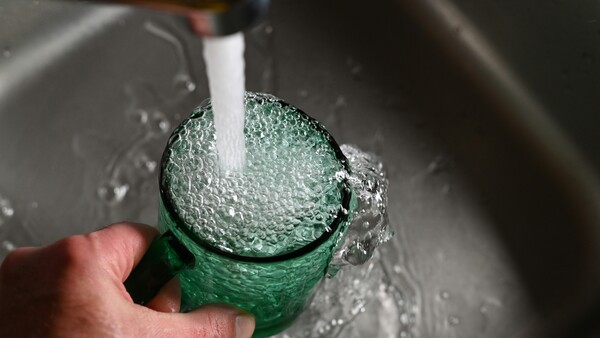
새로운 연구에서 물 속 ‘영원한 화학물질(PFAS)'을 보다 비용 효율적이고 실용적으로 검사할 수 있는 새로운 방법이 공개됐으며, 이는 환경 PFAS(과불화화합물) 모니터링에 혁신을 가져올 잠재력을 보여주고 있다. [사진출처(Photo Source) = Unsplash]
새로운 연구에서 물 속 ‘영원한 화학물질(PFAS)'을 보다 비용 효율적이고 실용적으로 검사할 수 있는 새로운 방법이 공개됐으며, 이는 환경 PFAS(과불화화합물) 모니터링에 혁신을 가져올 잠재력을 보여주고 있다.
그리피스대학교(Griffith University) 연구팀은 휴대용 센서를 활용한 새로운 PFAS 검출 기술을 개발했다. 이 기술은 신속하면서도 높은 민감도와 선택성을 갖춘 현장 검사를 가능하게 해 기존의 실험실 분석에만 의존하던 방식에 대한 실질적인 대안을 제시한다.
PFAS는 소방용 거품, 방수 의류, 코팅 조리기구 등 다양한 제품에 널리 사용되는 1만 종 이상의 합성 화학물질을 통칭한다. 이 화학물질들은 환경에서 분해되지 않는 ‘높은 지속성’으로 알려져 있으며, 특정 암이나 갑상선 질환 등 심각한 건강 문제와 연관돼 있다.
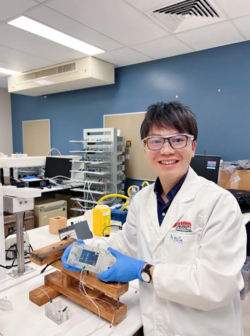
그리피스대 호주 강 연구소(Australian Rivers Institute)의 저우 밍(Ming Zhou) 박사.
현재 PFAS 검사는 주로 실험실 기반의 액체 크로마토그래피-탠덤 질량 분석법(LC-MS/MS)에 의존한다. 그러나 이 방법은 복잡한 시료 전처리, 고가의 장비, 고도의 전문 기술을 갖춘 인력이 필요해 일상적인 모니터링과 환경 감시에 큰 제약이 따른다. 시료당 비용이 200달러(약 29만 원)를 초과하기 때문에 태평양 도서국이나 개발도상국에서는 접근하기 어려운 경우가 많다.
저우 박사는 "이러한 상황이 우리로 하여금 현장에서 사용할 수 있고, 저비용·신속 검출이 가능한 기술을 개발하도록 이끌었다"며 "기존의 실험실 검사를 수질 모니터링의 'PCR 검사'라고 한다면, 우리 기술은 정량적 결과까지 제공하는 신속 검사 키트에 더 가깝다"고 말했다.
이번 프로젝트에 함께 참여한 박사과정 연구원 리펑 간(Lipeng Gan)은 "우리 센서가 특정 PFAS에 대해 매우 뛰어난 반응을 보이는 것을 확인했을 때 매우 기뻤다"며 "이번 결과는 신속하고 선택적인 현장 PFAS 검출을 가능하게 하는 기술의 잠재력을 보여주며, 고품질 PFAS 모니터링을 더욱 경제적이고 쉽게 이용할 수 있도록 하는 데 기여할 수 있음을 시사한다"고 말했다.
이 연구 논문 '물 속 고감도 및 고선택성 과불화알킬물질 검출을 위한 분자 각인 폴리아닐린 기능화 측면 유동막(Molecularly imprinted polyaniline-functionalized lateral-flow membrane for highly sensitive and selective per- and polyfluoroalkyl substances detection in water)'이라는 제목으로 『환경과학기술(Environmental Science and Technology)』 저널에 게재됐다.
[원문보기]
Team develops fast, affordable, on-site ‘forever chemical’ test
A new study has unveiled a new method to cost-effectively and practically test for “forever chemicals” in water, potentially revolutionising environmental PFAS monitoring.
Led by Griffith University, the novel PFAS detection technique is a portable sensor designed to provide rapid, highly sensitive, and selective on-site testing, offering a practical alternative to laboratory-only analysis.
PFAS (Per- and polyfluoroalkyl substances) are a group of more than 10,000 synthetic chemicals widely used in products such as firefighting foams, water-resistant clothing, and non-stick cookware.
Known for being “highly persistent”, these chemicals do not break down in the environment and have been linked to serious health conditions, including certain cancers and thyroid diseases.
“Many countries, including Australia, have implemented guidelines for PFAS levels in drinking water,” lead author Dr Ming Zhou said, from Griffith University’s Australian Rivers Institute.
“And there are many ongoing global campaigns for environmental surveillance due to their unbreakable nature and links to numerous health issues.”
Current PFAS testing relied heavily on laboratory-based liquid chromatography-tandem mass spectrometry (LC-MS/MS), a process that requires complicated sample pretreatment, expensive laboratory equipment, and highly trained technicians, creating a major constraint for routine monitoring and environmental surveillance.
At a cost of exceeding $200 per sample, current methods were often inaccessible for regional areas and developing nations, such as the Pacific Islands.
“This triggered our pursuit for an on-site, low-cost, fast-detection technology,” Dr Zhou said.
“If we view the traditional lab test as the ‘PCR test’ of water monitoring, our technology is closer to a rapid test kit, while still providing quantitative results.”
“I was very excited to see the excellent response of our sensor to a specific PFAS,” said Lipeng (Jason) Gan, the PhD candidate who worked with Dr Zhou on this project.
“This result shows the potential of the technology to enable fast, selective, and on-site PFAS detection, helping make high-quality PFAS monitoring more affordable and accessible.”
The study ‘Molecularly imprinted polyaniline-functionalized lateral-flow membrane for highly sensitive and selective per- and polyfluoroalkyl substances detection in water’ has been published in Environmental Science and Technology.
 즐겨찾기 추가
 시작페이지로 설정