[싱가포르] 미시간 주립대 로즈 석좌교수, ‘2026 리콴유 물상’ 수상자로 선정
세계적인 물안전 혁신 이끈 미국 미생물학자…정량적 미생물 위험평가(QMRA) 개척 공로 인정받아
QMRA, 전 세계 식수기준으로 채택…안전한 물재사용 가능하게 해 수백만명에게 혜택 제공
6월 16일 ‘싱가포르 국제 물주간(SIWW) 2026’ 개막식서 시상… 3억5천만원 상금 수여
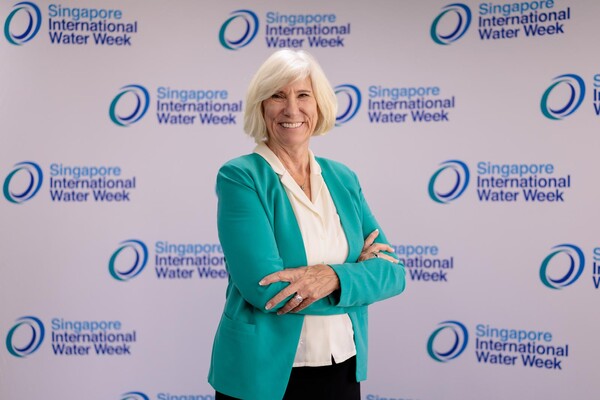
조앤 브레이 로즈(Joan Bray Rose) 미시간 주립대학교(Michigan State University)의 호머 노울린 물 연구(Homer Nowlin Chair in Water Research) 석좌교수이자 물연합(Water Alliance) 이사가 ‘2026년 리콴유 물상(Lee Kuan Yew Water Prize 2026)’수상자로 선정됐다. 시상식은 6월 16일 ‘싱가포르 국제 물주간(SIWW) 2026’ 개막식에서 열린다. [사진출처(Photo source) = 싱가포르 PUB]
조앤 브레이 로즈(Joan Bray Rose) 미시간 주립대학교(Michigan State University)의 호머 노울린 물연구(Homer Nowlin Chair in Water Research) 석좌교수이자 물연합(Water Alliance) 이사가 싱가포르 ‘2026년 리콴유 물상(Lee Kuan Yew Water Prize 2026)’ 수상자로 선정됐다.
로즈 교수는 식수 수질 및 물재이용 시스템을 보호하기 위한 과학 기반 접근법인 ‘정량적 미생물 위험 평가(Quantitative Microbial Risk Assessment, QMRA)’ 개발 및 전 세계적 도입에 핵심적인 역할을 한 공로를 인정받아 ‘제11회 리콴유 물상(11th recipient of the Lee Kuan Yew Water Prize)’ 수상자로 선정됐다.
로즈 교수의 연구는 미생물 위험관리 과학을 혁신하고 전 세계 지역사회의 공중보건을 보호하고 안전한 식수를 보장하는 정책을 수립하는 데 중요한 역할을 했다. 수질 및 건강 분야에 대한 로즈 교수의 전문성은 싱가포르의 하·폐수 관리 강화와 싱가포르의 ‘세 번째 국가 상수도 시스템(Singapore’s third National Tap)’인 뉴워터(NEWater) 도입에도 핵심적인 역할을 했다.
로즈 교수는 수상 소감에서 “이 영예로운 상을 받게 되어 매우 기쁘다. 이번 수상은 미생물 위험 과학 발전과 오늘날 공중보건 보호에 있어 미생물 위험 과학의 역할에 대한 우리의 공동의 노력을 반영하는 것이다”라고 말했다.
그녀는 이어 “안전한 물은 인류 생존에 필수적인 가장 기본적인 자원 중 하나이지만, 그 분포가 고르지 못한 경우가 많다. 미생물 위험이 계속해서 진화함에 따라, 물 시스템의 견고성을 강화하는 것은 물의 질과 사람들의 생명을 보호하고, 물 공급의 신뢰성과 회복력을 보장하기 위한 지속적인 노력이다”라고 강조했다.
보이지 않는 위험 밝혀내어 수질 안전에 혁명을 일으키다
로즈 교수는 1980년대 후반과 1990년대에 미국 전역에서 발생한 일련의 수인성 질병 집단 발병을 조사하는 팀을 이끌었다. 그중 가장 심각한 사례는 1993년 위스콘신주 밀워키(Milwaukee)에서 발생한 크립토스포리디움증(Cryptosporidiosis) 집단 발병으로 약 40만3천 명의 주민이 감염되고 최소 69명이 사망했다.
로즈 교수는 미국에서 크립토스포리디움(Cryptosporidium)이 인수공통 감염병 병원체로서 널리 퍼져 있다는 사실과, 여과 및 소독이 제대로 이루어지지 않은 식수를 통해 인간에게 전염된다는 사실을 최초로 입증했다.
크립토스포리디움이 이러한 집단 발병의 원인임을 밝혀냄으로써, 로즈 교수는 식수 시스템이 미생물 오염에 얼마나 취약한지를 강조했으며, 이는 전 세계 공중보건에 중대한 영향을 미치는 문제라고 주장했다.
그녀의 연구 결과는 또한 중요한 격차를 드러냈다. 병원균은 기존의 수처리 방식을 회피할 수 있었고, 기존 모니터링 시스템은 미생물을 검출할 뿐 위험도를 정량화하지 못했으며, 공중 보건 대응은 예측보다는 사후 대응에 치중되어 있었다.
로즈 교수는 1990년대와 2000년대 초에 수질안전(water safety)과 공중보건(Public health)을 위협하는 이러한 심각한 격차를 해소하기 위해 정량적 미생물 위험 평가(QMRA)를 개척했다. QMRA는 음용수 및 재이용수를 포함한 기타 용수의 미생물 위험을 평가하고 관리하기 위한 체계적이고 과학적인 접근 방식을 도입했다.
QMRA는 과학자들이 병원균 농도, 노출 경로 및 섭취 패턴을 기반으로 감염 위험과 질병 발생 확률을 정량화 할 수 있도록 함으로써, 수질관리를 사후 대응적인 ‘검출 및 시정(detect and correct)’ 방식에서 사전 예방적인 ‘예측 및 예방(predict and prevent)’ 전략으로 전환시켰다. 이는 수질 안전에 혁명을 일으켜 수질관리 시스템의 품질을 향상시키고 보건 기준을 안정적으로 충족할 수 있도록 했다.
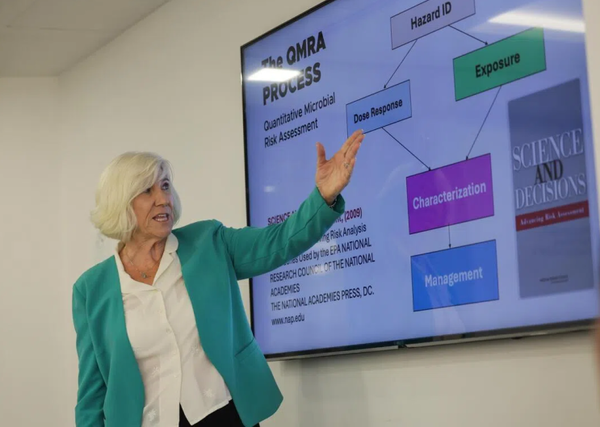
조앤 브레이 로즈(Joan Bray Rose) 석좌교수는 1990년대와 2000년대 초에 수질안전(water safety)과 공중보건(Public health)을 위협하는 이러한 심각한 격차를 해소하기 위해 정량적 미생물 위험 평가(QMRA)를 개척했다. QMRA는 음용수 및 재이용수를 포함한 기타 용수의 미생물 위험을 평가하고 관리하기 위한 체계적이고 과학적인 접근 방식을 도입했다. [사진출처(Photo source) = 로즈 석좌교수 LinkedIn]
수질 미생물학 및 수질에 미치는 세계적 영향
QMRA(정량적 미생물 위험 평가)는 현재 미국 환경보호청(EPA)의 안전한 식수 기준과 세계보건기구(WHO)의 2004년 ‘제3판 식수 수질 가이드라인(Third Edition of the Drinking Water Quality Guidelines)’을 비롯한 전 세계 식수 규제에 널리 채택되고 있다. 로즈 교수의 연구는 상수도 사업자 및 규제기관이 특정 수원에 대한 허용 가능한 건강 위험을 기반으로 처리 요건을 정의할 수 있도록 했다.
로즈 교수는 QMRA의 적용 범위를 식수를 넘어 처리된 하·폐수 및 물재이용 시스템의 미생물 위험 평가까지 확장했다. 이러한 발전은 재활용수를 실행 가능하고 지속 가능한 공급원으로 활용하는 데 대한 전 세계적인 신뢰를 크게 강화했으며, 이후 세계적인 물 부족 문제 해결을 위한 물재이용 도입을 강력하게 옹호해 왔다.
로즈 교수는 또한 오렌지 카운티 상수도국(Orange County Water District’s)의 독립 자문 패널과 캘리포니아 주 수자원 관리위원회의 물 재이용 전문가 패널에 자문을 제공했다. 그녀의 지침은 캘리포니아의 간접 및 직접 음용수 재이용 규정 제정에 기여했으며, 이 규정은 현재 호주, 스페인, 미국을 포함한 전 세계 물재이용 기준의 모델이 되었다.
로즈 교수는 20년 넘게 싱가포르 국립수자원공사인 PUB와 긴밀히 협력해 왔다. 그녀는 2003년에 도입된 뉴워터(NEWater)의 발전에 중추적인 역할을 했으며, 1998년부터 2002년까지 NEWater 전문가 패널 위원으로 활동했다. 로즈 교수는 패널에서 전문지식을 공유하고 수질 모니터링을 위한 모범사례에 대한 지침을 제공했으며, NEWater의 장기적인 안전성을 입증하는 건강 연구 결과를 검토했다.
2003년부터 2019년까지는 싱가포르 PUB의 외부 감사 패널 의장을 맡아 싱가포르의 안전하고 효율적인 물재이용 시행을 지원했다. 그녀의 중요한 공헌을 인정받아 2015년 싱가포르 정부로부터 명예 시민상을 수여받았다.
PUB는 QMRA 접근 방식을 활용하여 수질 감시 데이터를 통해 처리 과정을 개선하고 국내외 식수 기준 및 지침을 준수하는 역량을 강화해 왔다. 연구 활동 외에도, 그녀는 QMRA 하계 연구소 및 QMRA 위키(wiki) 설립과 같은 교육 및 협력 사업을 통해 미생물 위험 평가 분야의 세계적인 지식과 역량을 증진시켜 왔다. 또한, 글로벌 수인성 병원균 프로젝트 및 폐수권과 같은 주요 국제 사업을 주도하여 전 세계 수인성 질병 발생에 대한 대비 태세를 강화했다.
글로벌 공중 보건의 든든한 옹호자
올해 72세인 로즈 교수는 수질개선과 공중보건 증진에 평생을 바쳐 왔다. 그녀는 수질 미생물학 분야에서 세계적인 권위자로 널리 인정받고 있으며, 2024년 국제물협회(International Water Association, IWA) ‘글로벌 수자원상(Global Water Award)’을 수상했다.
로즈 교수는 전 세계인의 삶의 질 향상에 대한 깊고 변함없는 헌신을 바탕으로 새로운 미생물 건강 위험에 대한 연구를 이끌고 있다. 도시들이 진화하는 공중보건 및 기후변화에 대응하여 물 회복력을 강화하는 데 있어 그녀의 연구는 여전히 매우 중요하다.
싱가포르 테마섹 재단(Temasek Foundation)과 공동으로 수여하는 ‘리콴유 물상(Lee Kuan Yew Water Prize)’은 오는 6월 16일 ‘싱가포르 국제 물주간(Singapore International Water Week, SIWW) 2026’ 개막식에서 시상할 예정이다.
수상식에서는 상장, 금메달, 그리고 30만 싱가포르 달러(약 3억 5천만 원)의 상금이 수여된다. 로즈 교수는 같은 날 기조 강연도 할 예정이다. ‘SIWW 2026’에는 정부, 도시, 공공기관, 산업계의 지도자, 전문가, 실무자 2천500명과 2만5천 명 이상의 물 관계자 및 방문객이 참석할 것으로 예상된다.
[원문보기]
American microbiologist behind global water safety breakthrough wins 2026 Lee Kuan Yew Water Prize
Professor Joan Bray Rose recognised for pioneering Quantitative Microbial Risk Assessment (QMRA) as a global approach for assessing pathogen risks in water
QMRA adopted into global drinking water standards and enabled safe water reuse, benefitting millions worldwide
Professor Joan Bray Rose, Homer Nowlin Chair in Water Research and Director of the Water Alliance at Michigan State University and Lee Kuan Yew Water Prize 2026 Laureate
Singapore, 16 April 2026 - Professor Joan Bray Rose has been awarded the Lee Kuan Yew Water Prize 2026 for her work as a key pioneer in the development and global adoption of Quantitative Microbial Risk Assessment (QMRA), a science-based approach to safeguard the quality of drinking water, as well as water reuse systems.
Her work has transformed the science of microbial risk management and guided policies that protect public health and ensure safe water for communities worldwide. Her expertise in the domain of water quality and health has also played a key role in strengthening Singapore’s used water management, and the introduction of NEWater, Singapore’s third National Tap.
Commenting on her accolade, Professor Rose, 11th recipient of the Lee Kuan Yew Water Prize said, “I am deeply honoured to receive this esteemed award. This recognition reflects our collective progress in advancing microbial risk science and its role in protecting public health today.
Safe water is one of the world’s most fundamental yet unevenly distributed resource critical to sustaining human life. As microbial risks continue to evolve, strengthening the robustness of our water systems remains an ongoing endeavour to ensure they remain dependable and resilient; safeguarding both water quality and people’s lives.” She is currently the Homer Nowlin Chair in Water Research, Director of the Water Alliance at Michigan State University.
Uncovering invisible risks to revolutionise water safety
In the late 1980s and 1990s, Professor Rose led a team to investigate a series of waterborne disease outbreaks across the United States. Among the most severe was the 1993 Cryptosporidiosis outbreak in Milwaukee, Wisconsin, where an estimated 403,000 residents fell ill and at least 69 deaths were recorded.
She was the first to demonstrate the widespread occurrence of Cryptosporidium as a zoonotic pathogen in the United States, and its transmission to humans through inadequately filtered and disinfected drinking water supplies.
By establishing Cryptosporidium as the causative agent of these outbreaks, she highlighted the vulnerability of drinking water systems to microbial contamination - a challenge with global public health implications. Her findings also revealed a critical gap : pathogens could evade conventional water treatment, existing monitoring systems detected microbes without quantifying risk, and public health responses were largely reactive rather than predictive.
Professor Rose then pioneered QMRA in the 1990s and early 2000s to address these critical gaps undermining water safety and public health. QMRA introduced a systematic, science-based approach to assess and manage microbial risks in drinking and other forms of water, including reuse water.
By enabling scientists to quantify infection risks and illness probabilities based on pathogen concentrations, exposure pathways and consumption patterns, QMRA shifted water management from reactive “detect and correct” approaches to proactive “predict and prevent” strategies. This revolutionised water safety, boosting the quality of water systems to reliably meet health standards.
Global impact on water microbiology and water quality
QMRA is now widely adopted in drinking water regulations worldwide including the United States Environmental Protection Agency’s Safe Drinking Water Standards and the World Health Organisation’s Third Edition of the Drinking Water Quality Guidelines in 2004. Her work has enabled water utilities and regulators to define treatment requirements based on tolerable health risks for any given water source.
Professor Rose extended the application of QMRA beyond drinking water to assess microbial risks in treated wastewater and water reuse systems. This development greatly strengthened global confidence in leveraging recycled water as a viable and sustainable supply source, and Professor Rose has since strongly advocated for the adoption of water reuse to address global water scarcity.
She also advised the Orange County Water District’s Independent Advisory Panel and the California State Water Resources Control Board’s Expert Panel on water reuse. Her guidance contributed to California’s Indirect and Direct Potable Reuse regulations, now models for water reuse standards worldwide, including in Australia, Spain, and the United States.
For over two decades, Professor Rose worked closely with PUB, Singapore’s National Water Agency, to strengthen water quality and safety. She was instrumental in the advancement of NEWater which was introduced in 2003, serving on the NEWater Expert Panel from 1998 to 2002.
In her role, Professor Rose shared her expertise, provided guidance on best practices for water quality monitoring, and reviewed findings from health studies which demonstrated the long-term safety of NEWater. From 2003 to 2019, she also chaired PUB’s External Audit Panel, supporting the safe and robust implementation of water reuse in Singapore.
In recognition of her significant contributions, she was conferred the Honorary Citizen Award by the Government of Singapore in 2015. Tapping on the QMRA approach, PUB has since strengthened the capabilities to use water quality surveillance data to guide treatment processes and ensure compliance with local and international drinking water standards and guidelines. (Refer to Annex on how QMRA is applied in Singapore.)
Beyond research, she has advanced global knowledge and capacity in microbial risk assessment through training and collaborative initiatives such as launching the QMRA Summer Institute and QMRAwiki. She has also strengthened preparedness for waterborne disease outbreaks worldwide by spearheading major international initiatives such as the Global Water Pathogen Project5 and Wastewater Sphere6.
Recognising a steadfast champion of global public health
Professor Rose, who recently turned 72, has dedicated her professional life to improving water quality and safeguarding public health outcomes. She is widely regarded as one of the world’s leading authorities in water microbiology and received the 2024 International Water Association Global Water Award for her contributions.
Today, she continues to lead research on emerging microbial health risks, driven by a deep and enduring commitment to improving lives worldwide. Her work remains critical as cities strengthen their water resilience against evolving public health and climate challenges.
Professor Rose will receive the Lee Kuan Yew Water Prize - an award certificate, a gold medallion, and S$300,000, presented in partnership with Temasek Foundation - at an award ceremony on 16 June 2026, held during the official opening of the Singapore International Water Week (SIWW) 2026.
She will also deliver a keynote lecture the same day. SIWW2026 is expected to gather 2,500 leaders, experts and practitioners from governments, cities, utilities, and industry, and over 25,000 trade visitors.
[출처 = 싱가포르 PUB(https://www.pub.gov.sg/Resources/News-Room/PressReleases/2026/04/Lee-Kuan-Yew-Water-Prize-2026) / 2026년 4월 16일]
|  즐겨찾기 추가
 시작페이지로 설정
























