[북아메리카] [2026] [미국] 농촌수도협회, 농촌 상하수도 강화 위한 자발적 지역 파트너십 효과 분석 보고서 발표
이름
관리자
작성일
2026-03-17
조회수
1012
파일첨부
[미국] 농촌수도협회, 농촌 상하수도 강화 위한 자발적 지역 파트너십 효과 분석 보고서 발표
농촌지역사회 지원 파트너십과 공동 발간…지역사회 주도형 파트너십이 시스템 강화의 효과적 전략임을 입증
자발적 지역 협력이 농촌 인프라·인력·운영상의 난제 해결에 기여할 수 있는 방안 제시
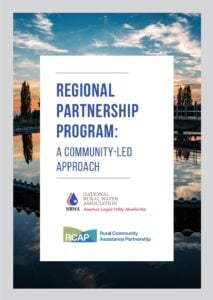
미국 농촌지역사회 지원 파트너십(RCAP)과 미국 농촌수도협회(NRWA)는 소규모 및 농촌 지역사회의 상하수도 시스템을 강화하기 위한 자발적 지역 파트너십의 효과를 분석한 보고서를 발표했다. [사진출처(Photo source) = 미국 농촌수도협회(NRWA)]
미국 농촌지역사회 지원 파트너십(RCAP)과 미국 농촌수도협회(NRWA)는 소규모 및 농촌 지역사회의 상하수도 시스템을 강화하기 위한 자발적 지역 파트너십의 효과를 분석한 보고서를 발표했다.
수십 년간의 현장 기술 지원과 시스템 데이터를 바탕으로 한 이번 분석은 신뢰할 수 있는 기술 지원 제공자의 도움을 받는 지역사회 주도의 협력이 장기적 지속가능성을 높이는 동시에 지역 거버넌스, 지역사회 정체성, 공적 책임을 유지할 수 있음을 보여준다.
전국적으로 농촌 상하수도 운영 기관들은 노후화된 인프라, 인력 부족, 규제 요구사항, 운영 비용 상승 등으로 점점 더 큰 압박을 받고 있다. '지역 파트너십 프로그램 : 지역사회 주도형 접근법(Regional Partnership Program: A Community-Led Approach)'이라는 제목의 백서는 연방 정책이 자발적이고 지역사회 주도의 지역화를 지원해야 하며, 이를 위해 공동체가 파트너십 기회를 평가하면서 지역 자율성을 지킬 수 있도록 기획 자원, 기술 지원, 투자 전략에 접근할 수 있어야 한다고 강조한다.
또한 이번 분석은 연방 지원이 강화돼야 할 분야를 제시했다. 여기에는 농업법(Farm Bill)을 활용한 맞춤형 지원, 지역화 관련 주정부 회전 기금(State Revolving Fund) 확대, 연방 자금 프로그램 전반의 유연성 개선 등이 포함된다.
'지역 파트너십 프로그램 : 지역사회 주도형 접근법(Regional Partnership Program: A Community-Led Approach) 백서 표지. [사진출처(Photo source) = 미국 농촌수도협회(NRWA)]
백서의 주요 내용은 다음과 같다.
- 농촌 상하수도 기관은 심각한 인프라 압박에 직면해 있으며, 미국 환경보호청(EPA)은 향후 수십 년간 약 6천250억 달러가 음용수 인프라 개선에 필요할 것으로 추정한다. 이는 재정 및 기술 역량이 제한된 소규모 시스템에 큰 도전 과제를 안겨준다.
- 지역화는 자발적이고 지역사회 주도형일 때 가장 효과적이다. 이 방식은 운영 기관들이 협력하고 전문성을 공유하며 기술·관리·재정 역량을 강화하는 동시에 지역사회 정체성을 보존할 수 있도록 한다.
- 지역화에는 공동 서비스, 공동 구매, 계약 지원, 지역 기관 설립, 자발적 통합 등 다양한 파트너십 모델이 포함된다.
- 시스템 규모만으로는 규제 성과를 결정하지 않는다. 국가 데이터에 따르면, 대규모 시스템이 소규모 시스템보다 규제 준수에서 항상 우수한 성과를 내는 것은 아니다.
맷 홈즈(Matt Holmes) NRWA의 CEO는 "농촌 상하수도 기관은 안전한 식수와 깨끗한 하수 서비스를 제공하기 위해 무엇이 필요한지 누구보다 잘 알고 있다"며 "이번 백서는 지역 파트너십이 자발적이고 지역사회 주도로 추진될 때 성공 가능성이 크다는 점을 다시 확인시켜 준다"고 말했다.
이어 "지역화는 지역 통제권을 희생하지 않고도 역량을 강화할 수 있으며, 적절한 연방 지원과 유연한 자금 조달 도구가 마련된다면 더 많은 지역사회가 장기적 지속가능성을 개선하면서도 주민들에게 중요한 정체성과 책임성을 지킬 수 있는 파트너십 모델을 탐색할 수 있을 것"이라고 덧붙였다.
NRWA와 RCAP는 50년 이상 미국 전역의 소규모 및 농촌 상하수도 기관과 협력해 복잡한 인프라 및 운영 문제 해결을 지원해 왔다. 두 기관은 전국적으로 1천 명 이상의 직원을 고용하고 있으며, 수백 개의 상하수도 기관이 지역화를 성공적으로 추진하도록 안내해 왔다.
올가 모랄레스-페이트(Olga Morales-Pate) RCAP의 CEO는 "소규모 및 농촌 지역사회는 안전하고 신뢰할 수 있는 상하수도 시스템을 유지하는 데 있어 고유한 어려움에 직면해 있다"며 "지역사회가 주도하는 지역 파트너십은 역량을 강화하는 동시에 지역사회의 장기적 성공의 핵심인 리더십과 책임성을 유지할 수 있는 의미 있는 길을 열어줄 수 있다"고 강조했다.
[원문보기]
National Rural Water Association and Rural Community Assistance Partnership Incorporated Identify Community-Led Regional Partnerships as Proven Strategy for Strengthening Rural Water Systems
Findings highlight how voluntary regional collaboration can help rural utilities address infrastructure, workforce and operational challenges
The Rural Community Assistance Partnership Incorporated (RCAP) and the National Rural Water Association (NRWA) released an analysis today examining how voluntary regional partnerships can help strengthen water and wastewater systems serving small and rural communities.
Drawing on decades of on-the-ground technical assistance and system data, the analysis shows how community-led regional collaboration, supported by trusted technical assistance providers, can strengthen long-term sustainability while preserving local governance, community identity and public accountability.
Across the country, rural utilities face increasing pressure from aging infrastructure, workforce shortages, regulatory requirements and rising operational costs. The white paper, titled "Regional Partnership Program : A Community-Led Approach," underscores that federal policy must support voluntary, community-driven regionalization by ensuring communities have access to planning resources, technical assistance and investment strategies that allow them to evaluate partnership opportunities while protecting local autonomy.
The analysis also identifies several areas where federal support could strengthen these efforts, including leveraging the Farm Bill for targeted assistance, increasing State Revolving Fund resources for regionalization and improving flexibility across federal funding programs.
Key findings of the white paper include the following:
-Rural utilities face significant infrastructure pressures. The U.S. Environmental Protection Agency estimates that roughly $625 billion will be needed for drinking water infrastructure improvements in the coming decades, creating major challenges for small systems with limited financial and technical capacity.
-Regionalization is most effective when it is voluntary and community-led. This approach allows utilities to collaborate, share expertise and strengthen technical, managerial and financial capacity while preserving community identity.
-Regionalization includes multiple partnership models. Communities may pursue shared services, joint purchasing, contractual assistance, regional entities or voluntary consolidation depending on local needs.
-System size alone does not determine regulatory performance. National data shows that larger systems do not consistently outperform smaller systems in regulatory compliance.
The full white paper is available for download here.
"Rural utilities know better than anyone what it takes to provide safe drinking water and clean wastewater services to their communities," said NRWA CEO Matt Holmes.
"This paper reinforces that regional partnerships have the best chance of success when they are voluntary and community-led. Regionalization can strengthen capacity without sacrificing local control. With the right federal support and flexible funding tools, more communities can explore partnership models that improve long-term sustainability while preserving the identity and accountability that matter most to the people they serve."
For more than fifty years, NRWA and RCAP have worked alongside small and rural utilities across the country, providing technical assistance, training and support to help communities address complex infrastructure and operational challenges. Together, the two organizations employ more than 1,000 staff nationwide and have successfully guided hundreds of utilities through regionalization.
"Small and rural communities face unique challenges when it comes to sustaining safe and reliable water and wastewater systems," said RCAP CEO Olga Morales-Pate. "Regional partnerships, when driven by the communities themselves, can provide a meaningful pathway for strengthening capacity while ensuring communities maintain the leadership and accountability that are central to their long-term success."
To learn more about RCAP's mission and impact, visit www.rcap.org. To learn more about NRWA's mission and impact, visit www.nrwa.org.
 즐겨찾기 추가
 시작페이지로 설정