[미국] 라이스대·도쿄대·미항공우주국과 동위원소 모델 비교로 지구 물순환 통합 분석
동위원소 구성 모델 8종을 위한 수 없는 첫 번째 국제 공동연구
ERA5 재분석 자료 적용, 1979~2023년 전 지구 물 동위원소 군모의
평균 분석 결과, 강수·수증기·적설 동위원반 저항에서 최고의 성능 확인
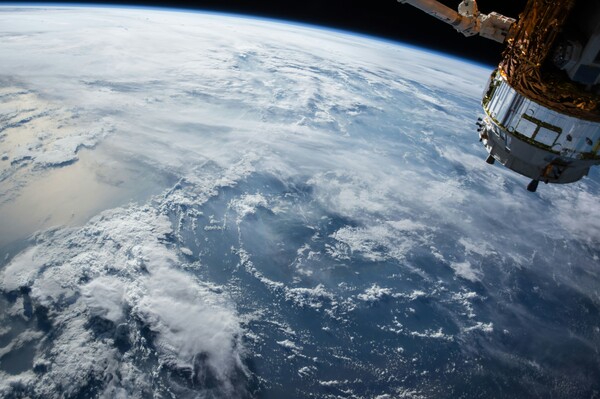
ALICE University(Rice University), Tokyo University(The University of Tokyo), 미 엘지 우주국(NASA) 역할이 국제 공동 연구에서 동위원소를 포함하는 여러 가지 모델을 동 조건에서 비교한 결과, 여러 가지 모델 결과를 종합한 분석(다중 모델 앙상블이 개별 모델보다 강수·수증기·적설에서 가지고 있는 구성원소집단을 가장 사랑하는 구성원소군에 있습니다. [사진 제공(사진출처)=Unsplash]
ALICE University(Rice University), Tokyo University(The University of Tokyo), 미 엘지 우주국(NASA) 역할이 국제 공동 연구에서 동위원소를 포함하는 여러 가지 모델을 포함하는 포함에서 비교한 결과, 여러 가지 모델 결과를 종합한 평균 분석(다중 모델 앙상블이 개별 모델보다 강수·수증기·적설에서 가지고 있는 구성원소집단을 가장 사랑하는 구성원소군에 있습니다.
이번 연구는 동위원소 분리 모델을 동일한 환경에서 직접 비교한 최초의 완전한 연구로, 현대 인류와 산업후 연구, 미래 기후 예측을 연결하는 기준을 제시한다.
활동은 동위원소를 포함한 모델을 대상으로 최초의 완전하게 호환되는 연구를 수행했습니다. 연구 결과는 ESS 오픈 아카이브(ESS Open Archive)에 공개되었습니다.
물 동위원소는 부품의 더 많은 종류를 포함하는 역할로, 대기 중 이동과 상태를 추적하는 데 활용됩니다. 공지사항 20여 회원 전 세계 다양한 연구 그룹이 동위원소를 포함한 군 모델을 자체 개발했지만, 실험 설계와 조건이 다른 모델 간 성능을 직접 비교하고 모의 가치를 평가하는 데가 있습니다.
연구진은 이러한 문제를 해결하기 위해 물 동위원소 모델 상호비교 프로젝트(Water Isotope Model Intercomparison Project, WisoMIP)를 수행했다. 이 프로젝트에서는 최첨단 동위원소 기후모델 8종에 동일한 대기 순환장과 해수면 온도, 해빙 조건을 적용했다. 대기 순환장은 ERA5 재분석 자료를 기반으로 설정됐다.
각 모델은 1979년부터 2023년까지 대기 중 물 동위원소의 3차원 분포를 일 단위로 모의했다. 이를 통해 대규모 대기 순환의 차이를 통제한 상태에서, 모델마다 동위원소 과정이 어떻게 표현되는지를 직접 비교할 수 있도록 했다.
실비아 디(Sylvia Dee) 라이스대학교 지구·환경·행성과학과 부교수이자 공동 수석연구책임자는 “이번 연구는 공간과 시간에 걸쳐 물순환을 연구할 수 있는 과학 공동체의 역량을 확장하는 데 목적이 있다”며 “이번 협력은 물이 기후 시스템을 통해 이동하면서 남기는 고유한 특성을 이해하는 데 도움을 주고, 인간 활동에 따른 온난화 속에서 지구 물순환의 변화를 새로운 관점에서 살펴볼 수 있게 한다”고 말했다.
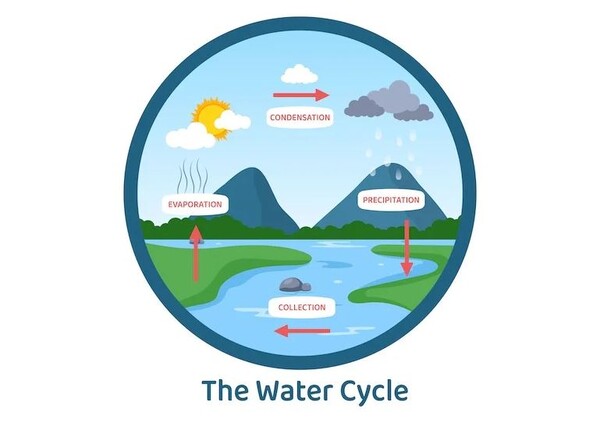
[자료제공(Photo Source) = Rice University]
연구진은 개별 기후모델 결과와 함께, 여러 모델을 같은 조건에서 동시에 구동한 뒤 그 결과를 종합한 평균 분석 결과를 평가했다. 그 결과, 개별 모델은 지역에 따라 서로 다른 편향을 보였으나, 모델 평균 결과는 강수, 수증기, 적설에서 관측된 동위원소 분포를 가장 안정적으로 재현했다.
또한 이러한 종합 분석 결과는 강수 산소 동위원소의 대규모 공간 구조를 전 지구적으로 잘 재현했으며, 동시에 모델 간 차이가 크게 남아 있는 지역도 함께 드러냈다. 이는 현재 동위원소 기후모델이 지닌 신뢰성과 한계를 동시에 보여주는 결과라고 연구진은 설명했다.
봉하영(Bong Hayoung) 나사 고다드 우주연구소(NASA Goddard Institute for Space Studies) 박사후연구원이자 제1저자는 “동일한 조건에서 여러 동위원소 기후모델을 처음으로 비교함으로써, 지구 물순환을 추적하는 데 있어 모델 평균 분석 방식의 신뢰성과 부가가치를 확인했다”면서, “모델 결과 간 차이의 공간적 분포는 향후 모델 개선과 추가 관측이 필요한 지역을 보여준다”고 말했다.
물 동위원소 신호는 빙핵, 산호, 나이테와 같은 자연 기록물에 보존되며, 최근에는 강수와 대기 수증기에서도 직접 관측되고 있다. 연구진은 이번 연구가 현대 관측 자료, 고기후 재구성, 미래 기후 예측을 연결하는 핵심적인 연결 고리를 제공한다고 평가했다.
WisoMIP 데이터셋은 동위원소 기후모델을 평가하기 위한 새로운 국제 기준으로 제시됐으며, 향후 기후변화 평가에서 불확실성을 줄이는 데 기여할 것으로 기대된다.
이번 연구는 일본학술진흥회(Japan Society for the Promotion of Science), 일본 문부과학성(Ministry of Education, Culture, Sports, Science and Technology), 일본 과학기술진흥기구(Japan Science and Technology Agency), 환경재생보전기구(Environmental Restoration and Conservation Agency), 북극 지속가능성 도전 과제 3단계(Arctic Challenge for Sustainability Phase III), 노르웨이 연구위원회 산하 iTRANSFER 프로젝트, 미국 국립과학재단(U.S. National Science Foundation)의 지원을 받았다.
[원문보기]
Multimodel isotope simulations reveal unified picture of Earth’s water cycle
An international research team, including scientists from Rice University, the University of Tokyo and NASA, has completed the first fully standardized comparison of isotope-enabled climate models. In a recent study published in ESS Open Archive, the researchers showed that multimodel ensemble provides the most accurate representation of the present-day global water cycle.
“This work is about expanding our scientific community’s ability to study the water cycle across space and time,” said Sylvia Dee, associate professor of Earth, environmental and planetary sciences at Rice and one of the project’s lead principal investigators.
“This collaboration is helping us to understand water’s unique fingerprints as it moves through the climate system. We can see changes in Earth’s water cycle with anthropogenic warming through a new lens and refine our future projections of water-related extreme weather events.”
Water isotopes — molecules of water containing heavier forms of hydrogen and oxygen — are powerful tracers of atmospheric moisture transport and phase changes. Over the past two decades, isotope-enabled climate models have been developed independently by multiple research groups worldwide.
However, differences in experimental design and boundary conditions have made it difficult to directly compare their performance and to assess the robustness of simulated isotope distributions.
To address this challenge, the research team conducted the Water Isotope Model Intercomparison Project (WisoMIP). In this project, eight state-of-the-art isotope-enabled climate models were forced with identical atmospheric circulation fields derived from the ERA5 reanalysis together with unified sea surface temperature and sea ice conditions.
The models simulated the three-dimensional distribution of atmospheric water isotopes on a daily basis from 1979 to 2023, enabling a direct comparison of isotope processes while controlling for large-scale atmospheric circulation.
“By comparing isotope-enabled climate models under fully unified conditions for the first time, we demonstrate the robustness and added value of the multimodel approach for tracing Earth’s water cycle,” said Hayoung Bong, first author and postdoctoral fellow at the NASA Goddard Institute for Space Studies. “At the same time, the spatial patterns of model spread highlight where further model development and observations are most needed.”
The results show that, although individual models exhibit regionally varying biases, the multimodel ensemble mean consistently outperforms any single model in reproducing observed isotope distributions in precipitation, water vapor and snow.
In addition, the ensemble reproduces the expected large-scale spatial structure of precipitation oxygen isotopes, while revealing where intermodel uncertainty remains large. Together, these results demonstrate both the robustness and the limitations of current isotope-enabled climate models.
Because water isotope signals are preserved in natural archives such as ice cores, corals and tree rings — and can now be directly observed in precipitation and atmospheric water vapor — these findings provide a critical link between modern observations, paleoclimate reconstructions and future climate projections.
The WisoMIP dataset establishes a new international benchmark for evaluating isotope-enabled climate models and is expected to contribute to reducing uncertainty in climate change assessments.
This research was supported by the Japan Society for the Promotion of Science; Japan’s Ministry of Education, Culture, Sports, Science and Technology; the Japan Science and Technology Agency; the Environmental Restoration and Conservation Agency; the Arctic Challenge for Sustainability Phase III; the Research Council of Norway through the iTRANSFER project; and the U.S. National Science Foundation.
[출처 = 라이스대학교(Rice University) ( https://news.rice.edu/news/2026/multimodel-isotope-simulations-reveal-unified-picture-earths-water-cycle ) / 2026년 2월 16일]
|  즐겨찾기 추가
 시작페이지로 설정
























