[캐나다] 토론토대연구진, 손세탁 환경서 간과돼 온 미세플라스틱 오염 원인 규명
손세탁 수질(TDS)에 따른 합성섬유 미세플라스틱 방출 분석
토론토대학교 응용과학·공학부 연구진, 『Scientific Reports』 게재
탈이온수 대비 호수 물에서 섬유 방출 억제 효과 감소
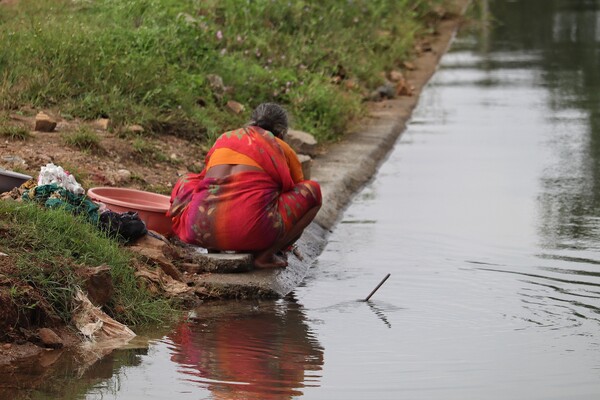
캐나다 토론토대학교(University of Toronto) 연구진이 합성섬유를 손세탁할 경우, 총용존고형물(TDS)이 높은 물에서 더 많은 미세플라스틱 섬유가 방출된다는 연구 결과를 발표했다. [사진제공(Photo Source) = Pixabay]
캐나다 토론토대학교(University of Toronto) 연구진이 합성섬유를 손세탁할 경우, 총용존고형물(TDS)이 높은 물에서 더 많은 미세플라스틱 섬유가 방출된다는 연구 결과를 발표했다.
이번 연구는 세탁기 사용을 전제로 진행돼 온 기존 연구의 한계를 지적하며, 전 세계적으로 보편적인 손세탁 환경을 반영한 분석이라는 점에서 의미를 갖는다.
폴리에스터, 나일론, 아크릴 등 합성섬유는 패스트패션 산업을 중심으로 광범위하게 사용되고 있으며, 체인징 마켓 재단(Changing Markets Foundation)에 따르면 전 세계 섬유 생산의 약 69퍼센트를 차지한다.
이러한 합성섬유는 세탁 과정에서 발생하는 마찰로 인해 미세플라스틱 섬유(microplastic fibres, MPF)를 방출해 하천과 호수 등 수계로 유입된다. 미세플라스틱은 물에서 제거하기 매우 어려운 물질로, 인체 건강에 미치는 영향은 아직 명확히 규명되지 않았지만 해양 생물이 섭취할 경우 소화관을 막거나 상해를 유발할 수 있는 위험 요소로 알려져 있다.
이번 연구는 토론토대학교 응용과학·공학부(Faculty of Applied Science & Engineering) 연구진이 수행했으며, 연구 결과는 국제학술지 『Scientific Reports』에 게재됐다.
연구진은 손세탁 환경에서 수질 차이가 미세플라스틱 섬유 방출에 미치는 영향을 분석하기 위해 기존 문헌을 참고해 대나무 빨래판을 활용한 손세탁 방식을 적용했다. 손세탁 관련 표준화된 실험 방법이 부족해 기존 연구에서 사용된 방식을 일부 수정해 적용했다고 밝혔다.
실험에는 녹색과 검은색 폴리에스터 원단이 사용됐으며, 실리콘 기반 코팅 처리 원단과 미처리 원단이 모두 포함됐다. 세탁에는 탈이온수, 수돗물, 캐나다 온타리오호수(Lake Ontario)에서 채취한 호수 물이 사용됐다. 세탁 후 연구진은 세탁수를 여과해 방출된 미세플라스틱 섬유의 양과 길이를 분석했다.
그 결과, 탈이온수에서는 코팅이 섬유 탈락을 약 92퍼센트 줄였으나, 온타리오호수 물에서는 감소율이 37%에 그쳤다. 연구진은 이를 통해 총용존고형물 농도가 높아질수록 코팅의 효과가 크게 저하된다는 점을 확인했다. 또한 TDS가 높은 물일수록 방출된 섬유의 길이가 더 짧아지는 경향이 나타났다.
논문 제1저자인 아마누엘 골리아드(Amanuel Goliad) 토론토대학교 DREAM 연구실 소속 석사과정 연구원은 “전 세계 인구의 거의 3분의 2는 세탁기를 사용할 수 없다”고 말했다. 이어 “전 세계 대부분의 사람들은 손빨래를 하지만, 미세섬유에 관한 연구는 거의 모두 자원이 풍부한 환경에서의 세탁기 사용에 초점을 맞추고 있다”고 밝혔다.
케빈 골로빈(Kevin Golovin) 토론토대학교 기계·산업공학과 부교수는 “코팅의 효과에 가장 큰 영향을 미치는 요소는 세탁에 사용되는 물의 종류”라며 “손빨래를 하는 대부분의 사람들은 강, 바다, 호수 등 지역에서 쉽게 구할 수 있는 물을 사용하고, 이러한 물에는 총용존고형물이 더 많이 포함돼 있어 사람들이 인식하는 것보다 미세섬유 방출에 더 큰 영향을 미친다”고 설명했다.
이어 “세탁기에 접근할 수 없는 지역사회가 오히려 더 많은 미세섬유에 노출되고 있지만, 현재의 정책과 기준은 이를 반영하지 못하고 있다”며 “이들 지역은 국제 정책에서 제시하는 수준보다 더 강화된 수질 여과 시스템이 필요할 수 있다”고 말했다.
연구진은 경도가 높은 물에 포함된 용존 광물이 섬유를 더 작은 조각으로 분해할 가능성이 있다고 분석했다. 짧아진 섬유는 여과 시스템에서 제거하기 더 어렵고, 수생 생물이 섭취할 가능성도 높아진다.
이에 따라 DREAM 연구실은 높은 TDS 환경의 손세탁에서도 효과를 유지할 수 있는 원단 코팅 기술에 대한 추가 연구를 진행 중이다. 연구진은 탈이온수를 사용하는 실험실 기반 연구가 전 세계의 실제 세탁 조건을 충분히 반영하지 못하고 있다는 점도 지적했다.
한편, 이번 연구는 캐나다 혁신재단(Canada Foundation for Innovation)과 캐나다 자연과학·공학연구위원회(Natural Sciences & Engineering Research Council)의 지원을 받아 수행됐다.
[원문보기]
U of T research reveals overlooked source of microplastic pollution
Most research and environmental policy focuses on machine laundering but billions who handwash their clothes are exposed to greater microplastic pollution
Researchers at the University of Toronto’s Faculty of Applied Science & Engineering have observed that handwashing synthetic fabrics in water with higher total dissolved solids (TDS) leads to more microplastic fibres (MPF) being released.
The study, published in Scientific Reports, investigated how polyester fabrics fared when handwashed in various types of water. Although some fabrics had a silicone-based coating meant to reduce MPF, the researchers found the coating's efficacy varied under different conditions.
The research holds implications for billions of people around the world without access to washing machines and soft water.
“Nearly two-thirds of the world does not have access to a washing machine,” says lead author Amanuel Goliad, a master’s student in the Durable Repellent Engineered Advanced Materials (DREAM) lab led by Associate Professor Kevin Golovin of the department of mechanical and industrial engineering.
Goliad, whose family is from Ethiopia, grew up knowing about handwashing's prevalence – and realized there was a gap in the research. “Most people around the globe handwash, yet nearly all the microfibre research focuses on machine laundering in high-resource settings,” he says.
Synthetic fibres like polyester, nylon and acrylic – mainly used in fast fashion – account for some 69 per cent of textile production, according to the Changing Markets Foundation.
When such fabrics are laundered, the resulting friction results in MPFs being released into waterways.
Microplastics are notoriously difficult to remove from water. While the impacts to human health are unclear, microplastics are a known risk to marine life as they can block digestive tracts and cause injury when swallowed.
The DREAM lab had previously created a silicone-based coating to reduce friction in the laundering process and prevent the fibres from breaking off – but the coating was only tested with machine laundering fabrics.
For this study, Goliad adapted a bamboo washboard-based method from another research paper (he notes there’s so little research on handwashing that finding a standardized method was difficult).
He then washed green and black polyester fabrics, both coated and uncoated, using de-ionized, tap and lake water from Lake Ontario. He then filtered the wash water to count and analyze the MPFs.
Under the microscope, Goliad found that significant amounts of MPFs were released. He also found that coating didn’t prevent MPF release as much as was shown in previous research that used washing machines.
In green polyester fabric, coating reduced fibre shedding by about 92 per cent in deionized water but only 37 per cent in water from Lake Ontario, illustrating how its efficacy declines as TDS increases.
“The biggest impact in the efficacy of the coating comes from the type of wash water,” says Golovin. “Most people that handwash clothing use whatever body of water is locally available; it could be a river, an ocean, a lake.
“There are more total dissolved solids within them, and that affects the release of these microfibres more than people realize.”
At the same time, most research is being conducted in labs using deionized water, which has a TDS of 0, meaning that studies don’t reflect the real washing conditions of much of the world.
“There are additional implications for communities that don’t have access to laundry machines. They’re the ones being exposed to more microfibres, but the policies and standards don’t reflect this,” says Golovin. “A potential action item resulting from this research – and hopefully, follow-up research – is that those communities might need better water filtration systems than what global policy is stipulating, because they’re exposed to more MPFs.”
Another surprising find in the study were the actual lengths of the fibres.
“Higher TDS levels resulted in shorter fibre lengths,” says Goliad. “That’s important because shorter fibres are harder to filter out in filtration systems; they spread more quickly and they’re more easily ingested by aquatic life.”
The researchers hypothesize that dissolved minerals in harder water may be breaking fibres into smaller pieces, with the DREAM lab now conducting research into fabric coatings that can better withstand handwashing in water with higher TDS.
“I hope this work highlights the environmental impact of hand washing and the need for more inclusive research,” says Goliad.
This research was supported by the Canada Foundation for Innovation and the Natural Sciences & Engineering Research Council.
[출처 = 캐나다 토론토대학교(University of Toronto)(U of T research reveals overlooked source of microplastic pollution) / 2025년 12월 22일]
|  즐겨찾기 추가
 시작페이지로 설정
























