[북아메리카] [2025] [미국] 라이스대 연구진, 빛을 활용해 PFAS 등 오염물질 분해하는 신소재 개발
이름
관리자
작성일
2025-12-24
조회수
1049
파일첨부
[미국] 라이스대 연구진, 빛을 활용해 PFAS 등 오염물질 분해하는 신소재 개발
광촉매 반응 활용해 PFAS·의약품 폐기물 등 난분해성 오염물질 분해
금속 없이도 빛으로 오염물질 제거하는 신소재 개발
국제학술지 『Materials Today』에 게재
빛만으로 PFAS 등 난분해성 오염물질을 분해하는 금속 없는 신소재를 라이스대학교(Rice University) 연구진이 개발했다. [사진출처(Photo Source) = Pixabay]
미국 텍사스(Texas)주에 위치한 라이스대학교(Rice University)의 재료과학자들과 공동 연구진이 빛을 이용해 물속의 다양한 오염물질을 분해하는 신소재를 개발했다. 이 소재는 ‘영원한 화학물질’로 불리며 광범위한 확산으로 주목받아 온 과불화·폴리플루오로알킬물질(PFAS)을 포함한 여러 오염원을 효과적으로 분해할 수 있는 것으로 나타났다.
이 공정에는 공유결합 유기 골격체(covalent organic frameworks, COFs)로 알려진 물질군이 활용된다. COFs는 다공성 구조를 가져 표면적이 매우 크기 때문에, 빛에 의해 구동되는 반응, 즉 광촉매 반응에 특히 적합하다. COF가 빛과 상호작용하면 분자 내 일부 전자가 이동하면서 전자 공공이 형성되는데, 이러한 전하 분리 현상이 COFs를 우수한 광촉매로 만드는 핵심 요인이다.
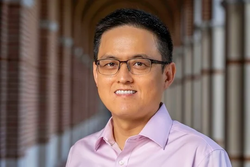
준 루(Jun Lou) 라이스대학교 재료과학·나노공학과 칼 F. 하셀만 석좌교수는 국제학술지 『Materials Today』에 게재된 이번 연구의 공동 교신저자다. [사진제공(Photo Source) = 제프 핏로우/라이스대학교(Jeff Fitlow/Rice University)]
국제학술지 『Materials Today』에 게재된 이번 연구에 따르면, 라이스대 연구진은 육각형 질화붕소(hBN)로 이루어진 2차원 박막 위에 COF 소재를 직접 성장시키는 데 성공했다. 이를 통해 빛만으로도 의약품 폐기물과 염료, PFAS를 포함한 난분해성 오염물질을 효과적으로 분해할 수 있는 하이브리드 초정화(supercleansing) 표면을 구현했다.
이판 주(Yifan Zhu), 라이스대학교 재료과학·나노공학과 박사후연구원이자 이번 연구의 제1 저자는 “두 가지 안전하고 가벼운 소재를 새로운 방식으로 결합해, 다양한 오염물질에 빠르게 작용하면서도 환경에 해를 끼칠 수 있는 금속에 의존하지 않는 강력한 오염 저감 표면을 구현했다”고 말했다. 이어 그는 “이는 수자원을 보호하는 데 있어 더 깨끗하고 비용 효율적이며 지속 가능한 해법을 제시한다는 점에서 의미가 크다”고 강조했다.
이 표면을 구현하기 위해 연구진은 서로 결합하기 어려운 두 소재를 효과적으로 결합할 수 있는 방법을 찾아야 했다. 이를 위해 연구진은 물질에 의도적으로 결함이나 불완전성을 도입해 새로운 특성이나 거동을 유도하는 기법인 ‘결함 공학(defect engineering)’을 적용했다. 구체적으로 연구팀은 육각형 질화붕소 표면에 미세한 흠집을 식각 방식으로 형성했다. 이러한 결함은 반응성이 높은 결합 지점으로 작용해 COF가 hBN 박막에 고정되도록 하고, 그 위에 직접 성장할 수 있도록 했다. 그 결과 형성된 계면은 빛에 의해 여기된 전자와 전자 공공을 서로 다른 방향으로 유도하며, 이러한 과정이 오염물질을 제거하는 정화 효과를 만들어낸다.
이판 주 연구원은 “두 소재를 단순히 섞는 방식이 아니라 직접 함께 성장시키는 방법을 택함으로써, 전하가 포획되지 않고 원활하게 이동할 수 있는 연결된 구조를 구현했다”고 말했다. 그는 이어 “특히 육각형 질화붕소는 일반적으로 변형이 매우 어려운 소재라는 점에서, 이러한 소재 조합에 이 같은 접근법이 적용된 것은 이번이 처음”이라고 설명했다.
실제 적용 환경에서의 성능을 평가하기 위해 연구진은 정수 처리 시설의 조건을 모사한 수직·수평 유동수 반응기에서 해당 소재를 시험했다. 그 결과 이 소재는 반복적인 정화 사이클에서도 구조와 안정성을 유지하며, 일관된 성능을 보이는 것으로 확인됐다.
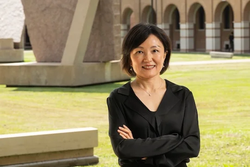
치린 리(Qilin Li) 라이스대학교 토목·환경공학과 칼 F. 하셀만 석좌교수는 국제학술지 『Materials Today』에 게재된 이번 연구의 공동 교신저자다. [사진제공(Photo Source) = 제프 핏로우/라이스대학교(Jeff Fitlow/Rice University)]
준 루(Jun Lou) 라이스대학교 재료과학·나노공학과 칼 F. 하셀만 석좌교수이자 이번 연구의 교신저자는 “이번 연구 결과는 금속을 사용하지 않은 단일 소재만으로도 제거가 어려운 여러 오염물질을 동시에 처리할 수 있음을 보여준다”고 밝혔다. 이어 그는 “이는 더 깨끗한 물을 위한 현실적이고 저비용의 해법에 한 걸음 더 다가섰다는 의미”라고 강조했다.
치린 리(Qilin Li) 라이스대학교 토목·환경공학과 칼 F. 하셀만 석좌교수도 이번 연구의 교신저자로 참여했으며, 밍제 리우(Mingjie Liu) 플로리다대학교(University of Florida) 화학과 조교수와 함께 연구를 이끌었다. 이밖에 라이스대학교 소속 공동 연구진으로는 위런 펑(Yuren Feng), 샹 장(Xiang Zhang), 칭 아이(Qing Ai), 톈유 시에(Tianyou Xie), 신퉁 웡(Xintong Weng), 리신 저우(Lixin Zhou), 텐수 자이(Tianshu Zhai), 이펑 류(Yifeng Liu), 샤오촨 황(Xiaochuan Huang), 천양 린(Chen-yang Lin), 사라 글래스(Sarah Glass), 봉기 신(Bongki Shin), 이모 한(Yimo Han), 앙헬 마르티(Angel Martí) 그리고 풀리켈 아자얀(Pulickel Ajayan) 교수가 참여했다.
이번 연구는 라이스대학교와 플로리다대학교 연구진 간의 공동 협력으로 수행됐으며, 미국 국립과학재단(NSF), 미 공군연구소 국제 연구·혁신·나노과학 센터(RISING Center at Rice), 웰치 재단(Welch Foundation)의 지원을 받았다.
[원문보기]
Engineered material uses light to destroy PFAS, other contaminants
Materials scientists at Rice University and collaborators have developed a material that uses light to break down a range of pollutants in water, including per- and polyfluoroalkyl substances, or PFAS, the “forever chemicals” that have garnered attention for their pervasiveness.
The process involves the use of a class of materials known as covalent organic frameworks, or COFs, whose porous structure ⎯ and hence high surface area ⎯ make them useful in light-driven, or photocatalytic, reactions. When they interact with light, some of the electrons in COF molecules get displaced, forming holes, and this bifurcation of charges is what makes COFs good photocatalysts.
According to a study published in Materials Today, the Rice team grew a COF material directly onto a two-dimensional film of hexagonal boron nitride (hBN), giving rise to a hybrid supercleansing surface that needs only light in order to cut through tough pollutants, including pharmaceutical waste, dyes and PFAS.
“By combining two safe, lightweight materials in a new way, we built a powerful pollution-fighting surface that works quickly, works on many different pollutants and does not rely on metals that could harm the environment,” said Yifan Zhu, a postdoctoral researcher in Rice’s Department of Materials Science and Nanoengineering and a first author on the study. “This matters because it offers a cleaner, cheaper and more sustainable way to protect our water.”
To construct this surface, the researchers had to find a way to combine the two materials, which are usually difficult to attach to one another. They did so using defect engineering, a technique that deliberately embeds defects or imperfections into a material in order to engender new properties or behaviors. In this case, the team etched microscopic “scratches” into the hBN surface. The imperfections served as reactive sites anchoring the COF to the hBN film and enabling it to grow directly on top. The resulting interface directs the light-energized electrons and holes in different directions, creating the cleansing effect.
“By growing them directly together rather than simply mixing them, we created a connected structure where charges could travel easily without getting trapped,” Zhu said. “This approach had not been done before with this pair of materials, especially because hBN is usually very hard to modify.”
To examine performance under practical conditions, the team tested the material in vertical and horizontal flowing-water reactors ⎯ mirroring equivalent setups in water treatment facilities. The material performed consistently over repeated cleansing cycles, maintaining structure and stability.
“These findings show that a single, metal-free material can tackle multiple hard-to-remove pollutants,” said Jun Lou, a corresponding author on the study who is Rice’s Karl F. Hasselmann Professor of Materials Science and Nanoengineering. “This moves us closer to practical, low-cost solutions for cleaner water.”
Qilin Li, Rice’s Karl F. Hasselmann Professor of Civil and Environmental Engineering, is also a corresponding on the study, alongside Mingjie Liu, an assistant professor of chemistry at the University of Florida. Other contributors from Rice are Yuren Feng, Xiang Zhang, Qing Ai, Tianyou Xie, Xintong Weng, Lixin Zhou, Tianshu Zhai, Yifeng Liu, Xiaochuan Huang, Chen-yang Lin, Sarah Glass, Bongki Shin, Yimo Han, Angel Martí and Pulickel Ajayan.
The work was a collaboration between Rice and University of Florida collaborators. The research was supported by the National Science Foundation (2113882, 1449500, 2404270); the Air Force Research Laboratory International Research, Innovation and Science in Nanotechnology (RISING) Center at Rice; and the Welch Foundation (C-2248, C-2065).
 즐겨찾기 추가
 시작페이지로 설정