[해외시장조사보고서] “글로벌 스마트 냉각수 처리 시장, 2033년까지 97억 달러 예상”
2024년 41억달러(6조373억원)서 연평균 9.8% 증가세로 2033년 97억달러(14조2천832억원) 예상
글로벌 시장조사기관 '리서치 인텔로(Research Intelo)', 2033년까지의 ‘글로벌 스마트 냉각수 처리 시장’ 규모 발표
스마트 냉각수처리 솔루션, 물사용 최적화·운영비용 절감…엄격한 환경 규제 준수 보장
북미지역, 성숙한 산업기반·첨단기술 인프라·스마트 물관리 솔루션의 조기 도입 덕분에 전 세계 매출의 34% 이상 차지
아시아-태평양지역, 2033년까지 연평균 성장률(CAGR) 12.5% 초과 예상…가장 빠르게 성장
에코랩·수에즈·베올리아·쿠리타·자일럼·켐트리트·다우 워터&프로세스솔루션 등 글로벌 물기업 두각
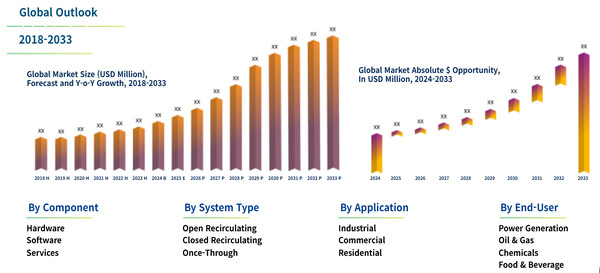
글로벌 시장조사기관인 리서치 인텔로(Research Intelo)의 최신 연구에 따르면, ‘글로벌 스마트 냉각수 처리 시장(Global Smart Cooling Water Treatment Market)’ 규모는 2024년에 41억 달러(약 6조373억 원)로 평가되었으며, 오는 2033년까지 97억 달러(14조2천832억 원)에 이를 것으로 예상되며, 2024년부터 2033년 예측 기간 동안 9.8%의 견고한 연평균 성장률(CAGR)으로 성장할 것으로 보인다. [그림출처(picture source) = 리서치 인텔로(Research Intelo)]
미국의 글로벌 시장조사 및 비즈니스 컨설팅 회사인 리서치 인텔로(Research Intelo)는 최근 ‘2033년까지의 글로벌 스마트 냉각수 처리 시장 시장보고서(Smart Cooling Water Treatment Market Research Report 2033)’ 를 발표했다. 이 보고서 내용을 요약했다.
글로벌 시장조사기관인 리서치 인텔로(Research Intelo)의 최신 연구 보고서에 따르면, ‘글로벌 스마트 냉각수 처리 시장(Global Smart Cooling Water Treatment Market)’ 규모는 2024년에 41억 달러(약 6조373억 원)로 평가되었으며, 오는 2033년까지 97억 달러(14조2천832억 원)에 이를 것으로 예상되며, 2024년부터 2033년 예측 기간 동안 9.8%의 견고한 연평균 성장률(CAGR)으로 성장할 것으로 예측했다.
이러한 놀라운 성장세는 주로 산업용수 관리 시스템에서 자동화와 디지털화가 점점 많이 도입되고 있는 데 기인한다. 이러한 시스템은 물 사용을 최적화하고 운영비용을 절감하며 엄격한 환경 규제 준수를 보장하기 위해 설계되었다.
전 세계 산업 및 상업 부문이 더 높은 효율성과 지속가능성을 추구함에 따라, 스마트 냉각수 처리 솔루션(Smart Cooling Water Treatment Solutions)의 통합은 운영 우수성과 환경 보호를 달성하는 데 중요한 수단이 되고 있다.
■ 지역 전망 북미지역은 현재 스마트 냉각수 처리 시장에서 가장 큰 점유율을 차지하고 있으며, 2024년 전 세계 매출의 34% 이상을 차지하고 있다. 이 지역의 지배력은 성숙한 산업 기반, 첨단 기술 인프라, 그리고 스마트 물관리 솔루션의 조기 도입 덕분이다.
EPA(미국환경보호청)의 「청정수법(Clean Water Act)」과 같은 엄격한 규제 체계와 발전, 석유 및 가스, 식음료 등 산업 전반에 걸친 물 및 에너지 소비 감소 압력이 첨단 냉각수 처리 시스템의 도입을 가속화했다. 더불어 선도적인 시장 참여자들과 고도로 숙련된 인력의 존재는 북미의 리더십을 더욱 공고히 했으며, 지속적인 연구개발 및 디지털 전환 투자가 지속적인 시장 확장을 견인하고 있다.
아시아-태평양 지역은 스마트 냉각수 처리 시장에서 가장 빠르게 성장하는 지역으로 예상되며, 2024년부터 2033년까지 연평균 성장률(CAGR)이 12.5%를 초과할 것으로 예측된다. 중국, 인도, 동남아시아 국가들 등 신흥 경제국에서 급속한 산업화, 도시화, 인프라 개발 투자 증가가 주요 성장의 요인이다.
지역 정부들은 물부족과 오염 문제를 해결하기 위해 더 엄격한 환경 정책을 시행하고 있으며, 이에 따라 산업계는 스마트 수처리 기술을 도입하고 있다. 또한, 제조 시설의 확산과 상업 부문의 확장은 효율적이고 지속가능한 냉각수 관리 솔루션에 대한 큰 수요를 창출하여 시장 성장을 더욱 촉진시키고 있다.
남미, 중동 및 아프리카의 신흥 경제국들은 스마트 냉각수 처리 솔루션의 점진적인 도입을 목격하고 있으나, 시장 보급률은 다른 지역에 비해 상대적으로 낮은 수준으로 남아 있다. 기술 전문성 부족, 높은 초기 자본 비용, 불충분한 인프라와 같은 도입 문제도 여전히 존재한다.
하지만, 특히 석유 및 가스, 발전, 제약 등 수질과 운영 효율성이 중요한 분야에서 지역별 수요가 증가하고 있는 추세다. 수자원 관리 개선과 지속 가능한 산업 관행 장려를 위한 정책 개혁이 이러한 장벽을 점진적으로 극복하여 향후 몇 년간 스마트 냉각수 처리 시스템의 도입 확대를 위한 길을 열 것으로 기대된다.
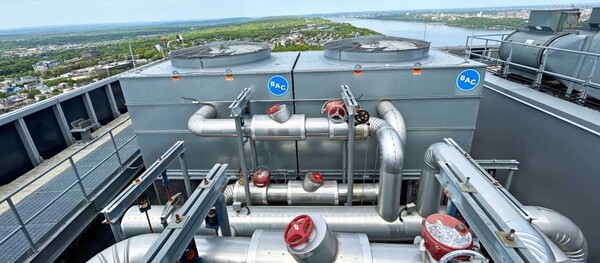
전 세계 산업 및 상업 부문이 더 높은 효율성과 지속 가능성을 추구함에 따라, 스마트 냉각수 처리 솔루션(Smart Cooling Water Treatment Solutions)의 통합은 운영 우수성과 환경 보호를 달성하는 데 중요한 수단이 되고 있다.
■ 주요 성장 요인 기술 혁신과 자동화 트렌드(Trend)는 스마트 냉각수 처리 시장의 성장 최전선에 있다. IoT(사물인터넷) 센서, AI(인공지능) 기반 분석, 클라우드(Cloud) 기반 모니터링 플랫폼의 통합은 냉각수 시스템 관리 방식을 혁신했다. 이 기술들은 수질 지표의 실시간 모니터링, 예측 유지보수, 자동화된 화학 첨가를 가능하게 하여 수동 개입과 인적 오류를 크게 줄인다.
산업 및 상업 부문 전반에 걸친 ‘인더스트리 4.0(Industry 4.0)’과 디지털 전환 이니셔티브로(Digital Transformation Initiatives)의 전환은 스마트 냉각수 처리 솔루션의 도입을 가속화하고 있으며, 기업들은 성능 최적화, 가동 중단 시간 감소, 환경 영향 최소화를 위한 데이터 기반 통찰력을 활용하려 하고 있다.
최종 사용자 수요의 변화와 변화하는 라이프스타일(lifestyle) 패턴도 시장 환경을 형성하고 있다. 발전, 석유 및 가스, 화학 등 산업 부문은 운영 효율성을 높이고 더 엄격한 환경 기준을 준수해야 하는 압박을 받고 있다. 마찬가지로, 상업 및 주거 부문에서도 물 절약과 스마트 물 관리의 이점에 대한 인식이 높아지고 있다.
지속가능성, 자원 최적화, 기업의 사회적 책임에 대한 강조가 높아지면서 조직들은 규제 준수를 보장할 뿐만 아니라 장기적인 비용 절감과 평판 개선에도 기여할 첨단 냉각수 처리 시스템에 투자하도록 촉진하고 있다.
규제 지원, 정책 개혁, 정부 인센티브가 시장 성장을 촉진하는 데 중요한 역할을 하고 있습니다. 주요 경제권 전반에서 당국은 엄격한 수질 기준을 제정하고 에너지 효율적이고 친환경적인 냉수 처리 기술 도입을 촉진하는 정책을 시행하고 있다.
재정적 인센티브, 세금 감면, 보조금 프로그램은 기업들이 기존 시스템을 업그레이드하고 스마트 솔루션에 투자하도록 장려하고 있다. 이러한 규제 체계는 혁신을 촉진할 뿐만 아니라 신규 진입자와 기존 업체 모두에게 공정한 경쟁의 장을 조성하여 건전한 경쟁을 촉진하고 전반적인 시장 발전을 가속화하고 있다.
스마트 냉각수 처리 시장에 대한 투자 동향은 이 부문의 성장 잠재력을 더욱 강조한다. 벤처 캐피털 자금 조달, 인수합병, 전략적 파트너십이 증가하고 있으며, 기존 기업과 스타트업 모두 기술 역량과 지리적 영역을 확장하려 하고 있다.
최근 몇 년간의 주목할 만한 거래는 AI 기반 물 분석, 원격 모니터링 플랫폼, 하드웨어-소프트웨어 통합 솔루션에 집중되어 있어 업계가 지속적인 혁신과 가치 창출에 대한 의지를 반영한다.
■ 구성요소 분석 스마트 냉각수 처리 시장은 하드웨어, 소프트웨어, 서비스로 구성 요소별로 세분화된다. 역사적으로 센서, 컨트롤러, 투싱 펌프와 같은 하드웨어 부품이 가장 큰 수익 점유율을 차지해 왔으며, 이는 실시간으로 수질을 모니터링하고 제어할 수 있는 신뢰할 수 있고 고성능 장비의 필요성에 의해 촉진되었다.
하지만 지난 10년간 소프트웨어 및 서비스 쪽으로의 뚜렷한 변화가 있었으며, 최종 사용자들은 데이터 분석, 원격 모니터링, 예측 유지보수 기능을 점점 더 우선시하고 있다. 첨단 소프트웨어 플랫폼과 하드웨어 구성 요소의 통합은 전면적인 시스템 관리를 가능하게 하고, 선제적인 의사결정을 용이하게 하며, 운영 위험을 줄이게 하고 있다.
소프트웨어 개발 혁신은 특히 혁신적이었으며, 벤더들은 AI 기반 분석, 클라우드 기반 대시보드, 모바일 애플리케이션을 도입하여 실행 가능한 인사이트와 맞춤형 알림을 제공한다. 이러한 발전은 사용자 채택을 촉진하고 있으며, 조직들은 화학 첨가 최적화, 물 사용량 최소화, 규제 준수를 위한 디지털 도구를 활용하려 하고 있다.
소프트웨어-서비스(SaaS) 모델이 점점 주목받고 있으며, 초기 자본 지출을 줄이고 기존 인프라와의 원활한 업그레이드 및 통합을 가능하게 하는 유연하고 확장 가능한 솔루션을 제공한다.
이러한 발전에도 불구하고, 전 세계적인 부족과 지정학적 불확실성 속에서 고품질 센서와 전자 부품 조달에 있어 공급망에는 여전히 도전이 남아 있다. 원자재 가격의 변동성과 물류 중단은 하드웨어 가용성과 전체 시스템 배치 일정에 영향을 미칠 수 있다. 공급업체들은 소싱 전략을 다양화하고, 현지 제조 역량에 투자하며, 기술 파트너와 전략적 제휴를 맺어 공급망 회복력을 확보하고 위험을 완화하는 데 대응하고 있다.
특히, 스마트 냉각수 처리 시장의 가격 추세는 기술 발전, 규모의 경제, 경쟁 압력의 복합적인 영향을 받는다. 스마트 시스템의 초기 투자비용은 전통적인 솔루션보다 높지만, 유지보수 요구 감소, 에너지 절감, 시스템 수명 향상으로 인해 총 소유 비용은 감소하고 있다. 최종 사용자들은 스마트 솔루션의 장기적 가치를 점점 더 인식하고 있으며, 단기 예산 제약에도 불구하고 더 높은 채택률을 이끌고 있다.
글로벌 스마트 냉각수 처리 시장(Global Smart Cooling Water Treatment Market) 규모
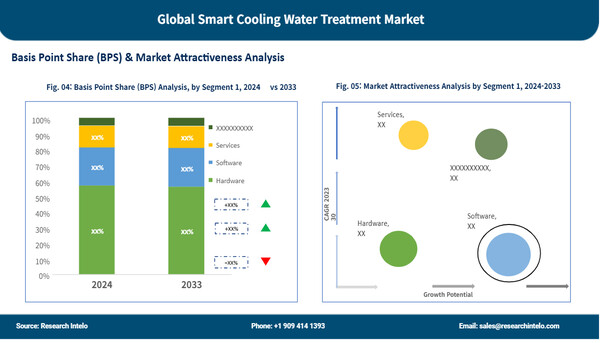
[그림출처(picture source) = 리서치 인텔로(Research Intelo)]
■ 시스템 유형 분석 시스템 유형 구간에는 개방형 재순환, 폐쇄형 재순환, 그리고 한 번의 통과식 냉각수 시스템이 포함된다. 개방형 순환 시스템은 전통적으로 시장을 지배해 왔으며, 특히 발전소나 화학 제조와 같은 대규모 산업 분야에서 그렇다.
이러한 시스템은 스케일링, 부식, 미생물 증식을 방지하기 위해 지속적인 모니터링과 처리가 필요하므로, 스마트 수처리 솔루션의 주요 후보가 됩니다. 개방형 순환 시스템의 역사적 보급은 첨단 모니터링 및 자동화 기술 도입의 견고한 토대를 마련해 왔다.
폐쇄형 순환 시스템은 특히 물 절약과 환경 준수가 중요한 분야에서 점점 더 확산되고 있다. 이 시스템들은 물 손실을 최소화하고 오염 위험을 줄이지만, 최적의 수질 화학을 유지하기 위해 정교한 제어 메커니즘이 필요하다. 센서 기술과 자동 도징의 혁신으로 폐쇄형 순환 시스템의 신뢰성과 성능이 향상되어, 환경 영향과 운영비용을 최소화하려는 산업에 점점 더 매력적으로 다가왔다.
일회통 시스템은 물 소비량이 많아 덜 흔하지만, 물 공급이 제약이 없는 특정 용도에서는 여전히 유효하다. 하지만 규제 감시와 지속 가능성 우려가 커지면서 일회식 시스템에서 더 효율적인 대안으로 전환되고 있다. 이 부문에서 스마트 수처리 솔루션의 도입은 주로 변화하는 환경 기준을 준수하고 물 유출 및 유출량을 줄이기 위한 필요성에 의해 추진된다.
스마트 시스템 통합의 이점에도 불구하고, 기존 인프라 개조, 레거시 및 신기술 간 상호운용성 보장, 복잡한 데이터 스트림 관리 등 다양한 도전 과제가 광범위한 도입을 저해할 수 있다. 공급업체들은 단계별 구현과 다양한 시스템 아키텍처와의 원활한 통합을 가능하게 하는 모듈형, 확장 가능한 솔루션을 제공함으로써 이러한 문제를 해결하고 있다.
■ 응용 분석 스마트 냉각수 처리 시장의 적용 부문은 산업, 상업, 주거 부문을 포함한다. 산업 부문이 가장 큰 비중을 차지하며, 발전, 석유 및 가스, 화학, 식품 및 음료, 제약 분야에서 효율적인 물 관리에 대한 중요한 필요성에 의해 촉진된다.
산업 시설은 물 사용량을 최적화하고 가동 중단 시간을 최소화하며 제품 품질을 보장하기 위해 엄격한 규제 요건과 운영 압력에 직면해 있어 스마트 냉각수 처리 솔루션이 필수적이다.
상업 부문에서는 스마트 냉각수 처리 시스템의 도입이 가속화되고 있으며, 특히 대형 사무실 단지, 데이터 센터, 병원, 교육 기관에서 그렇다. 이러한 시설은 최적의 실내 환경을 유지하고 거주자의 편안함을 보장하기 위해 신뢰할 수 있고 에너지 효율적인 냉각 솔루션이 필요하다.
스마트 물관리 기술(Smart Water Management Technologies)의 통합은 상업 운영자들이 물 및 에너지 소비를 줄이고 유지보수 비용을 낮추며 미국 LEED(Leadership in Energy and Environmental Design)와 영국 BREEAM(Building Research Establishment Environmental Assessment Method)과 같은 친환경 건축 기준을 준수할 수 있도록 돕고 있다.
주거 부문은 아직 초기 단계이지만, 도시화와 생활 수준 향상으로 다가구 주택 단지와 고급 주택에서 첨단 수자원 관리 솔루션에 대한 수요가 증가함에 따라 관심이 커지고 있다. 스마트 냉각수 처리 시스템은 고급 주거용 프로젝트에 도입되어 수질개선, 공과금 절감, 지속 가능한 생활 이니셔티브를 지원하고 있다. 하지만 높은 초기 비용과 소비자 인식 부족으로 인해 도입이 제한되어 있어 맞춤형 교육과 인센티브 프로그램의 필요성이 강조되고 있다.
모든 애플리케이션 세그먼트에서 사용자 채택은 시스템 복잡성, 통합 용이성, 투자 수익률 인식과 같은 요인에 의해 영향을 받는다. 벤더들은 사용자 친화적인 인터페이스, 종합적인 교육 프로그램, 유연한 금융 옵션을 제공하여 도입 장벽을 낮추고 시장 침투를 가속화하는 데 대응하고 있다.
■ 최종 사용자 분석 스마트 냉각수 처리의 최종 사용자 환경은 발전, 석유 및 가스, 화학, 식품 및 음료, 난방·환기·공기조화(heating, ventilation, & air conditioning, HVAC), 제약 및 기타 분야를 아우른다.
발전은 여전히 가장 큰 최종 사용자 부문으로, 높은 물 소비와 신뢰할 수 있고 효율적인 냉각 시스템에 대한 중요한 필요성으로 인해 시장 수익의 중요한 비중을 차지하고 있다. 물 유출 및 배출을 줄이기 위한 규제 명령과 더 깨끗한 에너지원으로의 전환이 이 부문 내 스마트 수처리 기술에 대한 상당한 투자를 촉진하고 있다.
석유 및 가스, 화학 산업도 스마트 냉각수 처리 시스템을 활용해 공정 효율을 최적화하고 환경 영향을 최소화하며 점점 더 엄격한 규제를 준수하는 주요 도입자이다. 이들 부문은 수질, 오염 위험, 운영 복잡성 등 독특한 도전에 직면해 있어 시스템의 무결성과 성능 유지를 위해 고급 모니터링과 자동화가 필수적이다.
식품 및 음료 및 제약 산업은 엄격한 수질 관리, 제품 안전, 규제 준수의 필요성에 의해 고속 성장하는 최종 사용자 부문으로 떠오르고 있다. 이들 산업에서 스마트 냉각수 처리 솔루션의 도입은 제조업체들이 더 높은 수준의 공정 자동화를 달성하고, 운영 위험을 줄이며, 지속 가능성 성과를 향상시킬 수 있도록 돕고 있다.
HVAC 분야에서는 특히 대형 상업용 및 기관용 건물에서 스마트 냉각수 처리 시스템의 빠른 도입이 이루어지고 있다. 이러한 솔루션들은 시설 관리자들이 냉각탑 성능을 최적화하고, 장비 수명을 연장하며, 유지보수 비용을 절감하는 데 도움을 주어 에너지 효율성과 거주자의 편안함 향상에 기여하고 있다.
■ 기회와 위협 스마트 냉각수 처리 시장은 지속적인 혁신, 미개척 채택 격차, 그리고 글로벌 확장 가능성에 의해 상당한 성장 기회를 제공한다. AI 기반 분석, 첨단 센서 네트워크, 클라우드 기반 관리 플랫폼과 같은 신기술은 냉각수 처리에서 새로운 수준의 효율성, 투명성, 통제력을 열어주고 있다.
연구개발에 투자하고 이러한 혁신을 활용하는 기업들은 최종 사용자들이 점점 더 측정 가능한 성능 향상과 비용 절감을 제공하는 통합 데이터 기반 솔루션을 원함에 따라 경쟁 우위를 확보할 수 있다.
더불어, 산업화와 도시화가 가속화되는 신흥 경제국에서 시장이 여전히 침투율이 낮다. 목표 지향적인 마케팅, 역량 강화, 전략적 파트너십은 공급업체가 이러한 성장 기회를 포착하고 글로벌 입지를 확장하는 데 도움을 줄 수 있다.
또 다른 중요한 기회는 채택 격차를 해소하고 새로운 응용 분야로 확장하는 데 있습니다. 현재 산업 및 상업 부문이 시장을 지배하고 있지만, 주거 부문은 특히 고밀도 도시 중심지와 물 부족 지역에서 아직 활용되지 않은 잠재력을 제공한다. 주거용 사용자의 고유한 요구에 맞춘 제품 제공과 인식 캠페인 및 인센티브 프로그램을 결합하면 시장 채택 확대가 가능하다.
또한, 지속 가능성, 물 절약, 순환 경제 원칙에 대한 관심이 높아지면서 물 사용량을 최소화하고 화학물질 소비를 줄이며 폐쇄 루프 시스템을 지원하는 솔루션에 대한 수요가 증가하고 있다. 이러한 트렌드에 맞춰 제품 개발 및 마케팅 전략을 조율하는 기업은 새롭게 등장하는 기회를 활용할 수 있는 좋은 위치에 있다.
이러한 유망한 전망에도 불구하고, 시장은 규제 불확실성, 원자재 가격 변동성, 표준화 문제 등 여러 제약에 직면해 있다. 지역 간 일관성 없는 규제 체계는 준수 복잡성을 야기하고 국경 간 시장 확장을 저해할 수 있다. 센서 및 전자 기기와 같은 주요 부품 가격 변동은 시스템의 경제성과 수익성에 영향을 미칠 수 있다.
더불어, 데이터 통합과 시스템 상호 운용성을 위한 표준화된 프로토콜의 부재는 스마트 냉각수 처리 솔루션의 확장성과 효율성을 제한할 수 있습니다. 이러한 도전을 해결하려면 산업계의 협력, 정책 조화, 기술 개발 및 공급망 회복력에 대한 지속적인 투자가 필요하다.
■ 경쟁사 전망 스마트 냉각수 처리 시장은 글로벌 대기업, 전문 기술 제공업체, 혁신적인 스타트업들이 시장 점유율을 놓고 경쟁하는 다소 분산된 경쟁 환경을 보인다. 수에즈(Suez Water Technologies & Solutions), 에콜랩(Ecolab Inc.), 베올리아(Veolia Water Technologies), 자일럼(Xylem Inc.)과 같은 선도 기업들이 중요한 위치를 차지하고 있지만, 시장은 최첨단 솔루션과 차별화된 가치 제안을 제공하는 민첩한 신생 기업들로 인해 여전히 변화에 노출되어 있다. 경쟁 역학은 가격 경쟁, 가치 차별화, 그리고 변화하는 고객 요구를 충족하는 통합적이고 종단 간 솔루션을 제공하는 능력의 결합에 의해 형성된다.
가격 경쟁은 특히 하드웨어 부문에서 두드러지며, 상품화와 규모의 경제가 단가를 낮추고 있다. 하지만 공급업체들은 점점 더 반복적인 수익원과 높은 마진을 제공하는 부가가치 서비스, 소프트웨어 플랫폼, 구독 기반 비즈니스 모델에 관심을 기울이고 있다.
측정 가능한 ROI를 제공하는 포괄적이고 데이터 기반 솔루션을 제공하는 능력은 시장에서 핵심 차별화 요소가 되고 있으며, 최종 사용자는 투자 가치를 극대화하고 장기적인 운영 및 지속 가능성 목표를 달성하고자 한다.
기술 투자와 지리적 확장은 선도 시장 참여자들의 성장 전략의 핵심이다. 기업들은 차세대 제품 개발, 시스템 상호 운용성 향상, 사용자 경험 개선을 위해 연구개발(R&D) 투자를 확대하고 있다.
전략적 인수, 합작 투자, 파트너십은 기업들이 기술 역량을 확장하고 새로운 시장에 진입하며 제품 개발 주기를 가속화할 수 있도록 돕고 있다. 최근 주요 거래로는 AI 기반 분석, IoT 기반 모니터링, 클라우드 기반 관리 플랫폼에 중점을 둔 수처리 대기업과 기술 스타트업 간의 협력이 있다.
스마트 냉각수 처리 시장의 주요 기업들은 견고한 제품 포트폴리오, 강력한 글로벌 입지, 혁신에 대한 헌신으로 차별화된다. 예를 들어, 수에즈는 첨단 센서, 실시간 분석, 자동화 제어 시스템을 결합한 통합 디지털 수자원 관리 솔루션을 선도적으로 개발했다.
에콜랩은 전 세계 기술 전문가 네트워크의 지원을 받아 포괄적인 수처리 화학물질, 장비 및 디지털 서비스로 유명하다.
베올리아와 자일럼은 수자원 인프라 분야에서 풍부한 경험을 바탕으로 다양한 최종 사용자 세그먼트의 고유한 요구에 맞춘 확장 가능하고 지속 가능한 솔루션을 제공하고 있다. 이들 기업은 또한 지속 가능성 이니셔티브의 선두에 서서 녹색 기술과 순환 경제 원칙에 투자하여 변화하는 고객 및 규제 요구에 부합한다.
주요 기업들의 최근 재무 및 전략적 움직임은 업계가 성장과 혁신에 대한 의지를 강조한다. 디지털 전환에 대한 투자, 고성장 지역으로의 확장, 새로운 비즈니스 모델 개발은 기업들이 신흥 기회를 포착하고 변화하는 시장 도전에 대응할 수 있도록 돕고 있다.
기술 기업, 연구 기관, 정부 기관과의 파트너십은 부문 간 협력을 촉진하고 혁신 속도를 가속화하여 스마트 냉각수 처리 시장이 역동적이고 경쟁력 있으며 급변하는 세계의 요구에 대응할 수 있도록 보장한다.
■ 신기술 스마트 냉각수 처리 시장의 미래는 전례 없는 수준의 효율성, 투명성, 지속 가능성을 약속하는 신기술들의 물결에 의해 형성되고 있다. 첨단 센서 네트워크는 수질 매개변수의 실시간 세분화 모니터링을 가능하게 하여 이상 징후의 조기 탐지와 선제적 유지보수를 가능하게 하고 있다.
AI 기반 분석 플랫폼은 원시 데이터를 실행 가능한 통찰력으로 전환하여 예측 유지보수, 최적화된 화학물질 투여, 지속적인 시스템 최적화를 가능하게 하고 있다. 클라우드 기반 관리 플랫폼은 중앙 집중식 제어와 원격 접근을 제공하여 운영자가 단일 인터페이스에서 여러 시설을 관리하고 변화하는 상황에 신속히 대응할 수 있도록 지원한다.
기타 주목할 만한 기술 발전으로는 안전한 데이터 공유 및 추적성을 위한 블록체인 통합, 시스템 시뮬레이션 및 최적화를 위한 디지털 트윈 활용, 부식 및 스케일링 방지를 위한 첨단 소재 개발이 있다.
이러한 혁신은 시스템 성능과 신뢰성을 향상시킬 뿐만 아니라, 물 및 에너지 소비를 줄이고, 화학물질 사용을 최소화하며, 폐쇄형 물 관리를 가능하게 하여 더 넓은 지속 가능성 목표를 지원한다. 이러한 신기술에 투자하고 성공적으로 제품 제공에 통합하는 기업은 스마트 냉각수 처리 시장의 다음 성장 물결을 선도할 수 있는 좋은 위치에 있을 것이다.
■ 경쟁 환경 글로벌 시장에서 활동하는 저명한 기업 △에코랩주식회사(Ecolab Inc.) △수에즈 수자원 기술 및 솔루션(Veolia Water Technologies) △베올리아 워터 테크놀로지스(Veolia Water Technologies) △쿠리타 물 산업주식회사(Kurita Water Industries Ltd.) △켐트리트주식회사(ChemTreat, Inc.) △다우 워터 앤 프로세스 솔루션(Dow Water & Process Solutions) △렌테크 B.V.(Lenntech B.V.) △날코 워터(Nalco Water) △GE 물 및 공정 기술(GE Water & Process Technologies) △듀폰 워터 솔루션(DuPont Water Solutions) △아쿠아테크 인터내셔널 LLC(Aquatech International LLC) △바스프 SE(BASF SE) △솔레니스 LLC(Solenis LLC) 등이다.
[원문보기]
Smart Cooling Water Treatment Market Research Report 2033
According to our latest research, the Global Smart Cooling Water Treatment Market size was valued at $4.1 billion in 2024 and is projected to reach $9.7 billion by 2033, expanding at a robust CAGR of 9.8% during the forecast period of 2024∼2033.
This impressive growth trajectory is primarily fueled by the increasing adoption of automation and digitalization in industrial water management systems, which are designed to optimize water usage, reduce operational costs, and ensure compliance with stringent environmental regulations.
As industrial and commercial sectors worldwide strive for greater efficiency and sustainability, the integration of smart cooling water treatment solutions is becoming a critical lever for achieving operational excellence and environmental stewardship.
Regional Outlook
North America currently commands the largest share of the Smart Cooling Water Treatment Market, accounting for over 34% of the global revenue in 2024. The region’s dominance can be attributed to its mature industrial base, advanced technological infrastructure, and early adoption of smart water management solutions.
Stringent regulatory frameworks such as the EPA’s Clean Water Act, combined with growing pressure to reduce water and energy consumption across industries like power generation, oil & gas, and food & beverage, have accelerated the deployment of advanced cooling water treatment systems. Moreover, the presence of leading market players and a highly skilled workforce has further cemented North America’s leadership position, with continuous investments in R&D and digital transformation initiatives driving sustained market expansion.
Asia Pacific is projected to be the fastest-growing region in the Smart Cooling Water Treatment Market, forecasted to register a CAGR exceeding 12.5% from 2024 to 2033. Rapid industrialization, urbanization, and increasing investments in infrastructure development across emerging economies such as China, India, and Southeast Asian nations are major growth drivers.
Governments in the region are implementing stricter environmental policies to address water scarcity and pollution, prompting industries to adopt smart water treatment technologies. Additionally, the proliferation of manufacturing facilities and the expansion of the commercial sector are creating significant demand for efficient and sustainable cooling water management solutions, further propelling market growth.
Emerging economies in Latin America and the Middle East & Africa are witnessing gradual uptake of Smart Cooling Water Treatment solutions, although market penetration remains relatively lower compared to other regions. Adoption challenges such as limited technical expertise, high initial capital costs, and inadequate infrastructure persist.
However, localized demand is growing, particularly in sectors like oil & gas, power generation, and pharmaceuticals, where water quality and operational efficiency are critical. Policy reforms aimed at improving water resource management and incentivizing sustainable industrial practices are expected to gradually overcome these barriers, paving the way for increased adoption of smart cooling water treatment systems in the coming years.
Key Growth Drivers
Technological innovation and automation trends are at the forefront of growth in the Smart Cooling Water Treatment Market. The integration of IoT sensors, AI-powered analytics, and cloud-based monitoring platforms has revolutionized the way cooling water systems are managed. These technologies enable real-time monitoring of water quality parameters, predictive maintenance, and automated chemical dosing, significantly reducing manual intervention and human error.
The shift towards Industry 4.0 and digital transformation initiatives across industrial and commercial sectors is accelerating the adoption of smart cooling water treatment solutions, as companies seek to harness data-driven insights for optimizing performance, reducing downtime, and minimizing environmental impact.
Shifts in end-user demand and evolving lifestyle patterns are also shaping the market landscape. Industrial sectors such as power generation, oil & gas, and chemicals are under increasing pressure to enhance operational efficiency and comply with stricter environmental standards. Similarly, the commercial and residential sectors are witnessing rising awareness about water conservation and the benefits of smart water management.
The growing emphasis on sustainability, resource optimization, and corporate social responsibility is driving organizations to invest in advanced cooling water treatment systems that not only ensure regulatory compliance but also deliver long-term cost savings and reputational benefits.
Regulatory support, policy reforms, and government incentives are playing a pivotal role in catalyzing market growth. Across major economies, authorities are enacting stringent water quality standards and implementing policies that promote the adoption of energy-efficient and environmentally friendly cooling water treatment technologies.
Financial incentives, tax breaks, and grant programs are encouraging businesses to upgrade their legacy systems and invest in smart solutions. These regulatory frameworks are not only fostering innovation but also leveling the playing field for new entrants and established players alike, driving healthy competition and accelerating overall market development.
Investment trends in the Smart Cooling Water Treatment Market further underscore the sector’s growth potential. Venture capital funding, mergers and acquisitions, and strategic partnerships are on the rise, as both established companies and startups seek to expand their technological capabilities and geographic footprint. Notable deals in recent years have focused on AI-driven water analytics, remote monitoring platforms, and integrated hardware-software solutions, reflecting the industry’s commitment to continuous innovation and value creation.
Component Analysis
The market for smart cooling water treatment is segmented by component into hardware, software, and services. Historically, hardware components such as sensors, controllers, and dosing pumps have constituted the largest revenue share, driven by the need for reliable, high-performance equipment to monitor and control water quality in real-time.
However, the past decade has seen a notable shift toward software and services, as end-users increasingly prioritize data analytics, remote monitoring, and predictive maintenance capabilities. The integration of advanced software platforms with hardware components is enabling holistic system management, facilitating proactive decision-making, and reducing operational risks.
Innovations in software development have been particularly transformative, with vendors introducing AI-powered analytics, cloud-based dashboards, and mobile applications that provide actionable insights and customizable alerts.
These advancements are driving user adoption, as organizations seek to leverage digital tools for optimizing chemical dosing, minimizing water usage, and ensuring regulatory compliance. Software-as-a-Service (SaaS) models are gaining traction, offering flexible, scalable solutions that reduce upfront capital expenditure and enable seamless upgrades and integration with existing infrastructure.
Despite these advancements, challenges persist in the supply chain, particularly in sourcing high-quality sensors and electronic components amid global shortages and geopolitical uncertainties. Volatility in raw material prices and logistical disruptions can impact both hardware availability and overall system deployment timelines. Suppliers are responding by diversifying their sourcing strategies, investing in local manufacturing capabilities, and forming strategic alliances with technology partners to ensure supply chain resilience and mitigate risks.
Price trends in the smart cooling water treatment market are influenced by a combination of technological advancements, economies of scale, and competitive pressures.
While initial investment costs for smart systems remain higher than traditional solutions, the total cost of ownership is declining as a result of reduced maintenance requirements, energy savings, and improved system longevity. End-users are increasingly recognizing the long-term value proposition of smart solutions, driving higher adoption rates despite short-term budget constraints.
System Type Analysis
The system type segment includes open recirculating, closed recirculating, and once-through cooling water systems. Open recirculating systems have traditionally dominated the market, particularly in large-scale industrial applications such as power plants and chemical manufacturing.
These systems require continuous monitoring and treatment to prevent scaling, corrosion, and microbial growth, making them prime candidates for smart water treatment solutions. The historical prevalence of open recirculating systems has laid a strong foundation for the adoption of advanced monitoring and automation technologies.
Closed recirculating systems are gaining momentum, especially in sectors where water conservation and environmental compliance are paramount. These systems minimize water loss and reduce the risk of contamination, but require sophisticated control mechanisms to maintain optimal water chemistry.
Innovations in sensor technology and automated dosing have enhanced the reliability and performance of closed recirculating systems, making them increasingly attractive to industries seeking to minimize environmental impact and operational costs.
Once-through systems, while less common due to their high water consumption, remain relevant in specific applications where water availability is not a constraint. However, growing regulatory scrutiny and sustainability concerns are prompting a shift away from once-through systems towards more efficient alternatives.
The adoption of smart water treatment solutions in this segment is primarily driven by the need to comply with evolving environmental standards and reduce water withdrawal and discharge volumes.
Despite the benefits of smart system integration, challenges such as retrofitting existing infrastructure, ensuring interoperability between legacy and new technologies, and managing complex data streams can hinder widespread adoption. Vendors are addressing these issues by offering modular, scalable solutions that facilitate phased implementation and seamless integration with diverse system architectures.
Application Analysis
The application segment of the Smart Cooling Water Treatment Market encompasses industrial, commercial, and residential sectors. The industrial segment accounts for the largest share, driven by the critical need for efficient water management in power generation, oil & gas, chemicals, food & beverage, and pharmaceuticals.
Industrial facilities face stringent regulatory requirements and operational pressures to optimize water usage, minimize downtime, and ensure product quality, making smart cooling water treatment solutions indispensable.
In the commercial sector, the adoption of smart cooling water treatment systems is accelerating, particularly in large office complexes, data centers, hospitals, and educational institutions. These facilities require reliable, energy-efficient cooling solutions to maintain optimal indoor environments and ensure occupant comfort.
The integration of smart water management technologies is enabling commercial operators to reduce water and energy consumption, lower maintenance costs, and comply with green building standards such as LEED and BREEAM.
The residential segment, while still nascent, is witnessing growing interest as urbanization and rising living standards drive demand for advanced water management solutions in multi-family housing complexes and luxury residences.
Smart cooling water treatment systems are being incorporated into high-end residential projects to enhance water quality, reduce utility bills, and support sustainable living initiatives. However, adoption remains limited by high upfront costs and a lack of consumer awareness, highlighting the need for targeted education and incentive programs.
Across all application segments, user adoption is influenced by factors such as system complexity, ease of integration, and perceived return on investment. Vendors are responding by offering user-friendly interfaces, comprehensive training programs, and flexible financing options to lower adoption barriers and accelerate market penetration.
End-User Analysis
The end-user landscape for Smart Cooling Water Treatment is diverse, encompassing power generation, oil & gas, chemicals, food & beverage, HVAC, pharmaceuticals, and other sectors. Power generation remains the largest end-user segment, accounting for a significant share of market revenue due to the sector’s high water consumption and critical need for reliable, efficient cooling systems.
Regulatory mandates to reduce water withdrawal and discharge, coupled with the transition to cleaner energy sources, are driving significant investments in smart water treatment technologies within this sector.
The oil & gas and chemicals industries are also major adopters, leveraging smart cooling water treatment systems to optimize process efficiency, minimize environmental impact, and ensure compliance with increasingly stringent regulations.
These sectors face unique challenges related to water quality, contamination risks, and operational complexity, making advanced monitoring and automation essential for maintaining system integrity and performance.
Food & beverage and pharmaceuticals are emerging as high-growth end-user segments, driven by the need for stringent water quality control, product safety, and regulatory compliance. The adoption of smart cooling water treatment solutions in these industries is enabling manufacturers to achieve higher levels of process automation, reduce operational risks, and enhance sustainability performance.
The HVAC sector is witnessing rapid adoption of smart cooling water treatment systems, particularly in large commercial and institutional buildings. These solutions are helping facility managers optimize cooling tower performance, extend equipment lifespan, and reduce maintenance costs, contributing to improved energy efficiency and occupant comfort.
Opportunities & Threats
The Smart Cooling Water Treatment Market offers substantial growth opportunities driven by ongoing innovation, untapped adoption gaps, and the potential for global expansion.
Emerging technologies such as AI-powered analytics, advanced sensor networks, and cloud-based management platforms are unlocking new levels of efficiency, transparency, and control in cooling water treatment. Companies that invest in R&D and leverage these innovations stand to gain a competitive edge, as end-users increasingly seek integrated, data-driven solutions that deliver measurable performance improvements and cost savings.
Furthermore, the market remains underpenetrated in several regions, particularly in emerging economies where industrialization and urbanization are accelerating. Targeted marketing, capacity building, and strategic partnerships can help vendors capture these growth opportunities and expand their global footprint.
Another significant opportunity lies in addressing adoption gaps and expanding into new application areas. While industrial and commercial sectors currently dominate the market, the residential segment presents untapped potential, particularly in high-density urban centers and regions facing water scarcity.
Tailoring product offerings to meet the unique needs of residential users, coupled with awareness campaigns and incentive programs, can drive broader market adoption. Additionally, the growing focus on sustainability, water conservation, and circular economy principles is creating demand for solutions that minimize water usage, reduce chemical consumption, and support closed-loop systems. Companies that align their product development and marketing strategies with these trends are well positioned to capitalize on emerging opportunities.
Despite these promising prospects, the market faces several restraining factors, including regulatory uncertainty, raw material price volatility, and standardization challenges. Inconsistent regulatory frameworks across regions can create compliance complexities and hinder cross-border market expansion. Fluctuations in the prices of key components such as sensors and electronic devices can impact system affordability and profitability.
Moreover, the lack of standardized protocols for data integration and system interoperability can limit the scalability and effectiveness of smart cooling water treatment solutions. Addressing these challenges will require coordinated industry efforts, policy harmonization, and continued investment in technology development and supply chain resilience.
Competitor Outlook
The Smart Cooling Water Treatment Market exhibits a moderately fragmented competitive landscape, with a mix of global conglomerates, specialized technology providers, and innovative startups vying for market share.
While leading players such as Suez, Ecolab, Veolia, and Xylem hold significant positions, the market remains open to disruption from agile newcomers offering cutting-edge solutions and differentiated value propositions.
Competitive dynamics are shaped by a combination of price wars, value differentiation, and the ability to deliver integrated, end-to-end solutions that address evolving customer needs.
Price competition is particularly pronounced in the hardware segment, where commoditization and economies of scale are driving down unit costs. However, vendors are increasingly shifting their focus towards value-added services, software platforms, and subscription-based business models that offer recurring revenue streams and higher margins.
The ability to provide comprehensive, data-driven solutions that deliver measurable ROI is becoming a key differentiator in the market, as end-users seek to maximize the value of their investments and achieve long-term operational and sustainability goals.
Technology investment and geographic expansion are central to the growth strategies of leading market players. Companies are ramping up R&D spending to develop next-generation products, enhance system interoperability, and improve user experience.
Strategic acquisitions, joint ventures, and partnerships are enabling firms to expand their technological capabilities, access new markets, and accelerate product development cycles. Notable recent deals include collaborations between water treatment giants and tech startups focused on AI-powered analytics, IoT-enabled monitoring, and cloud-based management platforms.
Top companies in the Smart Cooling Water Treatment Market are distinguished by their robust product portfolios, strong global presence, and commitment to innovation. Suez, for example, has pioneered integrated digital water management solutions that combine advanced sensors, real-time analytics, and automated control systems.
Ecolab is renowned for its comprehensive suite of water treatment chemicals, equipment, and digital services, supported by a global network of technical experts. Veolia and Xylem are leveraging their extensive experience in water infrastructure to deliver scalable, sustainable solutions tailored to the unique needs of diverse end-user segments. These companies are also at the forefront of sustainability initiatives, investing in green technologies and circular economy principles to align with evolving customer and regulatory expectations.
Recent financial and strategic moves by leading players underscore the industry’s commitment to growth and innovation. Investments in digital transformation, expansion into high-growth regions, and the development of new business models are enabling companies to capture emerging opportunities and address evolving market challenges.
Partnerships with technology firms, research institutions, and government agencies are fostering cross-sector collaboration and accelerating the pace of innovation, ensuring that the Smart Cooling Water Treatment Market remains dynamic, competitive, and responsive to the needs of a rapidly changing world.
Emerging Technologies in Smart Cooling Water Treatment Market
The future of the Smart Cooling Water Treatment Market is being shaped by a wave of emerging technologies that promise to deliver unprecedented levels of efficiency, transparency, and sustainability. Advanced sensor networks are enabling real-time, granular monitoring of water quality parameters, facilitating early detection of anomalies and proactive maintenance.
AI-powered analytics platforms are transforming raw data into actionable insights, enabling predictive maintenance, optimized chemical dosing, and continuous system optimization. Cloud-based management platforms are providing centralized control and remote access, empowering operators to manage multiple facilities from a single interface and respond rapidly to changing conditions.
Other notable technological advancements include the integration of blockchain for secure data sharing and traceability, the use of digital twins for system simulation and optimization, and the development of advanced materials for corrosion and scaling prevention.
These innovations are not only enhancing system performance and reliability but also supporting broader sustainability goals by reducing water and energy consumption, minimizing chemical usage, and enabling closed-loop water management. Companies that invest in these emerging technologies and successfully integrate them into their product offerings will be well positioned to lead the next wave of growth in the Smart Cooling Water Treatment Market.
Key Players
△Ecolab Inc. △Suez Water Technologies & Solutions △Veolia Water Technologies △Kurita Water Industries Ltd., ChemTreat, Inc. △Dow Water & Process Solution △Lenntech B.V. △Nalco Water (An Ecolab Company) △GE Water & Process Technologies △DuPont Water Solutions △Aquatech International LLC △BASF SE △Solenis LLC △Pentair plc △Xylem Inc. △Thermax Limited Buckman Laboratories International, Inc. △Accepta Ltd. △BWA Water Additives △Kemira Oyj.
[출처 = 리서치 인텔로(Research Intelo)(https://researchintelo.com/report/smart-cooling-water-treatment-market) / 2025년 12월 11일]
|  즐겨찾기 추가
 시작페이지로 설정
























