[해외연구보고서] NOAA·NASA, 2025년 남극 오존층 구멍 “1992년 이후 다섯 번째로 작아”
올해 평균 면적 723만 제곱마일… 최근 10년 대비 3주 빨리 해체
“오존 파괴물질 규제 효과 뚜렷… 2060년대 후반 완전 회복 전망”
기상 조건·극소용돌이 영향으로 올해는 예년보다 더 작은 규모 기록
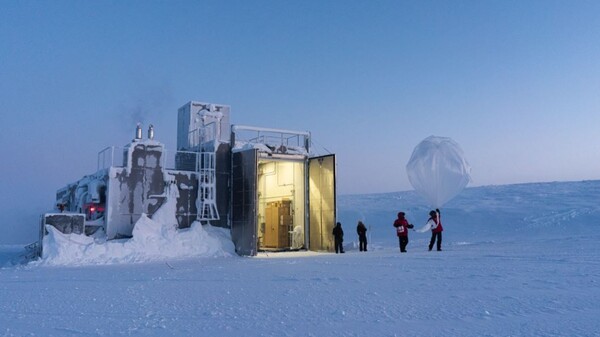
2025년 9월 15일, 남극 아문센-스콧 기지 상공에서 남극 오존홀의 연간 형성을 측정하는 장비 ‘오존존드(ozonesonde)’를 실은 기상 관측 기구를 발사하기 위해 겨울을 남극에서 보내는 NOAA 기술진이 준비하고 있다. [사진제공(Photo Source) = Dr. Simeon Bash (University of Chicago/South Pole Telescope)]
미국 국립해양대기청(NOAA)과 미국항공우주국(NASA)은 2025년 남극 상공 오존층 구멍이 1992년 이후 다섯 번째로 작은 규모였다고 발표했다. 1992년은 오존층 파괴 물질의 단계적 감축을 규정한 국제협약인 몬트리올 의정서가 시행되기 시작한 해다.
올해 오존층 파괴 시즌(9월 7일~10월 13일) 동안 오존층 구멍의 평균 면적은 약 723만 제곱마일(약 1천871만 제곱킬로미터)로 집계됐다. 이는 최근 10년 평균보다 약 3주 빠르게 해체되는 양상이다.
폴 뉴먼(Paul Newman) NASA 선임 과학자는 “예측한 대로 오존층 구멍은 2000년대 초반보다 작아지고 있다”며 “형성 시기는 늦어지고 해체 시기는 앞당겨지고 있다”고 설명했다. 올해 최대 면적은 9월 9일 기록된 883만 제곱마일(약 2천286만 제곱킬로미터)로, 관측 사상 최대였던 2006년 대비 약 30% 작은 규모다.
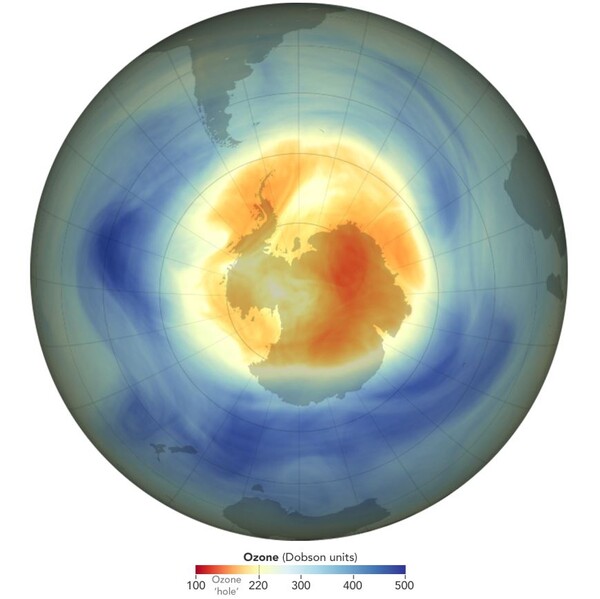
이 그림은 2025년 남극 오존층 구멍이 최대에 도달한 날의 크기와 형태를 보여준다. 오존 손실이 중간 수준인 구역은 주황색, 더 강한 손실은 빨간색으로 표시돼 있다. 과학자들은 오존 농도가 역사적 기준인 220 도브슨 단위(Dobson Units) 아래로 떨어지는 영역을 ‘오존홀’로 정의한다. [사진제공(Photo Source) = NASA Earth Observatory / 데이터 제공: NASA Ozone Watch, GEOS-5 Global Modeling and Assimilation Office)]
NOAA와 NASA는 1979년 이후 위성 기반 장기 관측 기록을 활용해 오존층 구멍의 면적 변화를 분석해왔다. 이 기록을 기준으로 하면 올해 규모는 46년 중 14번째로 작은 수준이다.
연구팀은 몬트리올 의정서와 개정안을 통한 오존 파괴물질 규제 효과가 뚜렷하게 나타나고 있다고 설명했다. 스티븐 몬츠카(Stephen Montzka) NOAA 선임 과학자는 “남극 성층권 내 오존 파괴물질 농도가 2000년 정점 대비 약 3분의 1 감소했다”고 말했다. 뉴먼 박사는 “25년 전과 동일한 염소량이 남아 있었다면 올해 오존층 구멍은 100만 제곱마일(약 259만 제곱킬로미터) 이상 더 컸을 것”이라고 덧붙였다.
기상 관측용 기구 자료에 따르면, 남극점 상공의 오존 농도는 10월 6일 147도브슨 단위(DU)까지 떨어지며 올해 최저치를 기록했다. 사상 최저치는 2006년 10월의 92도브슨 단위이다.
오존: 무엇이며 왜 필요한가
오존층은 성층권(지상 11~50km)에 위치하며 태양 자외선(UV)을 차단하는 보호막 역할을 한다. 오존 감소는 농작물 피해, 피부암 증가, 백내장 등 다양한 건강 피해를 초래한다. 과거 광범위하게 사용된 염화불화탄소(CFC) 등 오존 파괴물질은 대기 중 수십 년 이상 잔존하며 오존을 지속적으로 파괴한다.
이들 금지물질은 여전히 오래된 건축 자재나 매립지 등에서 배출되고 있으나, 배출이 점차 줄어들면서 남극 오존층 구멍은 2060년대 후반쯤 회복될 것이라는 전망이 지배적이다.
로라 시아스토(Laura Ciasto) NOAA 기상학자는 “올해 8월 극소용돌이(polar vortex)가 평년보다 약해 온도가 평균 이상으로 유지되면서 오존층 구멍이 더 작아지는 데 영향을 준 것으로 보인다”고 말했다.
[원문보기]
NOAA, NASA: 2025 ozone hole is 5th smallest since 1992
Scientists with NOAA and NASA have ranked this year’s ozone hole over the Antarctic as the fifth smallest since 1992 — the year that the Montreal Protocol, a landmark international agreement to phase out ozone-depleting chemicals began to take effect.
During the height of this year’s ozone depletion season from September 7 through October 13, the average extent of the 2025 ozone hole was about 7.23 million square miles (18.71 million square kilometers). The ozone hole is already breaking up nearly three weeks earlier than average over the past decade.
“As predicted, we’re seeing ozone holes trending smaller in area than they were in the early 2000s,” said Paul Newman, a senior scientist at the University of Maryland system and longtime leader of NASA’s ozone research team. “They’re forming later in the season and breaking up earlier.”
The hole reached its greatest one-day extent for the year on September 9 at 8.83 million square miles (22.86 million square kilometers). That’s about 30% smaller than the largest hole ever observed in 2006, which had an average area of 10.27 million square miles (26.60 million square kilometers).
NASA and NOAA previously ranked ozone hole severity using a time frame dating back to 1979, when scientists began tracking Antarctic ozone levels with satellites. Using that longer record, this year’s hole area ranked 14th smallest over 46 years of observations.
NOAA and NASA scientists say this year’s monitoring showed that controls on ozone-depleting chemical compounds established by the Montreal Protocol and subsequent amendments are driving the gradual recovery of the ozone layer, which remains on track to recover fully later this century as countries around the world replace ozone-depleting substances with less harmful alternatives.
“Since peaking around the year 2000, levels of ozone depleting substances in the Antarctic stratosphere have declined by about a third relative to pre-ozone-hole levels,” said Stephen Montzka, senior scientist with NOAA’s Global Monitoring Laboratory.
“This year’s hole would have been more than one million square miles larger if there was still as much chlorine in the stratosphere as there was 25 years ago,” added NASA’s Newman.
Weather balloon data showed that the 2025 ozone layer directly over the South Pole reached its lowest concentration of 147 Dobson Units on October 6. The lowest value ever recorded over the South Pole was 92 Dobson Units in October 2006.
Ozone: What it is and why we need it
Earth’s ozone-rich layer acts as a planetary sunscreen that helps shield life from harmful ultraviolet (UV) radiation from the sun. It is located in the stratosphere, which is found between 7 and 31 miles above the Earth’s surface. Reduced ozone allows more UV rays to reach the surface, which can cause crop damage as well as increased cases of skin cancer and cataracts, among other adverse health impacts.
Ozone depletion begins when certain chlorine–and bromine–containing compounds reach the stratosphere, where intense UV radiation breaks them apart and releases reactive forms of chlorine and bromine. These substances then interact with ozone molecules and destroy them.
For decades, compounds such as Chlorofluorocarbons (CFCs) and other ozone-depleting compounds were used in aerosol sprays, foams, air conditioners and refrigerators, and the chlorine and bromine in these compounds can persist in the atmosphere for many years.
American leadership in science, technology, and policy has been central to identifying these risks and driving actions that protect the ozone layer as well as the health and prosperity of the American people.
These now-banned chemicals persist in old products like building insulation and in landfills. As emissions from those legacy uses taper off over time, scientists project that the ozone hole over the Antarctic should recover (get smaller) around the late 2060s.
Laura Ciasto, a meteorologist with NOAA’s Climate Prediction Center and a member of the ozone research team, noted that factors like temperature, weather and the strength of the wind encircling Antarctica known as the polar vortex also influence ozone levels and the size of the ozone hole from year to year. “A weaker-than-normal polar vortex this past August helped keep temperatures above average and likely contributed to a smaller ozone hole,” said Ciasto.
[출처 = 미국 국립해양대기청(NOAA)(https://www.noaa.gov/news-release/noaa-nasa-2025-ozone-hole-is-5th-smallest-since-1992) / 2025년 11월 24일]
|  즐겨찾기 추가
 시작페이지로 설정
























