[미국] 버지니아 공대, 농촌 애팔래치아 대상 ‘가정용 정수필터 건강영향’ 대규모 연구 착수
NIH 370만 달러 지원… 개별 우물·샘물 의존 지역의 수질·건강 위험 정밀 평가
2030년까지 480가구·1천500명 참여… 정수필터 제공 시점에 따른 질병 감소 효과 분석
“취약 농촌 지역의 안전한 식수 접근성 확대 위한 정책 근거 기대”
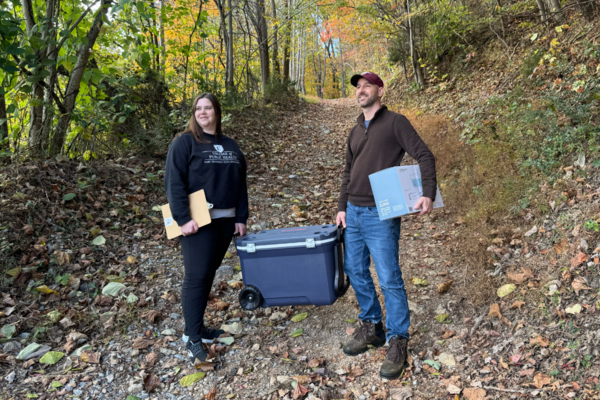
버지니아 공대(Virginia Tech)를 중심으로 구성된 연구팀이 농촌 애팔래치아(Appalachia) 지역을 대상으로 저비용 카운터탑 정수필터가 건강 개선에 효과가 있는지를 검증하기 위한 미국 최초의 대규모 연구를 시작했다. 사진은 베스 오코넬(Beth O’Connell·왼쪽) 이스트테네시주립대 지역사회·행동건강학과 부교수와 알래스터 코헨(Alasdair Cohen) 버지니아 공대 환경역학 조교수가 수질 조사 연구를 위한 현장 작업을 수행하고 있다. [사진제공(Photo Source) = 버지니아 공대 이샤 레이(Isha Ray)]
버지니아 공대(Virginia Tech)를 중심으로 구성된 연구팀이 농촌 애팔래치아(Appalachia) 지역을 대상으로 저비용 카운터탑 정수필터가 건강 개선에 효과가 있는지를 검증하기 위한 미국 최초의 대규모 연구를 시작했다.
이 연구는 개별 우물과 샘물에 의존하는 지역 주민들의 수인성 질병 위험을 감소시킬 수 있는지 실증적으로 평가하는 것을 목표로 한다.
이번 연구는 미국 국립보건원(NIH)으로부터 총 370만 달러(약 53억 8천535만 원)의 연구비를 지원받았으며, 버지니아 공대를 포함해 네 개 대학의 교수진이 참여한다. 연구는 버지니아 남서부와 테네시 북동부 등 농촌 애팔래치아 지역을 중심으로 진행되며, 2030년까지 장기 추적 방식으로 수행된다.
책임연구자인 알래스터 코헨(Alasdair Cohen) 버지니아 공대 환경역학 조교수는 ‘애팔래치아 지역 건강 개선을 위한 안전한 물 접근성 확대 : 농촌 물 여과 및 건강 연구(RWELL)’라는 이름의 프로젝트를 이끈다.
코헨 연구팀은 해당 지역의 수질·보건 문제를 지속적으로 연구해왔으며, 그동안 축적된 조사 결과는 저소득 가구일수록 관리되지 않는 개인 수원으로 인해 수인성 질병에 더 많이 노출되어 있다는 사실을 보여왔다.
연구팀은 이번 사업을 위해 약 480가구, 1천500명 이상의 참여자를 모집할 계획이다. 대상은 버지니아 남서부 및 테네시 북동부의 10개 카운티에 거주하는 주민들로, 참여 가구 전원에게 카운터탑 정수필터가 제공된다.
제공 방식은 무작위 배정 전략을 적용해 절반은 즉시, 나머지 절반은 12개월 후 필터를 지급한다. 이를 통해 필터 제공 시점 차이를 활용해 건강 지표 및 수질 변화를 비교·분석할 예정이다.
연구진은 참여 가구의 질병 신고 빈도, 침·대변 샘플을 통한 수인성 병원체 검사, 필터 설치 전후 수질 분석 등 광범위한 데이터를 수집한다. 이 과정은 2030년까지 장기간 이어지며, 연구진은 개인 우물·샘물의 오염 수준과 정수필터 사용이 실제 건강 개선으로 이어지는지 여부를 체계적으로 확인한다.
예비 연구에서는 개인 우물이나 샘물을 사용하는 일부 가구에서 유해 박테리아와 바이러스 등 오염 물질이 발견된 바 있어, 이번 대규모 연구는 해당 지역의 보건 위험을 규명하는 데 중요한 기초자료가 될 전망이다.
미국 환경보호청(EPA)에 따르면 약 4천만 명의 미국인이 공공 상수도의 관리·감독을 받지 않는 개별 우물에 의존하고 있으며, 이 때문에 농촌 지역 전반의 수질·건강 리스크에 대한 정보가 크게 부족한 상황이다.
버지니아 공대에서는 리앤 크로메티스(Leigh-Anne Krometis) 생물시스템공학과 교수, 에린 링(Erin Ling) 가정용 수질 프로그램 코디네이터이자 선임 전문지도사, 마크 에드워즈(Marc Edwards) 토목·환경공학 석좌교수 등이 공동연구자로 참여한다.
이스트테네시주립대(ETSU)에서는 베스 오코넬(Beth O’Connell) 부교수, 필립 슈어먼(Phillip Scheuerman) 교수, Md 라세두자만(Md Rasheduzzaman) 조교수가 협력하고 있다.
또한 노스캐롤라이나대(UNC) 환경과학·공학과의 조 브라운(Joe Brown) 교수, UC버클리의 앨런 허버드(Alan Hubbard) 교수와 이샤 레이(Isha Ray) 교수 등도 연구에 참여하며, 연구 설계에는 EPA 소속 팀 웨이드(Tim Wade), 안드레이 에고로프(Andrey Egorov), 섀넌 그리핀(Shannon Griffin) 등 환경보호청 전문가들이 참여했던 두 건의 파일럿 연구 결과가 반영됐다.
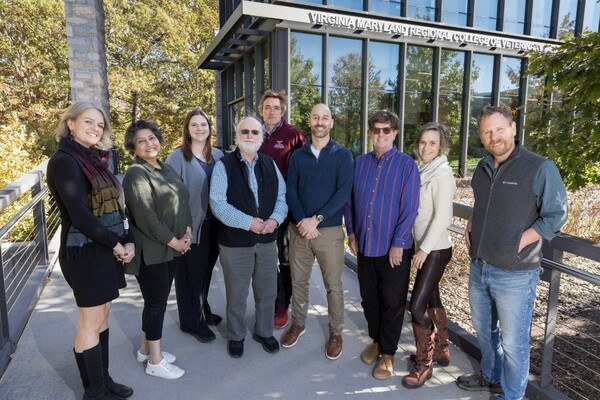
버지니아 공대 코헨 조교수가 이끄는 이 연구팀은 식수를 시험하는 미국 최초의 대규모 연구를 진행하고 있다. 사진 왼쪽부터 에린 링(Erin Ling), 이샤 레이(Isha Ray), 베스 오코넬(Beth O’Connell), 필립 슈어먼(Phillip Scheuerman), 마크 에드워즈(Marc Edwards), 알래스데어 코헨(Alasdair Cohen), 앨런 허버드(Alan Hubbard), 리앤 크로메티스(Leigh-Anne Krometis), 조 브라운(Joe Brown) 등이 버지니아-메릴랜드 수의과대학 앞에 서 있다. [사진제공(Photo Source) = 버지니아 공대 이샤 레이(Isha Ray)]
코헨 교수는 “필터가 실제로 사용되고, 주민 만족도가 높으며, 건강 개선과 연관된다는 결과가 확인된다면 주정부, 지방정부, 연방기관, 비영리단체 등이 이를 확대 적용하는 데 중요한 근거가 될 것”이라고 설명했다.
또한 “개입 방식이 단순하고 필터가 저렴하며 사용이 간편해야 하고, 가능하다면 우물·샘물의 맛까지 개선할 수 있어야 한다”고 강조했다.
그는 이번 연구를 “버지니아 공대 부임 이후 다년간의 연구가 결실을 맺는 단계”라고 평가하며, “지역사회와 더 넓은 지역의 안전한 물 접근성과 건강 개선에 의미 있는 기여가 되길 바란다”고 밝혔다.
[원문보기]
Study to examine if water filters can improve health for households in rural Appalachia
A team led by Virginia Tech’s Alasdair Cohen is launching the first major U.S. study to test whether simple countertop water filters can reduce illness in households that rely on private wells and springs for drinking water.
The study, supported by a $3.7 million National Institutes of Health (NIH) grant, includes faculty members from four universities and will focus on rural Appalachia in Southwest Virginia and northeast Tennessee.
Findings from Cohen and colleagues’ prior studies indicate that lower-income families in that region face higher risks of waterborne diseases because of contaminated private water sources that are not monitored and regulated like public water systems.
Cohen, assistant professor of environmental epidemiology in the Department of Population Health Sciences, part of the Virginia-Maryland College of Veterinary Medicine, is the principal investigator for the study. Titled “Expanding Safe Water Access to Improve Health Outcomes in Appalachia: The Rural Water Filtration and Health (RWELL) Trial,” the study will continue through 2030.
The research team plans to enroll approximately 480 households and more than 1,500 people across 10 counties in Southwest Virginia and northeast Tennessee. All households will be provided countertop water filters in a randomized fashion, half receiving them initially and half receiving them after a 12-month period.
Scientists will track rates of reported illnesses, test saliva and stool samples for waterborne germs, and comprehensively analyze water quality in both groups over the study period.
Preliminary research has shown that some households with private wells or springs have harmful bacteria, viruses, and other contaminants in their water supply.
The study's goal is to determine whether affordable point-of-use filters can significantly reduce gastrointestinal and other water-related illness in rural communities without access to treated municipal water.
"We share the water testing results back with the households,” Cohen said. “We also provide gift cards as a token of thanks for people’s time and participation.”
As many as 40 million Americans get their drinking water from private wells that are not monitored by health officials, according to the Environmental Protection Agency. This creates a significant data gap about water quality and health risks, especially in rural areas where many families cannot afford expensive water treatment systems.
If successful, the study could provide evidence for policies and programs to expand safe drinking water access in underserved rural areas throughout Appalachia and similar rural regions nationwide.
“This could be very promising as a kind of stopgap, semi-permanent option for households that for a variety of reasons don't have better options, or can't afford to have wells repaired or regularly tested,” Cohen said.
Cohen is hopeful the results will spur public officials to take action.
“If we find that yes, the filters are used, that people like them, and that filter use is associated with improved health outcomes, then at that point I’d hope state or local governments, federal agencies, or nonprofits, would take what we’ve done and scale it up,” Cohen said.
“That’s also why it’s so important that the intervention provision is relatively straightforward and that the filters are relatively affordable, easy to use, and hopefully even improve the taste of well and spring water for many households.”
Co-investigators from Virginia Tech on the project include Leigh-Anne Krometis, professor of biological systems engineering in the College of Agriculture and Life Sciences; Erin Ling, coordinator of the Virginia Household Water Quality Program and senior Extension specialist in biological systems engineering; and Marc Edwards, University Distinguished Professor of Civil and Environmental Engineering within the College of Engineering.
East Tennessee State University is a key partner in the study, with collaboration from Beth O’Connell, associate professor in the Department of Community and Behavioral Health; Phillip Scheuerman, professor in the Department of Environmental and Occupational Health and Safety Sciences; and Md Rasheduzzaman, formerly a postdoctoral associate working with Cohen at Virginia Tech but now assistant professor in the Department of Environmental and Occupational Health and Safety Sciences.
“We are excited to continue this collaborative work to address the basic need for safe drinking water and serve the people of our region,” O’Connell said.
Also collaborating on the project are Joe Brown, professor and engineering programs director in the Department of Environmental Sciences and Engineering, and interim director of the UNC Water Institute at the University of North Carolina; Professor Alan Hubbard, biostatistician and co-director of the Center for Targeted Machine Learning at the University of California, Berkeley; and Professor Isha Ray in the Energy and Resources Group at the University of California, Berkeley.
The two pilot studies Cohen led to inform the design of this study were conducted in collaboration with Tim Wade, Andrey Egorov, Shannon Griffin, and other scientists at the U.S. Environmental Protection Agency, and Cohen hopes to continue working with them for this study.
For Cohen, this study is a capstone of much prior research into Appalachian water quality issues.
"This is the culmination of years of work since coming to Virginia Tech,” Cohen said. “It’s rewarding to see all that collaboration, fieldwork, long days collecting samples, working with students in the lab, and analyzing data come together — to now have the opportunity, and funding support, to take things to the next level and hopefully help to further expand safe water access and improve health outcomes for people and communities in this region and beyond."
[출처 = 버지니아 공대(Virginia Tech)(https://news.vt.edu/articles/2025/11/vetmed-water-appalachia.html) / 2025년 11월 14일]
|  즐겨찾기 추가
 시작페이지로 설정
























