[북아메리카] [2025] [해외연구보고서] 코넬대, 트리클로산 90% 제거하는 사이클로덱스트린 나노섬유막 개발
이름
관리자
작성일
2025-10-29
조회수
1056
파일첨부
[해외연구보고서] 코넬대, 트리클로산 90% 제거하는 사이클로덱스트린 나노섬유막 개발
사이클로덱스트린 막, 트리클로산 15분 만에 75% 제거… 최대 88% 흡수율 달성
시프로플록사신·옥시벤존까지 제거…실제 환경서 미량 오염물질 제거 효과 입증
사이클로덱스트린, 옥수수 전분 유래 물질로 생분해 및 세척만으로 재사용 가능
학술지 『분리정제기술(Separation and Purification Technology)』최근호에 게재
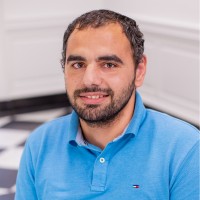
본 연구의 제1저자인 마흐무드 아보엘케이르(Mahmoud Aboelkheir) 코넬대 인간생태대학(College of Human Ecology) 인간중심설계(Human Centered Design) 전공 섬유과학(Fiber Science) 박사과정생. [사진출처(Photo source) = 마흐무드 아보엘케이르 .linkedin ]
항균제 트리클로산(Triclosan)은 개인 위생용품, 섬유, 플라스틱 등에 널리 사용되지만, 하수를 통해 환경으로 유입될 경우 수생 생물에 심각한 위협을 초래한다.
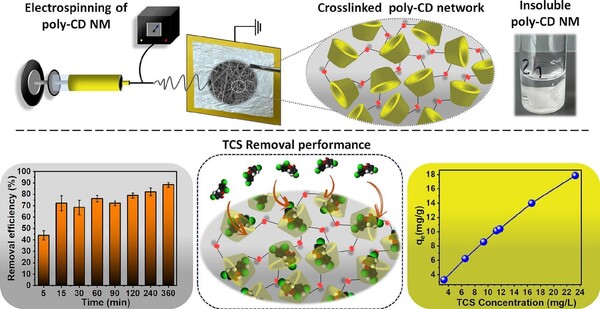
미국 코넬대학교(Cornell University) 연구팀은 실험실 테스트에서 물 속 트리클로산을 약 90% 제거하는 사이클로덱스트린(Cyclodextrin) 기반 섬유 막을 개발했다. 전기장을 이용해 액체에서 초극세사 섬유를 뽑아내는 전기방사(Electrospinning) 공정으로 제작된 이 나노섬유 소재는 세척 후 재사용이 가능하며, 다른 미량 오염물질도 효과적으로 제거하는 것으로 나타났다.
본 연구의 제1저자인 마흐무드 아보엘케이르(Mahmoud Aboelkheir) 코넬대 인간생태대학(College of Human Ecology) 인간중심설계(Human Centered Design) 전공 섬유과학(Fiber Science) 박사과정생은 "전기방사 공정은 직경 1마이크론보다 작은 매우 얇은 섬유를 만들어내는데(사람 머리카락은 약 75마이크론), 이를 통해 높은 표면적과 뛰어난 흡착 성능을 확보할 수 있다"고 설명했다.
이번 연구 결과는 '전기방사된 폴리사이클로덱스트린 나노섬유막을 이용한 수중 의약품 미량오염물질 제거(Removal of Pharmaceutical Micropollutants From Aqueous Environment by Electrospun Polycyclodextrin Nanofibrous Membrane)'라는 제목으로 10월 15일 학술지 『분리정제기술(Separation and Purification Technology)』에 게재됐다.
이번 연구의 교신저자인 타메르 우야르(Tamer Uyar) 코넬대 인간생태대학 인간중심설계 전공 섬유과학 부교수. [사진출처(Photo source) = 코넬대학교(Cornell University)]
이번 연구의 교신저자는 타메르 우야르(Tamer Uyar) 코넬대 인간생태대학 인간중심설계 전공 섬유과학 부교수이며, 공동저자로는 아슬리 첼레비오글루(Asli Celebioglu) 우야르 교수 연구실의 전 박사후연구원 , 데이미언 헬블링(Damian Helbling) 코넬대 공과대학 토목·환경공학과 부교수, 이반 케레스테스(Ivan Keresztes) 코넬 NMR 및 화학 질량분석 시설 책임자가 참여했다.
트리클로산은 수생 생물에 위협이 될 뿐만 아니라 내분비계 교란과도 연관돼 있으며, 이는 호르몬 불균형, 피부 자극, 발진, 알레르기 반응을 유발할 수 있다. 미국에서는 손세정제와 바디워시 제품에서 사용이 금지돼 있지만, 여전히 다른 개인 위생용품에서는 사용되고 있다.
10년 전 헬블링 교수는 기존 활성탄 여과 시스템보다 200배 높은 흡착률을 달성한 다공성 사이클로덱스트린 주입 폴리머를 개발한 연구팀의 일원이었다. 이번 연구에서 우야르 교수 연구팀은 사이클로덱스트린 자체로 섬유를 제작하는 데 성공했으며, 이를 통해 폴리머나 다른 소재에 부착하지 않고도 독립적인 여과재로 활용할 수 있게 돼 더욱 뛰어난 여과 잠재력을 입증했다.
우야르 교수는 "섬유 과학자로서 우리는 항상 섬유의 활용 가능성을 모색하고 있다"며 "사이클로덱스트린 막은 섬유 소재이기 때문에 별도의 지지 구조 없이도 막으로 사용할 수 있다"고 말했다.
실험실 테스트에서 사이클로덱스트린 막은 물 속 트리클로산(농도 11mg/L)의 약 75%를 처음 15분 안에 제거했다. 이 막은 6시간 후 포화 상태에 도달했으며, 약 88%의 흡수율을 달성했다.
트리클로산 외에도, 나노섬유 사이클로덱스트린 막은 세균 감염 치료에 사용되는 항생제 시프로플록사신(Ciprofloxacin)과 선크림 성분인 옥시벤존(Oxybenzone)을 효과적으로 제거하는 것으로 나타났다. 아보엘케이르 박사과정생에 따르면, 연구팀은 여러 수원에서 채취한 물을 대상으로 실험을 진행해 그 효능을 확인했다.
아보엘케이르 박사과정생은 "연구진은 플랫록(Flat Rock)과 인근의 지하수 관정, 지역 내 하수처리장에서 물샘플을 채취했다"며 "이는 실제 환경에서 막을 시험한 것으로, 실제 사용될 수 있는 조건에서 테스트했음에도 불구하고 여전히 이러한 미량 오염물질 제고에 효율성을 보였다"고 말했다.
우야르 교수 연구팀의 막이 가진 또 다른 장점은 재사용성이다. 많은 에너지를 들여야 재생할 수 있는 분말 흡착제와 달리, 사이클로덱스트린 막은 단순히 세척만으로도 쉽게 재생할 수 있다. 또한 사이클로덱스트린은 옥수수 전분에서 유래한 물질이기 때문에 생분해가 가능하며 활성탄, 실리카, 기타 비재생성 소비보다 훨씬 더 지속 가능하다.
미국 코넬대학교(Cornell University) 연구팀은 실험실 테스트에서 물 속 트리클로산을 약 90% 제거하는 사이클로덱스트린(Cyclodextrin) 기반 섬유 막을 개발했다. [그림출처(picture source) = 『분리정제기술(Separation and Purification Technology)』]
연구진은 코넬대 NMR 시설에서 수행된 핵자기공명(NMR) 분광법의 일종인 RFOES(Rotating Frame Overhauser Enhancement Spectroscopy)를 통해 연구 결과를 확인했다.
현재 우야르 교수 연구실에서는 섬유 염료(Textile Dyes), 휘발성 유기화합물(VOCs), 흔히 '영원한 화학물질'로 알려진 과불화화합물(PFAS)과 같은 난분해성 오염물질을 포획·제거할 수 있는 고도 사이클로덱스트린 기반 나노섬유막 개발 연구가 진행 중이다.
이번 연구는 NMR 시설과 코넬 소재연구센터 시설을 활용했으며, 이 두 시설은 미국 국립과학재단(NSF)의 지원을 받고 있다. 또한 연구는 풀브라이트 해외유학생 프로그램(Fulbright Foreign Student Program)의 지원도 받았다.
[원문보기]
Reusable nanofiber membrane filters water sustainably
The antimicrobial triclosan is widely used in personal hygiene products, textiles and plastics, but when it enters the environment via wastewater, it poses a significant threat to aquatic organisms.
A Cornell research group has developed a cyclodextrin-based fibrous membrane that in lab testing removed approximately 90% of triclosan from water. Their washable and reusable nanofiber material, fabricated via electrospinning – a process that uses an electric field to draw ultra-thin fibers from a liquid – also effectively removed other micropollutants.
“The electrospinning produces a very thin fiber, less than 1 micron in diameter (a human hair is approximately 75 microns), which gives us high surface area and excellent adsorption,” said Mahmoud Aboelkheir, doctoral student in human centered design and lead author of “Removal of Pharmaceutical Micropollutants From Aqueous Environment by Electrospun Polycyclodextrin Nanofibrous Membrane,” which published Oct. 15 in the journal Separation and Purification Technology.
The senior author is Tamer Uyar, associate professor of fiber science in human centered design in the College of Human Ecology. Co-authors are former Uyar group postdoctoral researcher Asli Celebioglu; Damian Helbling, associate professor in the School of Civil and Environmental Engineering, in Cornell Engineering; and Ivan Keresztes, director of the Cornell NMR and Chemistry Mass Spectrometry Facilities.
In addition to being a threat to aquatic organisms, triclosan has been linked to endocrine disruption, which can cause hormonal imbalance, as well as skin irritation, rashes and other allergic reactions. The chemical is banned in the U.S. in consumer hand and body washes, but is still found in many personal-care products.
Ten years ago, Helbling was part of a research group that invented a porous, cyclodextrin-infused polymer that achieved adsorption rates 200 times that of traditional activated-carbon filtration systems. In the current work, the Uyar group has made a fiber out of cyclodextrin, meaning it can stand alone as filtration material instead of being incorporated onto a polymer or some other material, resulting in even greater filtration potential.
“As fiber scientists, we are always looking for the application of fiber,” Uyar said. “So our cyclodextrin membrane is a fiber material, so it can be used as a membrane without a support structure.”
In lab testing, the cyclodextrin membrane removed approximately 75% of triclosan in water (11 milligrams per liter concentration) in the first 15 minutes. The membrane reached saturation after six hours, achieving around 88% uptake.
In addition to triclosan, the group’s nanofibrous cyclodextrin membrane demonstrated effective removal of ciprofloxacin, an antibiotic used to treat bacterial infections; and oxybenzone, found in sunscreen. According to Aboelkheir, the group tested water from several sources to confirm its efficacy.
“Our collaborators got water samples from Flat Rock and also from some groundwater wells and wastewater treatment plants in the area,” he said. “This was an actual test of our membrane, in realistic environments where it could be used, and it still had efficiency in the removal of these micropollutants.”
Another benefit of the Uyar group’s membrane: reusability. Unlike powdered adsorbents that require a lot of energy to restore them for further use, the cyclodextrin membrane could be easily regenerated just by washing it. And since cyclodextrin is a derivative of corn starch, it’s biodegradable and more sustainable than activated carbons, silicas and other non-renewables.
The group confirmed its findings via rotating frame Overhauser enhancement spectroscopy, a type of nuclear magnetic resonance spectroscopy, conducted at the Cornell NMR Facilities.
Ongoing studies in Uyar’s lab involve developing advanced cyclodextrin-based nanofibrous membranes designed to capture and remove textile dyes, volatile organic compounds (VOCs), and persistent pollutants like per- and polyfluoroalkyl substances (PFAS), commonly known as “forever chemicals.”
This work made use of the NMR and Cornell Center for Materials Research facilities, both supported by the National Science Foundation. Support also came from the Fulbright Foreign Student Program.
 즐겨찾기 추가
 시작페이지로 설정