[영국] 일름강 하구에 잘피밭 조성…잘피밭, 탄소흡수·홍수방어에 기여
소형 잘피 부유 현상 원인 규명 위해
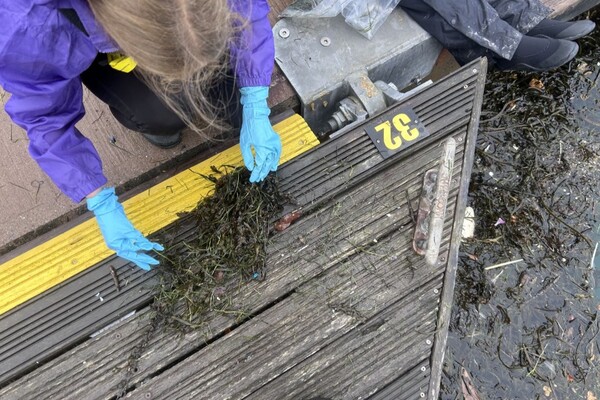
영국 정부는 일름 강 하구 해안에 잘피밭을 조성한다고 밝혔다. 사진은 자원봉사자가 소형 잘피를 수거하는 모습. [사진출처 = 영국 정부(UK GOV)]
영국 환경청(Environment Agency)은 일름 강(River Yealm) 하구 해안에 잘피밭을 조성한다고 현지시각 9월 4일 밝혔다.
지역 사회의 지원을 받는 실험의 일환으로, 킹스브리지(Kingsbridge)와 타마르 강(Tamar estuaries) 하구에 떠다니는 소형 잘피를 수거해 브릭스턴(Brixton) 스티어 포인트(Steer Point) 인근 일름 강 해안선에 잘피밭을 조성한다.
환경청 모니터링 팀, 지역 환경당국 관계자, 자원봉사자 그룹은 소형 잘피를 수거해 심을 수 있는 최적의 표본을 선정하고 해양 외래유입종을 제거한 후 소형 잘피(Dwarf Seagrass)를 심었다.
폴 엘스미어(Paul Elsmere) 환경청 모니터링팀 관계자는 "소형 잘피 덩어리가 자연적으로 자유롭게 떠다니고 표류하는 지에 대해 알려진 것은 없지만, 이를 수거해 새로운 장소에 심는 것은 궁극적인 형태의 재활용"이라면서 "해초는 생물다양성을 풍부하게 하고 그 안에 탄소가 포집되어 흡수되며 자연 홍수 방어 장벽이 되기도 한다"고 말했다.
이번 실험에는 나이젤 모티머(Nigel Mortimer) 사우스 데번 내셔널랜드스케이프하구파트너십(South Devon National Landscape Estuaries Partnership) 하구 담당자와 협력해 진행됐다.
나이젤 모티머 담당자는 "뿌리, 잎, 이삭으로로 구성된 소형 잘피가 자유롭게 떠다니는 이유는 알려져 있지 않다. 이 현상은 지난 10년 동안 처음 발견되었으며 종자 산포와 관련이 있을 수 있다"면서 "다른 곳에서는 잘피 이식과 종자 수확과 관련된 다른 실험이 진행 중이지만, 이번 실험에서는 소형 잘피가 겨울 동안 뿌리를 내려 새로운 잘피밭을 조성할 수 있는지, 아니면 실제로 씨앗을 분산시켜 현지에서 발아할 수 있는지 확인할 예정"이라고 밝혔다.
한편, 자원봉사자들은 내년에 돌아와 더 많은 잘피를 심을 계획이며, 인근 주민에게는 주의 깊게 관찰해 줄 것을 요청할 예정이다.
이번 실험은 지역 당국, 토지 소유주, 항구 당국, 전문가, 지역 산림단체 및 자원봉사자가 참여했다.
[원문보기]
New Yealm seagrass meadow created from 'castaway' plants
The beginnings of a new seagrass meadow in the River Yealm have been planted thanks to volunteers largely from the Environment Agency.
A trial supported by the local community is harvesting rafts of dwarf seagrass adrift in the Kingsbridge and Tamar estuaries and replanting them at a new home on the River Yealm Estuary shoreline near Steer Point, Brixton.
Just over a dozen staff members and apprentices from the agency’s monitoring team, local environmental staff and groups of volunteers have lent their time to support the cause. This involved selecting the best specimens to replant, cleaning them of any potential invasive species, then planting into shallow holes poked into the mudflats. The seagrass is then helped kept in place with a ‘twig’ peg, a thousand of which were crafted by local volunteers.
Paul Elsmere of the Environment Agency said:
"Why clumps of dwarf seagrass naturally become free floating and adrift isn’t known so gathering them up and replanting them in a new location is the ultimate form of recycling."
"Seagrass ticks all the boxes: Biodiversity thrives on and in it, carbon gets captured and buried by it and it’s even a natural flood defence barrier. We are excited to see how this meadow develops.”
The trial was organised in collaboration with Nigel Mortimer from South Devon National Landscape Estuaries Partnership.
Estuaries officer Nigel Mortimer said:
"Why plants of dwarf seagrass - complete with roots, leaves and seed head - naturally become free floating is not known. This phenomenon was first noticed in the past 10 years and may be linked to seed dispersal."
"While other trials are in progress elsewhere involve the transplanting of seagrass and seed harvesting, this one wants to see if dwarf seagrass can take root over the winter to establish a new meadow or indeed disperse their seed to germinate locally."
The volunteers plan to return next year to add more seagrass to the growing meadow. In the meantime, local paddlers will be asked to keep an eye on the plants whenever they pass by.
As well as the help of volunteers doing the planting, the trial involves local authorities, landowners, harbour authorities, seagrass scientists, paddlers and even a local woodland group.
Everyone involved in the trial is grateful to local businesses and groups for their support, including Mayflower Marina for allowing access to their pontoons to collect the seagrass, local landowners and Brixton Camping Site.
[출처 = 영국 정부(UK GOV)(New Yealm seagrass meadow created from 'castaway' plants - GOV.UK) / 9월 4일]
|  즐겨찾기 추가
 시작페이지로 설정
























