[미국] EWG, “식수 내 발암물질로 미국인 1억2천200만명 이상이 위험에 노출”
미국 환경단체인 EWG, “관리되지 않는 가축분뇨, 식수서 놀라운 수준의 화학 발암물질 유발 원인 중 하나로 밝혀져”
공장식 축산농장 발생 가축분뇨 유출수, 공공 상수도 시스템의 소독제와 반응하여 소독부산물 생성
2019∼2023년까지 전국 수질검사 결과 분석한 결과, 49개 주와 워싱턴 D.C.에 걸쳐 약 6천 개의 지역 상수도 시스템에서 최소 1건 이상 TTHMs이 안전하지 않은 수준으로 검출
미국 전역의 수십 개 상수도 시스템서 기준치의 2~3배에 달하는 수치 기록…주민들에게 심각한 건강 위험에 노출시키고 있어
소독 전에 유기오염물질을 제거 위해 입상 활성탄 및 역삼투압과 같은 첨단 정수 시스템에 투자 시급

미국의 환경과 건강을 연구하는 환경단체인 EWG(Environmental Working Group, 환경실무그룹)의 새로운 보고서는 광범위한 공중보건 위기의 충격적인 심각성을 보여준다. 1억 2천200만 명이 넘는 미국인이 발암물질인 소독부산물(Disinfection Byproduct)이 고농도로 함유된 물을 마시고 있는 것으로 나타났다. [사진출처(Photo source) = EWG(환경실무그룹)]
미국의 환경과 건강을 연구하는 환경단체인 EWG(Environmental Working Group, 환경실무그룹)의 새로운 보고서는 광범위한 공중보건 위기의 충격적인 심각성을 보여준다. 1억 2천200만 명이 넘는 미국인이 발암물질인 소독부산물(Disinfection Byproduct)이 고농도로 함유된 물을 마시고 있는 것으로 나타났다.
공장식 축산농장에서 발생하는 가축분뇨 유출수는 공공 상수도 시스템의 소독제와 반응하여 이러한 부산물을 생성하기 때문에 이러한 문제를 더욱 악화시킨다.
EWG가 지난 2019년부터 2023년까지 전국의 수질검사 결과를 분석한 결과, 49개 주와 워싱턴 D.C.에 걸쳐 약 6천 개의 지역 상수도 시스템에서 최소 1건 이상의 부산물인 총트리할로메탄(Total Trihalomethanes, TTHMs)이 안전하지 않은 수준으로 검출된 것으로 나타났다.
방광암, 대장암, 그리고 선천적 기형 위험 증가와 관련된 이러한 독성 화학물질은 소독제와 식수로 유입되는 유기 오염물질 간의 상호작용의 직접적인 결과이다.
EWG의 미국 중서부 지역 책임자이자 이번 보고서 저자인 앤 셰힝거(Anne Schechinger) 국장은 “이것은 경각심을 일깨우는 신호이다”라면서 “공장식 축산시설의 가축분뇨가 우리의 상수도를 오염시키고 있으며, 공공 수도서비스 기관들이 그 물을 안전하게 만들려고 할 때 의도치 않게 암과 선천적 기형 위험을 증가시키는 또 다른 공중보건 위험을 초래한다”고 강조했다.
텍사스, 수질오염 선두
EWG 보고서에 따르면 오염된 상수도 시스템의 절반 이상이 단 10개 주에 집중되어 있으며, 이 중 상당수는 규모가 가장 큰 주들이고, 텍사스가 그 선두를 달리고 있다. 수백만 주민에게 물을 공급하는 700개 이상의 텍사스 상수도 시스템에서 총트리할로메탄(TTHMs) 수치가 환경보호청(EPA)의 법적 기준인 80ppb(parts per billion, 십억 분의 1)를 초과하는 것으로 나타났다.
더욱 우려스러운 것은 전국의 수십 개 상수도 시스템에서 이 기준치의 2배 또는 3배에 달하는 수치를 기록하여 주민들을 심각한 건강 위험에 노출시키고 있다는 것이다.
소독부산물이 가축분뇨에 의해 유발되는 방법
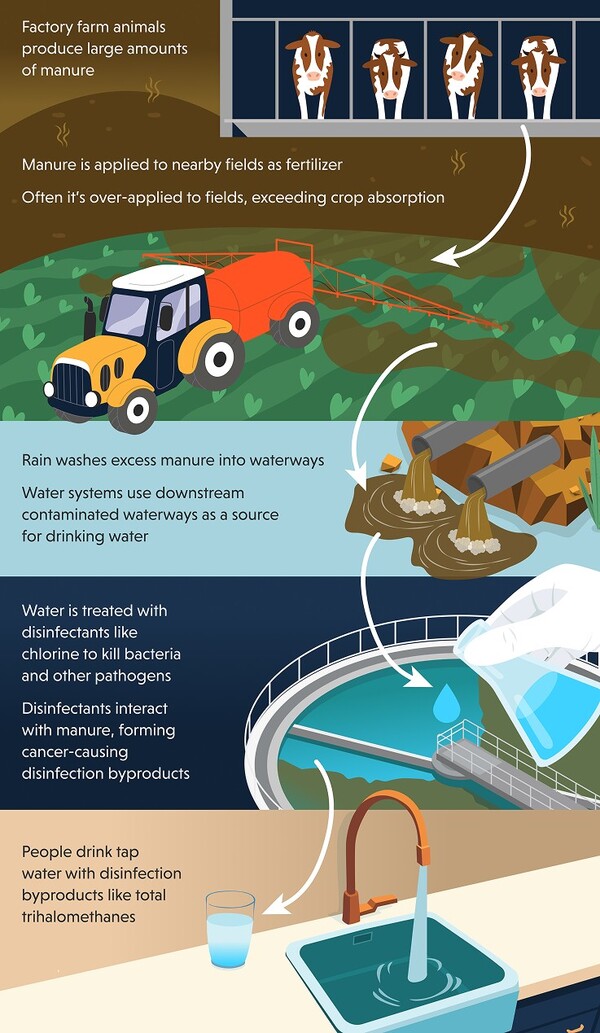
[그림출처(picture source) = EWG(환경실무그룹)]
주요 결과
이 보고서는 공장식 축산 농장에서 발생하는 막대한 양의 가축분뇨로 인한 문제의 심각성과 만연함, 그리고 소독부산물에서의 가축분뇨 역할을 조명한다. EWG는 다음과 같은 사실을 발견했다.
■ 광범위한 오염 5천919개의 상수도 시스템을 통해 식수를 공급받는 1억 2천200만 명 이상이 2019년에서 2023년 사이에 적어도 한 번은 발암성 소독 부산물이 안전하지 않은 수준으로 함유된 식수를 마셨다.
■ 가축분뇨 유출이 원인 가축분뇨는 물을 오염시키는 원인 중 하나이며 염소와 같은 소독제와 반응하여 독성 총트리할로메탄(TTHMs)을 생성한다.
■ 미국 정부 안전 한도 초과 49개 주와 워싱턴 D.C.의 시스템에서 나오는 물은 EPA의 TTHMs 기준인 80ppb 이상이 검출됐으며, 일부 시스템에서는 300ppb를 초과하는 TTHMs이 검출되었다.
■ 건강 위험 EPA의 한계 이하 수준에서도 TTHMs은 방광암 및 대장암, 저체중 출생, 사산 및 선천적 기형과 관련이 있는 것으로 나타났다.
■ 가장 영향을 많이 받는 주 텍사스(Texas)가 700개가 넘는 상수도 시스템이 EPA의 TTHMs 기준치를 초과하여 전국에서 가장 높은 수치를 기록했으며, 캘리포니아(California), 플로리다(Florida), 노스캐롤라이나(North Carolina) 등도 상위권 주에 속한다.
■ 자금 부족 해결책 이러한 공중보건 위험에도 불구하고, 트럼프 행정부는 가축분뇨 유출을 막을 수 있었던 수십억 달러 규모의 연방 농업보전기금(Federal Agricultural Conservation Fund)을 최근 동결했다. 반면, 납세자 자금은 공장식 축산농장의 성장을 계속 지원하고 있다.
공장식 축산농장, 가축분뇨 위기에 시달려
산업 규모의 공장식 축산농장은 막대한 양의 가축분뇨를 발생시키며, 이는 일반적으로 농지에 비료로 사용된다. 그러나 과도한 분뇨는 인근 강, 호수, 하천으로 흘러 들어가 수백만 명의 미국인에게 식수로 공급된다.
공공 수도시설에서 유기물이 포함된 물을 염소와 같은 소독제로 처리하는 과정에서 TTHMs을 포함한 독성 부산물이 생성된다. 이 문제는 특히 가축과 작물 재배가 가장 집중된 농촌 지역에서 심각하다.
2019∼2023년 미국 연방 한도를 초과하는 총트리할로메탄(TTHMs)이 포함된 공공 수도 시스템 현황
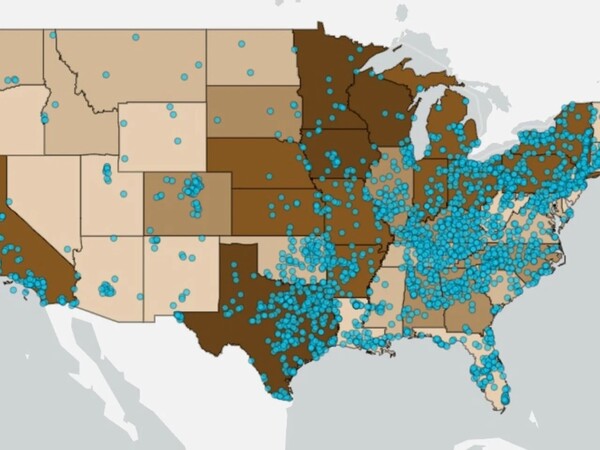
[그래픽 출처(graphic source) = EWG(환경실무그룹)]
긴급 조치 필요
공장식 축산농장은 병원균으로 식품을 오염시키고, 공기와 물을 오염시키며, 생명을 구하는 항생제의 효능을 무력화 시켜 우리 건강을 위협한다. EWG 보고서는 가축분뇨 오염을 억제하고 공중보건을 보호하기 위한 즉각적인 조치를 촉구한다. 여기에는 다음이 포함된다.
■ 더 강력한 규제 EPA는 식수원 근처의 분뇨 살포를 제한하는 것을 포함하여 공장식 축산에 더욱 엄격한 가축분뇨 관리 규정을 적용해야 한다.
■ 수처리 예산 확대 소독 전에 유기 오염물질을 제거하기 위해 연방 정부와 주 정부는 입상 활성탄 및 역삼투압과 같은 첨단 정수 시스템에 투자해야 한다.
■ 지속가능한 농업 위한 인센티브 환경보호 프로그램은 하천 완충지대 및 피복 작물과 같이 가축분뇨 유출을 방지하는 관행에 대한 예산 지원을 우선적으로 제공해야 한다.
■ 공장식 축산농장이 아닌 육류 구매 소비자는 공장식 축산농장에서 도축된 육류가 아닌, 풀을 먹고 가축을 키우는 농장에서 생산된 육류와 유제품을 구매할 수 있어야 한다.
EWG 중서부 지역 책임자이자 보고서 저자인 앤 셰힝거(Anne Schechinger) 국장은 “이 위기는 예방할 수 있다”라면서 “농업인, 규제 당국, 정책 입안자들은 식량 생산이 공중 보건에 그렇게 큰 비용을 초래하지 않도록 책임을 져야 한다”고 강조했다.
[원문보기]
Cancer-causing chemicals in drinking water put 122 million Americans at risk
EWG report finds unchecked animal waste is one source triggering alarming levels of chemical carcinogens in drinking water
MINNEAPOLIS - A new report from the Environmental Working Group shows the shocking extent of a widespread public health crisis: Over 122 million Americans drink water with high levels of cancer-causing disinfection byproduct chemicals.
Manure runoff from livestock factory farming operations contributes to the problem, as it reacts with public water systems’ disinfectants to create these byproducts.
EWG’s analysis of nationwide water test results from 2019 to 2023 found that nearly 6,000 community water systems across 49 states and Washington, D.C., had at least one instance of unsafe levels of the byproduct trihalomethanes, or TTHMs.
These toxic chemicals, linked to increased risks of bladder and colorectal cancer, as well as birth defects, are a direct result of the interaction between disinfectants and organic pollutants flowing into drinking water.
“This is a wake-up call,” said Anne Schechinger, EWG’s Midwest director and author of the report. “Manure from factory farms is polluting our water supplies, and when utilities try to make that water safe to drink, they unintentionally create another public health hazard that increases the risk of cancer and birth defects.”
Texas leads in water contamination
The report found that more than half the contaminated water systems were in just 10 states, many of which are the biggest states, with Texas leading the way. More than 700 Texas water systems - serving millions of residents - recorded TTHM levels above the Environmental Protection Agency’s legal limit of 80 parts per billion, or ppb.
Even more alarming, dozens of systems nationwide tested at double or even triple this threshold, exposing residents to serious health risks.
Key findings
The report shines a light on the severity and ubiquity of the problems caused by the massive amounts of manure factory farms produce and its role in disinfection byproducts. EWG found:
Widespread contamination: Over 122 million people served by 5,919 water systems had drinking water with unsafe levels of cancer-causing disinfection byproducts at least once between 2019 and 2023.
Manure runoff as a culprit: Livestock manure is one source that contaminates water and interacts with disinfectants like chlorine to create toxic TTHMs.
Exceeding government safety limits: The water from systems in 49 states and Washington, D.C., tested at or above the EPA’s limit of 80 ppb for TTHMs, with some systems testing higher than 300 ppb.
Health risks: Even at levels below EPA’s limit, TTHMs have been linked to bladder and colorectal cancer, low birth weight, stillbirths and birth defects.
Most affected states : While Texas led the nation, with over 700 water systems exceeding EPA’s TTHM limit, other top states include California, Florida and North Carolina.
Underfunded solutions : Despite these risks to public health, billions in federal agricultural conservation funding that could have prevented manure runoff were recently frozen by the Trump administration, while taxpayer money continues supporting the growth of factory farms.
Factory farms are swamped by a manure crisis
Industrial-scale animal factory farms generate enormous amounts of manure, which is commonly spread on farmland as fertilizer. However, excess manure washes into nearby rivers, lakes and streams, many of which supply drinking water to millions of Americans.
When utilities treat water containing organic matter with disinfectants like chlorine, the process creates toxic byproducts, including TTHMs. The problem is especially severe in rural areas, where livestock and crop farming is most concentrated.
Urgent need for action
Factory farms threaten our health by contaminating our food with pathogens, polluting our air and water, and threatening the efficacy of life-saving antibiotics. EWG’s report calls for immediate action to curb manure pollution and protect public health. These include:
Stronger regulations : The EPA must impose stricter manure management rules on factory farms, including limits on manure application near drinking water sources.
Expanded water treatment funding : To remove organic contaminants before disinfection, federal and state governments must invest in advanced water filtration systems, such as granular activated carbon and reverse osmosis.
Incentives for sustainable farming : Conservation programs should prioritize funding for practices that prevent manure runoff, such as stream buffers and cover crops.
Purchasing non-factory-farmed meat : Consumers can buy meat and dairy products from farms that produce livestock outside of factory farms, on grass.
“This crisis is preventable,” Schechinger said. “Farmers, regulators and policymakers must take the responsibility of ensuring that food production does not come at such a steep cost to public health.”
Consumers can take immediate action by using EWG’s Tap Water Database to check for contaminants in their drinking water and find the best filtration options for their homes.
The Environmental Working Group (EWG) is a nonprofit, non-partisan organization that empowers people to live healthier lives in a healthier environment. Through research, advocacy and unique education tools, EWG drives consumer choice and civic action.
[출처 = EWG(환경실무그룹)(https://www.ewg.org/news-insights/news-release/2025/04/cancer-causing-chemicals-drinking-water-put-122m-americans-risk) / 2025년 4월 10일]
[연구보고서 원문 = EWG(환경실무그룹)(https://www.ewg.org/research/manure-one-source-triggering-cancer-causing-chemicals-drinking-water-122-million?auHash=oSV1upQAaJU91UQ9E595z2H2uOPBZUzk4ZCTfpSDR7) / 2025년 4월 10일]
|  즐겨찾기 추가
 시작페이지로 설정
























