[오세아니아] [2025] [호주] 2024년 글로벌 워터 모니터 보고서, "기후 극단 현상 세계 물순환 '대혼란' 초래"
이름
관리자
작성일
2025-01-13
조회수
1671
파일첨부
[호주] 2024년 글로벌 워터 모니터 보고서, "기후 극단 현상 세계 물순환 '대혼란' 초래"
2024년 기록상 가장 더운 해...기온상승 물이동 방식 영향 미쳐 극심한 홍수 및 가뭄 유발
물재해로 8천700명 이상 사망, 4천만명 이주 및 최소 5천500억 달러 경제적 손실 발생
불가피한 극한 상황 대비해 강력한 홍수 방어·가뭄에 강한 수자원 개발·조기경보시스템 개선 필요
2024 글로벌 워터 모니터(Global Water Monitor] 보고서 표지. [자료 출처(Picture Source) = Global Water Monitor]
호주국립대학교(Australian National University, ANU)가 주도한 새로운 보고서에 따르면, 2024년은 기록적인 기온 상승의 해로, 전 세계 물순환이 새로운 기후 극단으로 향하게 돼 극심한 홍수와 치명적인 가뭄을 초래했다.
알버트 반 다이크(Albert van Dijk) ANU 교수가 이끈 국제 연구팀이 참여한 '2024년 글로벌 워터 모니터(Global Water Monitor)' 보고서에 따르면, 기온 상승이 물이동 방식을 변화시켜 물순환에 대혼란을 초래했다.
반 다이크 교수는 "해수면 온도 상승은 아마존 분지와 남아프리카의 열대성 저기압과 가뭄을 심화시켰다. 또한 전 세계적인 지구 온난화는 폭우의 증가와 폭풍의 이동 속도를 늦춰 유럽, 아시아, 브라질에 치명적인 홍수를 발생시켰다"고 설명했다.
2024년에는 전 세계 인구의 절반에 해당하는 111개국 약 40억 명이 역대 가장 더운 해를 보냈다. 반 다이크 교수는 2024년 육지 기온이 금세기 초보다 1.2도 더 높았으며, 산업혁명 초기보다는 약 2.2도 더 높았다고 말했다.
반 다이크 교수는 "2024년 지구는 4년 연속으로 기록상 가장 더운 해를 경험했다. 이로 인해 전 세계의 수자원 시스템이 가장 큰 타격을 입었다. 더욱 강해지는 홍수, 장기 가뭄, 기록적인 극단적 현상은 악화되고 있는 추세"라고 강조했다.
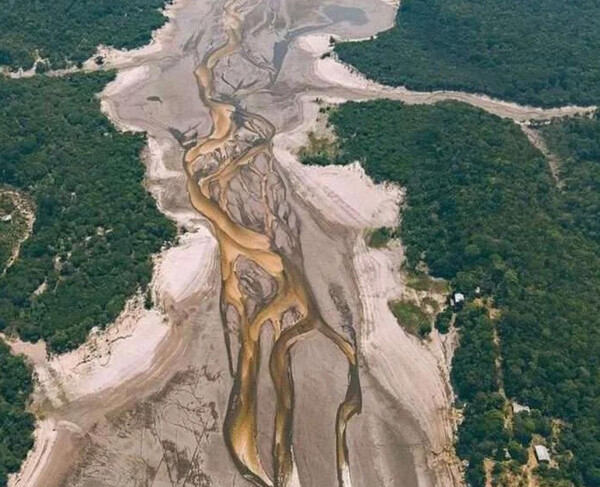
지구에서 가장 중요한 생태계 중 하나인 아마존 분지에서 기록적인 낮은 강 수위로 인해 운송로가 차단되고 수력 발전이 중단됐다. 덥고 건조한 날씨로 인한 산불은 9월에만 5만2천 제곱킬로미터 이상을 태워 엄청난 양의 온실 가스를 방출했다. [사진출처(Photo source) = 글로벌 워터 모니터(Global Water Monitor)]
또한 "2024년에 가장 큰 피해를 입힌 물 관련 재해에는 돌발 홍수, 강 범람, 가뭄, 열대성 저기압, 산사태가 포함된다"며 "물 관련 재해로 8천700명 이상이 사망하고 4천만 명이 이주했으며 5천500억 달러가 넘는 경제적 손실이 발생했다"고 말했다.
이어 "역사적인 가뭄에서 재앙적인 홍수에 이르기까지 이러한 극심한 사건은 생명, 생계 및 생태계 전체에 영향을 미친다. 별도의 폭우 사건으로 인해 아프가니스탄과 파키스탄에서 광범위한 홍수가 발생해 1천 명 이상이 사망했다. 또한 브라질은 재앙적인 홍수로 80명 이상이 사망했으며. 이 지역에는 300mm 이상의 강수량을 기록했다"고 설명했다.
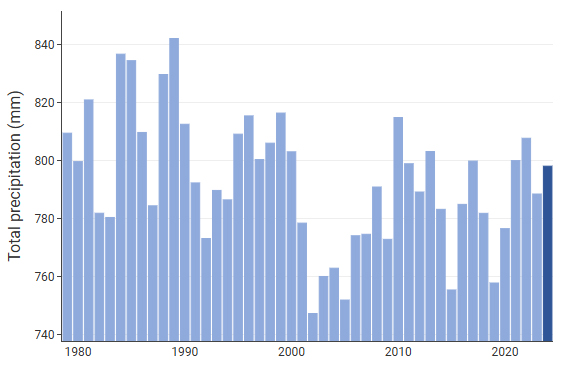
그림 1. 전 세계 연평균 강수량
[자료 출처(Picture Source) = Global Water Monitor]
반 다이크 교수는 "우리는 강수량 기록이 점점 더 빈번하게 갱신되고 있다는 것을 발견했다. 예를 들어, 2024년에 월별 강수량 최고 기록이 금세기 초보다 27%더 자주 달성됐고, 일일 강수량 기록은 52% 더 자주 달성됐다. 최저 기록은 38% 더 자주 발생했으며, 양쪽 모두 더 심각한 극단 현상이 나타나고 있다"고 말했다.
또한 “중국 남부에서 양쯔강과 진주강이 도시와 마을을 침수시켜 수만 명의 사람이 대피했으며, 수억 달러의 농작물 피해를 입혔다. 8월 방글라데시에서 폭우와 댐 방류로 광범위한 강 범람이 발생했다. 580만 명 이상이 피해를 입었고 최소 100만 톤의 쌀이 폐기됐다. 스페인에서는 10월 말 8시간 만에 500mm 이상의 비가 내려 치명적인 홍수가 발생했다"고 덧붙였다.
2024년에 세계 일부 지역에서는 대규모 홍수가 발생했지만 다른 지역에서는 극심한 가뭄을 견뎌냈다.
반 다이크 교수는 “지구에서 가장 중요한 생태계 중 하나인 아마존 분지에서 기록적인 낮은 강 수위로 인해 운송로가 차단되고 수력 발전이 중단됐다. 덥고 건조한 날씨로 인한 산불은 9월에만 5만2천 제곱킬로미터 이상을 태워 엄청난 양의 온실 가스를 방출했다. 남부 아프리카에서는 심각한 가뭄으로 옥수수 생산량이 50% 이상 감소해 3천만 명이 식량 부족에 직면했다. 목초지가 말라붙으면서 농부들은 가축을 도살해야 했다. 가뭄으로 수력 발전량도 감소해 광범위한 정전이 발생했다"고 설명했다.
이어 "우리는 불가피하게 더 심각한 극한 상황에 대비하고 적응해야 한다. 이는 더 강력한 홍수 방어, 가뭄에 강한 식량 생산 및 수자원 개발, 더 나은 조기 경보 시스템을 의미할 수 있다. 물은 우리에게 가장 중요한 자원이며, 홍수와 가뭄이라는 극한 상황은 우리가 직면한 가장 큰 위협 중 하나"라고 강조했다.
지구에서 가장 중요한 생태계 중 하나인 아마존 분지에서 기록적인 낮은 강 수위로 인해 운송로가 차단되고 수력 발전이 중단됐다. 덥고 건조한 날씨로 인한 산불은 9월에만 5만2천 제곱킬로미터 이상을 태워 엄청난 양의 온실 가스를 방출했다. [사진출처(Photo source) = 글로벌 워터 모니터(Global Water Monitor)]
연구팀은 수천 개의 지상 관측소와 지구 궤도를 도는 위성 데이터를 사용해 강수량, 토양 수분, 강 유량, 홍수와 같은 중요한 물 변수에 대한 실시간에 가까운 인사이트를 제공했다.
글로벌 워터 모니터는 전 세계 기관 간의 협력으로, 다양한 공공 및 민간 기관이 참여하고 있다.
2024년 보고서는 글로벌 워터 모니터 웹사이트에서 확인할 수 있다.
[원문보기]
Climate extremes in 2024 ‘wreaking havoc’ on the global water cycle
2024 was another year of record-breaking temperatures, driving the global water cycle to new climate extremes and contributing to ferocious floods and crippling droughts, a new report led by The Australian National University (ANU) shows.
The 2024 Global Water Monitor Report, involving an international team of researchers and led by ANU Professor Albert van Dijk, found rising temperatures are changing the way water moves around the planet, “wreaking havoc” on the water cycle.
“Rising sea surface temperatures intensified tropical cyclones and droughts in the Amazon Basin and southern Africa. Global warming also contributed to heavier downpours and slower-moving storms, as evidenced by deadly flash floods in Europe, Asia and Brazil,” Professor van Dijk said.
In 2024, about four billion people across 111 countries – half of the world’s population − experienced their warmest year yet. Professor van Dijk said air temperatures over land in 2024 were 1.2 degrees Celsius warmer than at the start of the century, and about 2.2 degrees Celsius higher than at the start of the Industrial Revolution.
“In 2024, Earth experienced its hottest year on record, for the fourth year in a row. Water systems across the globe bore the brunt,” he said.
“2024 was a year of extremes but was not an isolated occurrence. It is part of a worsening trend of more intense floods, prolonged droughts, and record-breaking extremes.”
The most damaging water-related disasters in 2024 included flash floods, river floods, droughts, tropical cyclones and landslides. Water-related disasters killed more than 8,700 people, displaced 40 million people and caused economic losses exceeding US $550 billion.
“From historic droughts to catastrophic floods, these extreme events impact lives, livelihoods, and entire ecosystems. Separate, heavy rainfall events caused widespread flash flooding in Afghanistan and Pakistan, killing more than 1,000 people,” Professor van Dijk said.
“Catastrophic flooding in Brazil caused more than 80 deaths, with the region recording more than 300 millimetres of rainfall.
“We found rainfall records are being broken with increasing regularity. For example, record-high monthly rainfall totals were achieved 27 per cent more frequently in 2024 than at the start of this century, whereas daily rainfall records were achieved 52 per cent more frequently. Record-lows were 38 per cent more frequent, so we are seeing worse extremes on both sides.
“In southern China, the Yangtze and Pearl Rivers flooded cities and towns, displacing tens of thousands of people and causing hundreds of millions of dollars in crop damages.
“In Bangladesh in August, heavy monsoon rains and dam releases in August caused widespread river flooding. More than 5.8 million people were affected and at least one million tonnes of rice was destroyed. In Spain, more than 500 millimetres of rain fell within eight hours in late October, causing deadly flash floods.”
While some parts of the world experienced major flooding in 2024, others endured crippling drought.
“In the Amazon Basin, one of the Earth’s most important ecosystems, record low river levels cut off transport routes and disrupted hydropower generation. Wildfires driven by the hot and dry weather burned through more than 52,000 square kilometres in September alone, releasing vast amounts of greenhouse gases,” Professor van Dijk said.
“In southern Africa, a severe drought reduced maize production by more than 50 per cent, leaving 30 million people facing food shortages. Farmers were forced to cull livestock as pastures dried up. The drought also reduced hydropower output, leading to widespread blackouts.
“We need to prepare and adapt to inevitably more severe extreme events. That can mean stronger flood defences, developing more drought-resilient food production and water supplies, and better early warning systems.
“Water is our most critical resource, and its extremes—both floods and droughts—are among the greatest threats we face.”
The research team used data from thousands of ground stations and satellites orbiting the Earth to deliver near real-time insights into critical water variables such as rainfall, soil moisture, river flows, and flooding.
The Global Water Monitor is a collaboration between institutions across the world and involves various public and private organisations.
The 2024 report is available on the Global Water Monitor website.
 즐겨찾기 추가
 시작페이지로 설정























![2024 글로벌 워터 모니터(Global Water Monitor] 보고서 표지. [자료 출처(Picture Source) = Global Water Monitor]](https://cdn.waterjournal.co.kr/news/photo/202501/79240_53170_4918.jpg)