[미국] EPA, 캘리포니아서 최초로 탄소 격리 위한 지하 주입정 승인
이산화탄소 배출 저감 및 기후변화 완화 위해
 미국 환경보호청(EPA)은 캘리포니아 자원공사(CRC)의 자회사인 카본 테라볼트(Carbon TerraVault JV Storage Company Sub 1, LLC, CTV)에 지하 주입 규제(UIC) VI 등급 주입정 4건을 승인했다고 밝혔다. EPA는 「음용수안전법」에 따라 지하 식수원 보호를 위해 지하 주입정을 Ⅰ~Ⅵ 등급으로 규제하고 있다.
Ⅵ 등급 UIC 주입정은 이산화탄소의 영구적인 지하 격리를 위해 깊은 암석층에 이산화탄소를 주입하는 데 사용된다. 탄소 포집(carbon capture) 및 지중 저장(Underground Storage) 또는 지중 격리(geologic sequestration)라고 불리는 이 기술은 대기 중 이산화탄소 배출을 줄이고 기후변화를 완화할 수 있다. 클래스 VI UIC 승인 캘리포니아에서 최초로 승인된 Ⅵ 등급 주입정에 대한 것으로, EPA의 태평양 남서부 지역에서 최초의 승인이다.
EPA는 허가 신청서에 CTV가 제출한 모든 정보와 운영 기준, 모니터링 요구 사항 및 기존 지질학적 환경에 대한 철저한 기술 검토를 완료했다. 인근 지역 사회가 의견을 제공할 수 있도록 EPA는 공개 의견 수렴 기간을 개최하고 수천 개의 공개 의견을 검토했다. 또한 EPA는 컨 카운티(Kern County)의 지역 공무원, 소방 공무원, 지역 사회 구성원 및 부동산 소유자들과 만나 Ⅵ 등급 주입정 프로그램을 설명했다.
마샤 구즈만(Martha Guzman) EPA 태평양 남서부 지역 관리자는 "탄소 격리는 지구 온난화의 약 3분의 1을 담당하는 기후 초오염 물질인 메탄의 석유 및 가스 부문 배출을 다루지는 않지만 이산화탄소를 포집한다"면서 "이번 승인은 「음용수안전법」에 따라 식수원을 보호하는 탄소 주입 프로젝트가 허용되기 때문에 승인됐다. EPA는 이 스인에 이산화탄소 누출에 대한 지속적인 모니터링과 같은 중요한 기능이 포함되도록 노력했으며, 모니터링 데이터를 대중에게 공개하고 CTV가 주입 전에 프로젝트 지역의 모든 방치공 200개를 연결해야 한다는 요구 사항이 포함되도록 했다. 저는 이 허가가 대중과 환경을 보호한다고 믿는다"고 말했다.
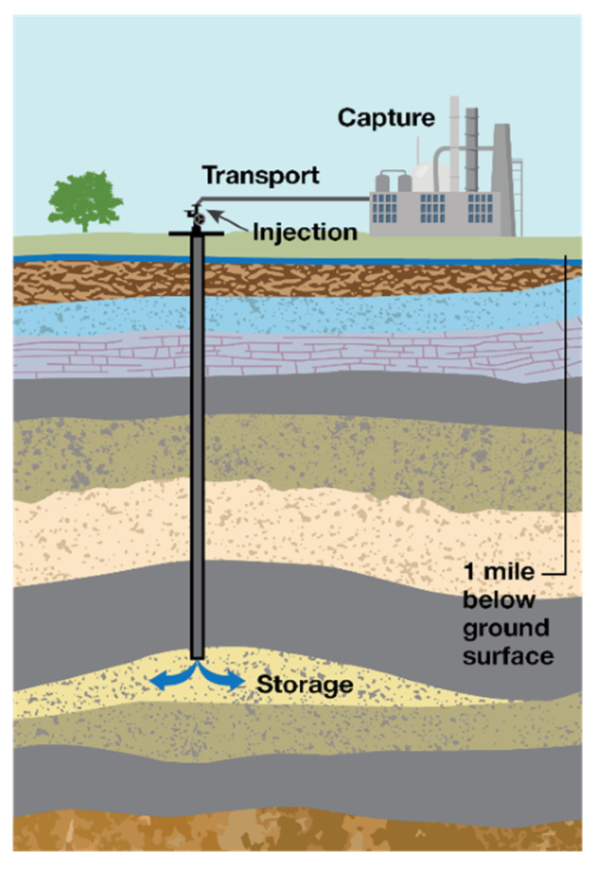
미국 환경보호청(EPA)은 캘리포니아 자원공사(CRC)의 자회사인 카본 테라볼트(Carbon TerraVault JV Storage Company Sub 1, LLC, CTV)에 지하 주입 규제(UIC) VI 등급 주입정 4건을 승인했다고 밝혔다. [그림출처(picture source) = 미국 환경보호청(EPA)]
이번 승인은 CTV가 캘리포니아 베이커스필드(Bakersfield)에서 서쪽으로 약 20마일 떨어진 엘크 힐스 유전(Elk Hills Oil Field)에 4개의 주입정을 건설할 수 있도록 허가한다. 이 주입정은 지표면 아래 1마일 이상 깊이의 몬터레이층(Monterey Formation)에 건설될 예정이다. CTV는 26년 동안 매년 약 150만 톤의 이산화탄소를 주입해 총 3천800만 톤의 이산화탄소를 제거하고 저장할 계획이다. 또한 이번 승인으로 엘크 힐스 유전 내에서 캘리포니아 자원공사의 연소 전 가스 처리를 초기 이산화탄소 공급원으로 식별하고 EPA의 승인을 받아 CTV가 추가적인 이산화탄소 공급원을 추가토록 규정했다.
EPA의 승인은 완전성, 지하수 수질, 이산화탄소 거동을 추적하기 위해 광범위한 모니터링을 필요로 합니다. 또한, CTV는 주입된 이산화탄소가 지하에 머무르는지 확인하기 위해 지표면 수준의 공기 및 누출 감지 모니터링을 수행해야 한다.
CTV는 지표면 공기 및 누출 감지 모니터링 데이터와 기타 모니터링 데이터를 공개적으로 접근 가능한 웹사이트에 제공할 계획이다. 또한, CTV는 비상 상황을 계획하고 긴급 대응이 필요한 예상치 못한 사건을 대중에게 알리는 긴급 및 복구 대응 계획이 포함된다.
EPA가 이산화탄소 주입 시작을 승인하기 전에 프로젝트 중 이산화탄소가 이동할 것으로 예상되는 200개의 관정을 막아야 한다. EPA는 주입정을 통해 격리된 이산화탄소가 지하수 공급원으로 이동하지 않도록 관리한다.
EPA가 지도, 기록, 코어 및 지진 조사 결과를 포함한 CTV의 적용 사례를 검토한 결과, EPA는 해당 부지의 지역 및 지역 지질학적 특징을 통해 몬터레이층에 주입이 승인된 총 이산화탄소 양을 안전하게 수용하고 저장할 수 있을 것으로 판단했다.
또한 주입 지층을 덮고 있는 지질층은 격리 구역의 이산화탄소가 이동 없이 제자리에 유지될 수 있는 적절한 트랩 역할을 한다. EPA는 또한 단층 및 균열 평가와 주입 활동으로 인한 지진 발생 확률을 포함한 해당 지역의 과거 지진 데이터를 검토했다. 이 검토를 바탕으로 EPA는 주입 작업이 지진 활동을 일으킬 가능성이 낮다고 판단했다.
EPA는 또한 CTV가 주입구를 막고, 주입 후 필요한 모든 현장 관리를 수행하며, 프로젝트 운영 종료 시 현장을 적절히 해체하고, 필요한 긴급 및 보완 대응 조치를 수행하기 위해 프로젝트 기간 동안 재정적 책임을 유지하도록 요구한다.
CTV는 이러한 활동을 위해 약 3천만 달러를 확보했다. EPA는 이 금액을 검토하고 승인했으며, 활동 비용을 계속 검토하고, 변경 사항이 있을 경우 매년 CTV가 금액을 업데이트하도록 요구할 계획이다.
[원문보기]
EPA issues first ever underground injection permits for carbon sequestration in California
Carbon sequestration will be used at Kern County site to reduce carbon dioxide emissions and mitigate climate change
On December 30, 2024, the U.S. Environmental Protection Agency (EPA) issued four Underground Injection Control (UIC) Class VI well permits to Carbon TerraVault JV Storage Company Sub 1, LLC (CTV), a subsidiary of California Resources Corporation (CRC). Class VI UIC wells are used to inject carbon dioxide into deep rock formations for permanent underground storage.
This technology, called carbon capture and underground storage or geologic sequestration, can be used to reduce carbon dioxide emissions to the atmosphere and mitigate climate change. The four Class VI UIC permits are for the first permitted Class VI injection wells in California and represent the first such permits issued by EPA’s Pacific Southwest Region.
EPA has determined that the activities authorized under the Class VI UIC permits are protective of underground sources of drinking water and public health as required by the Safe Drinking Water Act (SDWA). EPA completed a thorough technical review of all information submitted by CTV in its permit application, as well as the operational standards, the monitoring requirements, and the existing geologic setting.
In order to ensure the surrounding community could provide input, EPA held public comment periods and reviewed thousands of public comments submitted on the draft permits. EPA also met with local officials in Kern County, emergency responders, community members, and property owners to explain the Class VI well program, listen to concerns, and answer questions.
"Although carbon sequestration does not address emissions of methane -- a climate super pollutant, responsible for approximately one-third of global warming -- from the oil and gas sector, it does capture carbon dioxide," said EPA Pacific Southwest Regional Administrator Martha Guzman.
"This permit is authorized because the Safe Drinking Water Act allows for carbon injection projects that protect drinking water sources. EPA worked to ensure that the permit includes important features such as continuous monitoring for carbon dioxide leaks, with that monitoring data made available to the public, and a requirement that CTV plug all abandoned wells in the area of the project -- 200 -- before injection. I believe this permit is protective of the public and the environment."
The permits authorize CTV to construct four deep injection wells in the Elk Hills Oil Field, approximately 20 miles west of Bakersfield, California. The wells will be constructed to depths of more than a mile below surface level, into the Monterey Formation.
CTV plans to inject about 1.5 million metric tons of carbon dioxide per year for 26 years, totaling almost 38 million metric tons of carbon dioxide removed andstored. The permits identify CRC's pre-combustion gas treatment within the Elk Hills Oil Field as the initial carbon dioxide source and prescribe a process for CTV to add additional sources of carbon dioxide with EPA's approval.
EPA’s permits require extensive monitoring for well integrity, ground water quality and to track carbon dioxide movement. In addition, CTV must conduct surface-level air and leak detection monitoring to ensure that the injected carbon dioxide is staying underground.
CTV will provide the surface air and leak detection monitoring data along with other monitoring data on a publicly accessible website. CTV is also required to plan for emergencies and maintain an Emergency and Remedial Response Plan, which includes an Emergency Communication Plan to inform the public of any unanticipated event that requires an emergency response.
Before EPA will authorize the start of carbon dioxide injection, CTV is required to properly plug 200 wells where carbon dioxide is expected to migrate during the project. EPA will review and approve the final plugging records to ensure that the wells do not allow carbon dioxide to migrate upward into underground sources of drinking water.
Based on EPA’s review of CTV’s application, including maps, well logs, cores, and the results of seismic surveys, EPA determined that the regional and local geologic features of the site will allow the Monterey Formation to safely receive and store the total volume of carbon dioxide authorized for injection. In addition, the confining zone -- the geologic formation that overlies the injection formation -- provides a suitable trap for the carbon dioxide to remain in place without migration.
EPA also reviewed historic seismicity data in the area, including an assessment of faults and fractures, as well as the probability of induced seismicity due to injection activities. Based on this review, EPA determined that the injection operations are unlikely to cause seismic activity or containment issues.
EPA will also require CTV to maintain financial responsibility throughout the life of the project to plug the injection wells, perform all required post-injection site care, properly decommission the site at the end of project operations, and conduct any needed emergency and remedial response measures.
CTV has secured approximately $30,000,000 for these activities. EPA has reviewed and approved this amount and will continue to review the cost of the activities and require CTV to update the amount on an annual basis if there are changes.
While the Class VI UIC permits issued by EPA authorize the injection of carbon dioxide pursuant to the federal Safe Drinking Water Act (SDWA), the permits do not relieve CTV of complying with applicable federal, state or local laws or regulations.
The Class VI UIC permits are in effect during the operating life of the injection wells and the post-injection site care period until site closure is completed. To access the materials associated with the final permit actions, visit regulations.gov under Docket No. EPA R09 OW 2023.
[출처 = 미 환경보호청(EPA)(EPA issues first ever underground injection permits for carbon sequestration in California | US EPA) / 12월 31일]
|  즐겨찾기 추가
 시작페이지로 설정
























