[미국] 염소소독 수돗물서 이전에 알려지지 않은 화합물 확인
미국 아칸소대-스위스 취리히공과대학 공동연구진, 무기 클로라민서 클로로니트라미드(Cl-N-NO₂) 음이온 발견
아칸소대 페어리 박사 “클로로니트라미드 음이온, 무기 클로라민의 분해 산물”
미국에서만 1억1천300만명 이상이 클로라민 함유된 수돗물 마시는 것으로 추정
현재 독성은 알려져 있지 않았지만, 다른 유병률과 독성 화합물과의 유사성은 우려스러운 부분
종합과학저널 『사이언스(Science)』 최근호에 논문 게재
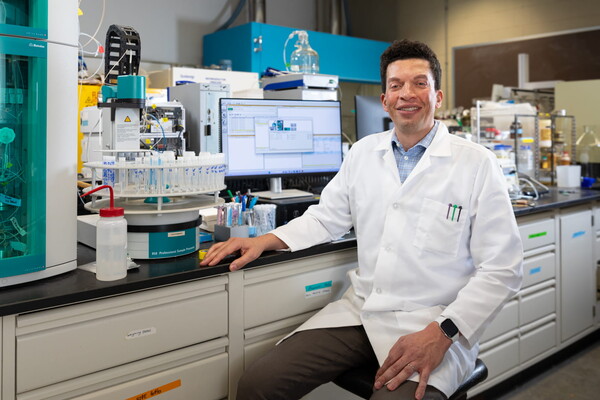
미국 아칸소대학교(University of Arkansas) 토목공학부 줄리안 페어리(Julian Fairey) 부교수(사진)와 스위스 취리히 연방공과대학교(ETH Zurich) 환경화학과 크리스토퍼 맥닐(Kristopher McNeill) 교수 등 공동연구진은 염소 소독된 식수(수돗물)에서 이전에는 알려지지 않았던 화합물을 발견했다고 밝혔다. [사진출처(Photo source) = 아칸소대학교(University of Arkansas)]
미국과 스위스의 연구팀이 염소화 식수(chloraminated drinking water, 염소로 소독된 수돗물)에서 이전에는 알려지지 않았던 화합물을 발견했다고 밝혔다. 무기 클로라민(chloramine, NH₂Cl 또는 NHCl₂)은 콜레라나 장티푸스와 같은 수인성 질병으로부터 공중보건을 보호하기 위해 식수를 소독하는 데 일반적으로 사용된다.
미국에서만 1억1천300만 명 이상이 클로라민이 함유된 수돗물을 마시는 것으로 추정된다.
연구진은 이제 화학적으로 ‘Cl-N-NO₂’로 표시되는 클로로니트라미드(chloronitramide) 음이온을 무기 클로라민 분해의 최종 산물로 확인했다. 현재 독성은 알려져 있지 않았지만, 다른 유병률과 독성 화합물과의 유사성은 우려스러운 부분이며, 공중보건 위험을 평가하기 위한 추가 연구가 필요하다. 단순히 화합물을 식별하는 것은 어려운 일이자 획기적인 일이다.
미국 아칸소주 페이엇빌(Fayetteville)에 있는 공립종합대학교인 아칸소대학교(University of Arkansas) 토목공학부 줄리안 페어리(Julian Fairey) 부교수는 최근 미국과학진흥협회(AAAS)가 발간하는 종합과학저널인 『사이언스(Science)』에 게재된 논문의 첫 번째 공동 저자이다.
페어리 부교수는 “연구자들이 수십년 동안 이 화합물에 대해 알고 있었지만 식별하지 못했다”고 언급했다. 그는 10년 전부터 미스터리를 풀기 시작했다.
페어리 부교수는 “저분자량으로 매우 안정적인 화학물질로 찾기가 매우 어려운 화학물질이다. 가장 어려웠던 부분은 이 화학물질을 식별하고 우리가 말한 구조임을 증명하는 것이었다”라고 말했다.
여기에는 이전에 해본 적이 없는 그의 실험실에서 화합물을 합성할 수 있는 것도 포함되었다. 그런 다음 샘플을 동료이자 공동 제1저자인 훌리아나 라자코비츠(Juliana Laszakovits)에게 보냈다. 그녀는 스위스 취리히 연방공과대학교(ETH Zurich) 환경화학과 크리스토퍼 맥닐(Kristopher McNeill) 교수의 연구실 박사후 연구원에게 보내 분석을 의뢰했다.
라자코비츠 연구원은 “클로라민 식수는 북미에서 흔하지만, 스위스에서는 클로라민을 검사하지 않는다”라면서 “스위스 수돗물에서는 클로로니트라미드 음이온이 없다”고 말했다.
맥닐 교수는 이를 통해 “실제로 스위스 수돗물 연구에서 대조군으로 사용할 수 있었다”라고 언급했다. 그는 “현재 연구가 미국의 수도 시스템에 초점을 맞추고 있다”고 덧붙였다.
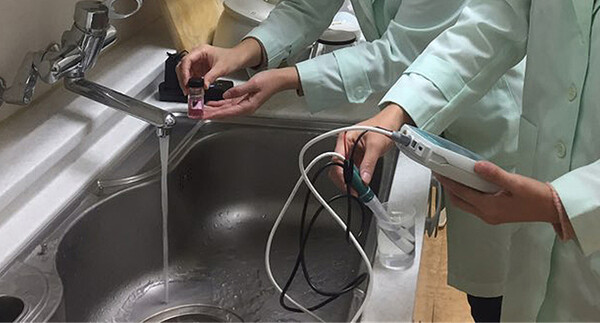
무기 클로라민(NH₂Cl 또는 NHCl₂)은 콜레라나 장티푸스와 같은 수인성 질병으로부터 공중보건을 보호하기 위해 식수를 소독하는 데 일반적으로 사용된다. 미국에서만 1억1천300만 명 이상이 클로라민이 함유된 수돗물을 마시는 것으로 추정된다. 사진은 특정기사와 관련 없음. [사진출처(Photo source) = 워터저널(waterjournal) DB 자료]
그러나 이탈리아, 프랑스, 캐나다 및 기타 국가에서도 클로라민화를 사용하고 있으며 잠재적으로 영향을 받을 수 있다. 이전에는 독성연구에서 평가할 수 없었던 이 새로운 화합물로 인한 건강 위험에 대한 의문이 제기될 수밖에 없다.
식수 소독제의 화학을 연구하는 페어리 부교수는 이전 인터뷰에서 “식수를 소독할 때 독성이 발생한다는 것은 잘 알려진 사실이다. 만성 독성은 정말 그렇다. 특정 수의 사람들이 수십 년 동안 식수로 인해 암에 걸릴 수 있다”고 주장했다.
페어리 부교수는 이어 “하지만, 어떤 화학물질이 이러한 독성을 유발하는지 확인하지 못했다. 우리 연구의 주요 목표는 이러한 화학물질과 화학물질이 형성되는 반응 경로를 식별하는 것”이라고 말했다.
이 화합물을 식별하는 것은 이 과정에서 중요한 단계이다. 클로로니트라미드 음이온이 암과 관련이 있는지 또는 기타 건강에 해로운 위험이 있는지 여부는 미국 환경보호청(EPA)과 같은 학계 및 규제기관에서 향후 연구 및 평가될 예정이다. 적어도 이 발견 덕분에 이 화합물에 대한 독성연구는 이제 완료될 수 있다.
페어리 부교수는 “독성이 아니더라도 독성을 발견하면 독소를 포함한 다른 화합물이 어떻게 형성되는지 이해하는 데 도움이 될 수 있다”라면서 “어떤 것이 어떻게 형성되는지 알면 잠재적으로 제어할 수 있다”라고 설명했다
이 논문의 공동저자로 페어리와 라자코비츠가 합류했다. 흐엉팜(Huong Pham), 티엔도(Thien Do), 사무엘 호지스(Samuel Hodges)는 모두 아칸소대학교 박사과정 학생 출신으로 페어리 부교수 연구실에서 이 연구에 기여했다.
맥닐은 2022년 안식년의 일환으로 취리히 연방공과대학교에서 방문 교수로 페어리 부교수를 초청하여 라자코비츠(Laszakovits)와 함께 이 연구를 진행했다. 데이비드 와먼(David Wahman)은 페어리 부교수의 연구소 그룹에서 오랫동안 협력했으며 EPA의 연구 환경엔지니어로 일하고 있다.
[원문보기]
Researchers Identify Previously Unknown Compound in Drinking Water
A team of researchers from the United States and Switzerland have reported the discovery of a previously unknown compound in chloraminated drinking water.
Inorganic chloramines are commonly used to disinfect drinking water to safeguard public health from diseases like cholera and typhoid fever. It’s estimated that more than 113 million people in the United States alone drink chloraminated water.
The researchers have now identified chloronitramide anion, chemically expressed as Cl?N?NO2?, as an end product of inorganic chloramine decomposition. While its toxicity is not presently known, its prevalence and similarity to other toxic compounds is concerning and warrants further study to assess its public health risk. Simply identifying the compound has been a challenge and a breakthrough.
Julian Fairey, an associate professor of civil engineering at the University of Arkansas, was the first co-author on the paper published in Science. Fairey noted that researchers have known about the compound for decades but have been unable to identify it. He himself began trying to unravel the mystery 10 years ago.
“It’s a very stable chemical with a low molecular weight,” Fairey said. “It’s a very difficult chemical to find. The hardest part was identifying it and proving it was the structure we were saying it was.”
This included being able to synthesize the compound in his lab, which had never been done before. Samples were then sent for analysis to his colleague and co-first author on the paper, Juliana Laszakovits, a postdoctoral researcher in the lab of Kristopher McNeill, Professor of Environmental Chemistry at ETH Zurich.
“Chloraminated drinking water is common in North America, but chloramination is not really practiced in Switzerland,” Laszakovits explained, “and there’s no chloronitramide anion in Swiss waters.”
McNeill noted that this “actually allowed us to use Swiss tap water as a control in the study.” He added that the current study focused on water systems in the US. However, Italy, France, Canada, and other countries also use chloramination and could be potentially affected as well.
Inevitably, there will be questions about the health risks posed by this new compound, which could not be previously evaluated in any toxicity studies.
Fairey, who studies the chemistry of drinking water disinfectants, explained in a previous interview: “It’s well recognized that when we disinfect drinking water, there is some toxicity that’s created. Chronic toxicity, really. A certain number of people may get cancer from drinking water over several decades. But we haven’t identified what chemicals are driving that toxicity. A major goal of our work is to identify these chemicals and the reaction pathways through which they form.”
Identifying this compound is an important step in that process. Whether chloronitramide anion will be linked to any cancers or has other adverse health risks will be assessed in future work by academics and regulatory agencies, such as the U.S. Environmental Protection Agency. At the very least, toxicity studies can now be completed on this compound thanks to this discovery.
“Even if it is not toxic,” Fairey explained, “finding it can help us understand the pathways for how other compounds are formed, including toxins. If we know how something is formed, we can potentially control it.”
Joining Fairey and Laszakovits as co-authors on the paper are Huong Pham, Thien Do, Samuel Hodges, Kristopher McNeill and David Wahman. Pham, Do and Hodges are all former Ph.D. students at the University of Arkansas who contributed to this research in Fairey’s lab.
In 2022, McNeill hosted Fairey at ETH Zurich as a visiting professor as part of his sabbatical where they worked with Laszakovits on this study. Wahman is a longtime collaborator with Fairey’s lab group and is a research environmental engineer at the U.S. Environmental Protection Agency
[출처 = 아칸소대학교(University of Arkansas)(https://arkansasresearch.uark.edu/researchers-identify-previously-unknown-compound-in-drinking-water/) / 2024년 11월 22일]
[연구논문 출처 = 『사이언스(Science)』 저널(https://www.science.org/doi/10.1126/science.adk6749) / 2024년 11월 21일]a
|  즐겨찾기 추가
 시작페이지로 설정
























