[미국] EPA, PFAS 대응 및 물속 신흥오염물질 식별 위한 이니셔티브 시작
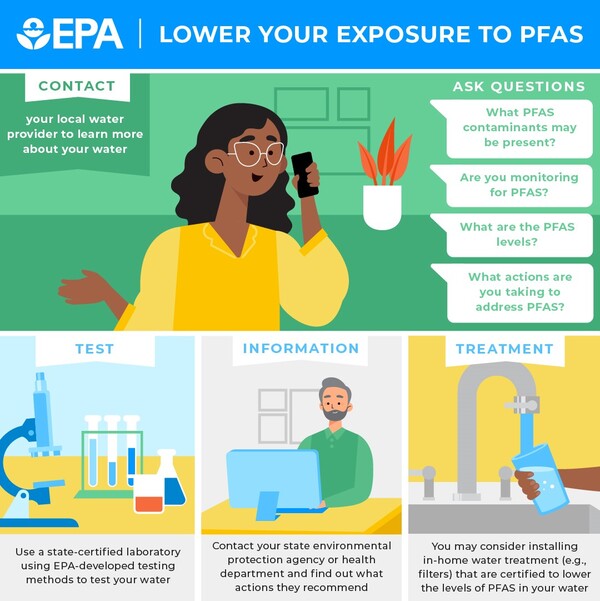
미국 환경보호청(EPA)은 소규모 및 소외된 지역사회에서 PFAS와 신흥오염물질에 대한 노출을 줄이는 데 초점을 맞춘 새로운 무료 기술 지원을 시작한다고 밝혔다. 그림은 EPA가 시민들에게 PFAS의 노출을 낮추기 위한 방법을 설명하는 홍보물. [그림출처(picture source) = 미국 환경보호청(EPA)]
미국 환경보호청(EPA)은 소규모 및 소외된 지역 사회에서 PFAS와 신흥오염물질에 대한 노출을 줄이는 데 초점을 맞춘 새로운 새로운 무료 기술 지원을 시작한다고 밝혔다. 이 이니셔티브는 EPA의 WaterTA(Water Technical Assistance) 프로그램의 일부이다.
신흥오염물질 해결 이니셔티브(The Tackling Emerging Contaminants initiative)는 자격을 갖춘 공공 음용수 시스템이 향후 3년 동안 200개의 소규모 또는 소외된 지역 사회에서 신흥오염물질 문제를 평가하고, 초기 수질 검사를 실시하고, 다음 단계를 식별하는 데 도움이 될 것이다. EPA는 또한 PFAS를 포함한 신흥오염물질 처리와 관련된 사례 연구, 관련 보고서(Fact Sheets), 웨비나 및 기타 리소스를 통해 모범 사례를 공유하고 성공을 확대할 것입니다.
브루노 피곳(Bruno Pigott) EPA 수자원 부국장은 "「초당적인프라법」은 소규모 및 소외된 지역 사회가 PFAS와 신규오염물질을 해결하여 주민들에게 깨끗하고 안전한 식수를 확보할 수 있도록 집중적으로 지원할 수 있는 기회를 제공한다"면서 "지역 사회 파트너와 긴밀히 협력하여 신흥오염물질 해결 이니셔티브는 역사적으로 서비스가 부족했던 지역이 건강하고 활기찬 지역 사회에 필수적인 보다 안전한 식수를 이용할 수 있도록 도울 것"이라고 말했다.
바이든 대통령의 「초당적인프라법」은 전국의 수자원 인프라를 개선하기 위해 전례 없는 500억 달러를 제공했다. 이 자금 중 50억 달러는 이 최신 기술 지원 이니셔티브를 지원하는 소규모 또는 소외된 지역 사회의 신흥오염물질(EC-SDC) 보조금 프로그램에 사용된다.
EPA의 무료 수자원 기술 지원 이니셔티브는 지역 사회가 수자원 문제를 파악하고, 계획을 수립하고, 역량을 구축하고, 연방 자금을 받기 위한 신청 자료를 개발하는 데 도움을 준다.
신흥오염물질 처리 이니셔티브는 EPA의 강력한 기술 지원 프로그램을 기반으로 하며 진단 수질 샘플링 및 분석, 원수 평가, 예비 처리 설계 및 평가, 운영 및 샘플링 교육, 신규 오염 물질 및 PFAS 오염을 해결하기 위한 식별 솔루션을 포함한다.
2024년 4월, EPA는 지역 사회를 유해한 '영원환 화확물질'이라 불리는 PFAS에 노출되지 않도록 보호하기 위해 PFAS 국가 1차 식수 규정을 발표했다. PFAS에 노출되면 일부 암, 간 및 심장 질환, 영유아의 면역 및 발달 손상을 포함한 건강에 부정적인 영향을 미칠 수 있다.
[원문보기]
EPA Launches New Initiative to Tackle PFAS, Identify Emerging Contaminants in Water
Today, November 20, the U.S. Environmental Protection Agency launched a new, no-cost technical assistance effort focused on reducing exposure to perfluoroalkyl and polyfluoroalkyl substances (PFAS) and other emerging contaminants in small or disadvantaged communities. This initiative is part of EPA’s Water Technical Assistance (WaterTA) program.
The Tackling Emerging Contaminants initiative will help eligible public drinking-water systems evaluate emerging contaminant issues, conduct initial water quality testing, and identify next steps in 200 small or disadvantaged communities over the next three years. EPA will also share best practices and amplify successes through case studies, fact sheets, webinars, and other resources regarding addressing emerging contaminants, including PFAS.
“The Bipartisan Infrastructure Law is providing a focused opportunity to help small and disadvantaged communities address PFAS and emerging contaminants to ensure that drinking water is clean and safe for residents,” said EPA Principal Deputy Assistant Administrator for Water Bruno Pigott. “By working hand-in-hand with local partners, the Tackling Emerging Contaminants initiative will help ensure that historically underserved areas have access to safer drinking water that is essential for healthy and vibrant communities.”
President Biden’s Bipartisan Infrastructure Law has provided an unprecedented $50 billion to improve water infrastructure across the nation. Of this funding, $5 billion is dedicated to the Emerging Contaminants in Small or Disadvantaged Communities (EC-SDC) grant program, which supports this latest technical-assistance initiative.
EPA’s free water technical assistance initiatives help communities identify their water challenges, develop plans, build capacity, and develop their application materials to access federal funding.
The Tackling Emerging Contaminants initiative builds on EPA’s robust suite of technical assistance programs and includes diagnostic water quality sampling and analysis, source water assessment, preliminary treatment design and evaluations, operational and sampling training, and identifying solutions to address emerging contaminants and PFAS contamination including community engagement and outreach support.
In April 2024, EPA issued the PFAS National Primary Drinking Water Regulation to protect communities from exposure to harmful PFAS, also known as “forever chemicals.” Exposure to PFAS has been linked to adverse health impacts that include some cancers, liver and heart disease, and immune and developmental damage to infants and children.
|  즐겨찾기 추가
 시작페이지로 설정