[호주] IEP, “급증하는 글로벌 분쟁 방지 위해선 물 투자가 핵심 열쇠”
국제 싱크탱크 경제평화연구소(IEP), 『2024년 생태학적 위협보고서(ETR)』10월 30일 발간
사회적 마찰·갈등 증폭 문제 기후변화로 인해 더욱 악화…국제적인 공동대응 없을땐 생태계 파괴 가속화
기후변화·인구증가·분쟁으로 생태학적 위험 심화…생태계 파괴·빈곤·분쟁 발생 사이 강한 상관 관계 확인
사하라 사막 이남 아프리카, 심각한 식량 불안정·물부족·급격한 인구증가로 가장 생태학적 위협 큰 지역
남아시아, 모든 지역 중 가장 심각한 자연재해 취약성으로 전체 ETR 지수서 두번째로 높아
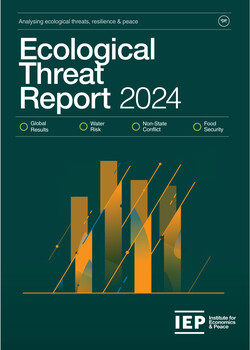 국제 싱크탱크인 경제평화연구소(Institute for Economics & Peace, IEP)는 『생태학적 위협보고서(Ecological Threat Report, ETR)』 제5판인 2024년 보고서를 10월 30일 발간했다.
『2024 생태학적 위협 보고서(2024 Ecological Threat Report)』에서는 국제적인 공동 대응 없이는 생태계 파괴가 가속화됨으로써 전 세계적으로 사회적 마찰과 갈등이 증폭될 것이라고 결론지었다.
경제평화연구소(이하 IEP)는 이러한 도전은 기후변화로 인해 더욱 악화될 것이라고 경고했다. 보고서에 나타난 주요 결과는 다음과 같다.
첫째, 기후변화, 인구 증가, 분쟁으로 인해 생태학적 위험이 심화되고 있으며, 생태계 파괴, 빈곤, 분쟁 발생률 사이에는 밀접한 상관 관계가 확인되고 있다.
둘째, 현재 13억 명의 인구가 거주하는 50개국은 비교적 높거나 매우 높은 수준의 생태적 위협에 직면해 있다. 이들 국가의 인구는 오는 2050년까지 거의 20억 명으로 증가할 것으로 예상된다.
셋째, 『생태학적 위협보고서, 이하 ETR』는 극심한 생태학적 위험과 낮은 사회적 회복력이 교차하여 불안정성, 분쟁 및 인도주의적 위기에 취약한 27개 생태학적 핫스팟 국가(hotspot countries)를 식별하고 있다.
넷째, 27개 핫스팟(분쟁지대) 국가 중 19개 국가는 사하라 사막 이남 아프리카에, 4개 국가는 중동과 북아프리카에 위치해 있다. 현재 많은 국가가 분쟁이나 내전을 겪고 있어 주민들이 불안을 겪고 있다.
다섯째, 농업-목축업 공동체에서의 갈등 예방은 지역사회 기반 접근 방식이 외부 개입보다 더 성공적인 것으로 입증되는 등 지역 거버넌스(governance) 구조의 강점과 밀접한 관련이 있다.
여섯째, 사하라 사막 이남 아프리카는 관개율이 세계에서 가장 낮으며 경작지의 1.8%만이 관개되고 있다. 물 수집 및 관리 개선을 통해 생태계의 압력을 완화할 수 있는 상당한 기회가 있다.
일곱 번째, 2050년까지 매년 150억 달러를 집수 및 농업개선 이니셔티브에 투자하면 사하라 사막 이남 아프리카의 식량 생산량을 50%까지 늘릴 수 있다.
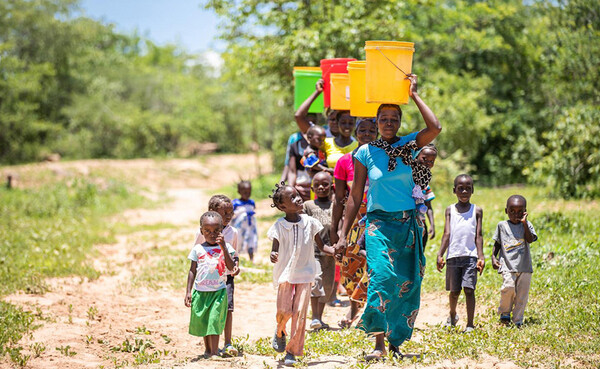
국제 싱크탱크인 경제평화연구소(IEP)는 10월 30일 발간한 『생태학적 위협보고서(ETR)』 제5판에 따르면, 사하라 사막 이남 아프리카는 높은 수준의 식량 불안정, 물 부족, 급격한 인구 증가로 인해 가장 심각한 생태학적 위협에 직면해 있다. [사진출처(Photo source) = 유니세프(Unicef)]
『2024 생태학적 위협 보고서』는 207개국을 대상으로 생태학적 위협, 기후변화, 열악한 거버넌스, 인구 증가, 분쟁이 맞물리면서 글로벌 위기가 커지고 있음을 보여준다.
이 보고서는 13억 명의 인구가 거주하는 50개 국가에서 어느 정도 높거나 매우 높은 수준의 생태 위협에 직면해 있다고 진단했는데, 이 중 82%가 아프리카에 있는 이 국가로 2050년까지 인구가 51% 증가할 것으로 예상된다.
사하라 사막 이남 아프리카가 특별한 우려 지역으로 부상하고 있다. 최근 이 지역에서 발생한 심각한 엘니뇨(El Nino)로 인한 가뭄으로 인해 이 지역 인구의 17%에 해당하는 6천800만 명이 영향을 받았다.
2024년 초에 시작된 가뭄으로 농작물과 가축 생산에 타격을 입어 식량 부족과 더 넓은 경제에 피해를 입혔다. 식량 가격은 ‘코로나19’ 팬데믹 이전보다 25% 상승하여 식량에 대한 접근성이 더욱 악화됐다.
그러나 이 지역은 식량 생산 능력을 개선할 수 있는 잠재력이 전 세계적으로 가장 큰 지역이기도 하다. 예를 들어, 아프리카의 평균 옥수수 수확량은 헥타르(ha)당 1.9톤에 불과하며, 전 세계 평균은 5.4톤에 불과하다. 또한 이 지역은 2억ha의 미개발 경작지를 보유하고 있다.
사하라 사막 이남 아프리카는 미세 물포집 기술(micro-water capture techniques)을 구현하고 개선된 농업 관행을 채택함으로써 생태 복원력과 식량 안보를 크게 향상시킬 수 있다.
IEP(경제평화연구소)의 스티브 킬레아(Steve Killelea) 설립자 겸 회장은 “전 세계는 생태적 위협이 분쟁 위험, 빈곤 및 부채와 점점 더 얽혀 있는 중요한 시점에 있다”라면서 “우리의 연구에 따르면, 물 포집 및 농업 관행에 대한 표적 투자는 식량 안보를 극적으로 개선하고 지역 회복력을 높이며 분쟁을 줄이고 강제 이주를 완화할 수 있다”고 강조했다.
생태학적 분쟁지대(Ecological Hotspots)
ETR은 27개의 생태학적 분쟁지대, 즉 높은 생태학적 위험과 낮은 사회 회복력이 교차하는 국가를 식별한다. 이러한 분쟁 국가는 불안정성, 분쟁, 인도주의적 위기의 위험 증가에 직면해 있다.
이 분쟁지대의 지리적 분포는 크게 왜곡되어 있으며, 19곳은 사하라 사막 이남의 아프리카에, 4곳은 중동과 북아프리카에, 나머지 4곳은 아시아와 카리브해에 걸쳐 분포되어 있다.
[표 1] 2024년 생태학적 분쟁지대(Ecological Hotspots) 국가
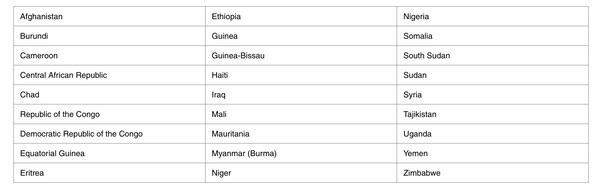
※ 상기 27개 국가들은 ‘핫스팟(Hotspots)’ 국가로 분류된다. 이들 나라 매우 높은 수준의 생태학적 위협을 가지고 있으며 긍정적인 평화 수준이 가장 낮은 30 개국 중 하나로 선정되었음을 의미한다.
사하라 사막 이남의 아프리카, 중앙 아시아 및 남아메리카 일부는 가장 높은 수준의 물 위험에 직면해 있다. [출처(source) = 경제평화연구소(IEP)]
남아시아는 모든 지역 중 가장 심각한 자연재해에 대한 취약성으로 전체 ETR 지수에서 두 번째로 높은 점수를 기록했다.
유럽과 북미는 어떤 하위국가 지역도 높거나 매우 높은 수준의 생태학적 위협에 직면하지 않은 유일한 두 지역이다.
핫스팟(분쟁지대) 국가는 지리적으로 밀집하는 경향이 있으며, 이는 생태 및 인도주의적 위기가 여러 국가를 포괄할 것이기 때문에 지역 불안정성을 초래할 수 있다. 파급 효과에는 인구 이동, 새로운 국경 간 분쟁, 교통 네트워크 및 공급망 중단 등이 포함된다.
현재 많은 핫스팟 국가들이 무력 충돌이나 시민 불안을 겪고 있으며, 생태 위협, 낮은 복원력, 폭력 위험 증가 사이의 상호작용을 강조하고 있다는 사실은 상황의 심각성을 강조한다.
이러한 문제를 해결하지 못하면 인구 증가, 환경 악화, 취약한 거버넌스의 복합적인 효과로 인해 특히 이미 분쟁이 발생하기 쉬운 지역에서 불안정성이 증가하는 주기가 발생할 수 있다.
거버넌스 및 물관리(Governance & Water Management)
물 위험은 물 부족보다 취약한 거버넌스와 더 밀접한 관련이 있다. 예를 들어, 아랍에미리트(UAE)는 제한된 자원에도 불구하고 낮은 물 위험에 직면해 있는 반면, 인근 예멘은 더 풍부한 수자원을 보유하고 있음에도 불구하고 어려움을 겪고 있다.
ETR 보고서는 소규모 물 집수 및 관련 이니셔티브에 연간 150억 달러를 투자하면 사하라 사막 이남 아프리카의 생태 위험을 크게 완화할 수 있으며, 일부 지역에서는 농작물 수확량이 세 배로 늘어날 가능성이 있다고 강조한다. 사하라 사막 이남 아프리카 지역이 향후 25년 동안 기본적인 식량 수요를 충족하기 위해 곡물 생산량을 두 배 이상 늘려야 한다는 점에서 이는 매우 중요한 문제이다.
남아시아는 모든 지역 중 가장 심각한 자연재해에 대한 취약성으로 전체 ETR 지수에서 두 번째로 높은 점수를 기록했다. [사진출처(Photo source) = 세계기상기구(WMO)]
ETR 보고서는 또한 취약 지역의 식량 안보와 경제 전망을 크게 개선할 수 있는 잠재적 솔루션, 특히 물관리 및 농업 관행을 파악한다. 아프리카의 모래 댐, 암석 유출수, 댐과 같은 소규모 물 집수 프로젝트는 최대 9ha까지 관개하고 18만 달러의 수익을 창출할 수 있는 유망한 결과를 보여준다.
사하라 사막 이남 아프리카에는 미개척 관개 잠재력을 가진 약 3천420만ha의 토지가 있으며, 이 지역 재생 가능 수자원의 6% 미만을 사용하여 활용할 수 있다.
스티브 킬레아(Steve Killelea) 회장은 “정부와 국제기구가 회복력을 구축하고 미래의 분쟁을 예방하기 위해 이러한 개입에 우선순위를 두는 것이 중요하다. 지방 거버넌스와 지역사회 기반 분쟁 해결 메커니즘을 강화하는 것은 외부 보안 개입보다 폭력으로 확대되기 전에 긴장을 완화하는 데 더 효과적인 것으로 입증되었다”라고 말했다.
기후변화는 위협 증폭기 역할을 하여 분쟁의 역사가 있고 제도가 약하며 회복력이 낮은 지역의 기존 긴장을 악화시킨다. 자원 경쟁이 발생하기 쉬운 지역에서는 기후로 인한 물이나 경작지 부족으로 인해 지역 사회 간의 긴장이 고조될 수 있다.
이러한 영향은 정부가 기후 관련 스트레스를 효과적으로 관리하거나 분쟁을 중재할 능력이 부족한 제도가 취약한 국가에서 특히 두드러진다.
사하라 사막의 남쪽 주변지대인 사헬(Sahe) 지역에서 농업-목축업 관련 분쟁이 증가함에 따라 5천만 명 이상의 사람들이 영향을 받고 있으며, 이는 생태적 압력이 기존의 민족 및 자원 기반 긴장을 어떻게 강화할 수 있는지를 보여준다. 초국가적 극단주의 단체들은 이러한 지역적 불만을 악용하여 전사들을 동원하고 갈등을 고조시켰다.
사헬 지역은 아프리카 전체 분쟁 사망자의 약 16%를 차지하지만, 아프리카 인구의 6.8%에 불과하다. 특히 우려되는 것은 코트디부아르, 베냉, 토고, 나이지리아 등 서아프리카 국가들이 비교적 평화로운 지역으로 침범하고 있다는 점이다.
물 및 식량 안보(Water and food security)
물 위험은 약한 거버넌스와 열악한 인프라와 밀접한 상관관계가 있으며, 사하라 사막 이남 아프리카는 재생 가능한 수자원의 2%만 농업에 사용하는 반면 전 세계 모든 지역의 평균은 6.7%에 불과하다.
그러나 적절한 투자를 통해 최악의 영향을 피할 수 있다. 사하라 사막 이남 아프리카의 경작지 중 관개 토지는 1.8%에 불과하며, 이는 전 세계 19%의 10분의 1에도 못 미치는 수치이다.
또한 관개 기술의 발전으로 농업에서 물사용이 더욱 효율적으로 이루어질 것이며, 2030년까지 저소득 및 중산층 국가의 관개 토지는 34% 증가할 것으로 예상되지만 총 농업용 물 사용량은 14% 증가에 그칠 것으로 예상된다.
[그림 1] 2024년 하위 국가의 물 위험 지수
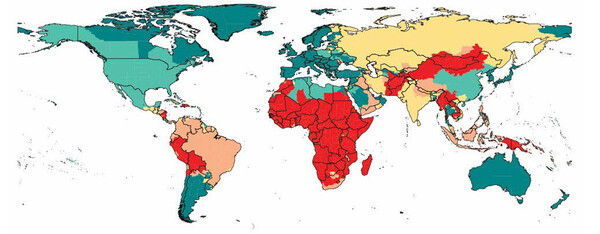
사하라 사막 이남의 아프리카, 중앙 아시아 및 남아메리카 일부는 가장 높은 수준의 물 위험에 직면해 있다. [출처(source) = 경제평화연구소(IEP)]
향후 전 세계에 미치는 영향(Future global implications)
기후변화는 남아시아와 남미의 빙하로 공급되는 생태계의 수자원에 스트레스를 줄 것이며, 해수면 상승은 세계에서 가장 비옥한 농업 지역, 특히 동남아시아의 염분을 증가시킬 수 있다.
중국과 인도의 날씨가 더 극심해지면 28억 명의 주민이 식량을 공급받기가 더 어려워질 것이다. 또한 9천100만 명 이상의 사람들이 메콩강 하류 유역과 나일강 삼각주에 생계를 의존하고 있어 상류의 댐 건설은 수자원 흐름에 심각한 영향을 미칠 것이다.
이러한 생태학적 위협의 글로벌 영향은 지역 경계를 넘어 확장된다. 한 지역의 식량 부족은 공급망의 상호 연결된 특성으로 인해 글로벌 식량 가격과 가용성에 영향을 미칠 수 있다.
기후변화가 심화됨에 따라 전 세계 이주 패턴에 상당한 변화가 일어나고, 원산지와 목적지 국가의 인구 통계와 경제가 재편될 수 있다. 농업을 위한 보다 효율적인 물과 토지 사용에 대한 적절한 투자는 생태 파괴의 최악의 영향을 극적으로 완화하고, 경제를 개선하고, 분쟁을 예방하고, 강제 이주를 줄일 수 있다.
[원문보기]
Water investment key to averting global conflict surge
Today marks the launch of the 5th edition of the Ecological Threat Report (ETR) from international think-tank, the Institute for Economics & Peace (IEP).
The report concludes that without concerted international action, accelerating ecological degradation will amplify social friction and conflicts worldwide. These challenges will be further exacerbated by climate change.
- Ecological risks are intensifying due to climate change, population growth, and conflict, with a strong correlation between ecological degradation, poverty and the incidence of conflict.
- 50 countries, currently home to 1.3 billion people, face high or very high levels of ecological threat. The population in these nations is projected to increase to almost 2 billion by 2050.
- The ETR identifies 27 ecological hotspots countries: where extreme ecological risks intersect with low societal resilience, leaving them vulnerable to instability, conflict and humanitarian crisis.
- Of the 27 hotspot countries, 19 are in sub-Saharan Africa and four are in the Middle East and North Africa. Many are currently experiencing conflict or civil unrest.
- Conflict prevention in agro-pastoralist communities is strongly linked to the strength of local governance structures, with community-based approaches proving more successful than external interventions.
- Sub-Saharan Africa has the lowest irrigation rates in the world, with only 1.8 per cent of cultivated land being irrigated. There is substantial opportunity to relieve ecological pressure through improved water collection and management.
- An annual investment of $15 billion in water capture and agricultural enhancement initiatives to 2050 could lift food production in sub-Saharan Africa by 50%.
The 2024 Ecological Threat Report covers 207 countries and highlights a growing global crisis as ecological threats, climate change, poor governance, population growth and conflict intersect.
The report identifies 50 countries, home to 1.3 billion people, facing high or very high levels of ecological threats. These countries, 82% of which are in Africa, are projected to see a 51% population increase by 2050.
Sub-Saharan Africa emerges as a particular area of concern. A recent severe El Nino-induced drought in the region has affected 68 million people, or 17% of the region's population.
The drought, which started in early 2024, has hit crop and livestock production, causing food shortages and damaging wider economies. Food prices are 25% higher than before the COVID-19 pandemic, further compounding access to food.
However, the region has the greatest potential globally to improve its food production capacity. For example, the average maize yield in Africa is just 1.9 tonnes per hectare, compared to the global average of 5.4 tonnes. Additionally, the region possesses 200 million hectares of untapped arable land.
By implementing micro-water capture techniques and adopting improved agricultural practices, sub-Saharan Africa could substantially enhance its ecological resilience and food security.
Steve Killelea, Founder & Executive Chairman of IEP, said: "The world is at a critical juncture where ecological threats are increasingly intertwined with conflict risks, poverty and debt. Our research shows that targeted investments in water capture and agricultural practices could dramatically improve food security, increase local resilience, lessen conflict and alleviate forced migration."
Ecological Hotspots
The ETR identifies 27 ecological hotspots: countries where high ecological risks intersect with low societal resilience. These hotspot countries face increased risks of instability, conflict, and humanitarian crises.
The geographical distribution of these hotspots is heavily skewed, with 19 located in sub-Saharan Africa, four in the Middle East and North Africa, and the remaining four spread across Asia and the Caribbean.
- Sub-Saharan Africa faces the most acute ecological threats, driven by high levels of food insecurity, water stress, and rapid population growth.
- South Asia recorded the second-highest overall ETR score, driven by its vulnerability to natural disasters, which are the highest of any region.
- Europe and North America are the only two regions where no subnational areas face high or very high levels of ecological threat.
Hotspot countries tend to cluster geographically, which can lead to regional instability as ecological and humanitarian crises will encompass multiple countries. Spillover effects include population displacement, new cross-border conflicts, and disruptions to transportation networks and supply chains.
The severity of the situation is underscored by the fact that many hotspot countries are currently experiencing armed conflicts or civil unrest, highlighting the interplay between ecological threats, low resilience, and heightened risk of violence.
Without addressing these challenges, the compounding effects of population growth, environmental degradation, and weak governance could lead to a cycle of increasing instability, particularly in regions already prone to conflict.
Governance & Water Management
Water risk is more closely tied to weak governance than water scarcity. For example, the UAE faces low water risk despite limited resources, while nearby Yemen struggles despite having more abundant water resources.
The report highlights that an annual investment of $15 billion in small-scale water capture and related initiatives could substantially mitigate ecological risks in sub-Saharan Africa, with the potential to triple crop yields in some areas. This is crucial, as the region needs to more than double its cereal production to meet its basic food needs over the next 25 years.
The ETR also identifies potential solutions, particularly in water management and agricultural practices, that could significantly improve food security and economic prospects in vulnerable regions.
Small-scale water capture projects like sand dams, rock runoff and dams in Africa show promising results, with a single $50,000 investment potentially irrigating up to 9 hectares and yielding a $180,000 return.
Sub-Saharan Africa has approximately 34.2 million hectares of land with untapped irrigation potential, which could be utilised using less than 6% of the region's renewable water resources.
Steve Killelea added: "It's crucial that governments and international organisations prioritise these interventions to build resilience and prevent future conflicts. Strengthening local governance and community-based conflict resolution mechanisms has proven more effective than external security interventions in mitigating tensions before they escalate into violence."
Climate change acts as a threat amplifier, exacerbating existing tensions in areas with a history of conflict, weak institutions, and low resilience. In areas prone to resource competition, climate-induced scarcity of water or arable land can escalate tensions between communities.
The impact is particularly pronounced in countries with weak institutions, where governments lack the capacity to effectively manage climate-related stresses or mediate resulting conflicts.
The rise of agro-pastoralist conflicts in the Sahel affects over 50 million people, demonstrating how ecological pressures can intensify existing ethnic and resource-based tensions. Transnational extremist groups have exploited these local grievances to mobilise fighters and escalate conflicts.
The Sahel region accounts for nearly 16% of Africa's total conflict deaths, despite comprising only 6.8% of the continent's population. Of particular concern is the encroachment of these groups into areas that were relatively peaceful, including the West African countries of Cote d'Ivoire, Benin, Togo and Nigeria.
Water and food security
Water risk is strongly correlated with weak governance and poor infrastructure, with sub-Saharan Africa using only 2% of its renewable water resources for agriculture, compared to an average across all global regions of 6.7%.
However, with appropriate investment the worst effects can be avoided. Only 1.8% of cultivated land in sub-Saharan Africa is irrigated, less than one-tenth of the global rate of 19%.
Additionally, advances in irrigation technology will make water use in agriculture more efficient, with irrigated land in low- and middle-income countries expected to increase by 34% by 2030, but total agricultural water usage expected to increase by only 14%.
Future global implications
Climate change is set to stress water resources in the glacier-fed ecosystems of South Asia and South America, while rising sea levels will increase salinity in some of the world's most fertile agricultural regions, particularly in Southeast Asia.
More extreme weather in China and India will make it harder to feed the 2.8 billion people who live there. Additionally, more than 91 million people depend on the lower Mekong River Basin and Nile deltas for their livelihoods, with upstream damming severely affecting water flows.
The global implications of these ecological threats extend beyond regional boundaries. Food shortage in one area can impact global food prices and availability due to the interconnected nature of supply chains.
As climate change intensifies, there will be significant shifts in global migration patterns, reshaping demographics and economies in both origin and destination countries. Adequate investment in more efficient water and land use for agriculture can dramatically mitigate the worst effects of ecological degradation, improve economies, prevent conflict, and reduce forced migration.
NOTES TO EDITORS
For more information and to download the Ecological Threat Report 2024, visit https://visionofhumanity.org and https://economicsandpeace.org. Video footage for broadcast and sound for radio is available by contacting Tim Johnston below.
About the Institute for Economics & Peace (IEP): IEP is an international and independent think tank dedicated to shifting the world's focus to peace as a positive, achievable, and tangible measure of human wellbeing and progress. It has offices in Sydney, Brussels, New York, The Hague, Mexico City and Nairobi.
[출처 = 경제평화연구소(IEP)(https://www.visionofhumanity.org/wp-content/uploads/2024/10/Ecological-Threat-Report-2024-PR-Embargoed-301024.pdf) / 2024년 10월 30일]
[보고서 원문 = 경제평화연구소(IEP)(https://www.visionofhumanity.org/wp-content/uploads/2024/10/ETR-2024-web.pdf?fbclid=IwY2xjawGUteVleHRuA2FlbQIxMAABHQJDCIIbKL2IjZdiacv8u2pQb6ErL9JtZchTG2hfdEnagbAXjNvy0u9Vsg_aem_jIvC-LmPbWQKzL_CfWAF8Q) / 2024년 10월 30일]
|  즐겨찾기 추가
 시작페이지로 설정
























