[미국] 콜로라도 볼더대 연구팀, 우주서 물정화 위한 공기 포집층 포함된 새로운 막 개발
스트라우브 교수 연구팀, 공기 포집층으로 100나노미터 크기의 작은 불순물 제거하는 막 개발
상용화 위한 연구 수행 중…시장 잠재성 높은 반도체용 초순수 분야에 적용 기대
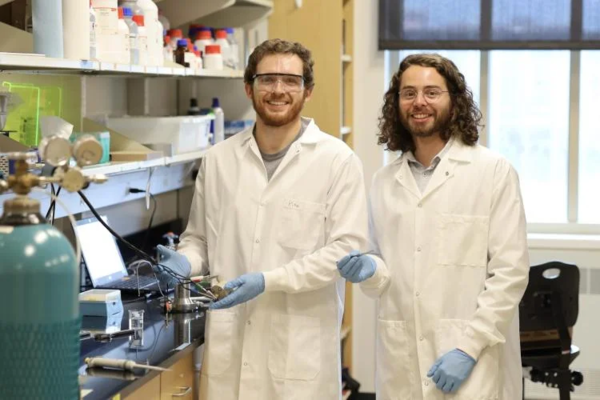
앤서니 스트라우브(Anthony Straub) 콜로라도 볼더 대학교(University of Colorado Boulder) 토목환경건축공학과 조교수는 막을 사용한 수처리 기술 개발에 집중하고 있다. [사진제공(Photo Source) = University of Colorado Boulder]
앤서니 스트라우브(Anthony Straub) 콜로라도 볼더 대학교(University of Colorado Boulder) 토목환경건축공학과 조교수는 막을 사용한 수처리 기술 개발에 집중하고 있다. 스트라우브 교수는 현재 개발 중인 나노기술 막 공정을 통해 산업과 인류를 위한 물정화 기술에서 큰 진전을 이루고 있으며, 신규 NASA 지원금을 통해 상용화로 가는 중요한 단계를 밟고 있다고 밝혔다.
스트라우브 교수는 "현재 널리 사용되고 있는 막 기술은 본질적으로 반세기 이전에 만들어졌다"며 "많은 응용 분야에서 잘 작동되고 있지만, 특정 불순물을 통과시키는 경향과 특정 화학 물질에 노출되면 분해된다는 문제점이 있다"고 설명했다.
미국 항공 우주국(NASA)은 스트라우브 교수와 키안 로페즈(Kian Lopez) 박사과정생에게 우주비행사가 미래의 달 기지에서 사용할 수 있는 시범 물정화 시스템을 개발하기 위한 '1단계 중소기업 혁신 연구상'을 수여했다.
현재 우주 물정화 시스템은 부피가 크고 수리가 잦다는 문제점이 있다. 스타우브 교수의 연구실에서 개발한 기술은 물을 가압하는 펌프만 있으며, 크기와 무게를 줄일 수 있다. 무게가 가벼운 것은 특히 달 탐사에서 중요한데, 화물 1kg당 수만 달러의 비용이 소요될 수 있기 때문이다.
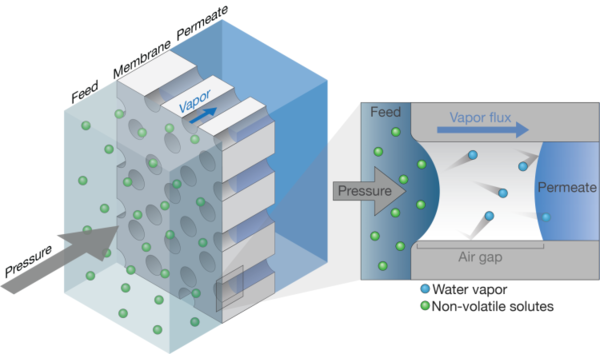
스타우브 교수는 "현재 막은 크기와 전하에 따라 불순물을 제거하므로, 작은 불순물이 막을 통과할 수 있다"며 " 우리가 설계한 막은 막 내부에 아주 얇은 공기 층을 가둬 물이 장벽을 통과할 수 있는 유일한 방법은 증발한 후 반대편에서 다시 응축되는 것으로, 불순물이 본질적으로 통과할 수 없다"고 설명했다.
전체 공정은 100나노미터 범위에서 이뤄지며, 이는 사람의 머리카락 너비의 160분의 1 크기다. 이 공정을 거친 물은 거의 수순 수준의 H2O며, 증기로 전환됐다가 다시 액체로 변하게 된다.
[그림 1] 막 공정 개요도
[자료제공(Picture Source) = University of Colorado Boulder]
이 새로운 막은 다양한 재료로 만들 수 있다. 또한 막 내 공기 포집층을 도입하는 데 성공했다 점에서 주목된다. 스트라우브 교수는 오랫동안 이 연구에 집중해 왔지만, 로페즈 박사과정생이 NASA 인턴십을 수료하지 않았다면 우주 응용 프로그램이나 상용화를 고려하지 않았을 것이라고 말했다.
로페즈 박사과정생은 "NASA의 멘토가 이 기술이 유망해 보이며, 우리가 미칠 수 있는 가장 큰 영향력은 회사를 설립하는 것"이라고 말했다.
스트라우브 교수와 로페즈 박사과정생은 콜로라도 볼더대학교 리즈 비즈니스 스쿨(CU Boulder Leeds Business School)에서 뉴 벤처 런치(New Venture Launch) 수업에 함께 참석해 뉴 벤처 챌린지(New Venture Challenge)와 랩 벤처 챌린지(Lab Venture Challenge)를 포함한 캠퍼스 기술 이전 이니셔티브에 참여했다. 올해 1월에 오스모퓨어 테크놀로지스(Osmopure Technologies, Inc.)를 설립했다.
우주는 하나의 응용 분야에 불과하다. 다른 가능성은 도시 상수도 시스템과 산업, 특히 초순수가 필요한 반도체나 컴퓨터 칩 제조 분야에 있다.
초순수는 미네랄, 입자, 박테리아, 미생물 및 용해된 가스가 없는 물을 의미한다. 이는 사람이 음용하기에 안전한 수준을 훨씬 넘어선다.
로페즈 박사과정생은 "현재 반도체 제조에서 요구하는 수준의 초순수를 생산하기 위해서는 14단계 공정을 거쳐야 한다. 최종 수질은 물 1밀리리터당 10나노미터 미만의 입자가 하나 이하로 포함돼 있어야 하는데, 이는 지구 전체에 단 한 명의 사람만 있는 것과 같은 밀도"라고 설명했다.
반도체 칩은 클린룸(Clean Room)에서 제조되며, 온도와 습도를 유지하고 칩의 에칭(Etching) 공정 중에 생성된 잔류물을 씻어내기 위해 초순수가 필요하다. 아주 작은 불순물도 칩을 손상시킬 수 있다.
스트라우브 교수는 "우리의 작업은 NASA에서 시작됐지만, 반도체용 초순수 시장을 목표로 두고있다"며 "이 시장은 엄청난 잠재력을 가졌으며, CU 벤처 파트너스에 임시 특허를 출원했다"고 말했다.
스트라우브 교수는 이번 보조금을 통해 앞으로 몇 달 안에 상당한 진전을 이룰 수 있을 것이라고 낙관하고 있다.
수트라우브 교수는 "4년이나 걸렸지만, 처음에는 효과가 있을지 몰랐다"며 "이론으로 시작해서 실험실로 가서 테스트했다. 제조는 실험실에서 여러 번 반복했다. 이제는 상용화하기 위해 노력하고 있으며, 안정적인 성능을 보이고 있다"고 말했다.
[원문보기]
Using nanoscale membranes to clean water on the Moon
Anthony Straub is making major advances in water purification technology for industry and human consumption on Earth and in space, with his work on a nanotechnology membrane process taking a major step toward commercialization, thanks to a new NASA grant.
An assistant professor in the Department of Civil, Environmental and Architectural Engineering at the University of Colorado Boulder, Straub’s research focuses on using membranes to improve water treatment.
“The membrane technology that is widely used now is essentially half a century old, and it has well-known limitations,” Straub said. “ It works well for many applications, but it has a tendency to let certain impurities through and it degrades if exposed to certain harsh chemicals.”
NASA has awarded Straub and one of his PhD students, Kian Lopez, a phase one Small Business Innovation Research award to develop a pilot water purification system for astronauts to use on a future Moon base.
Current space water purification systems are bulky and prone to repairs. The technology Straub’s lab has developed only requires a pump to pressurize water, reducing size and weight. Low weight is especially important in moon missions, where every kilogram of cargo can cost tens of thousands of dollars.
“Current membranes remove impurities based on size and charge and, as a result, allow for small impurities to bypass the membrane,” Straub said. “What we’ve designed traps a very small layer of air inside a membrane and the only way for the water to cross the barrier is by evaporating and then re-condensing on the other side, which impurities inherently cannot do.”
The entire process occurs over a 100 nanometer span, a distance 160 times smaller than the width of a human hair, and the water that results is nearly pure H2O – distillation quality — since it has been turned to steam and then back to liquid.
These new membranes can be made from a wide variety of materials; the advance is in modifying them to create the air trapping layer. Although the work has been a longtime focus of Straub, he had not considered space applications or commercialization until Lopez returned from an internship at NASA.
“My mentor at NASA said this technology looks promising and the biggest impact we could have would be to start our own company,” Lopez said.
Straub and Lopez decided to attend the New Venture Launch class together in the CU Boulder Leeds Business School, participating in campus technology transfer initiatives, including the New Venture Challenge and Lab Venture Challenge. They founded Osmopure Technologies, Inc. in January of this year.
Space is but one application. Other potential is in municipal water systems and industry, particularly semiconductor or computer chip manufacturing, which requires ultrapure water.
Although ultrapure sounds like a marketing buzzword, it has a formal definition: water free of all minerals, particles, bacteria, microbes, and dissolved gasses. The needs go far beyond water that is safe for human consumption.
“The minimum for ultrapure water in chip manufacturing is a 14-step process right now. The final product must contain less than one 10-nanometer particle per milliliter of water, which would be the density equivalent of having only a single person on the entire planet Earth,” Lopez said.
Semiconductor chips are manufactured in clean rooms, and ultrapure water is necessary to maintain temperature and humidity as well as to wash away residue produced during chip etching. Even the tiniest water impurities can damage the chips.
“Our work starts with NASA, but the beachhead market here on Earth is in ultrapure water production for semiconductors,” Straub said. “This is a huge potential market, and we have filed a provisional patents with CU Venture Partners.”
Straub is optimistic the grant will enable them to make significant progress in the coming months.
“This has been a four-year process, and at the beginning we didn’t know if it would work,” Straub said. “We started with theory and then went into the lab to test. The fabrication has gone through several iterations here in the CU labs. Now we are moving towards a commercial product, and the performance is impressive.”
[출처 = 콜로라도 볼더 대학교(University of Colorado Boulder)(https://www.colorado.edu/engineering/2024/10/16/using-nanoscale-membranes-clean-water-moon) / 2024년 10월 16일]
|  즐겨찾기 추가
 시작페이지로 설정
























