[캐나다] 브리티시 컬럼비아대, 미세 및 나노 플라스틱 신속하게 감지하는 새로운 장치 개발
형광 라벨 사용해 50나노미터에서 10마이크론의 작은 플라스틱 입자 감지…몇 분 내 검사 결과 제공
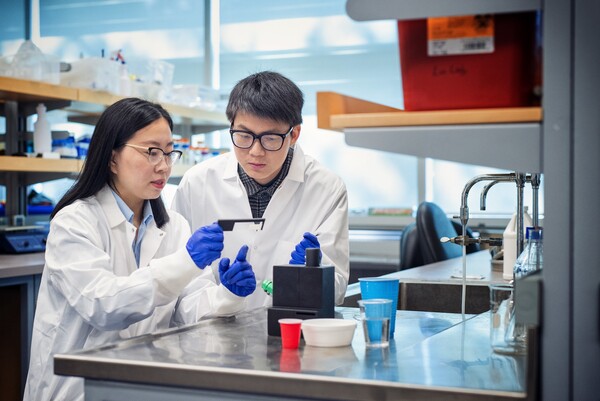
브리티쉬 콜럼비아 대학교(UBC) 연구팀은 일회용 컵과 물병과 같은 일상적인 물건에서 방출되는 플라스틱을 정확하게 측정하는 저비용의 휴대성이 높은 장치를 개발했다. [사진제공(Photo Source) = Martin Dee]
캐나다 브리티시 콜럼비아 대학교(UBC) 연구팀은 일회용 컵과 물병과 같은 일상적인 물건에서 방출되는 플라스틱을 정확하게 측정하는 저비용의 휴대성이 높은 장치를 개발했다고 밝혔다.
이 장치는 앱과 연결돼 있으며, 형광 라벨을 사용해 육안으로 감지할 수 없을 정도로 작은 50나노미터에서 10마이크론 크기의 플라스틱 입자를 감지하고 몇 분 안에 결과를 제공한다.
이 장치를 개발한 천서양(Tianxi Yang) UBC의 토지 및 식품 시스템 학부의 조교수는 "큰 크기의 플라스틱 조각이 미세 플라스틱과 나노 플라스틱으로 분해되면 식품 시스템, 생태계, 인간 건강에 심각한 위협이 될 수 있다"며 "이 새로운 기술은 플라스틱을 저비용으로 신속하게 감지해 건강과 생태계를 보호하는 데 도움이 된다"고 말했다.
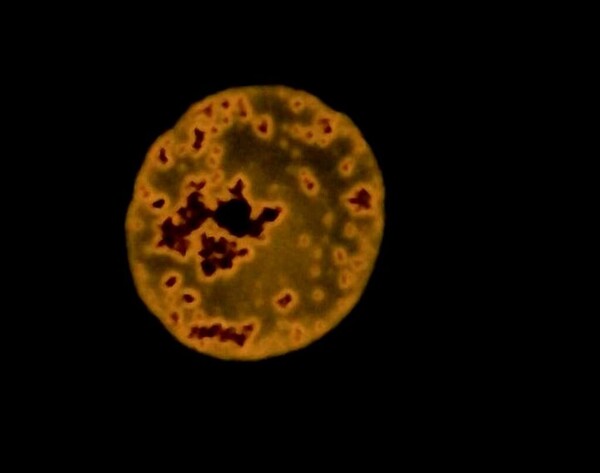
현미경으로 본 미세 및 나노 플라스틱 입자. [사진제공(Photo Source) = Peter Yang]
나노 및 마이크로 플라스틱은 도시락, 컵, 식기와 같은 플라스틱 재료가 분해되면서 생성되는 부산물이다. 나노 플라스틱은 표면적이 넓은 매우 작은 입자로, 독소를 흡수하고 인체 내 생물학적 장벽을 침투하는 능력이 증가해 특히 인간 건강에 문제가 된다.
이러한 플라스틱을 감지하려면 일반적으로 숙련된 인력과 고가의 장비가 필요하다. 천서양 교수는 더 빠르고 쉬우면서 안정적으로 감지하는 장치를 만들기 위해 노력했다.
연구팀은 무선 디지털 현미경, 녹색 LED 조명, 여광 필터(Excitation Filter)가 들어 있는 생분해성의 작은 3D 프린팅 상자를 만들었다. 플라스틱을 측정하기 위해 기계 학습 알고리즘을 사용해 MATLAB 소프트웨어를 사용자 정의하고 이미지 캡처 소프트웨어와 결합했다.
그 결과, 샘플 내 프라스틱 입자의 수를 나타내는 스마트폰이나 기타 모바일 기기와 함께 작동하는 휴대용 장치를 개발했다. 이 장치는 물 한 방울보다 작은 소량의 액체 샘플만으로 작동하며, 플라스틱 입자를 측정하기 위해 현미경의 녹색 LED 빛 아래에서 플라스틱 입자를 발광시켜 시각화한다.
연구를 위해 천서양 교수팀은 일회용 폴리스티렌 컵을 테스트했다. 컵에 증류수 50mL를 채우고 30분 동안 식혔다. 테스트 결과에 따르면, 컵에서 수억 개의 나노 크기의 플라스틱 입자가 방출됐으며, 이는 인간 머리카락의 100분의 1에 불과할 정도로 작은 크기다.
이번 연구의 공동저자인 하오밍양(Haoming (Peter) Yang) UBC의 토지 및 식품 시스템 학부의 석사 과정생은 "상자 속 현미경이 형광 이미지를 캡처하면 앱이 이미지의 픽셀 영역을 플라스틱 수와 일치시킨다"며 "판독 결과는 플라스틱의 존재 여부와 양을 표시한다. 각 테스트 비용은 1.5센트에 불과하다"고 말했다.
이 장치는 현재 폴리스티렌을 측정하기 위해 보정돼 있지만, 기계 학습 알고리즘을 조정해 폴리에틸렌이나 폴리프로필렌과 같은 다양한 유형의 플라스틱을 측정할 수 있다. 다음으로, 연구팀은 이 장치를 상용화해 다른 실제 응용 분야의 플라스틱 입자를 분석하는 것을 목표로 한다.
음료, 음식, 심지어 공기 중에 떠 있는 플라스틱 입자에서 플라스틱을 섭취하는 것의 장기적인 영향은 아직 연구 중이지만 충분히 우려할 만하다.
천서양 교수는 "플라스틱 섭취를 줄이려면 식품 용기에 유리나 스테인리스 스틸과 같은 대체 제품을 선택해 석유 기반 플라스틱 제품을 피하는 것이 중요하다"며 "생분해성 포장재의 개발은 기존 플라스틱을 대체하고 보다 지속 가능한 세상으로 나아가는 데에도 중요하다"고 말했다.
[원문보기]
How much microplastic are you drinking? New UBC tool can tell you in minutes
The tool uses fluorescent labeling to detect plastic particles ranging from 50 nanometres to 10 microns in size and delivers results in minutes.
Micro- and nanoplastics are in our food, water and the air we breathe. They are showing up in our bodies, from testicles to brain matter.
Now, UBC researchers have developed a low-cost, portable tool to accurately measure plastic released from everyday sources like disposable cups and water bottles.
The device, paired with an app, uses fluorescent labeling to detect plastic particles ranging from 50 nanometres to 10 microns in size – too small to be detected by the naked eye – and delivers results in minutes.
The method and findings are detailed in ACS Sensors.
“The breakdown of larger plastic pieces into microplastics and nanoplastics presents significant threats to food systems, ecosystems, and human health,” said Dr. Tianxi Yang, an assistant professor in the faculty of land and food systems, who developed the tool. “This new technique allows quick, cheap detection of these plastics, which could help protect our health and ecosystems.”
Nano and microplastics are byproducts of degrading plastic materials such as lunchboxes, cups and utensils. As very small particles with a large surface area, nanoplastics are particularly concerning to human health due to their increased ability to absorb toxins and penetrate biological barriers within the human body.
Detecting these plastics typically requires skilled personnel and expensive equipment. Dr. Yang’s team wanted to make detection faster, more accessible and more reliable.
They created a small, biodegradable, 3D-printed box containing a wireless digital microscope, green LED light and an excitation filter. To measure the plastics, they customized MATLAB software with machine-learning algorithms and combined it with image capture software.
The result is a portable tool that works with a smartphone or other mobile device to reveal the number of plastic particles in a sample. The tool only needs a tiny liquid sample – less than a drop of water – and makes the plastic particles glow under the green LED light in the microscope to visualize and measure them. The results are easy to understand, whether by a technician in a food processing lab or just someone curious about their morning cup of coffee.
For the study, Dr. Yang’s team tested disposable polystyrene cups. They filled the cups with 50 mL of distilled, boiling water and let it cool for 30 minutes. The results showed that the cups released hundreds of millions of nano-sized plastic particles, roughly one-hundredth the width of a human hair and smaller.
“Once the microscope in the box captures the fluorescent image, the app matches the image’s pixel area with the number of plastics,” said co-author Haoming (Peter) Yang, a master’s student in the faculty of land and food systems. “The readout shows if plastics are present and how much. Each test costs only 1.5 cents.”
The tool is currently calibrated to measure polystyrene, but the machine-learning algorithm could be tweaked to measure different types of plastics like polyethylene or polypropylene. Next, the researchers aim to commercialize the device to analyze plastic particles for other real-world applications.
The long-term impacts of ingesting plastic from beverages, food, and even from airborne plastic particles are still being studied but show cause for concern.
“To reduce plastic ingestion, it is important to consider avoiding petroleum-based plastic products by opting for alternatives like glass or stainless steel for food containers. The development of biodegradable packaging materials is also important for replacing traditional plastics and moving towards a more sustainable world,” said Dr. Yang.
[출처 = 브리티시 콜럼비아 대학교(The University of British Columbia)(https://news.ubc.ca/2024/08/new-ubc-tool-detects-microplastics/) / 2024년 8월 27일]
|  즐겨찾기 추가
 시작페이지로 설정
























