[UN 보고서] “전 세계 절반의 국가들이 담수 시스템 악화시켰다”
UN-Water·UNEP, “지표수 손실로 강 흐름 크게 감소…수역 오염 심화” 보고서서 밝혀
건강한 담수자원이 빠르게 고갈…식량안보·기후변화·생물다양성 전망 매우 어두워
아프리카 및 중앙·동남아시아에 있는 90개국이 하나 이상의 담수 생태계 악화 경험
사회·경제의 지속가능한 물사용에 대한 경쟁적 요구 균형 맞추려면 2030년까지 모든 국경을 넘나드는 통합수자원관리(IWRM) 구현 필요
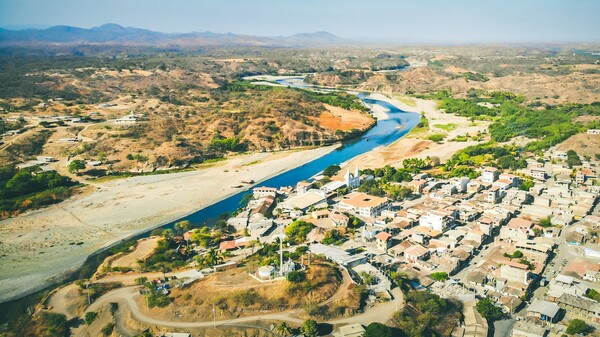
유엔-워터(UN-Water)와 유엔환경계획(UNEP)이 8월 28일 발표한 담수에 대한 진행 상황을 추적하는 세 가지 보고서의 결과에는 전 세계 절반의 국가에서 강, 호수 및 대수층을 포함하여 한 가지 이상의 담수 생태계가 악화되고 있는 것으로 나타났다. [사진출처(Photo source) = 유엔환경계획(UNEP)]
전 세계 절반의 국가에서 강, 호수 및 대수층을 포함하여 한 가지 이상의 담수 생태계가 악화되고 있는 것으로 나타났다. 강의 흐름이 크게 감소했고, 지표수가 줄어들거나 손실되고 있고, 주변 수역의 오염이 심화되고 있는 등 수자원 관리가 제대로 이루어지지 않은 것으로 조사됐다. 이것은 유엔-워터(UN-Water)와 유엔환경계획(UNEP)이 8월 28일 발표한 담수에 대한 진행 상황을 추적하는 세 가지 보고서의 결과 중 일부이다.
유엔-워터와 UNEP가 3년마다 발행하는 이 보고서는 담수원의 보호와 복원을 통해 유엔 지속가능발전목표6(SDG6)인 ‘모두를 위한 깨끗한 물과 위생(clean water and sanitation for all)’ 목표를 달성하기 위한 진전에 초점을 맞추고 있다.
이 보고서는 그 어느 때보다 많은 데이터를 바탕으로, 유엔 전체 차원의 물과 위생 전략과 그에 수반되는 다가오는 공동 실행 계획을 통해 도전에 대처하는 회원국들에 대한 지원을 확대할 것을 거듭 촉구하고 있다.
UNEP의 생태계 부서장인 다이애나 코판스키(Dianna Kopansky)는 “우리의 푸른 지구는 건강한 담수와 자원이 빠르게 고갈되고 있으며, 식량안보·기후변화·생물다양성에 대한 전망이 매우 어둡다”고 말했다.
코판스키 부서장은 특히 “이 중요한 시점에서, 지속가능한 물관리를 위한 세계 정치적 약속이 지난 2월에 열린 유엔 환경총회(UN Environment Assembly)에서 물 결의안을 통과시키는 것을 포함하여 그 어느 때보다 높았지만, 그것들은 요구되는 재정이나 행동에 의해 일치되지 않고 있다”면서 “다른 지역에 맞춘 보호와 복구 정책들은 더 이상의 손실을 멈추고 있으며, 악화를 되돌리는 것이 손에 닿아 있다는 것을 보여준다. 우리는 그것들이 절대적으로 더 필요하다”고 역설했다.
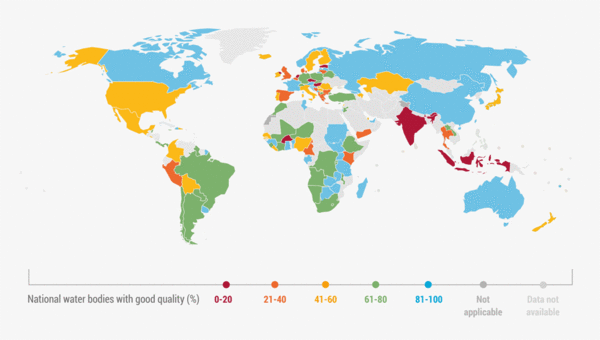
120 개국의 국가 SDG 지표 6.3.2의 지도는 주변 수질이 좋은 수역의 비율을 보여준다. [그림출처(picture source) = 유엔환경계획(UNEP)]
광범위한 퇴보
이 보고서에 따르면, 대부분 아프리카, 중앙아시아 및 동남아시아에 있는 90개국이 하나 이상의 담수 생태계의 악화를 경험하고 있는 것으로 나타났으며, 오세아니아와 같은 다른 지역은 개선을 기록하고 있다. 오염, 댐, 토지 전환, 과도한 추상화 및 기후변화는 담수 생태계의 악화에 기여하고 있다.
기후변화와 토지 사용에 의해 영향을 받아, 강의 흐름은 전세계적으로 402개의 유역에서 감소해 왔는데, 이것은 2000년 이후 5배 증가한 수치이다. 강물 흐름이 증가하는 유역은 훨씬 적다.
양식업 및 농업 등 인간의 활동으로 인한 맹그로브(mangroves)의 손실은 물 여과 및 탄소 격리 특성으로 인해 해안 지역사회, 담수자원, 생물다양성 및 기후에 위험을 초래했다. 지난 10년 동안 산림 전용의 전체 순 비율은 평준화되었지만 동남 아시아에서 맹그로브의 상당한 감소가 보고되었다.
전 세계 364개 유역에서 호수와 기타 표면 수역이 줄어들거나 완전히 사라지고 있다. 많은 대형 호수에서 입자와 영양소 수치가 계속 높으면 주로 토지 개간 및 도시화, 특정 기상현상으로 인해 조류 개화와 저산소 수역이 발생할 수 있다.
그럼에도 불구하고 저수지 건설은 북미, 유럽, 아시아와 같은 지역에서 주로 영구 수역의 글로벌 순이득에 기여하고 있다.
낮은 수준의 수질 모니터링
세계에서 가장 가난한 절반은 전 세계 수질 데이터 포인트의 3% 미만을 기여하는데, 여기에는 약 25만개의 호수 수질 측정치 중 4천500개만 포함된다. 이는 모니터링 용량을 개선해야 할 시급한 필요성을 보여준다.
이 규모의 데이터가 부족하다는 것은 2030년까지 인류의 절반 이상이 가뭄, 홍수, 하·폐수 유출물의 영향 및 농업 유출수에 대한 관리 결정을 알리는 데 필요한 수질 데이터가 부족한 국가에서 살게 된다는 것을 의미한다.
좋은 데이터가 있는 경우, 2017년 이후로 담수 수질이 저하되고 있음을 보여준다. 데이터가 부족한 경우 징후는 희망적이지 않다.
보고서 작성자는 정부에서 자금을 지원하는 일상적인 모니터링 프로그램을 확대 및 개발하고, 이러한 국가 프로그램에 시민 과학을 통합하고, 위성 기반 지구 관측 및 모델링 데이터 제품의 잠재력을 탐구하여 데이터 격차를 메우는 것을 권장하고 있다.
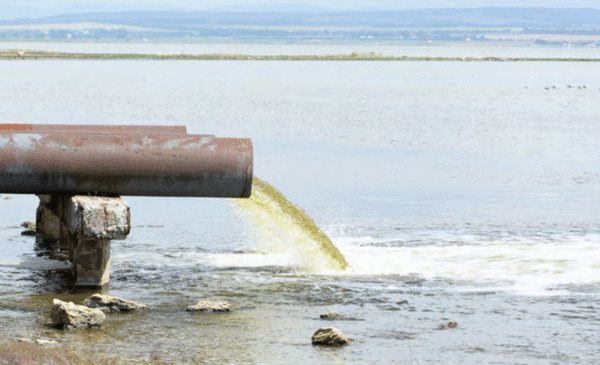
유엔-워터(UN-Water)와 유엔환경계획(UNEP)은 2030년까지 인류의 절반 이상이 가뭄, 홍수, 하·폐수 유출물의 영향 및 농업 유출수에 대한 관리 결정을 알리는 데 필요한 수질 데이터가 부족한 국가에서 살게 될 것이라고 경고했다. [사진출처(Photo source) = 유엔환경계획(UNEP)]
100개국 이상에서 수자원 관리에 대한 진전이 부족
사회와 경제의 지속가능한 물 사용에 대한 경쟁적 요구의 균형을 맞추려면 2030년까지 모든 부문, 모든 수준에서 국경을 넘나드는 통합수자원관리(Integrated Water Resources Management, IWRM)를 구현해야 한다.
47개국이 IWRM에 완전히 도달했거나 거의 도달했고, 63개국이 구현을 가속화해야 하며, 73개국은 IWRM에 대한 역량이 제한적이다. 보고된 현재 진행 속도로는 세계가 지속가능한 수자원 관리를 달성할 수 있는 시점은 2049년이다.
즉, 2030년까지 100개국 이상에서 최소 33억 명의 사람들이 경쟁적 수자원 수요를 균형 있게 조절할 수 있는 효과적인 거버넌스 프레임워크(governance frameworks)를 갖지 못할 가능성이 크다.
해결책에는 수익증대 및 비용회수 조치를 통한 자금조달, 인프라 및 관리에 대한 투자, 조정된 조치, 더 큰 제도적 역량 및 더 나은 모니터링 네트워크가 포함된다.
UN 환경계획(UNEP)
UNEP(유엔환경계획)는 환경에 대한 선도적인 세계적인 목소리이다. 그것은 영감을 주고, 알리고, 환경을 돌보는 데 있어 리더십을 제공하고, 파트너십을 장려한다. 미래 세대의 삶의 질을 손상시키지 않고 국가와 국민이 삶의 질을 향상시킬 수 있도록 한다.
유엔-워터(UN-WATER)
유엔-워터(UN-WATER)는 물과 위생에 관한 UN의 업무를 조정한다. 물과 위생 문제를 다루는 유엔 회원국들과 국제기구들로 구성되어 있다. UN-Water의 역할은 회원국과 파트너들이 물과 관련된 문제들에 대응하여 ‘하나로서 전달’할 수 있도록 보장하는 것이다.
[원문보기]
Half the world’s countries have degraded freshwater systems, UN finds
Nairobi, 28 August 2024 - In half the world’s countries one or more types of freshwater ecosystems are degraded, including rivers, lakes and aquifers. River flow has significantly decreased, surface water bodies are shrinking or being lost, ambient water is growing more polluted, and water management is off-track. These are some of the findings of three reports tracking progress on freshwater, published today by UN-Water and the UN Environment Programme (UNEP).
The triennial series of reports is focused on progress towards achieving the goal of “clean water and sanitation for all” (SDG 6) through protecting and restoring freshwater sources. Based on greater data sets than ever before, the reports reiterate the call to scale up support for Member States in tackling challenges through the UN System-wide strategy for water and sanitation and the accompanying upcoming Collaborative Implementation Plan.
“Our blue planet is being rapidly deprived of healthy freshwater bodies and resources, with dire prospects for food security, climate change and biodiversity,” said Dianna Kopansky, Head of the Freshwater and Wetlands Unit, Ecosystems Division at UNEP.
“At this critical point, global political commitments for sustainable water management have never been higher, including through the passing of a water resolution at the last UN Environment Assembly in February, but they are not being matched by required finance or action. Protection and restoration policies, tailored for different regions, are halting further loss and show that reversing degradation is within reach. We absolutely need more of them.”
Widespread degradation
A reported 90 countries, most in Africa, Central- and Southeast Asia, are experiencing the degradation of one or more freshwater ecosystems. Other regions, such as Oceania, mark improvements. Pollution, dams, land conversion, over-abstraction and climate change contribute to degradation of freshwater ecosystems.
Influenced by climate change and land use, river flow has decreased in 402 basins worldwide - a fivefold increase since 2000. A much smaller number is gaining in river flow.
Loss of mangroves due to human activities (e.g., aquaculture and agriculture) poses a risk to coastal communities, freshwater resources, biodiversity, and climate due to their water filtration and carbon sequestering properties. Significant decreases of mangroves were reported in Southeast Asia, though the overall net rate of deforestation has leveled off in the last decade.
Lakes and other surface water bodies are shrinking or being lost entirely in 364 basins worldwide. A continued high level of particles and nutrients in many large lakes can lead to algal blooms and low-oxygen waters, primarily caused by land clearance and urbanization, and certain weather events.
Nevertheless, the construction of reservoirs contributes to a global net-gain in permanent water, mainly in regions like North America, Europe, and Asia.
Low levels of water quality monitoring
The poorest half of the world contributes under 3 per cent of global water quality data points, including only 4,500 lake quality measurements out of almost 250,000. This reveals an urgent need to improve monitoring capacity.
Lack of data on this scale means that by 2030 over half of humanity will live in countries that have inadequate water quality data to inform management decisions related to address drought, floods, impacts from wastewater effluents and agricultural runoff.
Where good data are available, it shows that freshwater quality has been degrading since 2017. Where data are lacking, the signs are not promising.
Report authors recommend the expansion and development of routine government-funded monitoring programmes, as well as incorporating citizen science into such national programmes, and exploring the potential of satellite-based Earth observation and modelled data products to help fill the data gap.
Inadequate progress on water resources management in over 100 countries
Balancing competing needs for sustainable water use from society and the economy requires the implementation of integrated water resources management (IWRM) across sectors, at all levels and across borders by 2030.
47 countries have fully reached or almost reached IWRM, 63 countries need to accelerate implementation, while 73 countries have only limited capacity for IWRM. At the current rate of reported progress, the world will only achieve sustainable water management by 2049. This means that by 2030 at least 3.3 billion people in over 100 countries are likely to have ineffective governance frameworks to balance competing water demands.
Solutions include unlocking finance through revenue raising and cost recovery arrangements, investments in infrastructure and management, as well as coordinated action, greater institutional capacity and better monitoring networks.
About the UN Environment Programme (UNEP)
UNEP is the leading global voice on the environment. It provides leadership and encourages partnership in caring for the environment by inspiring, informing and enabling nations and peoples to improve their quality of life without compromising that of future generations.
About UN-Water
UN-Water coordinates the UN’s work on water and sanitation. It is comprised of UN Members States and international organizations working on water and sanitation issues. UN-Water’s role is to ensure that Members and Partners ‘deliver as one’ in response to water-related challenges.
[출처 = UN환경계획(UNEP)(https://www.unep.org/news-and-stories/press-release/half-worlds-countries-have-degraded-freshwater-systems-un-finds) / 2024년 8월 28일]
[보고서 출처 = UN환경계획(UNEP)(https://www.unep.org/resources/report/mid-term-status-sdg-6-indicators-632-651-661-2024) / 2024년 8월 27일]
|  즐겨찾기 추가
 시작페이지로 설정
























