[미국] “2023년, 전 세계 수자원 폭력의 기록적인 해였다”
수계 공격 등 전쟁무기로서의 물사용, 지난 10년 동안 가파른 증가 추세 이어가
2023년 사건수 347건으로 최대…2022년 231건보다 150%에 달해
물 접근·통제 둘러싼 분쟁으로 인한 폭력 39%…물이 전쟁무기로 사용된 경우 11% 차지
글로벌 물 싱크탱크 ‘태평양연구소’, 2023년 ‘물 갈등 연대기(The Water Conflict Chronology)’ 주요 업데이트 자료 발표
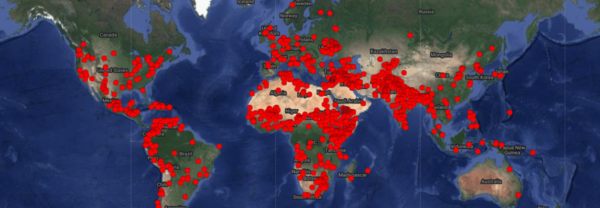
글로벌 물 싱크탱크인 태평양연구소(Pacific Institute)는 물 관련 폭력에 대한 세계에서 가장 포괄적인 오픈소스 데이터베이스인 ‘물 갈등 연대기(The Water Conflict Chronology)’대한 주요 업데이트 자료를 8월 22일 발표했다. 이 자료에 따르면, 수자원에 대한 폭력은 2023년에 극적으로 증가했으며, 지난 10년 동안 이러한 사건이 가파른 증가 추세를 이어가고 있는 것으로 나타났다. [사진출처(Photo source) = 태평양연구소(Pacific Institute)]
수자원에 대한 폭력은 2023년에 극적으로 증가했으며, 지난 10년 동안 이러한 사건이 가파른 증가 추세를 이어가고 있는 것으로 나타났다. 특히, 이러한 사건에는 △수계에 대한 공격 △물의 통제 및 접근에 대한 불안과 분쟁 △전쟁 무기로서의 물 사용 등이 포함된다.
물에 대한 폭력은 최근 몇 년 동안 사건 수가 급격히 증가했는데, 2023년에는 347건으로 2022년에 기록된 사건 수(231건)의 150%에 달했다. 2000년에는 이러한 사건이 22건만 기록되었다.
글로벌 물 싱크탱크인 태평양 개발 환경안보 연구소(Pacific Institute, 이하 ‘태평양연구소’)는 물 관련 폭력에 대한 세계에서 가장 포괄적인 오픈소스 데이터베이스인 ‘물 갈등 연대기(The Water Conflict Chronology)’ 대한 주요 업데이트 자료를 8월 22일 발표했다.
이 업데이트 자료에 따르면, 수자원 및 수계와 관련된 폭력적 갈등이 300건 이상의 새로운 사례가 기록에 추가되었다. 사건은 뉴스 보도, 목격자 진술 및 기타 갈등 데이터베이스에서 식별되었다. 새로운 항목에는 2023년 말까지의 모든 물 관련 폭력 사건이 포함된다.
업데이트된 데이터와 분석은 8월 25일∼29일 스웨덴 스톡홀룸에서 열리는 세계에서 가장 큰 국제 물 컨퍼런스인 ‘스톡홀름 세계 물주간(Stockholm’s World Water Week)’에 앞서 공개되었다. 물주간의 2024년 주제는 ‘국경을 잇는 것 : 평화롭고 지속가능한 미래 위한 물(Bridging Borders : Water for a Peaceful and Sustainable Future)’이다.
태평양연구소의 수석연구원이자 공동 창립자인 피터 글릭(Peter Gleick) 박사는 “수자원에 대한 폭력의 상당한 증가는 희소한 수자원에 대한 통제와 접근성, 현대사회에서 물의 중요성, 인구 증가와 극심한 기후변화로 인한 물 압박이 증가하고 있다”라면서 “특히 중동과 우크라이나에서 전쟁과 폭력이 널리 퍼져 있는 물 시스템에 대한 지속적인 공격을 반영한다”고 역설했다.
또한 태평양연구소의 모건 시마부쿠(Morgan Shimabuku) 수석원은 “이러한 사건의 급격한 증가는 안전하고 충분한 물에 대한 공평한 접근성을 보장하기 위한 조치가 너무 적다는 것을 나타내며 전쟁과 폭력이 민간인과 필수적인 물 인프라에 미치는 파괴를 강조한다”라고 말했다.
[그림 1] 2000∼2023년 물 분쟁 사건의 수
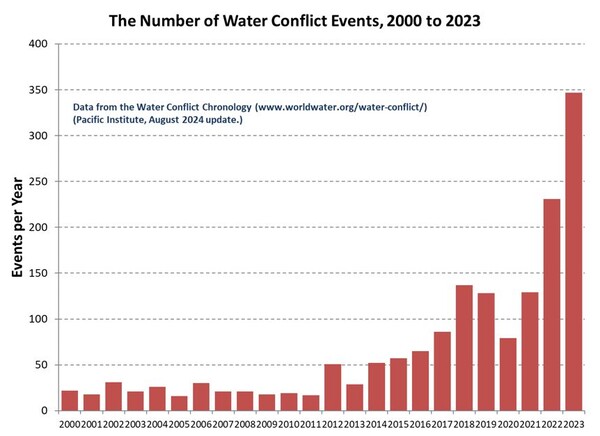
2000년에서 2023년 사이 연대기의 사건 수를 보면, 지난 10년 동안 극적인 상승을 볼 수 있다. [그래픽 출처(graphic source) = 태평양연구소(Pacific Institute)]
시마부쿠 수석원은 이어 “최근 업데이트된 데이터와 분석은 기후변화가 전 세계 갈등 지역에서 깨끗한 물에 대한 접근성을 덜 신뢰할 수 있게 만들어 이미 취약한 정치 상황에 더 큰 위험을 가중시키고 있다는 것을 보여준다”고 덧붙였다.
지역 분석
2023년 전 세계 모든 주요 지역에서 물 갈등이 보고되었다. 중동(보고서 및 데이터베이스에서 서아시아로 코딩됨), 남아시아, 사하라 이남 아프리카의 물 관련 폭력이 최근 몇 년의 추세와 일치하여 계속해서 데이터베이스를 지배하고 있는 것으로 나타났다.
2023년에는 세 가지 갈등 항목(발화기, 사상자, 무기) 모두에서 증가했는데, 물과 수도인프라에 대한 공격이 사건의 절반을 차지했고, 물의 접근 및 통제를 둘러싼 분쟁으로 인한 폭력은 39%, 물이 전쟁 무기로 사용된 경우가 11%를 차지했다.
2023년 아프리카의 농부와 목축업자, 도시와 농촌지역의 물 사용자, 종교단체, 종족간의 국가 간 갈등(사건의 62%)은 두 개 이상의 국가가 관련된 국경 간 사건(사건의 38%)보다 여전히 훨씬 많았다. 새로운 분석은 2023년에 특별히 우려되는 여러 지역을 나타낸다. 태평양연구소의 팩트시트(fact sheet)에는 2023년에 발생한 사건의 선택된 사례가 포함되어 있다.
이용 가능한 정책 및 실무 솔루션
태평양연구소의 업무는 물 갈등에 대한 데이터를 수집하고 공유하는 것 외에도 물 관련 폭력의 위험을 줄이기 위한 전략을 식별하고 이해하는 데 중점을 두고 있다. 물 관련 갈등의 증가에는 다양한 동인과 원인이 있으므로 물 회복력을 구축하고 근본 원인을 해결하는 다양한 접근 방식과 전략이 필요하다.
가뭄과 기후변화가 물 문제로 인한 긴장에 기여하는 지역에서는 이해 관계자간에 물을 보다 공평하게 분배하고 공유하기 위한 정책을 제정할 수 있으며, 기술을 통해 이용 가능한 물을 보다 효율적으로 사용할 수 있다.
물 공유 및 물의 공동관리에 대한 협정은 티그리스 / 유프라테스 강(Tigris / Euphrates rivers), 헬만드 강(Helmand River) 및 기타 지역을 따라 발생하는 것과 같은 국경간 갈등을 해결하기 위해 협상될 수 있다.
특히, 댐·송수관·정수처리 시설과 같은 민간 인프라를 보호하는 국제 전쟁법(international laws)이 시행되면 물에 대한 기본적인 인권을 보호하는 필수적인 보호법이 될 수 있다. 사이버 보안 관행을 개선하면 지역 사회의 물 접근을 무기화하려는 사이버 공격의 위협을 줄일 수 있다.
“물 관련 폭력의 위협을 줄이기 위해 노력하는 것이 시급하다. 이를 위한 가장 좋은 방법은 모든 사람에게 안전한 물과 위생을 보장하는 보다 탄력적이고 효과적인 물 정책으로 전환하고, 공유 수자원에 대한 국제 협정과 법률을 강화하고 시행하며, 기후변화로 인해 악화된 극심한 가뭄과 홍수로 인한 증가하는 위협을 해결하는 것”이라면서 “해결책은 있지만 지금까지는 충분히 적용되지 않았다”고 피터 글릭(Peter Gleick) 박사는 말했다.
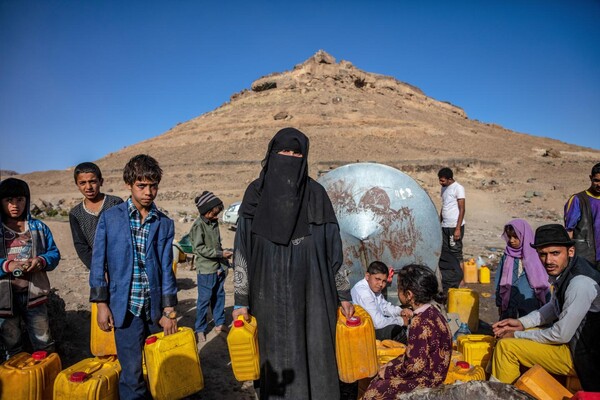
2023년 전 세계 모든 주요 지역에서 물 갈등이 보고되었다. 중동, 남아시아, 사하라 이남 아프리카의 물 관련 폭력이 최근 몇 년의 추세와 일치하여 계속해서 데이터베이스를 지배하고 있는 것으로 나타났다. [사진출처(Photo source) = 유엔개발계획(UNDP)]
배경 : 물 갈등 연대기
물 관련 폭력에 대한 세계 최대 규모의 오픈소스 데이터베이스
‘물 갈등 연대기(The Water Conflict Chronology)’는 물과 관련된 폭력에 관한 세계에서 가장 포괄적인 오픈 소스 데이터베이스이다. 1980년대 태평양연구소(Pacific Institute)가 만든 이 연표에는 (1)물과 수도시스템이 (2)목표물 또는 사상자 (3)폭력 무기의 원인이 된 검증된 사례가 포함되어 있다.
‘물 갈등 연대기’의 각 항목은 날짜, 위치, 범주(발화기, 사상자 또는 무기), 짧은 설명 및 확인 인용 또는 출처로 식별된다. 연대기는 현재 수자원 및 시스템과 관련된 1천920건 이상의 폭력 사례를 포함하고 있으며, 최근 수십 년 동안 물 관련 폭력이 분명히 악화되었음을 보여준다. 추가 데이터, 수치 및 정보는 이 팩트시트(fact sheet)에서 확인할 수 있다.
[원문보기]
2023 Was a Record Year for Violence Over Water Resources Across the Globe
New study from the Pacific Institute shows rapid growth in water as a trigger, weapon, and casualty of violence, with a dramatic jump in 2023 incidents
OAKLAND, CALIFORNIA, USA, AUGUST 22, 2024 - Violence over water resources increased dramatically in 2023, continuing a steep growth trend of such incidents over the past decade.
These events include attacks on water systems, unrest and disputes over the control of and access to water, and the use of water as a weapon of war. The number of events has risen rapidly in recent years, with 150% as many incidents in 2023 as those recorded in 2022 (347 events versus 231). In the year 2000, there were only 22 such incidents recorded.
The Pacific Institute, a global water think tank, is today releasing a major update to its Water Conflict Chronology, the world’s most comprehensive open-source database on water-related violence.
More than 300 new instances of violent conflicts associated with water resources and water systems have been added to the record. Incidents are identified from news reports, eyewitness accounts, and other conflict databases. The new entries capture all water-related incidents of violence through the end of 2023.
The updated data and analysis were released in advance of the world’s largest international conference on water, Stockholm’s World Water Week, where the 2024 theme is “Bridging Borders: Water for a Peaceful and Sustainable Future.”
“The significant upswing in violence over water resources reflects continuing disputes over control and access to scarce water resources, the importance of water for modern society, growing pressures on water due to population growth and extreme climate change, and ongoing attacks on water systems where war and violence are widespread, especially in the Middle East and Ukraine,” said Dr. Peter Gleick, Senior Fellow and co-founder of the Pacific Institute.
“The large increase in these events signals that too little is being done to ensure equitable access to safe and sufficient water and highlights the devastation that war and violence wreak on civilian populations and essential water infrastructure,” said Morgan Shimabuku, Senior Researcher with the Pacific Institute.
“The newly updated data and analysis exposes the increasing risk that climate change adds to already fragile political situations by making access to clean water less reliable in areas of conflict around the world.”
Regional Analysis
Water conflicts were reported in all major regions around the world in 2023. Violence over water in the Middle East (coded as Western Asia in the report and database), Southern Asia, and sub-Saharan Africa continue to dominate the database, consistent with trends in recent years.
2023 saw increases in all three categories of conflicts (trigger, casualty, weapon). Attacks on water and water infrastructure accounted for half of the incidents in 2023; violence triggered by disputes over access and control of water accounted for 39%; and water was used as a weapon of war 11% of the time.
Subnational conflicts between farmers and pastoralists in Africa, urban and rural water users, religious groups, and family clans in 2023 (62% of the events) continue to far outnumber transboundary events where two or more nations were involved (38% of the events).
The new analysis indicates several regions of special concern in 2023. A fact sheet from the Pacific Institute includes selected examples of incidents that took place in 2023.
Policy and Practice Solutions Available
In addition to collecting and sharing data on water conflicts, the Pacific Institute’s work is focused on identifying and understanding strategies to reduce the risks of water-related violence. The rise in water-related conflict has diverse drivers and causes and therefore requires diverse approaches and strategies that build water resilience and address underlying causes.
In places where drought and climate change are contributing to tensions over water, policies can be enacted to more equitably distribute and share water among stakeholders and technology can help to more efficiently use what water is available.
Agreements over water sharing and joint management of water can be negotiated to resolve transboundary conflicts, such as those along the Tigris/Euphrates rivers, the Helmand River, and elsewhere. When enforced, international laws of war that protect civilian infrastructure like dams, pipelines, and water-treatment plants can provide essential protections that uphold the basic human right to water.
Improving cybersecurity practices can reduce the threat of cyber-attacks that try to weaponize access to water for communities.
“It is urgent that we work to reduce the threat of water-related violence. The best ways to do this are to move to more resilient and effective water policies that guarantee safe water and sanitation for everyone, strengthen and enforce international agreements and laws over shared water resources, and address the growing threats posed by extreme droughts and floods worsened by climate change,” said Gleick. “Solutions are available, but to date they have been insufficiently applied.”
Background : The Water Conflict Chronology
The World’s Largest Open-Source Database on Water-Related Violence
The Water Conflict Chronology is the world’s most comprehensive open-source database on water-related violence. Created by the Pacific Institute in the 1980s, it includes verified instances where water and water systems have been a (1) trigger; (2) target or casualty; or (3) weapon of violence.
The data extend back over 4,500 years. Each entry in the Water Conflict Chronology is identified with the date, location, category (trigger, casualty, or weapon), a short description, and a verifying citation or source. The Chronology now includes over 1,920 cases of violence associated with water resources and systems and shows a clear worsening of water-related violence in recent decades.
Additional data, figures, and information can be found on this fact sheet.
For more information, contact Dr. Peter Gleick, co-founder and Senior Fellow of the Pacific Institute at pgleick@pacinst.org or Dr. Amanda Bielawski, Director of Communications and Outreach, at abielawski@pacinst.org.
[출처 = 태평양연구소(Pacific Institute)(https://pacinst.org/announcement/2023-was-a-record-year-for-violence-over-water-resources-across-the-globe/) / 2024년 8월 22일]
|  즐겨찾기 추가
 시작페이지로 설정
























