[WMO 보고서] 지구, 최근 역사상 가장 따뜻한 날 경험
2024년 7월 22일 일평균 기온, 17.15℃로 최고치 경신

세계기상기구(WMO)가 지구 기후를 모니터링하는 데 사용하는 데이터 세트 중 하나인 유럽연합의 코페르니쿠스 기후변화 서비스(C3S)의 ERA5 데이터 세트에 따르면, 지구는 최근 역사상 가장 더운 날을 경험했다. 2024년 7월 22일, ERA5 데이터 세트의 일평균 기온은 17.15℃로 최고치를 경신했다. [사진제공(Photo Source) = WMO]
세계기상기구(WMO)가 지구 기후를 모니터링하는 데 사용하는 데이터 세트 중 하나인 유럽연합의 코페르니쿠스 기후변화 서비스(C3S)의 ERA5 데이터 세트에 따르면, 지구는 최근 역사상 가장 더운 날을 경험했다.
2024년 7월 22일, ERA5 데이터 세트의 일평균 기온은 17.15℃로 최고치를 경신했다. 이는 2024년 7월 21일의 17.09°C와 1년 전인 2023년 7월 6일의 17.08°C를 넘어선 것이다.
크리스 휴이트(Chris Hewitt) 기후서비스 국장은 "이 새로운 일일 평균 기온 기록에 대한 보고서는 엘니뇨의 영향이 아닌 장기간의 혹서로 인한 것이라 점에서 주목할 만하다"고 말했다.
2023년 7월과 8월에 기록적인 기온이 장기간 연속적으로 기록되기 전에는 ERA5 데이터세트에서 일일 최고 기온이 강력한 엘니뇨 현상이 발생한 2016년 8월 13일의 16.80°C였다.
ERA5는 WMO가 전 세계 기온을 모니터링하는 데 사용하는 데이터 세트 중 하나다. 이 데이터 세트는 1940년부터 현재까지의 기간을 다루고 있다. 다른 전 세계 데이터 세트 중 일부는 1850년, 현대 계측 기록이 시작된 시점부터 시작된다.
카를로 부온템포(Carlo Buontempo) C3S 이사 에 따르면, "7월 21일 C3S는 일일 평균 기온에 대한 새로운 기록을 기록했으며, 지난 13개월 동안의 기온과 이전 기온 기록 사이의 차이가 상당히 크다"며 "기후가 계속 따뜻해지면서 앞으로 몇 달, 몇 년 안에 새로운 기록이 깨지는 것을 보게 될 것"이라고 말했다.
일평균 기온이 가장 높은 10년이 지난 2015년부터 2024년까지의 10년이라는 점도 지구 온난화 추세를 보여주는 또 다른 징후다.
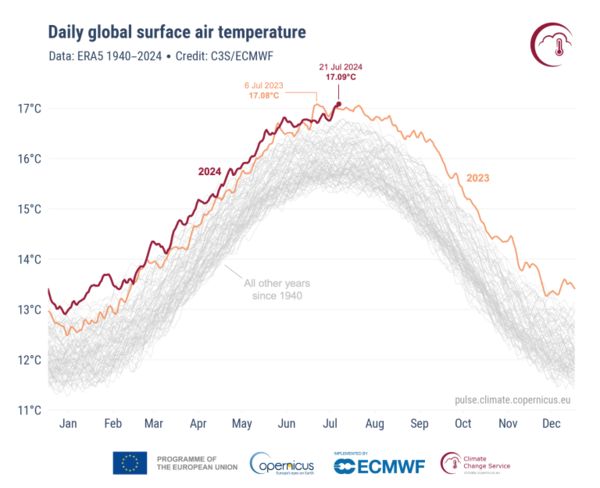
전 세계 일일 표면 공기 온도. [자료제공(Picture Source) = European Union’s Copernicus Climate Change Service]
가능한 원인
전 세계 평균 기온은 북반구 여름 동안 가장 따뜻하게 나타나는 경향이 있다. 이는 북반구의 넓은 육지가 북반구 여름 동안 남반구의 바다가 식는 것보다 더 빨리 따뜻해지기 때문이다. 그 결과, 연간 최고기온은 일반적으로 6월 말에서 8월 초 사이에 발생한다. 올해 전 세계 평균 기온은 이미 사상 최고 수준에 가까웠으며, 이는 1년 이상 동안 계절에 따른 사상 최고 수준을 기록한 후다.
초기 C3S 분석에 따르면, 일일 전 세계 평균 기온의 상승은 해빙 면적이 낮은 남극 대륙의 넓은 지역과 남빙양 일부 지역의 매우 따뜻한 기온과 관련이 있을 가능성이 높다. 이러한 이상 현상은 남극 겨울철에 종종 발생하며, 2023년 7월 초 기록적인 전 세계 기온에도 영향을 미쳤다.
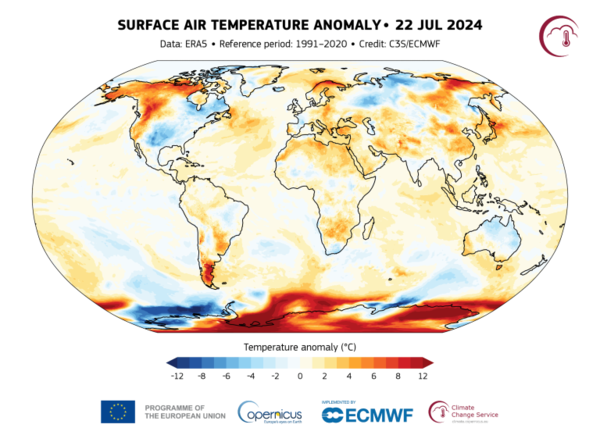
지표면 기온 이상. [자료제공(Picture Source) = European Union’s Copernicus Climate Change Service]
[원문보기]
Earth experiences warmest day in recent history
The Earth has just experienced its warmest day in recent history, according to one of the datasets that the WMO uses to monitor the Earth’s climate, namely the ERA5 dataset from the European Union’s Copernicus Climate Change Service (C3S).
On 22 July 2024, the daily global average temperature reached a new record high in the ERA5 dataset, at 17.15°C. This exceeds the previous records of 17.09°C, set just one day before on 21 July 2024, and 17.08°C, set a year earlier on 6 July 2023.
"This new report of a daily global average temperature record is noteworthy because we are no longer in an El Niño warm phase and it has occurred during an extended period of extraordinary heat – June 2024 was the thirteenth month in a row of record-breaking global temperatures,” said WMO Director of Climate Services, Chris Hewitt.
Prior to the long streak of record-breaking temperatures in July and August 2023, the highest daily global average temperature in the ERA5 dataset was 16.80°C, on 13 August 2016, following the strong El Niño event.
ERA5 is one of the datasets used by WMO to monitor global temperatures. It covers the period from 1940 to the present day. Some of the other global datasets date back to the start of the modern instrumental record in 1850.
According to C3S Director Carlo Buontempo: "On July 21st, C3S recorded a new record for the daily global mean temperature. What is truly staggering is how large the difference is between the temperature of the last 13 months and the previous temperature records. We are now in truly uncharted territory and as the climate keeps warming, we are bound to see new records being broken in future months and years."
Another sign of the global warming trend is the fact that the ten years with the highest daily average temperatures are the last ten years, from 2015 to 2024.
Likely causes
The global average temperature tends to be warmest during northern hemisphere summer. This is because the large land masses of the northern hemisphere warm up faster than the oceans of the southern hemisphere can cool down during the northern summer months. As a result, the annual peak of temperature generally occurs between late June and early August. This year, the global average temperature was already at near-record levels, after being at record levels for the time of year for more than a year.
The initial C3S analysis suggests that the rise in daily global average temperature is likely to be related to very warm temperatures over large parts of Antarctica and parts of the Southern Ocean which are experiencing low sea ice cover. Such large anomalies are not unusual during the Antarctic winter months, and also contributed to the record global temperatures in early July 2023.
[출처 = 세계기상기구(WMO)(https://wmo.int/media/news/earth-experiences-warmest-day-recent-history) / 2024년 7월 24일]
|  즐겨찾기 추가
 시작페이지로 설정
























