[미국] 빗물 제어 기능 갖춘 태양열 발전단지, 유거수 및 빗물 침식 완하시켜
팬실베니아 주립대 연구팀, 『수문학 저널(Journal of Hydrology)』에 연구 결과 발표
적절한 태양광 패널 배치로 식생 공간 조성 및 필요시 구조적 빗물 관리로 유거수 관리 가능
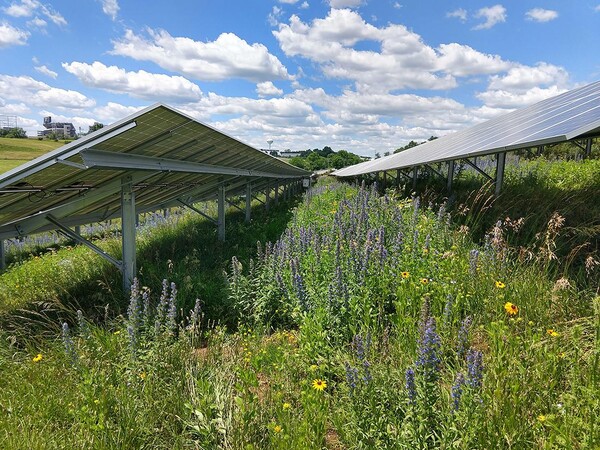
연구팀은 펜실베니아 중부 지역에 설치된 태양광 발전단지 두 곳에서 토양 수분 패턴, 일사량 및 식생에 대해 1년간 현장 조사를 실시했다. [사진제공(Photo Source) = Penn State]
대규모 태양광 발전단지의 수가 증가함에 따라, 자연 수문 과정에 미치는 영향에 대한 우려가 커지고 있다. 하지만 팬실베니아 주립대학교(Penn State) 연구팀의 새로운 연구에 따르면, 태양광 발전단지가 적절하게 구축된다면 과도한 유거수(Runoff)나 빗물에 의한 침식 증가를 쉽게 완화할 수 있다.
태양광 패널은 광범위하게 배치할 경우, 콘크리트나 아스팔트와 유사하게 빗물 유출의 양과 속도를 증가시킬 수 있다는 우려가 제기돼 왔다. 이에 연구팀은 펜실베니아 중부 지역에 설치된 태양광 발전단지 두 곳에서 토양 수분 패턴, 일사량 및 식생에 대해 1년간 현장 조사를 실시했다.
최근 『수문학 저널(Journal of Hydrology)』에 발표된 연구 결과에서 연구팀은 건강한 초목과 배수가 잘 되는 토양이 태양광 발전단지의 유거수 관리에 도움이 되며, 필요한 경우 더 까다로운 환경에서 공학적 빗물 제어를 통해 완화되지 않은 유거수를 관리할 수 있다고 발표했다.
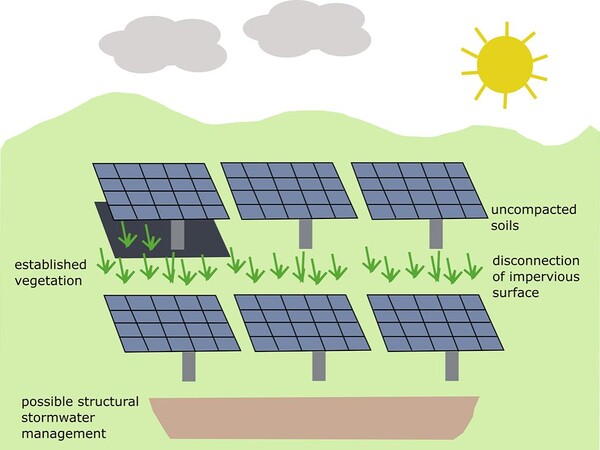
건강한 식생과 배수가 잘되는 토양은 태양광 발전단지의 유거수를 관리하는 데 도움이 될 수 있으며, 경사가 가파른 더 까다로운 지형에서 필요한 경우 공학적 빗물 제어 장치를 통해 완화되지 않는 유거수를 관리할 수 있다. [사진제공(Photo Source) = Penn State]
로렌 맥필립스(Lauren McPhillips) 토목환경공학과 조교수는 "우리는 특히 복잡한 지형과 가파른 경사면에 설치된 태양광 발전단지의 빗물 이동에 관심이 있다"며 "태양광 발전이 꽤 평평하고 배수가 잘 되는 토양이 있는 주요 농경지를 차지한다는 우려가 많다. 해당 지역에서는 유출 문제를 최소화할 수 있다. 태양광 발전단지를 위해 더욱 까다로운 토지를 활용하는 것을 용이하게 하는 데 관심이 있다”고 말했다.
루한기즈 나심 야바리(Rouhangiz "Nasim" Yavari) 토목환경공학과 수자원 공학 프로그램의 박사 학위 후보자인 수석 연구원은 이 연구에서 태양광 발전단지의 토양 수분 패턴을 분석했다. 연구팀은 태양광 패널 관련 물의 재배수(redistribution of water)에 대해 밝혔는데, 강수가 떨어지는 패널의 하부 가장자리 바로 아래의 땅은 수분이 주변 대비 19%가 더 높았고, 패널 아래 땅은 1년간 평균적으로 25% 낮았다.
연구팀은 폭우가 내리는 동안 패널의 드립라인(Driplines)에서 포화 및 국지적 유출 생성이 있었다는 점에 주목했다. 그러나 두 태양열 발전단지의 기존 침투 유역 및 도랑과 패널 사이의 열린 공간이 유출수를 관리한다는 것을 발견했다.
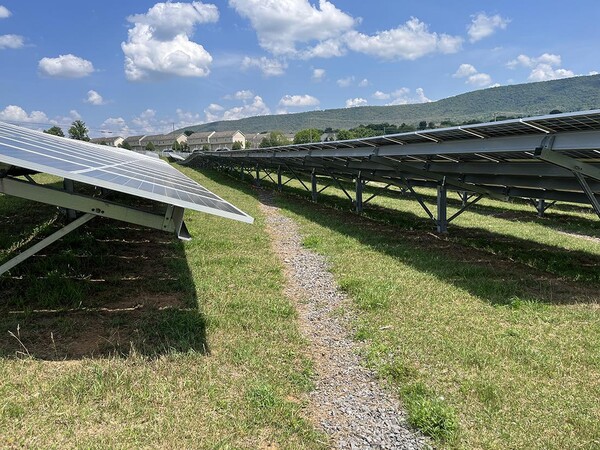
자갈로 채워진 사진과 같은 침투용 도랑은 태양광 발전시설의 빗물을 관리하는 데 도움이 된다. [사진제공(Photo Source) = Penn State]
농업, 임업, 자연 환경 등에 영향을 미치는 소규모 기상 및 기후 과정을 평가하는 미세기상 모니터링은 패널 아래에서 증발산량 감소, 즉 물이 땅에서 대기로 이동하는 과정을 감소시키는 것으로 나타났다. 또한 잠재적인 패널 하부 증발산량이 여름에 37%에서 67% 감소했으며, 겨울에는 그 차이가 미미하다는 것을 확인했다.
맥필립스 교수는 식생 조사 따르면, 연구 대상인 두 태양광 발전단지 모두 패널 하부에 거의 완전한 지면을 덮고 있었으며 이는 침투를 지원하고 침식을 줄이는 데 중요한 작용을 한다고 설명했다.
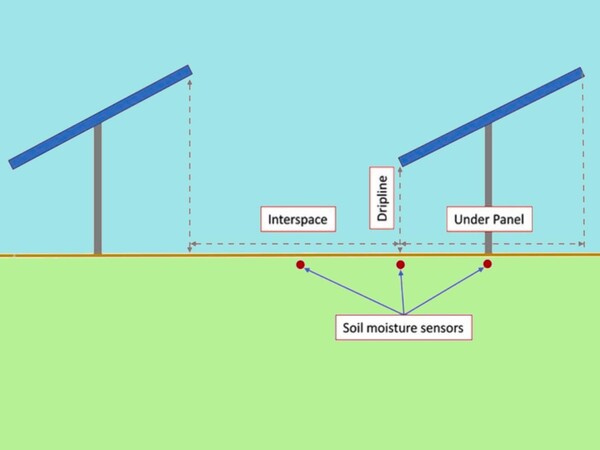
연구팀은 태양광 패널 주변과 아래에서 일어나는 소규모 기상 및 기후 과정을 관찰했다. [사진제공(Photo Source) = Penn State]
맥필립스 교수는 "이번 연구는 태양광 발전단지의 구조적 빗물 관리 관행에 대한 최초의 평가이며, 직접적인 현장 측정을 통해 시설의 수문적 현상에 대한 새로운 통찰력을 제공한다"며 "특히, 가파르고 복잡한 지형에서 태양광 발전단지의 포화도와 유출 가능성에 대한 최초의 해석 중 일부를 제공한다"고 강조했다.
이어 "우리의 관찰은 자연 수문학 패턴의 명확한 변화를 기록하는 동시에 태양광 패널 배열의 적절한 간격의 식생 공간과 경우에 따라 구조적 빗물 관리가 이러한 변화를 관리할 수 있음을 보여준다"며 "태양광 발전단지의 토지 관리가 다른 생태계 서비스에 어떤 영향을 미칠 수 있는지에 대한 조사와 함께 이러한 유형의 통찰력을 통해 생태계에 미치는 영향을 최소화하면서 재생 가능 에너지로의 중요한 전환을 촉진할 수 있다"고 설명했다.
맥필립스 교수는 진행 중인 연구가 연구 현장의 컴퓨터 모델링에 초점을 맞춰 태양광 발전단지의 빗물 관리 관행에 대한 적절한 설계를 알리고 있다고 덧붙였다.
이 연구는 펜실베니아 수자원 연구 센터를 통한 미국 지질조사국과 미국 농무부 산하 국립 식량 농업 연구소의 지원을 받아 수행됐다. 또한 농업과학대학의 전략적 네트워크 및 이니셔티브 프로그램과 과학 실천 보조금으로부터 특별 자금을 지원 받았다.
[원문보기]
Solar farms with stormwater controls mitigate runoff, erosion, study finds
As the number of major utility-scale ground solar panel installations grows, concerns about their impacts on natural hydrologic processes also have grown. However, a new study by Penn State researchers suggests that excess runoff or increased erosion can be easily mitigated — if these “solar farms” are properly built.
Solar panels are impervious to water, and vast arrays of them, it was feared, could increase the volume and velocity of stormwater runoff similar to concrete and asphalt. But after conducting a year-long field investigation of soil moisture patterns, solar radiation and vegetation at two solar farms in central Pennsylvania — built on slopes representative of the Northeast U.S. — the researchers concluded that such installations should not present negative implications for stormwater management.
In findings recently published in Journal of Hydrology, the team reported that healthy vegetation and well-draining soils can help manage runoff on solar farms, and where necessary on more challenging landscapes, engineered stormwater controls can manage any unmitigated runoff.
“We were especially interested in stormwater movement in solar farms on complex terrain and steep slopes,” said Lauren McPhillips, assistant professor in civil and environmental engineering, whose research group conducted the study. “There's a lot of concern that solar is eating up prime agricultural land with well-draining soils that are pretty flat. From those sites, you have minimal runoff concerns. We are interested in facilitating making use of more challenging marginal lands for solar farms.”
In the study, lead researcher Rouhangiz "Nasim" Yavari, doctoral degree candidate in the Water Resources Engineering Program in the Department of Civil and Environmental Engineering, analyzed soil moisture patterns in the solar farms. They revealed redistribution of water relative to solar panels, with soil moisture under driplines — ground directly beneath the lower edge of the panels from which precipitation falls — 19% higher than nearby land, and moisture in the soil under the panels 25% lower than nearby land, on average, at both solar farms over a year.
The researchers noted that there were periods of saturation and localized runoff generation at the panel driplines during heavy precipitation events. However, an open interspace between panel rows and existing infiltration basins and trenches at both solar farms managed the runoff.
Micrometeorological monitoring — assessing the small-scale weather and climate processes that affect things like agriculture, forestry and the natural environment — indicated reduced evapotranspiration, or the process by which water is transferred from the land to the atmosphere, under the panels. They also found that the potential underpanel evapotranspiration was 37% to 67% lower in summer, with a minimal difference in winter.
A vegetation survey revealed that both solar farms in the study had almost complete ground coverage under panels, which is critical for supporting infiltration and reducing erosion, noted McPhillips, who also is a faculty member in the Department of Agricultural and Biological Engineering in the College of Agricultural Sciences.
This research is the first assessment of structural stormwater management practices on solar farms, and it provides new insights on the hydrological phenomena of the installations through first-hand field measurements, McPhillips pointed out. The study provides some of the first interpretation of saturation and runoff potential on solar farms, in particular on steep and complex landscapes.
“While our observations document clear alteration in natural hydrologic patterns, they also demonstrate that adequately sized vegetated spaces between solar panel rows, and in some cases, structural stormwater management, can manage these changes,” she said. “These types of insights, along with investigation of how land management on solar farms can affect other ecosystem services, can allow us to facilitate this critical transition to renewable energy with minimal ecosystem impact.”
Ongoing research, McPhillips added, is focusing on computer modeling of these research sites to inform appropriate design of stormwater management practices on solar farms.
Cibin Raj, associate professor of agricultural and biological engineering; Jonathan Duncan, associate professor of hydrology; Margaret Hoffman, assistant professor of landscape contracting; and undergraduate researchers Demetrius Zaliwciw, Katherine Chu and Austin Gaydos contributed to the research
This research was supported by the U.S. Geological Survey via the Pennsylvania Water Resources Research Center and the U.S. Department of Agriculture’s National Institute of Food and Agriculture. Also, the research received special funding from the College of Agricultural Sciences’ Strategic Networks and Initiatives Program and Science to Practice grants.
[출처 = PENN STATE(https://www.psu.edu/news/research/story/solar-farms-stormwater-controls-mitigate-runoff-erosion-study-finds/) / 2024년 7월 18일]
|  즐겨찾기 추가
 시작페이지로 설정
























