[오스트리아] IIASA 국제연구팀, "효율적 수질 관리로 미래 물부족 절반으로 줄일 수 있어"
기존 물부족 연구, 수량에만 초점 맞춰…영양 모델과 비용 절감 절차 결합한 모델링 방법 제시
중국 주강 유역, 수질 관리 조치 시행 시 물부족 현상 절반으로 절감 가능
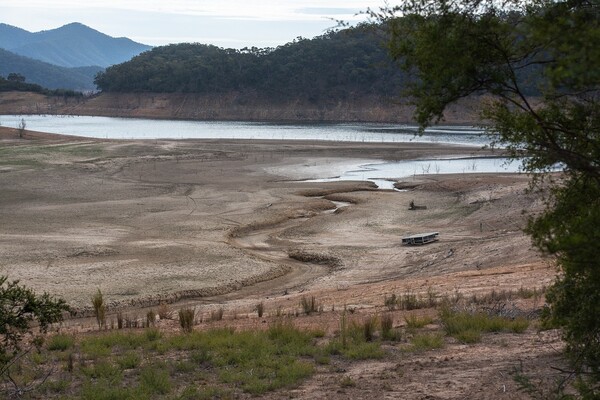
오스트리아에 본부를 두고 있는 국제응용시스템분석연구소(IIASA) 등 국제 연구팀은 미래 물부족을 크게 줄일 수 있는 물관리의 비용 효율적인 방법을 식별하기 위한 새로운 모델링 접근 방식을 개발했다. [사진출처(Photo Source) = 픽사베이(Pixabay)]
수량과 수질의 변화의 결과인 세계적인 물부족 문제는 지속 가능한 개발 목표의 달성을 어렵게 한다. 국제 연구팀은 미래 물부족을 크게 줄일 수 있는 물관리의 비용 효율적인 방법을 식별하기 위한 새로운 모델링 접근 방식을 개발했다.
세계 인구의 절반 이상이 물이 제한되거나 너무 오염된 지역에 살고 있다. 이는 물공급과 수요 간의 균형에 문제를 일으키고 에너지, 농업, 가정, 산업 등 물을 사용하는 부문에 경제적 위험을 초래한다. 또한 질소 수준 상승과 같은 수질 오염은 심각한 건강 문제로 이어질 수 있다.
물 분야의 디지털 혁신은 자원 관리와 지속 가능성을 위해 매우 중요하다. 원격 센서, 스마트 관개, 디지털 트윈과 같은 스마트 기술은 실시간 모니터링과 효율적 물사용을 가능하게 한다. 그러나 세계경제포럼(World Economic Forum)에 따르면, 물 분야가 기후 기술 투자의 1% 미만을 받는 등 자금 격차가 여전히 남아 있다.
타헤르 카힐(Taher Kahil) 국제응용시스템분석연구소(International Institute for Applied Systems Analysis, IIASA)의 생물다양성 및 천연자원 프로그램의 물안보 연구 그룹 리더는 "우리의 연구는 물부족을 효과적으로 완화하고, 인간, 환경, 사회, 경제적 요구를 충족시키고 지속 가능한 개발을 지원하기 위한 양질의 충분한 물을 확보하는 것"이라며 “상세하고 구체적인 방식으로 육지에 대한 생물 지구 화학, 기후변화 및 인간 활동의 영향을 고려해 영양 모델과 비용 절감 절차 결합한 모델링 방법을 소개한다"고 밝혔다.
『네이처 커뮤니케니션(Nature Communications)』에 발표된 이 연구는 물부족에 대한 현재의 연구가 종종 수질을 간과하고 수량에 초점을 맞추고 있음을 강조한다.
마리나 스트로칼(Maryna Strokal) 본 연구의 교신저자 중 한명이자 와게닝센 대학교 및 연구소(Wageningen University & Research)의 부교수는 “수질 오염을 줄이기 위한 투자는 미래의 물부족을 완화하기 위한 비용 효율적인 전략을 제공한다. 우리는 다양한 사회 경제적 및 기후 변화 시나리오를 고려해 물부족과 오염으로 심각한 스트레스를 받고 있는 중국 주강 유역에서 이 문제를 조사했다”며 “화학비료 사용 줄이기, 하수 처리 등과 같은 수질 관리 옵션과 물저장 및 절약 기술과 같은 수량 옵션을 조사했다”고 설명했다.
그 결과, 높은 경제 발전과 지구 온난화 시나리오에 따라 2050년 미래 물부족이 주로 주강 유역에서 4배 증가할 것으로 예상된다는 것을 보여준다. 연구팀은 수질 관리 조치를 시행할 경우, 주강 유역의 미래 물부족 현상을 절반으로 줄일 수 있음을 나타냈다.
카힐은 “물부족은 세계의 주요 환경 문제 중 하나다. 우리의 분석은 물스트레스가 심하고 오염된 다른 강 유역의 물 부족을 평가하기 위한 청사진 제공할 수 있으며, 지속 가능한 개발 목표에 맞춰 물부족을 완화하기 위한 비용 효율적인 전략 개발을 안내할 수 있다”고 결론지었다.
[원문보기]
Efficient water quality management could reduce future water scarcity by half
Global water scarcity, a result of both quantity and quality change, challenges the achievement of the Sustainable Development Goals. An international team of researchers developed a novel modeling approach to identify cost-effective combinations of water management, promising a substantial reduction in future water scarcity.
More than half of the world’s population lives in areas where water is limited and/or too polluted. This poses a challenge to the balance between water supply and demand, and causes economic risk for sectors that use water, such as energy, agriculture, households, and industry. In addition, water pollution, such as elevated nitrogen levels, can lead to severe health issues.
The digital transformation of the water sector is crucial for resource management and sustainability. Smart technologies like remote sensors, smart irrigation, and digital twins enable real-time monitoring and efficient water use. However, funding gaps remain, with the water sector receiving less than 1% of climate-tech investments, according to the World Economic Forum.
“Our challenge lies in effectively mitigating water scarcity, ensuring sufficient water of good quality to fulfill human, environmental, social, and economic demands, and support sustainable development,” notes Taher Kahil, Water Security Research Group Leader in the IIASA Biodiversity and Natural Resources Program. “Our study introduces a new modeling method that combines a nutrient model with a cost-saving procedure, considering the effects of biogeochemistry, climate change, and human activities on land in a detailed and specific way.”
The study, published in Nature Communications, highlights that current research on water scarcity often focuses on water quantity, overlooking water quality.
“Investing in reducing water pollution offers a cost-effective strategy to alleviate future water scarcity. We looked at this issue within the context of the Pearl River Basin in China, an area highly stressed by water scarcity and pollution, considering different socioeconomic and climate change scenarios,” explains Maryna Strokal, one of the study corresponding authors and Associate Professor at Wageningen University & Research. “We looked at water quality management options such as reducing chemical fertilizers use and treating wastewater, as well as water quantity options like water storage and water-saving techniques,” says Strokal.
Results show that future water scarcity in 2050 is expected to increase by a factor of four in most parts of the Pearl River Basin under a scenario with high economic development and global warming. The researchers demonstrate that implementing water quality management measures could halve future water scarcity in the Pearl River Basin.
“Water scarcity is one of the major environmental problems in the world. Our analysis can serve as a blueprint for assessing water scarcity in other heavily water stressed and polluted river basins, guiding the development of cost-effective strategies to mitigate water scarcity in alignment with the Sustainable Development Goals,” concludes Kahil.
Reference
Baccour, S., Goelema, G., Kahil, T., Albiac, J., van Vliet, M., Zhu, X., Strokal, M. (2024) Water quality management could cost-effectively halve future water scarcity: a case study in the Pearl River Basin Nature Communications DOI: 10.1038/s41467-024-49929-z
[출처 = IIASA(International Institute for Applied Systems Analysis)(https://iiasa.ac.at/news/jul-2024/efficient-water-quality-management-could-reduce-future-water-scarcity-by-half) / 2024년 7월 8일]
|  즐겨찾기 추가
 시작페이지로 설정
























