[미국] 기후변화로 예측하기 어려워지는 수자원
적설량 감소로 유거수 및 하천 변동성 증가
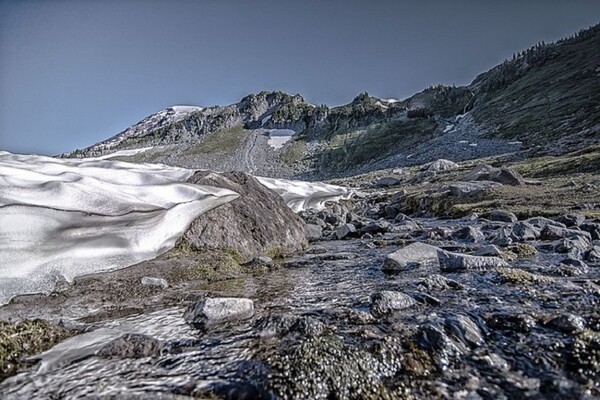
레이니어 산 국립공원(Mt. Rainier National Park)의 눈이 녹아 기후 변화로 예측하기 어려워지고 있다. [사진출처 = Wikimedia Commons]
국립 대기 연구 센터(National Center for Atmospheric Research, NCAR)가 주도한 종합적인 새로운 기후 변화 연구에 따르면, 수자원은 금세기 후반까지 북반구 전역에 걸쳐 다설 지역(snow-dominated regions)에서 점점 더 변동하며 예측하기 어려워질 것이라고 밝혔다.
과거 연구에서는 기후 변화가 물 가용성에 미치는 영향을 조사했다면, 이번 연구에서는 증가하는 수자원의 변동성에 초점을 맞췄다.
이 연구팀은 같은 강수량이 일정하게 유지되는 지역에서도 하천의 흐름이 더 다양해지고 예측할 수 없게 된다는 사실을 발견했다. 지금보다 더 따뜻해진 미래에는 스노우팩(눈덩이로 뒤덮인 들판)이 줄어들고 신뢰할 수 있는 유거수(runoff)를 제공하지 못함에 따라 수자원의 양과 시기는 주기적으로 내리는 비의 에피소드에 더 의존하게 될 것이다.
윌 위더(Will Wieder) NCAR의 수석 저자는 "물 관리자는 해빙과 유거수를 예측하는 데 4~6개월의 리드 타임을 갖는 대신, 개별 강수 사건의 변동에 따라 움직이게 될 것"이라며, "다설 지역의 물 관리 시스템은 스노우팩과 유거수의 예측 가능성을 기반으로 하며, 이러한 예측 가능성의 대부분은 기후 변화로 인해 사라질 수 있다"고 말했다.
관측 결과, 스노우팩은 이미 일찍 녹고 있으며, 심지어 많은 지역에서 감소하고 있는 것으로 나타났다. 이러한 감소는 금세기 말로 갈수록 매우 뚜렷해져서, 예를 들어, 미국 로키 산맥의 일부 지역에서 평균 겨울이 끝날 때 스노우팩에 포함된 물의 양이 거의 80%나 급감할 수 있다는 것을 과학자들은 발견했다.
유거수와 하천 흐름의 변화는 눈에서 나오는 신뢰할 수 있는 물에 의존하는 생태계에 연쇄적인 영향을 미칠 가능성이 높다고 이 연구는 경고한다. 비록 변화가 지역에 따라 일정하지는 않겠지만, 눈이 내리지 않는 날이 더 늘어나고 성장기가 길어질수록 수자원에 스트레스를 주고, 많은 지역의 토양을 건조시키고 화재 위험을 높일 것이다.
이 연구는 온실 가스의 배출이 빠른 속도로 지속된다고 가정한다. 위더 연구원은 사회가 온실 가스 배출을 성공적으로 줄인다면 적설량, 유거수 및 생태계에 대한 가장 심각한 영향을 피할 수 있을 것이라고 말했다.
과학자들은 온도와 강수량의 변화가 북반구의 적설과 유거수 패턴을 어느 정도 변화시킬지 보여주는 수자원의 미래에 대한 세부 사항을 입력하기 위해 고급 컴퓨터 시뮬레이션 세트를 사용했다.
이번 연구는 「미국 국립과학원회보(Proceedings of the National Academy of Sciences)」에 게재됐으며, NCAR의 후원재단인 미국 국립과학재단(U.S. National Science Foundation)에서 자금을 지원 받았다.
[원문보기]
Water resources to become less predictable with climate change
Declining snowpack will cause more variability in runoff, streamflow
Water resources will fluctuate increasingly and become more and more difficult to predict in snow-dominated regions across the Northern Hemisphere by later this century, according to a comprehensive new climate change study led by the National Center for Atmospheric Research.
Although past research looked at the impacts of climate change on water availability, the new study focuses on the increasing variability of water resources.
The research team found that, even in regions that keep receiving about the same amount of precipitation, streamflow will become more variable and unpredictable. As snowpack recedes in a warmer future and fails to provide reliable runoff, the amount and timing of water resources will become increasingly reliant on periodic episodes of rain.
"Water managers will be at the whim of individual precipitation events instead of having four to six months lead time to anticipate snowmelt and runoff," said NCAR scientist Will Wieder, the lead author. "Water management systems in snow-dominated regions are based on the predictability of snowpack and runoff, and much of that predictability could go away with climate change."
Observations show that snowpack is already melting earlier and even declining in many regions. This decline will become so pronounced toward the end of the century that the amount of water contained in snowpack at the end of an average winter in parts of the U.S. Rocky Mountains, for example, could plummet by nearly 80%, the scientists found.
The changes in runoff and streamflow are likely to have cascading impacts on ecosystems that depend on reliable water from snow, the study warns. Although the changes won't be uniform across regions, more snow-free days and longer growing seasons will put stress on water resources, drying out soils in many areas and heightening fire risk.
The study assumes that emissions of greenhouse gasses continue at a high rate. Wieder said that the most severe impacts on snowpack, runoff and ecosystems would likely be avoided if society successfully reduced greenhouse gas emissions.
The scientists drew on an advanced set of computer simulations to fill in details about the future of water resources, showing the extent to which changes in temperature and precipitation will alter snow accumulation and runoff patterns in the Northern Hemisphere.
The study is published in Proceedings of the National Academy of Sciences. It was funded by the U.S. National Science Foundation, NCAR's sponsor.
[출처 = NSF(National Science Foundation)(https://beta.nsf.gov/news/water-resources-become-less-predictable-climate-change) / 2022년 8월 10일]
|  즐겨찾기 추가
 시작페이지로 설정
























