[호주] UTS 연구진, 기후변화로 인한 머레이강 유량 감소와 하류 지역 위험 경고
머레이강 상류 수위 감소…식량 생산과 지역 경제에 심각한 위협으로 확산
머레이-달링 분지 계획 검토 필요…기후변화 현실 반영한 지속 가능한 물관리 시급
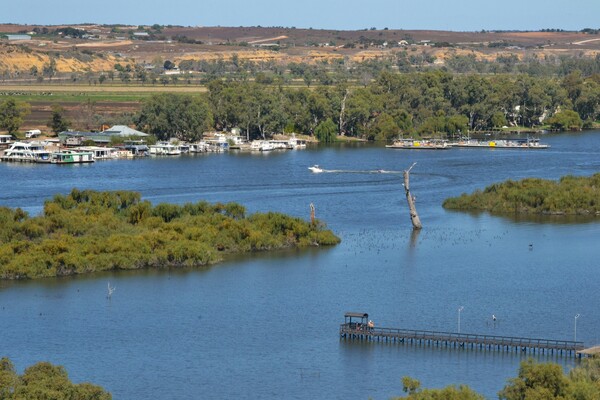
호주 시드니 공과대학교(UTS)의 밀턴 스피어(Milton Speer) 박사와 랜스 레슬리( Lance Leslie) 교수의 최근 연구(현재 사전 공개)에 따르면, 최근 머레이강의 유량 증가는 겉보기에는 긍정적인 신호처럼 보이지만 실제로는 강의 건강과 수자원 가용성의 장기적인 감소를 드러내고 있다. [사진출처(Photo source) = Unsplash]
머레이(Murray)강은 호주에서 가장 중요한 강으로, 뉴사우스웨일스(NSW), 빅토리아, 남호주 지역에서 농업·원예, 도시 용수, 레크리에이션, 환경, 생활용수, 수력 발전 등 다양한 용도로 사용되고 있다.
호주 시드니 공과대학교(UTS)의 밀턴 스피어(Milton Speer) 박사와 랜스 레슬리( Lance Leslie) 교수의 최근 연구(현재 사전 공개)에 따르면, 최근 머레이강의 유량 증가는 겉보기에는 긍정적인 신호처럼 보이지만 실제로는 강의 건강과 수자원 가용성의 장기적인 감소를 드러내고 있다.
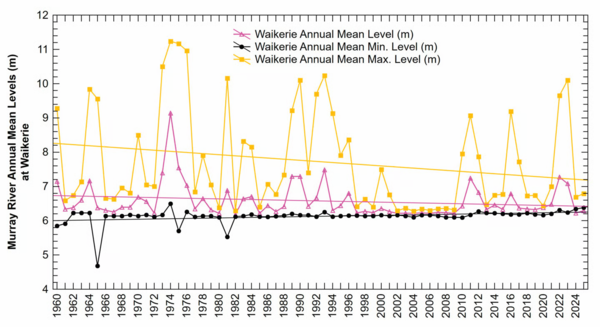
스피어 박사는 "머레이강은 최근 내린 비로 인해 유량이 많아 보일 수 있지만, 장기적인 전망은 훨씬 더 우려스럽다"며 "기후변화로 인해 머레이강 상류에서 이미 수위가 줄고 있으며, 이는 하류의 집중적인 물관리와 취수 구간에 도달하기도 전에 발생한다. 그 결과 와이케리(Waikerie) 너머로 물이 흐르기 위해 필요한 최소 수위인 6미터에도 도달하지 못하고 있다"고 지적했다.
그는 이어 "이는 단순히 강 관리 문제가 아니다. 물을 거의 혹은 전혀 취수하지 않는 머레이 상류에서 기후신호가 뚜렷하게 나타나고 있다"고 덧붙였다.
그림 1. 와이케리에서 측정한 머레이강 연평균 수위의 시계열 데이터
[사진제공(Photo source) = UTS]
머레이 강 유역의 건조 및 반건조 지역은 호주 식량 생산량의 약 40%를 차지한다. 따라서 강 수위 감소는 단순한 환경 문제가 아니라 식량 안보와 경제적 문제와도 직결된다.
레슬리 교수는 "머레이강 하류는 기후변화, 물 취수, 관리 압력이 모두 집중되는 곳에 있어 특히 취약하다"며 "최근 유량 증가는 반가운 소식이지만, 30년 이상 이어진 수위 감소 추세를 되돌릴 수 없다"고 설명했다. 이어 그는 "분석 결과, 1990년대 초 이후 머레이강 상류 수위가 상당히 감소했으며 이는 강수량 감소와 일치하다"고 덧붙였다.
또한 그는 “가뭄을 단순히 일시적 현상으로만 봐서는 안 된다. 머레이강 유역에서는 기후변화가 근본적인 원인으로 작용하고 있다”고 강조했다.
레슬리 교수는 “증가하는 물수요를 충족하면서 강의 건강을 유지하려면 더욱 효과적이고 비용 효율적인 관리 방식이 필요하다”고 말했다. 관개, 인구 증가, 인공지능(AI) 데이터센터와 같은 물집약적 시설로 인해 물수요가 늘어나면서 머레이강 유역에 대한 압력은 더욱 커질 것이며, 이는 호주 전역에 영향을 미치지만 당장 위협을 받는 것은 식수, 관개, 산업, 지역 경제를 위해 강물에 의존하는 지역사회에다.
스피어 박사는 “이는 머레이강에 의존하는 마을, 농부, 원주민 공동체, 산업을 위한 물안보 문제이기도 하다”고 덧붙였다.
연구진은 연방·주·지방 정부가 공급 수요를 지속적으로 충족할 수 있는 적절한 환경 유량을 확보해야 한다는 압력이 점점 더 커지고 있다고 지적한다. 레슬리 교수는 “다가오는 머레이-달링 분지 계획 검토는 수자원 정책을 기후변화 현실에 맞추는 중요한 기회”라며 “현재의 물관리 체계는 머레이강의 건강을 유지하는 데 필요한 환경 유량을 확보하지 못하고 있다. 강의 건강을 지키면서 증가하는 물수요를 충족하려면 더욱 효과적이고 비용 효율적인 관리 방안이 필요하다”고 강조했다.
[원문보기]
Lower Murray River at risk as climate change cuts river flows
Recent strong flows in the Murray River may look like good news, but UTS researchers warn they mask a much deeper and long-running decline
The Murray River is Australia’s most important river. Its water is shared by NSW, Victoria and South Australia for agriculture and horticulture, town water, recreation, environment, domestic and livestock, and hydroelectricity.
While recent strong flows in the Murray look like positive news for the river, new research (currently in preprint) by Dr Milton Speer and Professor Lance Leslie from the University of Technology Sydney (UTS) shows they mask a longer-term decline in river health and water availability.
“The Murray River may appear to be flowing strongly after recent rain, but the long-term picture is far more worrying,” said Dr Speer. “Our research shows climate change is already reducing river levels in the Upper Murray before the water even reaches the heavily managed and extracted sections downstream, with river levels not reaching the minimum level of 6 metres needed to allow water to flow beyond Waikerie.
“This is not just a river management problem. The climate signal is clear in the Upper Murray, where there is little or no water extraction.”
The arid and semi-arid reaches of the Murray River produce almost 40% of Australia’s food. So declining river levels are not just an environmental issue, they are a food security and economic concern.
“The Lower Murray is particularly vulnerable because it sits at the end of the system, where climate change, water extraction and management pressures all converge,” said Professor Leslie. “Recent flows are welcome, but they do not reverse more than three decades of declining river levels.
“Our analysis points to a significant decline in Upper Murray River levels since the early 1990s, consistent with reduced rainfall,” he said.
“We need to stop thinking of dry years as isolated events. In the Murray system, climate change is reshaping the baseline.”
Professor Lance Leslie, Visiting Fellow, School of Mathematical and Physical Sciences said "Maintaining river health while meeting growing water demand will require more effective and cost-efficient management practices."
As water demand grows – from irrigation, population growth and water-intensive facilities such as AI data centres – the pressure on the Murray system will only increase. While this is an issue that affects all of Australia, the immediate threat is to the local communities who depend on river water for drinking, irrigation, industry and local economies.
“This is also a water security issue for towns, farmers, Traditional Owners and industries that depend on the Murray River,” said Dr Speer.
The researchers say pressure is increasing on federal, state, and local government authorities to provide adequate environmental flows that can continue to meet supply demands.
“The upcoming review of the Murray-Darling Basin Plan is a critical opportunity to bring water policy into line with what is happening with our climate,” said Professor Leslie.
“Current water management arrangements are not delivering the environmental flows needed to keep the Murray River healthy.
“Maintaining river health while meeting growing water demand will require more effective and cost-efficient management practices.”
[출처 = 시드니 공과대학교(UTS)(https://www.uts.edu.au/news/2026/09/lower-murray-river-at-risk-as-climate-change-cuts-river-flows) / 2026년 9월 25일]
 즐겨찾기 추가
 시작페이지로 설정