[미국] 일리노이대, 지하 ‘열 배터리’로 데이터센터 냉각 및 물절약 방안 연구
데이터센터, 냉각에 전력 40% 소모…증발식 냉각으로 인한 물소비도 심각
ATES, 데이터센터 직접 냉각·보완 활용…지하수 순환으로 열 흡수·저장
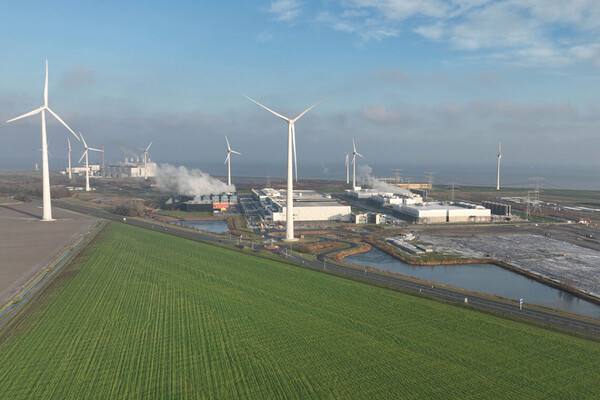
미국 일리노이대학교 어바나-샴페인 캠퍼스(University of Illinois Urbana-Champaign) 프레리 연구소(Prairie Research Institute) 연구진은 대수층 열에너지 저장(Aquifer Thermal Energy Storage, ATES) 기술을 활용해 인공지능(AI) 데이터센터의 환경적 부담을 완하하는 새로운 냉각 방안을 제시했다. [사진제공(Photo Source) = University of Illinois Urbana-Champaign]
미국 일리노이대학교 어바나-샴페인 캠퍼스(University of Illinois Urbana-Champaign) 프레리 연구소(Prairie Research Institute) 연구진은 대수층 열에너지 저장(Aquifer Thermal Energy Storage, ATES) 기술을 활용해 인공지능(AI) 데이터센터의 환경적 부담을 완하하는 새로운 냉각 방안을 제시했다. 연구진은 지하수의 안정적인 온도와 방대한 지층을 거대한 천연 ‘열 배터리’로 활용함으로써 데이터센터 냉각 효율을 극대화하는 방식을 제안하고 있다.
이번 연구는 일리노이 주립 지질조사국(Illinois State Geological Survey)의 유펑 린(Yu-Feng Lin) 연구원, 앤드류 스텀프(Andrew Stumpf) 연구원, 우파사나 판데이(Upasana Pandey) 박사후 연구원이 주도했으며, 기술적으로 실현 가능하지만 아직 충분히 활용되지 않은 해결책을 제시한다. 연구진은 이상적인 조건에서 효율성이 높아지면 냉각에 필요한 전력 수요가 전반적으로 줄어들 수 있다고 밝혔다.
연구 결과는 학술지 『그라운드워터(Groundwater)』에 게재됐다.
판데이 연구원은 “데이터센터는 막대한 전력을 소비하며, 설계 방식에 따라 그중 10~40%가 냉각에만 사용될 수 있다. 또한 데이터센터는 엄청난 양의 물을 소비하는데, 이는 주로 물을 증발시켜 결과적으로 지역 수자원이 손실되는 냉각 방식 때문”이라고 설명했다.
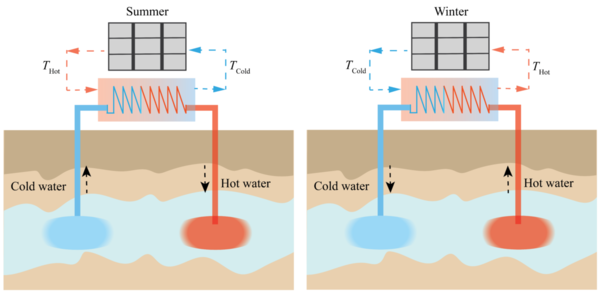
연구진은 ATES를 데이터센터에 '직접 냉각' 방식으로 통합하거나 기존 냉각 시스템을 보완하는 데 활용할 수 있다고 제안한다. 원리는 단순하다. 지하 대수층에서 물을 끌어올려 배관을 통해 데이터센터로 보내면, 차가운 지하수가 열교환기를 통해 발생한 열을 흡수하고 따뜻해진 물은 다시 지하로 되돌려 저장된다. 여름에는 냉각 과정에서 발생한 잉여 열을 지하에 저장해 뒀다가 겨울철 난방에 사용할 수 있고, 겨울에는 차가운 지하수를 저장해 뒀다가 여름철 냉각에 사용할 수 있다.
그림 1. 대수층 열에너지 저장(ATES) 시스템 개념도
[그림제공(Picture Source) = Upasana Pandey]
스텀프 연구원은 "일리노이처럼 계절 변화가 뚜렷하고 지질 조건이 이상적인 지역에서는 여름철 32°C에서 겨울철 영하 23°C까지 변하는 외부 온도를 조절하는 대신, 지열의 거의 일정한 온도를 활용할 수 있다"며 "즉, 32°C에서 21°C로 맞추는 것이 아니라 13°C에서 21°C에 맞추는 것이므로 에너지 절약 효과가 크다"고 말했다.
연구팀은 일리노이 지역이 이러한 시스템에 특히 적합한 이유를 세 가지로 꼽았다. 첫째, 뚜렷한 계절적 온도 차가 지하에 열과 냉기를 저장하기에 이상적이다. 둘째, 풍부한 대수층과 지하수는 열 교환 효율을 높인다. 셋째, 일리노이 중부의 빙하 퇴적물과 기타 지하 물질은 물에 포화될 때 열적 특성이 특히 잘 발휘된다. 또한 이전 연구에 따르면 지하 온도 변화 범위는 환경적으로 문제가 되지 않는다.
중요한 점은 이 시스템에서 사용되는 물이 반드시 식수일 필요는 없다는 것이다. 연구팀은 해수보다 염도가 높은 심층 염수 대수층, 오염된 지하수, 물이 차있는 폐광까지도 유망한 수원으로 제시했다.
연구진은 주요 장애물이 과학적·기술적 문제에 있는 것이 아니라 경제적·제도적 요인에 있다고 지적했다. 지열 및 대수층 시스템은 초기 투자 비용은 높지만 장기적으로 운영 비용은 낮다. 그러나 많은 프로젝트가 5~10년 단위로 평가되는 반면, 이 시스템은 20~40년의 수명 주기 동안 가장 큰 효과를 발휘한다. 인력과 전문성 측면에서도 석유·가스·지하수 개발 산업에서 이미 축적된 시추 기술을 활용할 수 있다.
린 연구원은 "데이터센터는 물-에너지 넥서스의 중심에 있다. 에너지 사용을 줄이면 물사용이 늘고, 물사용을 줄이면 에너지 소비가 증가하는 경우가 많다. 우리의 연구는 이 두 가지 문제를 동시에 해결할 수 있는 방안을 찾고 있다"고 말했다. 이어 "이러한 맥락에서 물은 마법과 같은 물질이다. 높은 비열을 갖고 있으며 흐름을 통해 훌륭한 열 전달체 역할을 한다. 이러한 특성은 드물지만, 지하수에서는 이를 활용해 에너지 저장이 가능하다"고 덧붙였다.
[원문보기]
Team looking to tap underground ‘thermal batteries’ to cool AI Data centers and save water
Aquifer-based geothermal systems, known as aquifer thermal energy storage, could help ease the environmental stress stemming from artificial intelligence data centers in the United States. Researchers at the Prairie Research Institute at the University of Illinois Urbana-Champaign are proposing a new way to keep those facilities cool by using the naturally stable underground temperatures and groundwater as a giant natural “thermal battery.”
The new study, led by Illinois State Geological Survey researchers Yu-Feng Lin, Andrew Stumpf and postdoctoral researcher Upasana Pandey, proposes a technically feasible and currently underutilized solution for data center cooling in the United States. They found that under ideal conditions, an increase in efficiency would lead to an overall reduction in electricity demand for cooling.
The study findings are published in the journal Groundwater.
“Data centers use large amounts of electricity, and 10 to 40% of that energy can go just to cooling, depending on the design,” Pandey said. “They also consume tremendous volumes of water, often through cooling methods where water is evaporated and effectively lost from the local supply.”
ATES can be integrated into data centers for “free or direct” cooling or to supplement another cooling system, the researchers propose. The concept is simple: water from an underlying aquifer is pumped through subsurface pipes into a data center. The cool groundwater can be used to absorb heat generated by the data center via a heat exchanger, and the warm water is returned underground and stored for future use. In the summer, excess heat from cooling data centers can be returned to the same aquifer, stored underground and later reused in winter for heating. In winter, cold groundwater can be stored for use in summer.
“In places like Illinois where we experience seasonality, and when the subsurface geology is ideal, instead of constantly trying to moderate the outdoor temperatures that swing from 90°F in summer to minus 10°F in winter, we can tap into the Earth’s near-constant temperature,” Stumpf said. “You’re no longer adjusting from 90°F to 70°F; you’re adjusting from about 55°F to 70°F. That’s a huge energy savings.”
According to the team, Illinois is uniquely suited to this kind of system because of three key advantages. First, hot summers and cold winters create pronounced seasonal temperature differences that are ideal for storing heat and cold underground. Second, the state’s prolific aquifers and groundwater make thermal exchange more efficient. Third, glacial deposits and other subsurface materials in central Illinois have thermal properties that respond particularly well when saturated with water. And previous research indicates that the range of subsurface temperature changes should not be an environmental concern.
Importantly, the water used in these systems does not have to be drinking water. The team points to deeper, salty aquifers — some of which are saltier than seawater — or even contaminated groundwater and water-filled abandoned mines as promising sources.
The researchers said the main obstacles are not scientific or technical. Geothermal and aquifer systems have higher upfront costs but lower operating costs over the long term. Many projects are evaluated on 5- to 10-year horizons, rather than the 20- to 40-year lifetimes during which these systems deliver the greatest benefits. As far as workforce and expertise are concerned, the drilling skills already exist in the oil, gas and water well industries.
“Data centers sit at the center of the water-energy nexus: If you try to reduce energy use, you often use more water, and if you reduce water use, you may need more energy. Our work looks for solutions that address both together,” Lin said. “Water is a magic material in this context because it has high heat capacity and can be a good thermal carrier with flow. That combination is rare, and in groundwater, we can tap those same properties for energy storage.”
[출처 = 미국 일리노이대학교 어바나-샴페인 캠퍼스(University of Illinois Urbana-Champaign)(https://news.illinois.edu/team-looking-to-tap-underground-thermal-batteries-to-cool-ai-data-centers-and-save-water/) / 2026년 6월 30일]
 즐겨찾기 추가
 시작페이지로 설정



























