[아제르바이잔] 카스피해에 최대 해수담수화 시설 건설
아제르바이잔 내 물안보 우려 고조 속에 ADB 1억6천500만 달러 지원 승인
총 공사 규모 4억700만 달러…사우디 아크와 파워가 프로젝트 개발·중국 화둥엔지니어링이 시공
숨가이트에 건설 예정…하루 30만㎥ 식수 생산하여 바쿠·압셰론 반도 지역에 공급 예정
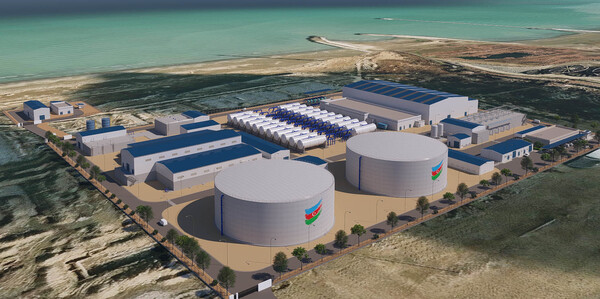
아시아개발은행(ADB)은 아제르바이잔의 4억700만 달러 규모 해수담수화 플랜트 건설을 위해 1억6천500만 달러의 자금 지원을 승인했다고 11월 24일 밝혔다. 이 프로젝트 개발은 사우디아라비아의 아크와 파워(ACWA Power)가, 중국 파워차이나(PowerChina) 그룹 산하의 화둥 엔지니어링 코퍼레이션(HDEC)이 주 시공사를 맡고 있다. 사진은 숨가이트(Sumgait)에 건설될 예정인 해수담수화 플랜트 조감도. [사진출처(Photo source) = 아크와 파워(ACWA Power)]
아시아개발은행(ADB)은 아제르바이잔의 4억700만 달러(약 5천475억 원) 규모 해수담수화 플랜트(Seawater Desalination Plant) 건설을 위해 1억6천500만 달러(약 2천220억 원)의 자금 지원을 승인했다고 11월 24일 밝혔다. 이는 물 부족과 기후 변화에 대한 우려가 커지는 가운데, 아제르바이잔이 물 공급원을 다변화하려는 노력의 일환이다.
숨가이트(Sumgait)에 건설될 예정인 이 시설은 하루 30만 세제곱미터(㎥)의 식수를 생산하여 바쿠(Baku)와 압셰론(Absheron) 반도 지역에 공급할 예정이다.
이번 프로젝트는 아제르바이잔이 수자원 확보에 점점 더 큰 압박을 받는 상황에서 추진된다. 현재 아제르바이잔이 사용하는 전체 수자원(식수 및 기타 용수 포함)의 약 70%는 국외에서 유입되고 있다.
한편, 이 플랜트의 취수원인 카스피해는 수위가 지속적으로 낮아지고 있어, 카스피해의 미래와 해당 지역의 생태적 균형에 대한 우려가 제기되고 있다. 과학자들은 해안선이 후퇴함에 따라 카스피 물범, 철갑상어 등 고유종의 서식지가 위협받고 있으며, 습지를 비롯한 민감한 생태계 또한 영향을 받고 있다고 경고한다.
ADB를 인용한 친정부 매체 ‘리포트(Report)’에 따르면, 이번 차관은 7천만 달러(약 941억 원)씩 두 차례, 2천500만 달러(약 336억 원) 한 차례 등 총 세 차례에 걸쳐 지급될 예정이다.
총사업비는 4억700만 달러로 추산되나, 나머지 자금을 어떻게 조달할 지에 대해서는 아제르바이잔 정부가 아직 구체적으로 밝히지 않았다. 이 시설은 하루 30만㎥의 물을 생산할 예정이며, 수요가 급증하는 시기에는 생산량을 33만㎥까지 늘릴 수 있는 능력을 갖출 계획이다.
이 프로젝트는 25년간의 민-관 협력(Public-Private Prtnership, PPP) 계약을 통해 추진된다. 담수화된 물은 전량 국영 기업인 ‘대도시 통합 상수도 서비스(United Water Supply Service of Large Cities)’에 공급될 예정이다. 이번 프로젝트는 바쿠와 압셰론 반도 지역의 주거 및 상업 시설에 공급되는 식수의 품질과 안정성을 개선하는 것을 목표로 한다.
이번 담수화 플랜트 건설 계획은 아제르바이잔의 제한된 수자원에 대한 우려가 커지는 가운데 나왔다. 세계은행(World Bank)에 따르면, 아제르바이잔 지표 수자원의 약 70%는 국경 밖에서 유입된다.
압셰론 반도(Absheron Peninsula)의 용수 공급 중 상당 부분은 사무르강(Samur River)에 의존하고 있다. 기후 변화, 가뭄, 그리고 증가하는 물 수요로 인해 대체 수자원의 필요성이 커지고 있다. 그러나 이 프로젝트는 환경적 우려를 낳고 있다. 담수화 과정에서 고농도의 염수가 발생하는데, 이것이 다시 카스피해로 방류될 예정이기 때문이다.
아제르바이잔에 담수화 시설이 처음 도입된 것은 아니다. 2013년 살리얀(Salyan) 지역의 히디를리(Khidirli) 마을에 하루 1천㎥ 규모의 시험용 담수화 시설이 가동되었다. 이후 생산 용량은 2천㎥/일로 확대되었다. 하지만 숨가이트(Sumgait)에 계획된 시설은 아제르바이잔 최초의 대규모 해수담수화 플랜트가 된다.
이 프로젝트는 환경적으로 지속 가능한 개발과 친환경 인프라 구축을 우선시하는 아시아개발은행(ADB)의 ‘아제르바이잔을 위한 2025∼2029년 국가 파트너십 전략(Country Partnership Strategy)’의 일환으로 추진되고 있다.
앞서 아시아인프라투자은행(AIIB) 또한 아제르바이잔의 담수화 플랜트 건설을 위해 4천500만 달러(약 605억 원) 규모의 대출을 승인한 바 있다.
사우디아라비아의 아크와 파워(ACWA Power)가 이 프로젝트를 개발하고 있으며, 중국 파워차이나(PowerChina) 그룹 산하의 화둥 엔지니어링 코퍼레이션(HDEC)이 주 시공사를 맡고 있다. HDEC의 하도급 업체인 스페인의 엔지니어링 기업 사베너(Savener)는 이미 해당 플랜트에 대한 엔지니어링 및 설계 작업에 착수했다.
[원문보기]
Funding for Caspian Sea desalination plant approved amid growing concern in Azerbaijan over water security
The Asian Development Bank (ADB) has approved $165 million in financing for a $407 million seawater desalination plant in Azerbaijan, as the country seeks to diversify its water supplies amid growing concerns over water scarcity and climate change.
The planned facility, which will be built in Sumgait, is expected to produce 300,000 cubic metres of drinking water per day to supply Baku and the Absheron Peninsula.
The project comes as Azerbaijan faces increasing pressure on its water resources, with around 70% of its overall water resources - both drinking water and otherwise -originating outside the country.
At the same time, the Caspian Sea, the source of the future plant’s water, is experiencing a prolonged decline in water levels - raising concerns about the Caspian Sea’s future and the region’s ecological balance. Scientists warn that the retreating coastline threatens habitats for endemic species, including Caspian seals and sturgeon, while also affecting wetlands and other sensitive ecosystems.
According to the pro-government outlet Report, citing the ADB, the loan will be disbursed in three tranches: two of $70 million each and one of $25 million.
The total cost of the project is estimated at $407 million and the government has not publicly detailed how the remaining funding will be allocated.
The facility is expected to produce 300,000 cubic metres of water per day, with the capacity to increase to 330,000 cubic metres during periods of peak demand.
The project will be implemented under a 25-year public-private partnership agreement. All desalinated water will be supplied to the state-owned United Water Supply Service of Large Cities.
The project aims to improve the quality and reliability of drinking water supplies to residential and commercial properties in Baku and the Absheron Peninsula.
The planned plant comes amid concerns over Azerbaijan’s limited water resources. According to the World Bank, around 70% of the country’s surface water resources originate outside its borders. A significant share of the Absheron Peninsula’s water supply also depends on the Samur River. Climate change, drought, and growing water demand have increased the need for alternative water sources.
However, the project itself raises environmental concerns as the desalination process produces highly concentrated brine - which will be discharged back into the Caspian Sea.
Desalination plants are not new to Azerbaijan. In 2013, a pilot desalination plant with a capacity of 1,000 cubic metres per day was launched in the village of Khidirli in Salyan District. Its production capacity was later increased to 2,000 cubic metres per day. However, the planned facility in Sumgait will be the country’s first large-scale seawater desalination plant.
The project is being implemented within the framework of the ADB’s 2025?2029 Country Partnership Strategy for Azerbaijan, which prioritises environmentally sustainable development and clean infrastructure.
Earlier, the Asian Infrastructure Investment Bank (AIIB) also approved a $45 million loan for the construction of the desalination plant in Azerbaijan.
Saudi Arabia’s ACWA Power is developing the project, while China’s HDEC (Huadong Engineering Corporation), part of the Power China group, is the main contractor. Spain’s engineering company Savener, acting as HDEC’s subcontractor, has already begun engineering and design work on the plant.
[출처 = OC 미디어(OC Media)(https://oc-media.org/funding-for-caspian-sea-desalination-plant-approved-amid-growing-concern-in-azerbaijan-over-water-security/) / 2026년 11월 24일]
[출처 = 아크와 파워(ACWA Power)(https://acwapower.com/en/what-we-do/projects/caspian-seawater-desalination-project/)]
 즐겨찾기 추가
 시작페이지로 설정



























