[UN] 유엔 총회, 정기 ‘유엔 물 회의(UN Water Conference)’ 개최 결의안 채택
오는 2031년부터 3년마다 개최…‘2026년 유엔 물 회의’ 공동 개최국인 세네갈·UAE 주도로 만장일치 채택
“물 관련 문제가 지속가능한 개발과 빈곤·기아 퇴치에 매우 중요…UN이 나서야”
‘2026년 유엔 물 회의’, 12월 8∼12일 UAE 아부다비서 개최

유엔 총회(United Nations General Assembly)는 오는 2031년부터 3년마다 정기적인 ‘유엔 물 회의(UN Water Conference)’를 개최하는 것을 골자로 하는 결의안을 11월 23일 채택했다. 사진은 2025년 유엔 총회 모습. [사진출처(Photo source) = 유엔 뉴스(UN News)]
유엔 총회(United Nations General Assembly)는 오는 2031년부터 3년마다 정기적인 ‘유엔 물 회의(UN Water Conference)’를 개최하는 것을 골자로 하는 결의안을 11월 23일 채택했다.
‘2026년 유엔 물 회의(2026 UN Water Conference)’ 공동 개최국인 세네갈(Senegal)과 아랍에미리트(UAE)의 주도로 마련되어 만장일치로 채택된 이 결의안(A/81/L-18)은 물 분야에서 국제 협력을 강화하는 강력한 토대를 제공하기로 했다.
결의안의 주요 내용
이 결의안은 특히 물 관련 문제가 지속 가능한 개발과 빈곤(Poverty) 및 기아(Hunger) 퇴치에 매우 중요하기 때문에 유엔 총회와 경제사회이사회(UN Department Economic and Social Council, UN DESA)의 의제에 더욱 잘 반영되어야 한다고 주장했다.
유엔 시스템 전반에 걸쳐 물 관련 우선순위의 조정 및 이행을 강화하는 것을 목표로 하는 유엔 시스템 차원의 물과 위생 전략이 존재함에도 불구하고, 이 결의안은 유엔 경제사회국과 유엔물기구인 UN워터(UN Water)의 역량 강화를 통해 유엔 시스템 전반에 걸친 물 관련 우선순위의 조정 및 이행을 더욱 강화할 것을 촉구했다.
이 결의안은 지속가능발전목표6(SDG6)과 같은 물 관련 목표를 달성하기 위해서는 유엔 물 협약(UN Water Convention), 지역 협력 체계, 초국가적 유역 협정 등의 포괄적인 틀을 바탕으로 전 세계적, 지역적, 하위 지역적, 유역적 차원에서 국제 협력이 필요하다는 점을 인정했다. 중복을 피하고 일관성과 조정을 강화하는 동시에, 포용성을 보장하고 합의를 도출하기 위해 노력이 필요하다는 것이다.
이 결의안의 핵심 결정은 유엔 물 회의를 정기적으로 개최하는 것이다. 이 결의안은 물 관련 우선순위, 특히 2026년과 2028년에 개최될 두 차례의 유엔 물 회의에서 다뤄질 우선순위들을 진전시키기 위한 지속적인 대화, 지침 및 조정을 위한 고위급 정부 간 프로세스를 촉진하는 것을 목표로 한다.
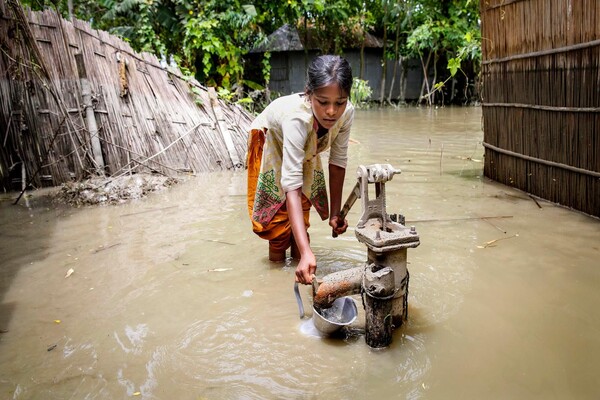
이 결의안은 특히 물 관련 문제가 지속 가능한 개발과 빈곤 및 기아 퇴치에 매우 중요하기 때문에 유엔 총회와 경제사회이사회(UN DESA)의 의제에 더욱 잘 반영되어야 한다고 주장했다. [사진출처(Photo source) = 유엔 워터(UN Water)]
심의
이 결의안은 세네갈과 아랍에미리트(UAE)를 대표하여 유엔 주재 UAE 상임대표인 모하메드 아부샤합(Mohamed Abushahab) 대사가 제출했다.
아부샤합 대사는 연설에서 “양국이 2026년 유엔 물 회의 공동 개최국으로서 광범위한 협의를 진행하는 과정에서 물 회의의 주기성 문제가 정기적으로 논의되었으며, 첫 번째 회의(1977년 마르델플라타)와 두 번째 회의(2023년 뉴욕) 사이에 46년의 공백이 있었다”는 점을 강조했다.
그는 “보다 주기적인 물 회의 개최가 회원국 주도의 정책 대화, 조정, 협력 및 물 관련 우선순위 진전을 위한 고위급 정부 간 프로세스를 위한 기회를 제공한다”고 언급했다.
아부샤합 대사는 특히 “2026년 유엔 물 회의와 관련하여 그는 결의안 채택이 회의를 순조롭게 시작할 수 있는 토대를 마련했다”고 강조하며, “이는 회원국들이 지속적인 진전을 이루고자 하는 장기적인 목표에 대한 확신을 가지고 회의에 임할 수 있는 기회를 제공한다”고 말했다.
여러 대표단은 토론에서 새로운 회의 주기에 관한 결의안의 시기와 구성에 대해 의문을 제기했다. 일부 대표단은 결의안의 시기에 대해 우려를 표명했다. 예를 들어, 아일랜드는 유럽 연합(EU)과 회원국을 대표하여 아부다비 회의, 특히 독일과 멕시코가 공동 의장국을 맡았던 다자간 프로세스에서의 물 관련 대화(E)를 참고하여 후속 결의안에서 주기적인 회의 개최를 고려했으면 좋았을 것이라고 밝혔다.
에티오피아는 5년 주기를 제안한 바 있다고 언급했다. 아르헨티나, 브라질, 에티오피아, 과테말라, 가이아나, 파나마, 파라과이, 수리남을 대표하여 발언한 브라질은 2026년과 2028년에 이미 회의가 예정되어 있고, 2030년 이후 개발 의제에 대한 논의가 이제 막 시작된 상황에서 이번 결정이 시기상조라고 지적했다.
다른 대표단들은 발언을 통해 향후 회의의 우선순위를 제시했다. 합의에 동참한 인도네시아는 UN워터와 유엔 사무총장 수자원 특사의 역할을 촉구했다.
호주는 캐나다, 뉴질랜드를 대표하여 실질적인 참여와 기존 수자원 관련 절차 간의 긴밀한 협력을 강조했다. 이란은 수문 정보에 대한 공평한 접근, 무력 충돌 시 민간 수자원 기반 시설 보호, 그리고 저렴한 금융, 기술 및 물자에 대한 접근성 개선을 요구했다.
‘물을 위한 집’ 과의 연계
멕시코는 독일과 함께 다자간 프로세스에서의 물 문제를 다루는 대화형 대화(e)의 공동 의장국으로서 이번 결의안을 ‘물을 위한 집(House for Wate)’ 설립 제안과 연결지어 다음과 같이 밝혔다.
“UAE와 세네갈이 유엔에서 물 문제에 대한 지속적인 리더십을 보여준 데 대해 감사드린다. 우리는 이번 결의안이 글로벌 물 거버넌스 강화에 한 걸음 더 나아가는 계기가 된 것을 환영한다.
UN80(안토니오 구테레스 유엔 사무총장이 2025년 3월에 발표한 유엔 시스템 전반의 개혁 계획)에 따라, 향후 유엔 물 회의는 더욱 일관성 있고, 조정 능력이 향상되었으며, 현장에서 더욱 효과적인 성과를 거두는 데 기여할 수 있을 것이다.
이번 결의안은 향후 물 회의를 회원국 주도의 포럼에 기반하여 정기적이고 예측 가능한 정부 간 프로세스로 나아가는 명확한 방향을 제시한다. 이러한 포럼은 글로벌 물 의제 전반에 걸쳐 지속적이고 철저한 참여를 촉진할 것이다. 검토 조항은 회원국들이 채택한 우선순위를 포함하여 물 관련 목표를 발전시키고 이행하는 데 있어 진전을 평가할 기회를 제공한다. 2023년, 2026년, 2028년 유엔 물 회의의 성과를 바탕으로 2030년까지 물 문제를 해결해 나가야 한다.”
하지만 필요한 프로세스를 정의하고 기존 도구를 기반으로 구축하기 위해서는 추가적인 노력이 필요합니다. 올해 물 회의에서 ‘다자간 프로세스에서의 물(Water in Multilateral Processes)’이라는 주제로 상호대화(Interactive Dialogue) 공동 의장으로서, 우리는 광범위한 협의를 통해 ‘물을 위한 집(House for Water)’이라는 아이디어를 발전시켰다.
이 집은 다자간 차원에서 물 관련 활동을 조직하고 강화하기 위한 유연하고 단계적인 접근 방식을 제안한다. 정기적인 정치적 대화의 장을 제공함으로써, 유엔 물 회의를 주기적으로 개최하는 것은 ‘물을 위한 집’ 내 회원국 포럼으로서 정부 간 물 문제 해결 프로세스를 향한 중요한 발걸음이 될 것이다.
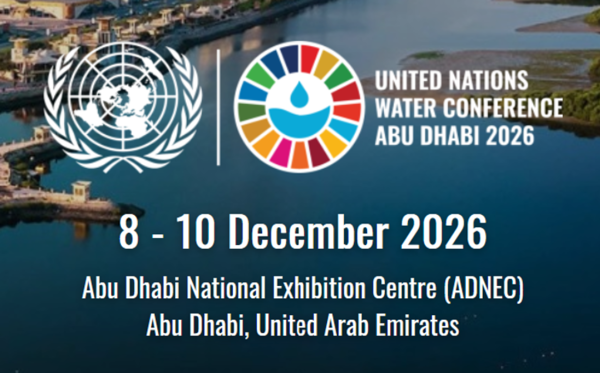
세네갈(Senegal)과 아랍에미리트(UAE)가 공동 개최하는 ‘2026년 유엔 물 회의(2026 UN Water Conference)’는 오는 12월 8일부터 12일까지 아랍에미리트(UAE) 아부다비에서 개최된다. [사진출처(Photo source) = 유엔 워터(UN Water)]
한편, 세네갈(Senegal)과 아랍에미리트(UAE)가 공동 개최하는 ‘2026년 유엔 물 회의(2026 UN Water Conference)’는 오는 12월 8일부터 12일까지 아랍에미리트(UAE) 아부다비에서 개최된다.
[원문보기]
United Nations General Assembly Adopts Resolution to Hold Regular Water Conferences
On Monday, November 23rd - the United Nations General Assembly adopted a resolution which provides a mandate to hold regular UN Water Conferences every three years, starting in 2031.
The Resolution (A/81/L-18), developed under the leadership of Senegal and the United Arab Emirates, the co-hosts of the 2026 UN Water Conference, and adopted by consensus, provides a strong foundation to strengthen international cooperation in the water sector.
The Resolution
Amongst others, the resolution argues that water-related issues need to be better reflected in the agendas of the General Assembly and the Economic and Social Council ? amongst others because it is critical for sustainable development and the eradication of poverty and hunger.
Despite the existence of a United Nations System-wide Strategy for Water and Sanitation which aims to enhance the coordination and delivery of water priorities across the United Nations system, the resolution advocates the strengthening of the Department of Economic and Social Affairs as well as UN-Water in order to enhance the coordination and delivery of water priorities across the United Nations system.
The resolution expresses recognition that in order to achieve water related goals and targets such as those under SDG 6, international cooperation is needed at the global, regional, subregional and basin levels - supported by overarching frameworks (such as the UN Water Convention, regional cooperation frameworks and transboundary basin agreements). There is a need to ensure that duplication is avoided and coherence and coordination is enhanced, while ensuring inclusiveness in the process and striving for consensus.
As mentioned above, the core decision of the resolution is to convene periodic United Nations Water Conferences. These aim to facilitate a high-level intergovernmental process for continual dialogue, guidance and coordination for the furtherance of water related priorities ? which could include priorities identified during the upcoming two UN Water Conferences in 2026 and 2028.
Deliberations
The resolution was presented by The UAE Permanent Representative to the United Nations, His Excellency Mohamed Abushahab, speaking on behalf of Senegal and the UAE. In his address, H.E. Abushahab emphasised that in the context of the extensive consultations held by the two countries in their role as co-hosts of the upcoming 2026 UN Water Conference, the issue of periodicity of water conferences regularly came up with a 46-year gap between the first and second conferences (in Mar del Plata in 1977 and New York in 2023).
The convening of more periodic water conferences, he stated, provides an opportunity for a high-level intergovernmental process for member state-driven policy dialogue, coordination, cooperation, and the advancement on water-related priorities.
For the 2026 UN Water Conference, he emphasized that the adoption of the resolution sets the conference off on a good footing -it “presents an opportunity for us to enter the conference with confidence in the long-term ambition of member states to continue progress”.
Several delegations used the debate to question the timing and design of the resolution on the new conference cycle. Some delegations expressed reservations related to the timing of the resolution: for instance, Ireland spoke on behalf of the European Union and its member states, and stated that it would have preferred to consider periodic conferences in a follow-up resolution informed by the Abu Dhabi conference, particularly its Interactive Dialogue (E) on water in multilateral processes, co-chaired by Germany and Mexico.
Ethiopia stated that it had proposed a five-year cycle. Speaking on behalf of Argentina, Brazil, Ethiopia, Guatemala, Guyana, Panama, Paraguay and Suriname, Brazil stated that it found the decision premature, as there were already conferences planned for 2026 and 2028, and the discussion on the post-2030 development agenda had only just started.
Other delegations used their interventions to set out priorities for future conferences. Indonesia, which joined the consensus, called for a role for UN-Water and the Secretary-General’s Special Envoy on Water. Australia, speaking also for Canada and New Zealand, emphasised meaningful participation and closer coordination among existing water processes. Iran called for equitable access to hydrological information, protection of civilian water infrastructure during armed conflict, and improved access to affordable finance, technology and supplies.
Connecting to a ‘House for Water’
Mexico, speaking jointly for Mexico and Germany as co-chairs of Interactive Dialogue (e), Water in Multilateral Processes, connected the resolution to their proposal for a “House for Water”:
“We thank the United Arab Emirates and Senegal for their continued leadership on water at the UN. We welcome this resolution as a step towards strengthening global water governance. In line with UN80 [a United Nations system-wide reform plan launched by Secretary-General Antonio Guterres in March 2025 ? Editorial comment], future UN Water Conferences can contribute to better coherence, improved coordination, and more effective delivery on the ground.
This resolution sets a clear path towards a regular and predictable intergovernmental process by anchoring future water conferences in a member state-driven forum that promotes continuity and sustained, well-prepared engagement across the global water agenda.
The review clause provides an opportunity to assess progress in advancing and implementing our water-related objectives, including any priorities adopted by member states beyond 2030, building on the outcomes of the 2023, 2026 and 2028 United Nations Water Conferences.
That said, further work will be needed to define the process we need and build it on instruments that we already have. As co-chairs of Interactive Dialogue (e), Water in Multilateral Processes, in this year’s Water Conference, we developed the idea of a House for Water, built upon broad consultations.
This House proposes a flexible, step-by-step approach to organise and enhance our work on water at the multilateral level. By providing a regular space for political dialogue, the establishment of periodic UN Water Conferences provides a crucial step towards an intergovernmental process for water, as the member states’ forum within the House for Water.
Looking ahead, ensuring continuity and efficiency beyond the 2026 conference will be essential. Sustained, coherent dialogue among member states, together with a more effective UN system, will support member states’ efforts regarding improved water management and enhance international cooperation to promote sustainable development.
We sincerely thank once again the United Arab Emirates and Senegal for their continued leadership in the next weeks and thereafter, and we extend an invitation to all of you. Let us build a House for Water together.”
Meanwhile, the 2026 UN Water Conference, jointly hosted by Senegal and the United Arab Emirates (UAE), will be held in Abu Dhabi, UAE, from December 8 to 12.
[출처 = 워터 디플로맷(Water Diplomat)(https://www.waterdiplomat.org/story/2026/11/united-nations-general-assembly-adopts-resolution-hold-regular-water-conferences) / 2026년 11월 24일]
 즐겨찾기 추가
 시작페이지로 설정



























