[COP31 성과] UNFCCC, “COP31, 파리협정 이행 위한 진전 이루었으나 주요 현안들에서는 합의 도출 난항”
공정한 전환·기후재원·기후변화 대응·전기화 등 주요 협상 안건서 중요한 진전 이뤄
협상 과정서 화석연료·기후재원 지원 문제 이견 좁히지 못해…최종 합의문 채택 결렬
COP31, 11월 9∼22일까지 튀르키에 안탈리아서 열려
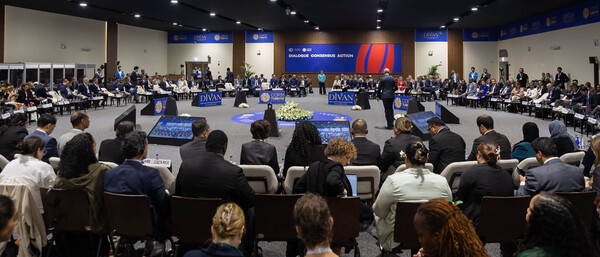
11월 9∼22일 튀르키에 안탈리아(Antalya)에서 열린 ‘제31차 유엔기후변화협약 당사국총회(COP31)’가 공정한 전환(Just Transition), 기후재원 및 기후변화 대응(Climate finance and adaptation), 전기화(Electrification)에 대한 대폭 진력 등 주요 협상 안건에서 중요한 진전을 이루며 마무리되었다. 그러나 당사자들은 의장국 주도의‘총괄 결정문(Cover decision)’에 대해서는 합의에 이르지 [사진출처(Photo source) = 유엔기후변화협약(UNFCCC)]
11월 9일부터 11월 22일까지 튀르키에 안탈리아에서 열린 ‘제31차 유엔기후변화협약 당사국총회(COP31)’가 예정된 기간을 이틀 가까이 넘기며 이어졌으나, 기후 변화 대응을 위한 포괄적 합의에 이르지 못하고 결국 결렬되었다. 유엔기후변화협약(UNFCCC)이 발표한 COP31 성과를 요약했다. [번역 및 정리= 배철민 편집국장 겸 글로벌물산업정보센터장]
11월 9~ 22일 튀르키에 안탈리아(Antalya)에서 열린 ‘제31차 유엔기후변화협약 당사국총회(COP31)’가 △공정한 전환(Just Transition) △기후재원 및 기후변화 대응(Climate finance and adaptation) △전기화(Electrification)에 대한 대폭 진력 등 주요 협상 안건에서 중요한 진전을 이루며 마무리되었다.
그러나 당사자들은 의장국 주도의 ‘총괄 결정문(Cover decision)’에 대해서는 합의에 이르지 못했으며, 이는 여러 중요한 사안과 기타 위임 협상 항목에 걸쳐 연쇄적인 영향을 미쳤다.
사이먼 스틸(Simon Stiell) 유엔 기후변화(UNFCCC) 사무총장은 “우리의 과정은 과학을 따르고 도전에 맞서야 한다”라면서 “이번 COP에서는 공정한 전환, 기후 금융 및 적응 등 주요 협상 결정들이 내려졌다. 기후 대응에서 공정성과 포용성은 필수적이다”라고 강조했다.
그는 또한 “많은 이들과 마찬가지로 저 역시 깊은 실망감을 느낀다. COP31은 의장국 주도의 결정문과 관련된 사안들에 대해 합의를 도출하지 못했다. 이번 일을 통해 반드시 배워야 할 교훈이 있다”라고 덧붙였다.
스틸 사무총장은 “우리는 COP 과정이 두 가지 트랙으로 진행된다는 점을 인식해야 한다. ‘행동 의제(Action Agenda)’ 측면에서 COP31은 실질적인 진전과 구체적인 성과를 거두었다”라고 말했다.
그는 이어 “그동안 여러 차례의 COP를 거치며 기후 협력은 큰 진전을 이루어냈고, 인류를 지구 온난화로 인한 파멸적인 경로에서 벗어나게 했다. 하지만 분명 훨씬 더 많은 노력이 필요하다. 기후 대응을 위한 싸움은 계속될 것이며, 우리는 결코 포기하지 않을 것”이라고 밝혔다.
전기화 시대의 가속화
올해 6월, COP31 의장국인 튀르키예는 COP31 협상 의장국인 호주 및 유엔 기후변화협약 사무국과 협력하여, ‘글로벌 기후 행동 의제(Global Climate Action Agenda)’의 핵심 요소로서 2035년까지 전동화 비율을 35%로 달성하겠다는 목표를 발표했다.
COP31에서 세계 경제의 약 절반을 차지하는 국가들은 이 ‘35x35 목표(2035년까지 35% 전동화)’를 지지하거나, 혹은 이보다 더 이른 시점에 해당 목표를 달성하겠다는 의지를 표명했다.
소규모 섬나라부터 세계 최대 경제국들에 이르는 150개국, 37개 도시, 그리고 연간 매출 4조 달러(5천368조 원) 이상을 기록하는 260개 이상의 기업이 참여하는 ‘COP31 글로벌 기후 행동 의제 : 전력화 추진 패키지(COP31 Global Climate Action Agenda Electrification Delivery Package)’는 청정 에너지 분야에 수십억 달러 규모의 투자를 이끌어내고, 전기 접근성을 확대하며, 전력망·교통·건물·산업 부문의 전력화를 추진한다.
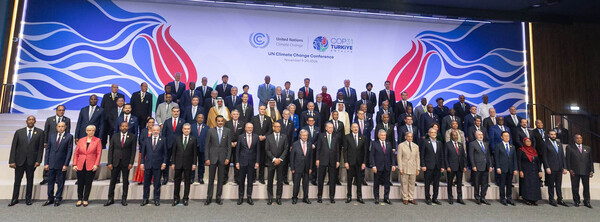
11월 9일 COP31 개막식에 참석한 세게 각구 정상 및 UN 관계자들의 기념촬영 모습. [사진출처(Photo source) = 유엔기후변화협약(UNFCCC)]
‘이행’을 실현하는 COP
COP31은 ‘이행(Implementation)’이 실제로 어떤 모습인지 보여주고자 했다. 복잡한 상황 속에서도 COP31은 협상 의제 165개 중 상당수에 대해 합의를 도출했으며, 이는 향후 이행을 앞당길 중요한 성과가 되었다. 매년 COP에서 190개가 넘는 당사국(국가 정부)이 모든 문구 하나하나에 합의해야 하는 상황임을 고려할 때, 이러한 진전은 다자주의에 대한 전 세계의 의지를 재확인해 준다.
■ 공정 전환 ‘공정 전환(Just Transition)’은 기후 행동을 가능하게 하고 촉진하는 동력으로서, 사람을 중심에 두고 더 빠르고 공정한 진전을 보장한다. COP31은 협상 의제에 따라 ‘아랍에미리트 공정 전환 작업 프로그램(UAE JTWP)’을 검토했으며, 운영 방식을 강화하여 향후 3년간 이 프로그램을 지속하기로 합의했다.
또한 COP31은 올해 JTWP의 일환으로 진행된 대화에서 도출된 핵심 메시지들을 확인했습니다. 이 대화들은 식량 안보, 농업, 해양, 산업, 혁신, 그리고 공정한 가치 사슬이라는 맥락에서의 공정 전환’에 초점을 맞추었다.
당사국들은 또한 2025년 벨렘(Belem)에서 열린 COP30 당시 개발하기로 결정했던 ‘공정 전환 메커니즘(Just Transition Mechanism)’을 단계적으로 가동하기로 했다. 이 메커니즘은 국제 협력, 기술 지원, 역량 강화, 지식 공유를 증진하여 공정하고 포용적인 ‘공정 전환’을 가능하게 하는 것을 목표로 하며, COP32에서 최종 채택될 예정이다.
사이먼 스틸(Simon Stiell) 유엔 기후변화(UNFCCC) 사무총장은 총회 초반에서 “사회와 경제 전반을 아우르는 포괄적인 접근 방식 속에서 노동자와 지역사회를 중심에 두는 전환은, 기후 행동을 가로막는 사회경제적 장벽을 극복하는 동시에 대중의 지지를 확보하는 데 필수적이다“라고 말했다.
스틸 사무총장은 특히 “‘아랍에미리트 공정 전환 작업 프로그램(UAE JTWP)’은 ‘공정 전환’이 무엇인지에 대한 공통된 이해를 형성하는 데 근본적인 역할을 해왔다”라면서 “공정 전환 메커니즘’은 각국이 스스로 공정 전환’ 경로를 설계하고 이행해 나가는 과정을 국제적 차원에서 지원할 중요한 기회가 될 것”이라고 역설했다.
■ 기후재원 COP31은 기후재원Climate Finance)과 관련하여, 단순히 목표를 설정하는 단계를 넘어 실제 이행 단계로 나아갔다. 당사국들은 기후재원 실무 프로그램을 진전시키면서, 적응금융 확대를 위한 노력을 새롭게 다졌다. 여기에는 적응기금을 파리협정 이행에만 전념하도록 전환하는 것과 기후재정에 대한 접근성을 더욱 신속하고 효율적으로 만드는 것이 포함된다.
또한, 기후변화에 대한 회복력을 갖춘 저탄소 개발로의 금융 흐름 전환을 위한 광범위한 노력도 지속되었다. 궁극적으로 이는 필요한 곳에 금융을 지원하여 국가와 지역사회가 회복력을 구축하고, 경제적 기회를 창출하며, 삶의 질을 향상시키고, 더 나은 삶의 질을 달성할 수 있도록 하는 것이다.
COP31가 예정된 기간을 이틀 가까이 넘기며 이어졌으나, 기후 변화 대응을 위한 포괄적 합의에 이르지 못하고 결국 결렬되었다. 사진은 환경단체의 시위 모습. [사진출처(Photo source) = 유엔기후변화협약(UNFCCC)]
■ 기술 기후 위기에 대응하는 데 필요한 기술(Technology)은 이미 존재한다. 이제 중요한 것은 이러한 기술이 가장 필요한 국가와 지역사회에 도달하도록 하는 것이다.
안탈리아에서 국제사회는 파리 협정의 약속을 실질적인 행동으로 옮기기 위한 추가적인 조치를 취했다. 각국이 기후 기술에 접근하고 이를 활용할 수 있도록 지원을 강화하고, 벨렘 기술 이행 프로그램을 진전시키며, 기술과 재정을 더욱 긴밀하게 연계하여 해결책을 대규모로 구현할 수 있도록 했다.
■ 기후변화 대응 COP31은 59개 벨렘 적응 지표의 실행을 진전시켰다. 각국이 자발적 국가 시험을 통해 얻은 경험, 과제, 격차 및 요구 사항을 공유할 수 있는 채널을 구축하고, 지표 방법론 및 메타데이터 개선을 위한 전담팀을 구성했다.
또한 바쿠 적응 로드맵( Baku Adaptation Road Map, 2026∼2028)의 이행을 강화하고, UAE 글로벌 기후 회복력 프레임워크 검토 준비를 시작했으며, 제2차 글로벌 재고 조사를 위한 정보 기반을 강화했다.
이러한 조치들은 적응을 전 지구적 목표 합의에서 집단적 진전 측정, 격차 파악, 이행 가속화로 전환하는 것을 목표로 하며, 동시에 각국의 상황을 존중하고 추가적인 보고 부담을 피하고자 한다.
바르샤바 국제 메커니즘(Warsaw International Mechanism)과 산티아고 네트워크(Santiago Network strengthen)에 대한 결정은 손실 및 피해에 대한 기술 지원 제공에 더욱 집중하는 데 중점을 두었으며, 여기에는 요청에 대한 신속한 대응, 취약 계층을 위한 간소화된 접근, 그리고 직접 지원금의 최소 몫이 이들에게 도달하도록 보장하는 방안이 포함된다. 이는 제도적 확대를 넘어 현장에서 측정 가능한 지원으로 나아가기 위해 중요하다.
당사국들은 적응 관련 소통 작업을 진전시켜 국가 적응 계획, 국가별 온실가스 감축 목표(Nationally Determined Contribution, NDC), 투명성 보고서 전반에 걸쳐 일관성을 높이는 동시에 유연성을 유지하고 불필요한 보고 부담을 피하도록 장려했다. 이는 각국이 적응 우선순위와 진전을 더욱 효과적으로 전달하고 국제 협력을 위한 정보 기반을 강화하는 데 도움이 될 것이다.
■ 2차 이행 점검 파리 협정의 핵심 메커니즘인 제2차 전 지구적 이행 점검(Global Stocktake, GST2)이 ‘제31차 기후변화협약 당사국총회(COP31)’에서 시작되었다. 전 지구적 이행 점검은 당사국들의 공동 진척 상황을 평가하는 과정이다. 이 점검의 결과는 각 당사국이 국가별로 결정한 기후 행동과 지원을 강화하고, 국제 협력을 증진하는 데 필요한 정보를 제공하는 것을 목적으로 한다.
GST2는 ‘정보 수집 및 준비’, ‘기술적 평가’, ‘결과물 검토’라는 3단계 과정을 거치게 된다. 이 과정은 2028년 11월에 열리는 제33차 당사국총회(COP33)에서 마무리되며, 당사국들은 기술적 평가 결과를 검토하고 GST2의 최종 결과에 합의하게 될 것이다.
■ 투명성 격년 투명성 보고서(Biennial Transparency Reports, BTR)는 모든 정부와 실물 경제 주체들에게 매우 중요한 도구이다. BTR은 기후 정책을 수립하고 기후 관련 다자 협력에 참여하는 데 필요한 강력한 근거를 제공한다.
BTR은 전 지구적 이행 점검(GST) 과정에서 핵심적인 역할을 하는데, 이는 당사국들이 스스로 보유한 데이터와 정보를 바탕으로 기술적 평가 및 정치적 논의에 참여할 수 있도록 돕기 때문이다.
COP31의 주요 협상 의제 중 하나로, 개발도상국이 지속적으로 보고를 수행할 수 있도록 지원하는 것이 필수적이라는 점이 강조되었다. 당사국들은 벨렘(Belem, CMA 7)에서 합의된 활동들의 이행 진척 상황과 그 영향을 검토했다. 이는 개발도상국이 보고 과정에서 겪는 어려움을 파악하고, 이를 해결하기 위한 방안을 모색하기 위한 것이었다.
이번 검토를 통해 2027년과 2028년에 수행될 활동들의 효과를 더욱 높이기 위한 일련의 지침이 마련되었다.
COP31 의장국 주도로 열린 장관급 고위 대화에서는 기후 투명성의 중요성이 재차 강조되었으며, 각국 장관 및 고위 대표들이 이에 대해 높은 수준의 정치적 지지를 보였다. 첫 번째 주기에서 형성된 동력을 바탕으로, 많은 국가가 2026년 12월 31일 기한 내에 제2차 격년 투명성 보고서(BTR)를 제출하겠다는 의지를 재확인했다.
글로벌 기후 행동 의제
기업, 투자자, 도시 등이 전력화 추진에 힘을 모으고 가속화하고 있습니다. 행동 의제 전력화 이행 패키지는 전력, 전력망, 교통, 건물 및 산업 전반에 걸친 활동을 포괄한다.
스티엘(Stiell) 사무총장은 “COP31은 전기화(Electrification)를 가속화하는 데 기여했으며, 이는 지구 온난화를 유발하는 화석 연료 오염과 예측 불가능한 비용을 줄이는 동시에 에너지 안보를 강화하고 일자리를 창출하며 인류 건강을 개선할 것”이라고 말했다.
COP31의 협상 과정과 병행하여, '글로벌 기후 행동 의제(Global Climate Action Agenda)'의 6개 핵심 분야에서 실질적이고 구체적인 진전이 이루어졌다.
· 분야 1: 에너지, 산업 및 교통(Energy, Industry and Transport )
- ‘탄소중립(Net-Zero)을 위한 유틸리티 연합(Utilities for Net Zero Alliance)’을 통해 2025년까지 2만1천km 이상의 새로운 전력망 인프라 구축
- ‘탄소중립을 위한 유틸리티 연합’의 연간 전력망 투자 계획 규모, 최소 1천560억 달러(209조 6천172억 원) 이상
- 6개 대륙에 걸쳐 13개의 ‘친환경 도로 회랑(green road corridors)’ 개발 중
· 분야 2 : 산림, 해양 및 생물다양성(Forests, Oceans and Biodiversity)
- ‘열대림 영구 기금(Tropical Forest Forever Facility)’에 대한 초기 후원 약정액, 총 83억 달러(11조 1천527억 원)로 증가
- 2030년까지 3천만 헥타르(ha)의 이탄지(peatland) 복원 목표
- 22개국 산호초 보호를 위한 3천만 달러(403억 원) 이상의 신규 자금 지원
· 분야 3 : 농업 및 식량 시스템(Agriculture and Food Systems)
- 116개국에서 6천600만ha 규모의 재생 농업(regenerative farming) 시행
- 식량 안보, 물 관리, 기후 정책을 연계하기 위한 글로벌 추진 계획인 ‘터쿼이즈 넥서스 이니셔티브(Turquoise Nexus Initiative)’ 출범
· 분야 4 : 회복력 있는 도시, 인프라 및 물(Resilient Cities, Infrastructure and Water)
- 69개 도시(주민 약 2억7천만 명)가 ‘연례 행동 제안(Yearly Offer of Action)’을 통해 12개월 기후 프로젝트를 수행하기로 약정
· 분야 5 : 인간 및 사회 개발(Human and social development)
- 20개의 기후 및 건강 관련 프로그램에 2억 2천500만 달러(3천24억 원) 이상 지원
- ‘유엔 재난 위험 금융 플랫폼(UN Disaster Risk Financing Platform)’을 통해 2030년까지 7천500만 명을 기후 재난으로부터 보호
· 분야 6 : 촉진 및 가속화 요소(Enablers and accelerators)
- ‘국가 플랫폼 허브(Country Platforms Hub)’를 통해 약 20개국이 투자 유치가 가능한 기후 프로젝트를 개발 중
- 유럽투자은행(EIB), 2026“2030년 기후 적응을 위해 300억 유로(43조 9천857억 원) 이상 투입 목표
- 탄소중립(Net-Zero) 달성을 위한 정부 수출 금융 규모, 약 3천760억 달러(505조 6천448억 원) 기록 2025년 대비 58% 증가.
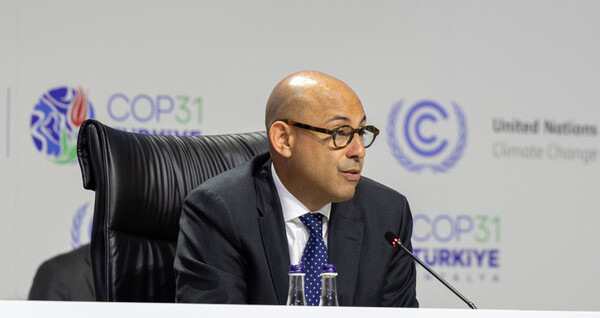
11월 22일 튀르키예 안탈리아에서 열린 ‘제31차 유엔 기후변화협약 당사국총회(COP31)’ 폐막식에서 사이먼 스틸(Simon Stiell) 유엔 기후변화협약 사무총장의 폐회사 모습. [사진출처(Photo source) = 유엔기후변화협약(UNFCCC)]
다음은 11월 22일 튀르키예 안탈리아에서 열린 ‘제31차 유엔 기후변화협약 당사국총회(COP31)’ 폐막식에서 사이먼 스틸(Simon Stiell) 유엔 기후변화협약 사무총장의 폐회사 전문이다.
각국 대표단, 동료, 그리고 내빈 여러분, 저는 많은 분이 느끼시는 깊은 실망감에 공감합니다. 이번 COP31은 의장국이 주도한 결정 사항들과 관련된 문제들에 대해 합의에 이르지 못했습니다.
우리의 협상 과정은 과학적 근거를 따라야 하며, 당면한 과제에 대응할 수 있어야 합니다. 이번 COP에서는 ‘공정한 전환(Just Transition)’을 포함하여 몇 가지 핵심적인 협상 결정이 이루어졌습니다. 기후 대응에 있어 공정성과 포용성은 무엇보다 중요합니다.
그러나 전 세계적으로 기후 변화의 영향은 더욱 악화하고 있으며, 화석 연료 비용은 각국 경제 전반에 걸쳐 인플레이션을 유발하고 있습니다. 또한, 지구 평균 기온 상승 폭이 1.5도를 넘어서는 상황이 다가오고 있습니다.
세계는 이번과 같은 상황이 반복되는 것을 감당할 여력이 없습니다. 규칙집(rulebook)과 선례를 포함한 우리의 협상 체계는 200여 개 국가를 하나로 모으기 위해 설계되었습니다.
지난 10년간 우리가 거듭 확인했듯이, 이러한 체계는 실제로 성과를 만들어냅니다.
△기온 목표에 대한 합의, △새로운 기후 재원 목표 설정, △정의롭고 질서 정연하며 공평한 방식으로 화석 연료에서 벗어나기 위한 전환, △기후 적응에 관한 글로벌 목표 설정 등이 그 예입니다.
이번 일을 통해 배워야 할 교훈이 있습니다. 이 협상 과정은 194개 당사국 모두의 것입니다. 합의는 아래에서부터 차근차근 쌓아 올릴 때 가장 효과적입니다. 완전한 투명성을 바탕으로, 모든 의견을 충분히 경청하고, 기존의 성과를 토대로 계속 발전시켜 나가야 합니다.
물론 개선하고 현대화하며 개혁해야 할 부분도 분명히 존재합니다. 이는 이번 회의에서 벌어진 일 때문만이 아닙니다. 우리가 '이행의 시대'를 살아가고 있는 만큼, 협상 과정 또한 진화해야 하기 때문입니다.
또한, COP 과정에는 두 가지 경로가 있다는 점을 인식해야 합니다. '행동 의제(Action Agenda)' 측면에서 볼 때, COP31은 실질적인 진전과 구체적인 성과를 거두었습니다.
여섯 가지 핵심 분야에서 해결책을 도출해 냈습니다. 농업 및 식량 시스템의 전환부터 도시와 인프라의 회복력 구축에 이르기까지 다양한 성과가 있었습니다. 각국의 공약과 '정상회의(Leaders’ Summit)'를 통해, COP31은 전 세계 경제의 약 절반이 전동화(electrification)를 가속화하고 있음을 보여주었습니다.
'COP31 전기화 이행 패키지(Electrification Delivery Package)' 또한 실물 경제 차원에서 중요한 진전을 이루어냈습니다. 이러한 진전들이 모여 더 많은 혁신과 투자를 이끌어낼 것입니다.
세계가 긍정적인 전환점을 향해 나아가도록 돕겠습니다. 안탈리아는 야심찬 결과를 향한 우리의 결의를 더욱 굳건히 할 것입니다. 이 과정은 과거에도 좌절을 겪었지만 더욱 강해져서 돌아왔습니다. 이번에도 그렇게 해야 합니다.
그리고 COP32는 매우 중요한 디딤돌입니다. 두 번째 GST는 첫 번째 GST를 기반으로 해야 하며, 후퇴해서는 안 됩니다. 인류는 더 이상 후퇴할 여유가 없습니다.
따뜻한 환대를 베풀어주신 튀르키예 정부와 국민 여러분께 감사드립니다. 그리고 지난 2주 동안 많은 기여를 해주신 모든 분들께 감사드립니다.
시민 사회 : 여러분은 지금 그 어느 때보다 중요합니다. 전 세계적으로 말입니다. 이 추진력을 활용하여 함께 노력합시다.
사무국 직원 여러분 : 특히 올해 두 의장국을 지원하며 보여주신 헌신과 전문성은 저에게 큰 영감을 줍니다. 수많은 COP를 통해 기후 협력은 인류를 생존 불가능한 지구 온난화의 길에서 벗어나게 하는 데 큰 진전을 이루어냈습니다.
하지만 분명히 훨씬 더 많은 것이 필요합니다. 투쟁은 계속됩니다. 우리는 결코 포기하지 않을 것입니다. 감사합니다.
[원문보기]
COP31 delivers progress that advances implementation of the Paris Agreement, but stalls on range of key issues
UN Climate Change News, Antalya, Turkiye, 23 November 2026 ? COP31 concluded yesterday with important progress in key negotiations items, such as on a just transition, climate finance and adaptation, and a significant boost for electrification, among other important issues.
However, Parties did not reach agreement on the Presidency-led cover decision, with flow-on impacts across a range of important issues and other mandated negotiations items.
“Our process must follow the science and meet the challenge," said UN Climate Change Executive Secretary Simon Stiell. "At this COP, key negotiating decisions have been made including on a Just Transition, climate finance and adaptation. Fairness and inclusion in the climate fight is essential."
"I share the deep disappointment of many: COP31 has been unable to agree on issues related to both Presidency's led decision. There are lessons that must be learnt,” he said.
“We must recognise that this COP process has two tracks. And across the Action Agenda, COP31 has delivered real progress and concrete results.?"
“Over many COPs climate cooperation has delivered vast progress - taking humanity off an unsurvivable path of global heating. But clearly much, much more is needed. The fight continues. We will never give up,” Stiell said.
Driving forward the age of electrification
In June this year, the COP31 Presidency of Turkiye, with the support of the COP31 Presidency of Negotiations of Australia and UN Climate Change, announced a goal of 35% electrification by 2035, as a key element of the Global Climate Action Agenda.
At COP31, countries representing around half of the global economy pledged their support for the 35x35 target, or their intention to achieve it earlier.
Involving 150 countries from small island states to the world’s largest economies, 37 cities and more than 260 businesses with over $4 trillion annual revenue, the COP31 Global Climate Action Agenda Electrification Delivery Package will deliver billions in clean energy investment, expand electricity access and electrify grids, transport, buildings and industry.
Delivering the Implementation COP
COP31 set out to show what implementation looked like. In spite of the complexity, COP31 delivered on a significant number of the 165 agenda items up for negotiation, with important agreed outcomes that will advance implementation. Where agreement is needed on every word, by more than 190 Parties (national governments) at the COP each year, this progress reaffirms the global commitment to multilateralism.
Just transition
Just transition is an enabler and catalyzer of climate action, ensuring faster and fairer progress with people at the centre.
Under the mandated negotiations items, COP31 reviewed the United Arab Emirates just transition work programme (UAE JTWP), agreeing to continue its work for an additional three years with strengthened modalities.
COP31 also recognized key messages from dialogues held under the JTWP this year, which focused on just transition in the context of food security, agriculture, oceans, industry, innovation and equitable value chains.
Parties also decided to operationalize the just transition mechanism, which COP30 decided to develop last year in Belem, in a phased approach. The mechanism aims to enhance international cooperation, technical assistance, capacity building and knowledge sharing, and enable equitable, inclusive just transitions and adoption is expected at COP32.
UN Climate Change Executive Secretary, Simon Stiell, said earlier in the conference, “Transitions that put workers and communities at the centre of holistic approaches that encompass whole societies and whole economies - is essential to building public support while helping to overcome the socio-economic barriers that can hold climate action back," said Stiell.
"The UAE just transition work program has played a fundamental role in developing a shared understanding of what just transitions are, and the just transition mechanism is an important opportunity for the international process to support countries as they shape and deliver their own just transition pathways.”
Climate finance
COP31 moved climate finance from goals towards delivery. Parties took the Climate Finance Work Programme forward, renewing efforts to scale up adaptation finance, including through the transition of the Adaptation Fund to exclusively serve the Paris Agreement, and to make access to climate finance faster and more efficient.
Work also continued on the wider shift in financial flows towards climate-resilient, low-emission development.
Ultimately, this is about getting finance where it is needed, so countries and communities can build resilience, create economic opportunities, improve livelihoods and deliver better outcomes for people.
Technology
The technologies we need to tackle the climate crisis already exist. What matters now is making sure they reach the countries and communities that need them most.
In Antalya, the international community took further steps to turn the promises of the Paris Agreement into action on the ground: strengthening support for countries to access and deploy climate technologies, taking forward the Belem Technology Implementation Programme, and bringing technology and finance closer together so that solutions can be implemented at scale.
Adaptation
COP31 advanced the operationalization of the 59 Belem Adaptation Indicators by creating a channel for countries to share experience, challenges, gaps and needs arising from voluntary country testing, and establishing a dedicated task force to improve indicator methodologies and metadata.
It also reinforced implementation of the Baku Adaptation Road Map (2026?2028), initiated preparations for reviewing the UAE Framework for Global Climate Resilience, and strengthened the information base for the second Global Stocktake.
Together, these steps aim to move adaptation from agreeing on global targets towards measuring collective progress, identifying gaps and accelerating implementation, while respecting national circumstances and avoiding additional reporting burdens.
Decisions on the Warsaw International Mechanism and Santiago Network strengthen the focus on delivering technical assistance for loss and damage, including faster responses to requests, simplified access for vulnerable communities and arrangements to ensure that a minimum share of directly funded assistance reaches them. This is important for moving from institutional expansion to measurable support on the ground.
Parties advanced work on adaptation communications, encouraging greater consistency across national adaptation plans, NDCs and transparency reports while preserving flexibility and avoiding unnecessary reporting burdens. This should help countries communicate their adaptation priorities and progress more effectively and strengthen the information base for international cooperation.
Second global stocktake
The second global stocktake (GST2) - a core mechanism of the Paris Agreement - launched at COP31. The global stocktake assesses the collective progress of Parties. Its outcomes are intended to inform Parties as they strengthen their climate actions and support, on a nationally determined basis, and to improve international cooperation.
GST2 will follow a three-stage process: information collection and preparation, technical assessment, and consideration of outputs. The process will conclude at COP 33 in November 2028, where Parties will consider the findings of the technical assessment and agree on the GST2 outcome.
Transparency
Biennial Transparency Reports (BTRs) are a vital enabling tool for all governments, as well as real-economy implementers, providing a stronger evidence base for climate policy-making and engagement in climate multilateralism. BTRs play a critical role in the global stocktake (GST) process because they enable Parties to engage in the technical assessment and political consideration, grounded in the data and information owned by Parties themselves.
Mandated negotiations items at COP31 agreed on underscoring that support to developing countries is crucial to sustain reporting from one cycle to the next, Parties reviewed the progress and impact of the implementation of the list of activities agreed in Belem (CMA 7) aimed towards identifying challenges in reporting faced by developing countries and possible solutions addressing the identified challenges.
The review resulted in a set of guidance aimed towards further increasing the impact of the activities in 2027 and 2028.
The COP31 Presidency-led?ministerial high-level dialogue showed a high level of political buy-in, with Ministers and other high-level representatives reiterating the importance of climate transparency. Building on the momentum from the first cycle, many countries reaffirmed their commitment to submit their second BTRs by the 31 December 2026 deadline.
Global Climate Action Agenda
Businesses, investors, cities and more are aligning and accelerating the electrification push. The Action Agenda Electrification Delivery Package combines activity across power, grids, transport, buildings and industry.
''COP31 has helped supercharge electrification, and that will drive down planet-heating fossil-fuel pollution and chaotic costs, while improving energy security, jobs and human health," Stiell said.
In parallel with the negotiated aspects of COP31, concrete real-world progress was delivered across the six axes of the Global Climate Action Agenda.
· Axis 1: Energy, Industry and Transport
- 21,000+ km of new grid infrastructure built in 2025 by the Utilities for Net Zero Alliance
- At least USD 156 billion+ in annual grid investment plans from the Utilities for Net Zero Alliance
- 13 green road corridors in development across six continents
·Axis 2: Forests, Oceans and Biodiversity
- Initial sponsor pledges for the Tropical Forest Forever Facility rose to a total of USD 8.3 billion
- 30 million hectares of peatland targeted for restoration by 2030
- USD 30 million+ in new funding to protect coral reefs across 22 countries
·Axis 3: Agriculture and Food Systems
- 66 million hectares under regenerative farming across116 countries
- Launch of the Turquoise Nexus Initiative, a global push to connect food security, water management and climate policy.
·Axis 4: Resilient Cities, Infrastructure and Water
- 69 cities (~270M residents), signed up to deliver 12-month climate projects through the Yearly Offer of Action.
·Axis 5: Human and social development
- USD 225 million+ awarded to 20 climate and health programmes
- 75 million people to be protected from climate disasters by 2030, via UN Disaster Risk Financing Platform.
·Axis 6: Enablers and accelerators
- Around 20 countries building investor-ready climate projects through the Country Platforms Hub
- EUR 30 billion+ targeted by the European Investment Bank for climate adaptation (2026∼2030)
- USD 376 billion in net-zero government export finance, up 58% year on year.
The Yearbook of Global Climate Action 2026 has also been updated to capture progress during the COP and can be seen here.
In a speech on 19 November 2026, UN Climate Change Executive Secretary, Simon Stiell, said: "Year on year, the Action Agenda is a power station of progress, and COP31 has already supercharged real-world results. Turning commitments into investment, infrastructure and progress people can feel. Across the board, we need to move far faster to meet the demands of the science, and the scale of accelerating disasters: Speeding up, scaling up and spreading out climate action. And the Action Agenda is doing so."
UN Climate Change Executive Secretary Simon Stiell remarks at the Closing Plenary of COP31
The following is a transcript of the closing remarks delivered by UN Climate Change Executive Secretary Simon Stiell at a COP31 Closing ceremony in Antalya, Turkiye, on 22 November 2026.
Excellencies, colleagues, friends, I share the deep disappointment of many: COP31 has been unable to agree on issues related to both Presidency's led decisions.
Our process must follow the science and meet the challenge. At this COP, key negotiating decisions have been made including on a Just Transition. Fairness and inclusion in the climate fight is absolutely essential.
But climate impacts are worsening the world over… fossil fuel costs are driving inflation through every economy… and 1.5 overshoot is approaching:
The world cannot afford a repeat of this moment. Our process ? including the rulebook and precedents ? are designed to bring almost 200 countries together.
As we have seen repeatedly over the past decade, that delivers results.
Agreeing temperature targets, New climate finance goals, To transition away from fossil fuels, in a just, orderly, and equitable manner.
And a global goal on adaptation, There are lessons that must be learned.
This process belongs to 194 Parties. Consensus works best from the ground up.
With full transparency, taking time to listen to all views, always building on what came before.
Clearly there is also scope to improve, modernise, and reform. But not only because of what happened here.
But also, because we must evolve, in this era of implementation.
We must also recognise that this COP process has two tracks. And across the Action Agenda, COP31 has delivered real progress and concrete results.
Landing solutions across its six axes:
From transforming agriculture and food systems to building resilience for cities and infrastructure.
Through individual country pledges and the Leaders’ Summit, COP31 has shown that around half the global economy is accelerating electrification.
The COP31 Electrification Delivery Package also made important real-economy progress.
Together, these advances should lead to more innovation and investment.
Helping the world to accelerate towards positive tipping points.
Antalya will reinforce our resolve for an ambitious outcome.
This process has suffered setbacks before and come back stronger. It must do so again.
And COP32 is a vital stepping stone. The second GST must build on the first.......not step back..... Humanity cannot afford anything else.
I thank the Government and people of Turkiye for their warm hospitality...
The COP Presidency and the Presidency of Negotiations ...
And everyone who has contributed so much across these two weeks.
Civil society: You are vital, now more than ever - the world over. Let's work together, to use this momentum.
Secretariat staff: your dedication and professionalism continues to inspire, particularly this year, supporting two presidencies.
Over many COPs climate cooperation has delivered vast progress - taking humanity off an unsurvivable path of global heating.
But clearly much, much more is needed.
The fight continues. We will never give up.
I thank you.
[출처 = 유엔기후변화협약(UNFCCC)(https://unfccc.int/news/cop31-delivers-progress-that-advances-implementation-of-the-paris-agreement-but-stalls-on-range-of) / 2026년 11월 23일]
 즐겨찾기 추가
 시작페이지로 설정



























